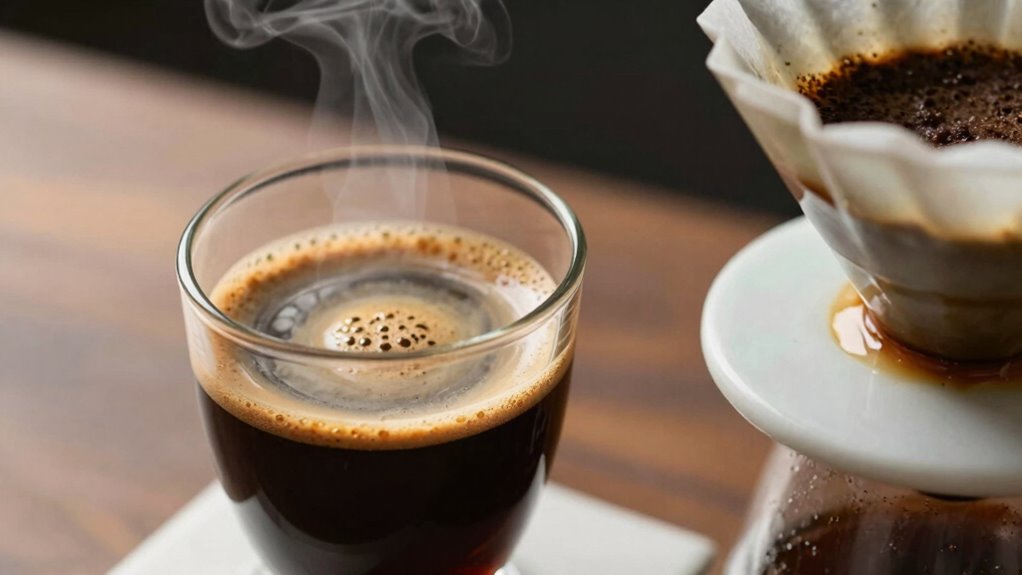

When you think about espresso, strength refers to the body and richness, meaning how thick and smooth it feels, while intensity is about how bold and powerful the flavor tastes. A shot can feel strong without being very intense, or vice versa. Many beginners confuse these because they sound similar, but understanding the difference helps you brew the perfect cup. Keep exploring to discover how controlling factors like grind size and extraction can fine-tune both aspects.

Get kitchen gear delivered free — and shop member deals
- Fast, free delivery on millions of items
- Access to Prime Big Deal Days deals on October 6–7
- Prime Video, Amazon Music and more included
Key Takeaways
- Espresso strength refers to body and richness, while intensity describes the perceived boldness and flavor power.
- Strength is mainly influenced by dose and grind size, whereas intensity depends on flavor profile and extraction quality.
- A strong espresso may have a mellow flavor, while a highly intense shot can be bold and punchy.
- Proper brewing techniques and machine calibration are essential to achieve the desired balance of strength and intensity.
- Many beginners confuse strength (body) with intensity (flavor boldness), but they are distinct aspects of espresso.
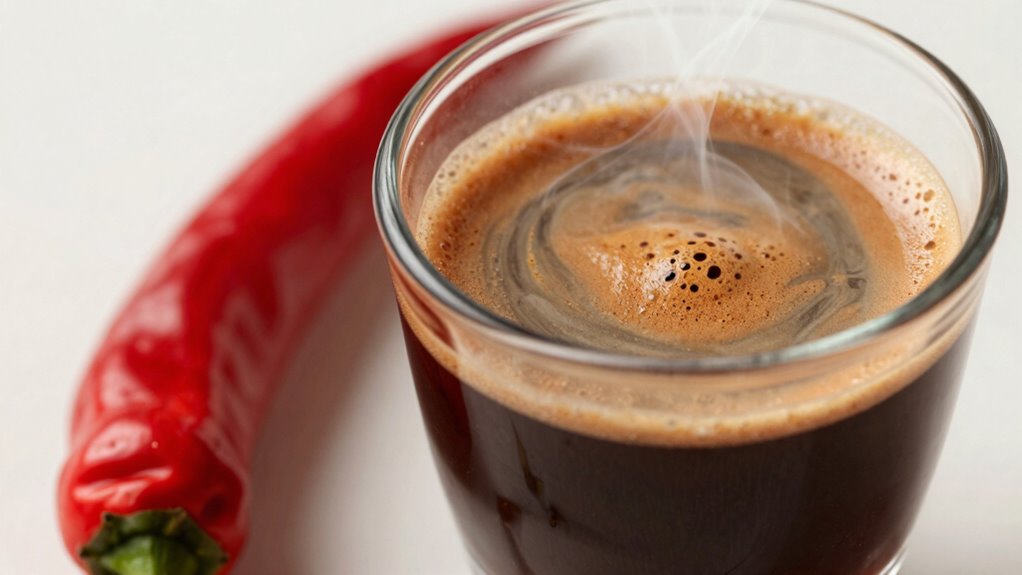
Have you ever wondered what truly differentiates espresso strength from intensity? It’s a common question, especially for beginners trying to grasp the nuances of a good shot. While they’re often used interchangeably, they refer to different aspects of your espresso experience. Strength primarily relates to the overall body and richness of the coffee, which is heavily influenced by the flavor profile. Intensity, on the other hand, describes how powerful or bold the taste feels, often affected by how concentrated the shot is.
Espresso strength is about body and richness, while intensity measures how bold and powerful the flavor feels.
When you think about flavor profile, you’re considering the specific tastes and aromas that define your espresso. A rich flavor profile might include notes of caramel, chocolate, or fruit, and it’s shaped by the coffee beans themselves, their roast level, and how they’re processed. But brewing variables—such as grind size, extraction time, water temperature, and pressure—play an essential role in how these flavors develop. For instance, a longer extraction can deepen the flavor profile, making it more complex, but it can also increase bitterness if overdone. Conversely, a finer grind usually results in more extraction, which boosts both strength and intensity but requires careful control to avoid over-extraction. Additionally, understanding extraction quality helps in fine-tuning these variables for the desired outcome. It’s also important to recognize that brewing techniques can significantly influence the final taste and feel of your espresso, emphasizing the need for consistency and precision. Proper technique ensures that the balance between strength and intensity aligns with your preferences and the beans used.
Furthermore, machine calibration plays a crucial role in maintaining the consistency of these variables and achieving the desired results every time.
Your espresso’s strength isn’t just about how much coffee you pack into the portafilter; it’s about how much of that flavor is dissolved into your shot. When you use a higher dose of coffee or a finer grind, you typically produce a stronger shot with a thicker, more viscous body. This makes the espresso feel more substantial on your palate, but it doesn’t automatically mean it’s more intense in flavor. It’s possible to have a strong espresso that’s mellow and smooth, or one that’s sharp and punchy, depending on how it’s brewed and the beans’ inherent qualities.
As an affiliate, we earn on qualifying purchases.
Frequently Asked Questions
How Does Bean Origin Affect Espresso Strength and Intensity?
Bean origin considerably affects espresso strength and intensity because it influences bean flavor and roast profiles. For example, beans from different regions have unique flavor notes, which can make your espresso taste bolder or smoother. A darker roast enhances strength, while regional characteristics add complexity. By choosing beans from specific origins and adjusting roast profiles, you can control the overall intensity of your espresso, tailoring it to your preferred taste.
Can Brewing Time Alter Espresso Strength Without Changing Intensity?
Yes, brewing time can alter espresso strength without changing its intensity. When you extend the brewing time, the flavor profile becomes more concentrated, making the espresso stronger. However, if you keep the brew temperature consistent, the overall intensity—how bold or robust the espresso tastes—remains the same. Adjusting brewing time mainly influences strength, while temperature helps maintain the desired flavor balance.
Is There a Difference in Caffeine Content Between Strength and Intensity?
Yes, there’s a difference in caffeine content between strength and intensity. Caffeine variability mainly influences strength, which relates to the amount of caffeine in your espresso. Intensity affects flavor perception, making it seem richer or bolder without necessarily increasing caffeine levels. So, while a stronger shot might have more caffeine, a highly intense one just emphasizes flavor, not caffeine content. Your brewing method impacts both, but they don’t always go hand-in-hand.
How Do Different Espresso Machines Influence Perceived Strength and Intensity?
Think of your espresso machine as a painter’s brush, shaping the flavor profile and brewing consistency. An espresso machine with precise temperature control and pressure settings influences perceived strength and intensity, making your coffee richer or more subdued. High-end machines deliver consistent results, enhancing flavor nuances, while lower-quality ones might cause variability. So, your choice of machine directly impacts how bold or smooth your espresso feels, shaping your overall coffee experience.
Does Milk Addition Change the Distinction Between Espresso Strength and Intensity?
Adding milk impacts the distinction between espresso strength and intensity by softening the bold flavor, making it less intense while maintaining its strength. Milk impacts flavor balance, diluting the espresso’s richness and reducing perceived strength. This creates a smoother, more balanced taste. So, when you add milk, you change the overall perception, making the drink feel less intense, but the espresso’s inherent strength remains unchanged.
espresso machine calibration tools
As an affiliate, we earn on qualifying purchases.
As an affiliate, we earn on qualifying purchases.
Conclusion
So, next time you sip that espresso, remember: confusing strength with intensity is like mixing up a lion and a kitten—you might get the wrong punchline! Mastering the difference will turn you into an espresso superhero, conquering morning breath and sleepy eyes with a single shot. Don’t let your coffee confusion hold you back—embrace the true power of your brew, and watch your mornings go from “meh” to “wow!” in a single sip.
As an affiliate, we earn on qualifying purchases.
As an affiliate, we earn on qualifying purchases.
Fall Picks
fall essentials
As an affiliate, we earn on qualifying purchases.