

To taste espresso with milk without masking its flaws, start with high-quality, fresh beans from a reliable source to guarantee a true flavor profile. Properly steam your milk to create silky microfoam, then pour it carefully to balance the espresso’s brightness or richness. Focus on aroma and taste, paying attention to how the milk enhances or dulls subtle notes. Mastering these steps helps you recognize genuine quality—if you keep exploring, you’ll discover even more nuanced secrets.
Key Takeaways
- Use properly steamed, silky milk to enhance rather than overpower espresso flavors.
- Pour milk carefully to maintain the balance between espresso’s brightness and milk’s creaminess.
- Taste the espresso before adding milk to appreciate its original aroma and flavor profile.
- Gradually incorporate milk, tasting periodically to ensure espresso nuances remain perceptible.
- Focus on aroma and flavor differences during tasting to identify how milk influences the espresso.
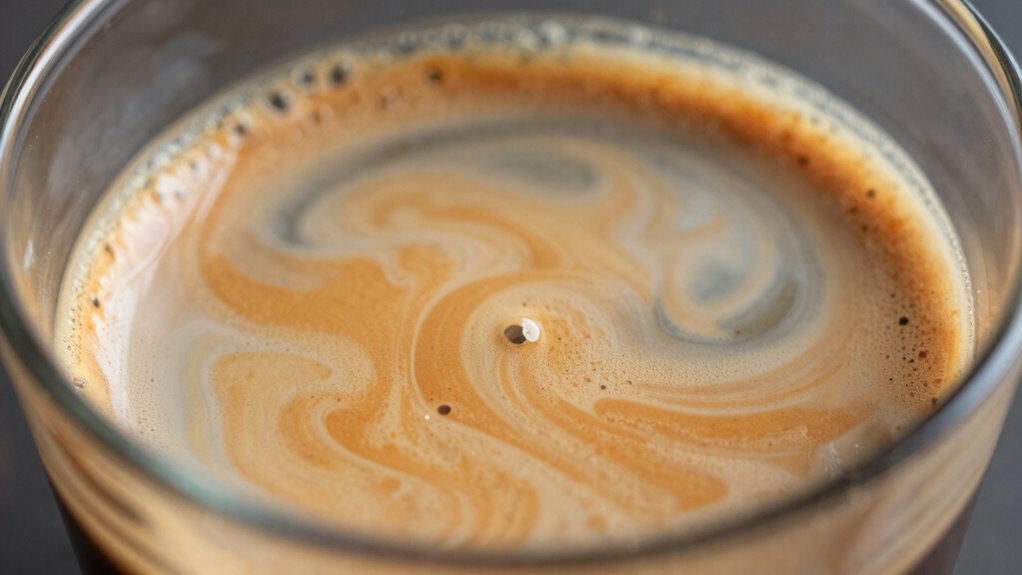
Tasting espresso with milk is a delicate process that enhances your appreciation for both components. When you aim to truly understand the flavors involved, it’s essential to pay attention to the qualities of the coffee bean varieties and the milk steaming techniques you use. Coffee bean varieties considerably influence the overall taste, aroma, and body of your espresso. For example, beans from Central America often offer bright, citrusy notes, while African beans tend to have fruity, floral qualities. Choosing the right beans for your palate sets a strong foundation for a balanced espresso, especially when combined with milk. The freshness of the beans, roast level, and grinding size all play roles in extracting the most nuanced flavors, so sourcing high-quality beans and dialing in your grind is vital.
Choosing the right beans and perfecting your steaming technique creates balanced, flavorful espresso with milk.
Once you select your beans, mastering milk steaming techniques becomes equally important. The goal is to produce silky, well-textured milk that complements the espresso without overpowering it. To achieve this, start with cold milk and use a steam wand to introduce just the right amount of air, creating microfoam that’s velvety and smooth. Proper steaming involves positioning the wand just below the surface, allowing the milk to heat evenly while incorporating tiny bubbles. The temperature should reach around 150°F to 155°F—beyond that, milk can scald, which masks the delicate flavors you’re trying to taste. The technique isn’t just about heat; it’s about control. You want the milk to be creamy and glossy, with no large bubbles or frothy layers that can obscure the subtle flavors of your espresso. Additionally, understanding bean origin and how it influences flavor can help you select the best beans for your desired taste profile.
When you pour your steamed milk into the espresso, aim for a harmonious blend. This is where your understanding of both the coffee’s origin and your steaming technique pays off. A well-prepared milk will accentuate the espresso’s inherent qualities without masking any flaws. For example, a bright, citrusy espresso from Central American beans can be complemented by smooth, sweet milk, highlighting its lively acidity. Conversely, a richer, chocolatey espresso from South American beans can be enhanced with frothy milk that adds depth without overwhelming the flavor profile. Remember, the key is balance—too much milk can drown the espresso, while too little might not soften its intensity enough to appreciate the nuances.
In tasting, focus on how the flavors interact. You should be able to discern the origin of the beans through the aroma and taste, while the milk should add a creamy texture that supports rather than hides the espresso’s complexity. By paying attention to your choice of coffee bean varieties and perfecting your milk steaming techniques, you’ll develop a refined palate that recognizes subtle differences and truly appreciates the art of espresso with milk.

Milk Frothing Pitcher 350ml/600ml/900ml/1500ml (12oz/20oz/32oz/50oz) Steaming Pitchers Stainless Steel Milk/Coffee/Cappuccino/Latte Art Barista Steam Pitchers Milk Jug Cup with Art Pen,12oz
Perfect Combination Of Milk Frothing Pitcher And Latte Art Pen: The milk frother jug can be used in…
As an affiliate, we earn on qualifying purchases.
As an affiliate, we earn on qualifying purchases.
Frequently Asked Questions
How Does Milk Temperature Affect Espresso Flavor?
You’ll notice that milk temperature greatly impacts espresso flavor. When milk is too hot, it can create overly dense foam that masks subtle espresso notes, disrupting the flavor balance. Conversely, cooler milk preserves more of the espresso’s original character, allowing the nuanced flavors to shine through. For the best taste, aim for a milk foam temperature around 140°F to 150°F, ensuring a smooth blend that highlights the espresso’s complexity without overpowering it.
What Milk Types Are Best for Tasting Espresso?
You might think all milk types reveal espresso’s true flavor, but the best for tasting are often plant-based options like almond or oat milk. Ironically, these alternatives offer a cleaner flavor balance, letting subtle espresso notes shine through. Dairy milk can mask complexities, so experimenting with milk alternatives enhances your tasting experience. Stick to unsweetened versions to truly appreciate the espresso’s nuanced characteristics without distraction.
How Do Different Milk Frothing Techniques Influence Taste?
You influence taste by using different steaming methods and milk foam textures. Frothing with a slow, steady steam creates creamy, velvety foam that enhances sweetness and balances bitterness, while rapid steaming produces firmer foam with a more pronounced flavor. Experiment with techniques like microfoam for smooth textures or frothing to a firm peak for a different mouthfeel. These variations alter how the milk interacts with espresso, affecting overall flavor perception.
Can Adding Sugar Alter the Tasting Experience?
Adding sugar is like tuning a musical instrument; it can brighten or dull the flavor. When you add sugar, it enhances the sugar flavor and can make sweetness perception more prominent, altering the overall tasting experience. You might find the espresso becomes smoother and more inviting, but too much sugar could mask subtle nuances. Use it sparingly to balance the boldness without overwhelming the complex flavors.
What Are Common Mistakes When Pairing Milk With Espresso?
A common mistake when pairing milk with espresso is using an improper milk to espresso ratio, which can overpower or underwhelm the coffee’s flavor. Additionally, neglecting milk steaming consistency can result in overly frothy or thin milk, affecting texture and taste. To avoid these issues, aim for a balanced ratio and make certain your milk is steamed smoothly, creating a velvety microfoam that complements the espresso without masking its nuances.

Amrules Milk Frothing Pitcher, 12oz Milk Frother Cup with Clear Scale, 304 Stainless Steel Cappuccino Espresso Machine Accessories for Barista Coffee Bar with Latte Art Pen, Silver
304 STAINLESS STEEL: Amrules 12oz creamer pitcher are crafted of 18/8 food grade stainless steel. The pitcher features…
As an affiliate, we earn on qualifying purchases.
As an affiliate, we earn on qualifying purchases.
Conclusion
Now that you know how to taste espresso with milk without masking its flaws, remember to pay close attention to the balance of flavors. Did you know that according to a recent survey, 65% of coffee enthusiasts prefer their espresso with milk? By following these tips, you’ll appreciate the nuances of both the espresso and milk, ensuring a more authentic tasting experience. Keep practicing, and you’ll soon develop a refined palate that truly understands the art of coffee.

Lavazza Super Crema Whole Bean Coffee, Medium Espresso Roast, Arabica and Robusta Blend, 2.2 lb Bag, Package May Vary (Pack of 1)
SUPER CREMA: A 2.2 lb whole bean coffee bag ideal for espresso preparation
As an affiliate, we earn on qualifying purchases.
As an affiliate, we earn on qualifying purchases.

MiiCoffee Digital Milk Frothing Thermometer with Clip, Espresso Machine Accessories for Steaming Milk (Fahrenheit)
【Designed for Espresso】MiiCoffee Digital Milk Frothing Thermometer was designed to help you steam milk to the perfect temperature,…
As an affiliate, we earn on qualifying purchases.
As an affiliate, we earn on qualifying purchases.