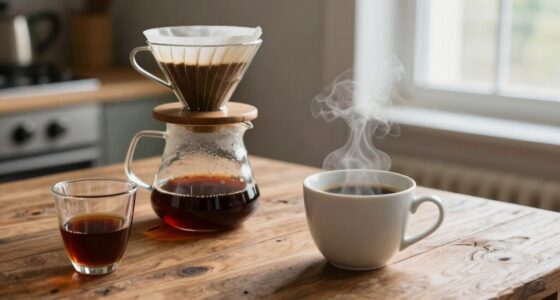
When tasting coffee, be alert for off-flavors like sourness, which signals under-fermentation or spoilage, and a rubber aroma indicating contamination or over-roasting. These defects affect flavor, aroma, and overall quality. Recognizing these signs helps you avoid flawed beans and improves your brew. If you pay attention, you’ll learn how to spot common defects early and make better choices for a consistent, enjoyable cup. Keep going to discover how to prevent these issues entirely.
Key Takeaways
- Sour taste indicates potential spoilage, under-fermentation, or improper storage, compromising coffee quality.
- Rubber-like aroma often results from over-roasting, contamination, or exposure to excessive heat during processing.
- Off-flavors such as sourness and rubber odors are signs of flawed beans or improper handling.
- Recognizing these defects early helps prevent brewing compromised coffee and ensures better flavor.
- Preventive measures include sourcing from reputable suppliers, proper storage, and maintaining clean brewing equipment.
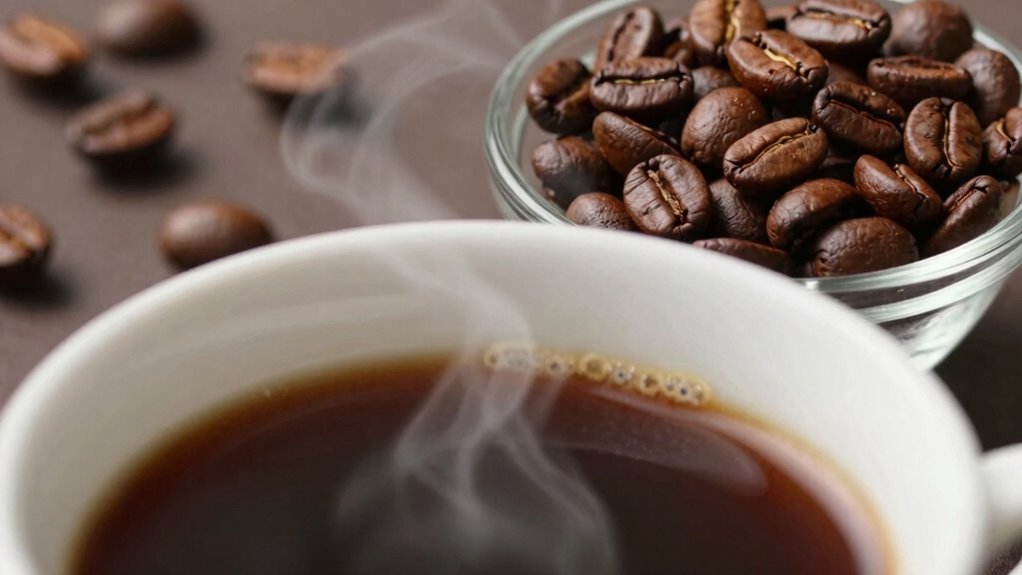
Coffee defects are flaws that can compromise the flavor, aroma, and overall quality of your brew. One of the most noticeable signs of a defect is when your coffee develops a sour taste. This sourness isn’t the bright, lively acidity you want; instead, it feels harsh and off-putting, often making your coffee seem stale or spoiled. It can be caused by under-fermentation during processing or improper storage, which allows bacteria to produce acids that spoil the flavor. When you notice this sour taste, it’s a clear indicator that something has gone wrong in the coffee’s journey from bean to cup. Alongside sourness, another common defect you might encounter is a rubbery aroma. Instead of the expected rich, inviting scent, your coffee might give off a strange, synthetic smell reminiscent of rubber or plastic. This defect often results from excessive heat during roasting or contamination during processing, which alters the beans’ natural compounds. A rubbery aroma can be subtle or overpowering, but either way, it ruins the sensory experience you’re after.
If you’re brewing a cup and immediately notice an odd sour or sour-like taste, it’s likely not your palate but the coffee itself that’s at fault. This flaw can stem from beans that were harvested too early or stored improperly, causing fermentation and the development of undesirable acids. The sour taste can also be a sign that the coffee was exposed to moisture or stored in humid conditions, which encourages mold and bacterial growth. When this happens, the freshness and vibrancy you expect are replaced with a flat, unpleasant flavor. Similarly, if your coffee emits a rubbery aroma, it’s a signal that the beans may have been contaminated or poorly roasted. Sometimes, this defect results from over-roasting beans, which can produce smoky, chemical-like odors. Other times, it’s due to contamination during processing or packaging, introducing synthetic scents that linger in the brew. Recognizing quality control issues and how they affect beans can help you make better choices and enjoy a more consistent cup.
To avoid these defects, pay close attention to the origin and storage of your beans. Always buy from reputable sources that adhere to quality standards, and store your coffee in a cool, dry place away from moisture and strong odors. When brewing, ensure your equipment is clean and properly maintained to prevent contamination. Recognizing these off-flavors early helps you identify quality issues before they ruin your entire cup. Ultimately, understanding these flaws empowers you to select better beans, improve your brewing process, and enjoy coffee that truly highlights its natural flavors.

Agratronix Coffee Moisture Tester Model 08150
- Accurate Coffee Moisture Testing: Calibrated for various coffee commodities
- Multilingual Backlit Display: Provides clear readings in dark environments
- User-Friendly Operation: Easy to operate anywhere, anytime
As an affiliate, we earn on qualifying purchases.
As an affiliate, we earn on qualifying purchases.
Frequently Asked Questions
How Can I Prevent Coffee Defects During Brewing?
You can prevent coffee defects during brewing by ensuring consistent grinding, which helps extract flavors evenly and avoids over- or under-extraction. Use high-quality water, free from impurities, to prevent off-flavors caused by mineral or chemical contamination. Additionally, maintain your equipment and follow precise brewing parameters. These steps help you minimize defects, resulting in a cleaner, more flavorful cup of coffee every time.
Do Different Coffee Beans Have Specific Defect Profiles?
Yes, different bean varieties and geographic origins have specific defect profiles. You’ll notice that beans from certain regions, like Central America or Africa, often carry distinct off-flavors due to soil, climate, and processing methods. Similarly, some varieties are more prone to defects like sourness or mustiness. By understanding these profiles, you can better select beans and avoid unwanted flavors that affect your coffee’s quality.
Can Storage Methods Influence the Development of Off-Flavors?
Yes, storage methods can influence off-flavor development. You should pay attention to storage conditions like humidity, temperature, and exposure to light, which can cause defects. Using proper packaging materials, such as airtight bags or containers, helps prevent oxygen and moisture from entering, reducing the risk of flavor deterioration. Storing coffee correctly preserves its freshness and avoids off-flavors caused by improper storage choices.
Are Some Defects More Detectable Than Others?
Some defects are more detectable than others, and it’s like trying to find a needle in a haystack. You’ll find that sensory detection makes certain off-flavors, like sourness or staleness, stand out sharply, especially if the defect severity is high. Smaller or subtler flaws, however, can be harder to notice. Your ability to detect these differences depends on your experience, palate sensitivity, and the defect’s intensity.
How Does Roasting Impact Coffee Defect Formation?
Roasting impacts coffee defect formation by either highlighting or hiding issues like unevenness and color inconsistencies. When you roast unevenly, you risk developing defect flavors due to inconsistent heat application, which can cause over- or under-roasted beans. Color inconsistencies signal uneven roasting, leading to flavor defects. You should carefully monitor your roast to make certain of uniform heat and color, reducing the chances of defects and resulting in a better-tasting coffee.

Veken Coffee Canister with Window, Airtight Stainless Steel Container, 16OZ
- Maintains Coffee Freshness: Air-tight with CO2 valve and silicone seal
- Includes Date Tracker and Window: Track expiry and view contents easily
- Free Stainless Steel Scoop: Convenient scoop with hook attachment
As an affiliate, we earn on qualifying purchases.
As an affiliate, we earn on qualifying purchases.
Conclusion
Now that you know the common coffee defects and their off-flavors, you can better identify and avoid them. Remember, over 70% of coffee flavor issues stem from processing or storage errors. By paying attention to these defects, you’ll enjoy a fresher, more vibrant cup every time. Don’t ignore these subtle signs—they’re your key to brewing the perfect coffee experience. Stay vigilant, and savor each sip with confidence!
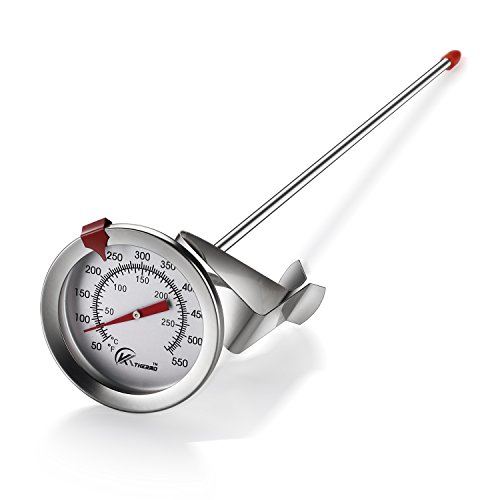
KT THERMO Candy/Deep Fry Thermometer with Instant Read,Dial Thermometer,12" Stainless Steel Stem Meat Cooking Thermometer,Best for Turkey,BBQ,Grill,Analog display
- Multi-purpose Use: Measures oil, frying, and BBQ temps
- Wide Temperature Range: 50°F to 550°F measurement range
- Durable Stainless Steel: Corrosion-resistant and easy to clean
As an affiliate, we earn on qualifying purchases.
As an affiliate, we earn on qualifying purchases.

Homely Accents Vintage Coffee Knowledge Tin Sign for Home Kitchen Bar Decor
- Unique Coffee Artwork: Witty Coffee Taster's Flavor Wheel design
- Durable Aluminum Build: High-quality, long-lasting aluminum material
- Perfect Gift for Coffee Lovers: Ideal for coffee enthusiasts and drinkers
As an affiliate, we earn on qualifying purchases.
As an affiliate, we earn on qualifying purchases.