Decaf espresso behaves differently because decaffeination alters the beans’ chemistry, removing caffeine and affecting oils, proteins, and flavor compounds. These changes lead to less stable crema, lighter texture, and milder flavors. The method used—such as water processing or solvent extraction—can also impact aroma and quality. To get the best results, you need specific brewing adjustments, like finer grind and longer extraction. Keep exploring, and you’ll discover how to optimize your decaf shots for full flavor.
Key Takeaways
- Decaffeination alters chemical compounds, reducing oils and proteins essential for crema stability and affecting texture.
- Different decaf methods leave residual chemicals or flavor impacts, influencing aroma, taste, and brewing behavior.
- Decaf beans typically have milder, flatter flavor profiles due to chemical changes and flavor compound loss.
- Roast profiles and bean origin impact decaf espresso’s richness and body, requiring specific brewing adjustments.
- Fine-tuning grind size, brew time, and temperature compensates for chemical and physical changes, enhancing flavor and crema.
How Does Decaffeination Change Coffee Beans’ Chemistry?
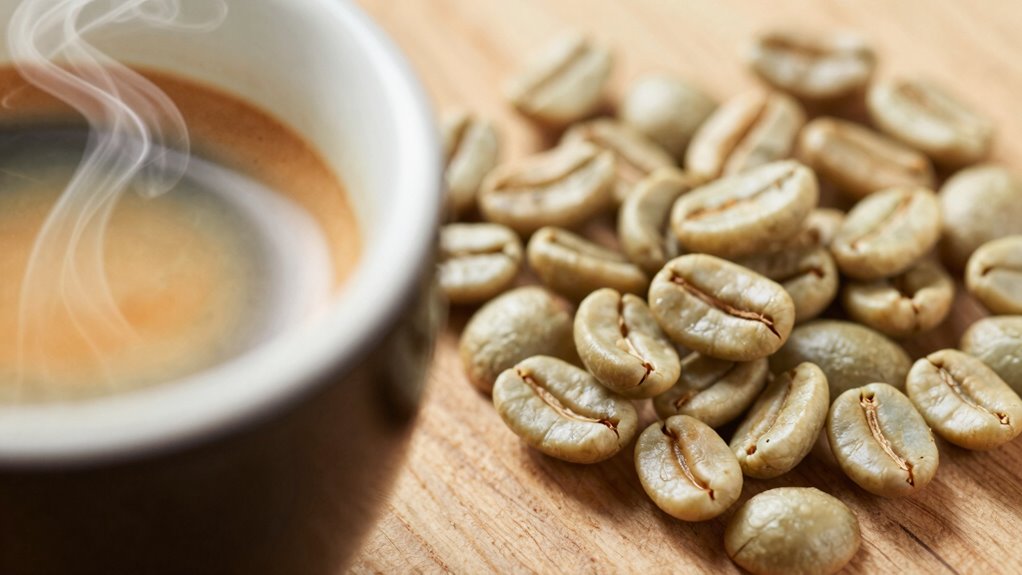
Decaffeination methods alter the chemical composition of coffee beans by removing caffeine, but they also affect other compounds that influence flavor and aroma. This process can impact your coffee’s overall profile, making flavor preservation a key concern. To counteract this, bean selection becomes vital. Choosing high-quality, specialty beans helps guarantee that even after decaffeination, your coffee retains its rich, nuanced flavors. Different beans respond uniquely to decaffeination techniques, so experts often select specific varieties known for their robustness and flavor stability. Additionally, understanding the chemical effects of decaffeination can guide you toward more flavorful options. By carefully selecting beans with strong aromatic profiles and desirable flavor characteristics, you increase the chances of enjoying a decaf espresso that’s still vibrant and full-bodied. Ultimately, thoughtful bean selection helps preserve the integrity of your favorite coffee experience.
Which Decaffeination Methods Are Used, and How Do They Affect Your Coffee?

Different decaffeination methods can considerably influence your coffee’s flavor and quality. The Swiss Water Process preserves more of the beans’ natural taste, while solvent extraction may strip some nuances. Using carbon dioxide offers a cleaner approach, but each method impacts the final espresso differently. Additionally, the choice of decaffeination technique can also affect the coffee’s energy efficiency, aligning with sustainable practices.
Swiss Water Process Impact
The Swiss Water Process stands out as a chemical-free method that preserves the coffee’s natural flavor while effectively removing caffeine. It uses water filtration to extract caffeine without added chemicals, making it a popular choice for purity-conscious consumers. During the process, green coffee beans are soaked in hot water, which dissolves the caffeine along with some flavor compounds. The water then passes through activated carbon filters that trap caffeine molecules while allowing other flavor components to remain. This cycle is repeated until the beans are decaffeinated to desired levels. Because no chemicals are used, the beans retain more of their original taste profile. As a result, decaf espresso made with the Swiss Water process often boasts a cleaner, more vibrant flavor compared to chemically decaffeinated options. Additionally, the process supports sustainable practices by reducing chemical waste and environmental impact.
Solvent Extraction Effects
Solvent extraction is a common decaffeination method that uses chemical solvents, such as methylene chloride or ethyl acetate, to remove caffeine from coffee beans. During this process, the beans are soaked in the solvent, which selectively dissolves caffeine while leaving most flavor compounds intact. However, concerns about chemical residues persist, as small amounts of solvent can remain on the beans after processing. These residues are carefully monitored to meet safety standards, but some coffee lovers prefer decaffeination methods that avoid chemicals altogether. Solvent extraction can sometimes subtly influence the coffee’s flavor profile, making it slightly different from beans processed by other methods. Understanding these effects helps you choose decaf options aligned with your taste and health preferences.
Carbon Dioxide Method Differences
When it comes to decaffeination, the carbon dioxide (CO₂) method stands out because it uses pressurized CO₂ to selectively extract caffeine from coffee beans. This process relies on decaffeination chemistry, where CO₂ acts as a solvent that targets caffeine molecules without disturbing the bean’s flavor compounds. During carbon dioxide extraction, CO₂ is transformed into a supercritical state, increasing its ability to penetrate the beans and dissolve caffeine efficiently. Unlike solvent-based methods, this technique preserves more of the bean’s original aroma and taste. It’s considered a cleaner, more natural process, often used for high-quality decafs. Overall, these differences in decaffeination chemistry make the CO₂ method a preferred choice for coffee lovers seeking minimal flavor loss.
Why Does Decaf Espresso Have Less Crema and a Different Texture?

Decaf espresso tends to have less crema and a different texture because the decaffeination process alters the coffee’s natural oils and proteins, which are essential for creating a rich, stable foam. The caffeine impact reduces the amount of compounds that contribute to crema formation, making it harder to develop that thick, velvety layer you expect from regular espresso. When caffeine is removed, some oils and proteins are also diminished or changed, affecting how well the coffee can trap gas during extraction. As a result, decaf tends to produce thinner, less persistent crema and a different mouthfeel. This change isn’t just about flavor; it’s a direct consequence of how decaffeination impacts the fundamental elements needed for a desirable espresso texture.
How Does Decaffeination Alter the Flavor of Espresso?
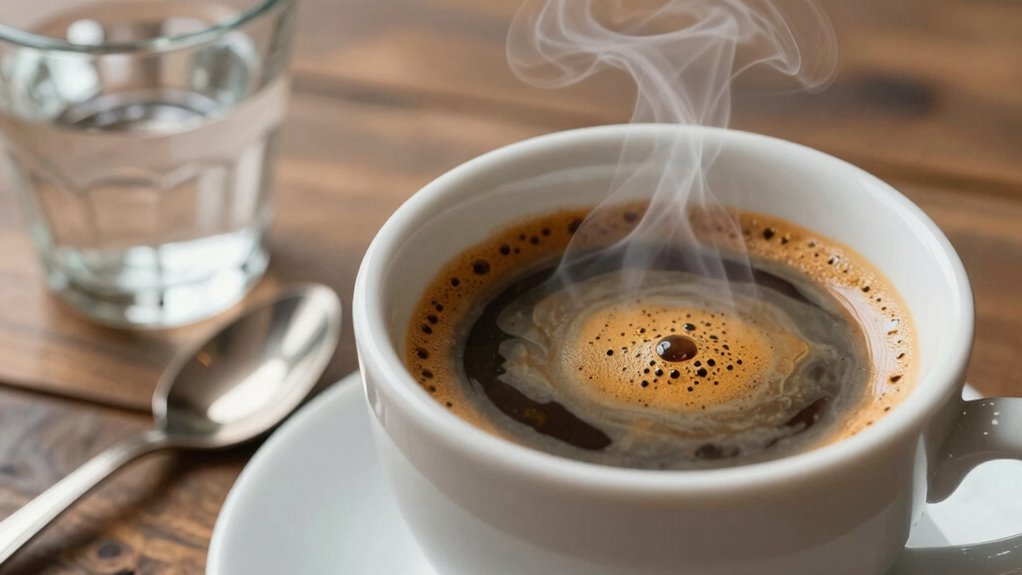
Decaffeination changes the flavor of espresso by altering its key flavor compounds, which can lead to a less vibrant taste. Residual solvents or processing methods might also introduce subtle differences in aroma and aftertaste. Additionally, roast profiles often shift to compensate for these changes, affecting the overall flavor experience. Understanding the decaffeination process helps explain why these flavor differences occur.
Flavor Compound Changes
The process of removing caffeine from espresso beans considerably impacts their flavor compounds, leading to noticeable changes in taste and aroma. During decaffeination, chemical changes occur within the beans’ natural constituents, altering essential oils and aromatic compounds. These chemical shifts can diminish some flavor notes while enhancing others, often resulting in a different sensory profile compared to regular espresso. You might notice a loss of bright, complex flavors and a shift toward more muted or altered aromas. The decaffeination process can also reduce the presence of certain acids and sugars, which contribute to body and sweetness. Additionally, the chemical alterations affect the overall flavor profile by disrupting the delicate balance of chemical compounds responsible for the nuanced taste of espresso. Overall, these flavor shifts stem from the disruption of delicate chemical balances, making decaf espresso taste different—sometimes milder or flatter—than its caffeinated counterpart.
Residual Solvent Effects
Residual solvents used during the decaffeination process can leave behind trace amounts that subtly influence espresso’s flavor profile. These solvent residues, although minimal, can introduce chemical residues that alter the taste, sometimes creating a slightly bitter or medicinal note. The type of solvent used—such as ethyl acetate or methylene chloride—affects the extent of these residues and their impact. High-quality decaf beans undergo thorough processing to minimize chemical residues, but trace amounts may still remain. This can result in a flavor difference compared to regular espresso, as chemical residues may interfere with the natural bean flavors. Understanding how residual solvents influence taste helps you appreciate the nuanced differences in decaf espresso and the importance of choosing beans processed with safer methods.
Roast Profile Adjustments
Because decaffeination alters the chemical structure of coffee beans, roasters often modify their roast profiles to compensate for flavor changes. These roast adjustments help maintain decaf stability and ensure the beans develop desirable aroma and body. You might notice that decaf espresso requires a slightly different roast curve—sometimes a bit lighter or with extended development—to preserve brightness and reduce bitterness. By fine-tuning the roast profile, roasters counteract the flavor loss caused by decaffeination, ensuring a balanced cup. Adjustments can also help mitigate any off-flavors introduced during decaffeination processes. Ultimately, thoughtful roast profile changes are essential for achieving a consistent, flavorful decaf espresso that rivals its caffeinated counterpart in complexity and richness.
How Do Bean Origin and Roasting Influence Decaf Espresso’s Behavior?
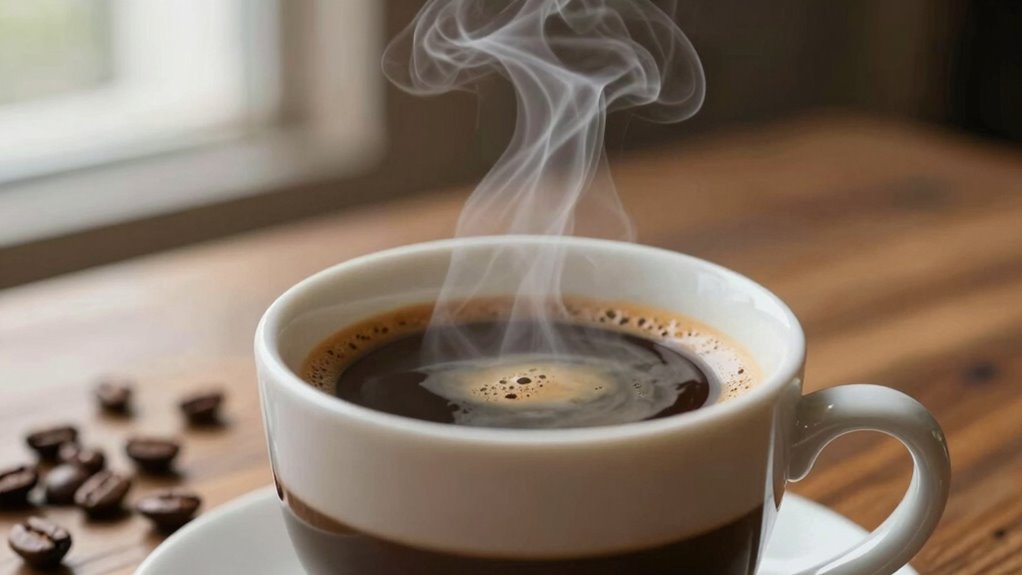
Bean origin and roasting play essential roles in shaping how decaf espresso behaves during brewing. The bean origin determines the bean’s flavor profile, acidity, and moisture content, all of which influence extraction and overall taste. For example, beans from Central America often yield bright, fruity notes, while African beans add complexity. The roasting level also impacts decaf espresso’s behavior; darker roasts tend to be oilier and more soluble, making extraction easier and creating a fuller body. Conversely, lighter roasts preserve acidity and delicate flavors but can be more challenging to brew consistently. Understanding these factors helps you optimize your brewing process, ensuring you get the best flavor and consistency from your decaf espresso shot.
Can You Brew Decaf Espresso to Achieve Richness and Full Body?

Achieving a rich, full-bodied decaf espresso is definitely possible, but it requires adjusting your brewing techniques to compensate for the typically milder profile of decaf beans. To enhance decaf aroma and improve caffeine perception, consider these steps:
Enhance decaf espresso with finer grind, longer brew time, and slightly higher temperature for richer flavor.
- Use a finer grind to increase extraction and boost body.
- Adjust your brew time for a longer extraction, which emphasizes the beans’ richness.
- Opt for a slightly higher brew temperature to maximize flavor and deepen the decaf’s aroma.
These tweaks help compensate for decaf’s milder profile, allowing you to craft an espresso with satisfying fullness and depth. While decaf beans naturally have less caffeine perception, these methods bring out their best, delivering a more robust experience without sacrificing the decaf qualities you enjoy.
What Are Common Myths About Decaf Espresso: and What’s the Truth?
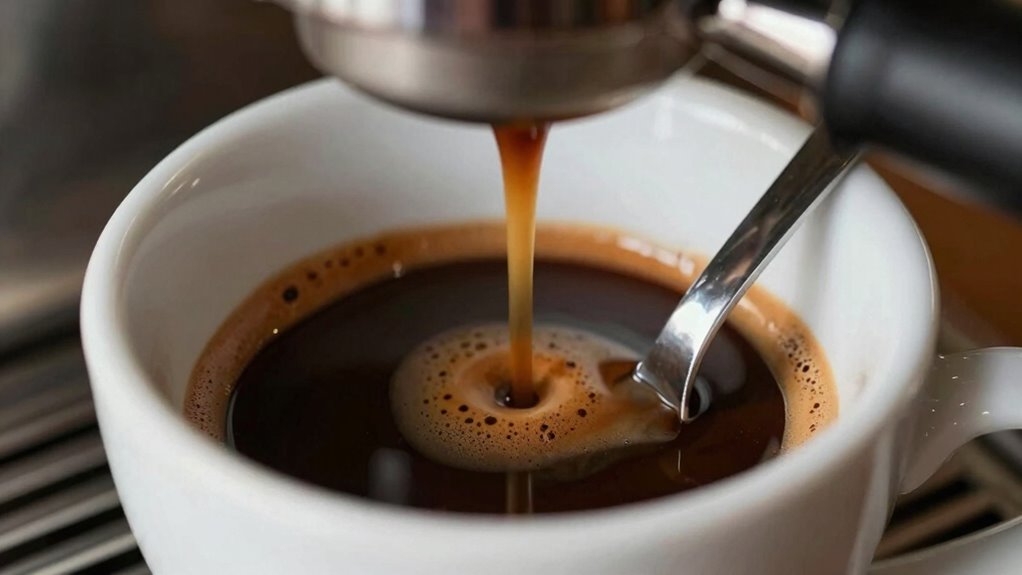
Have you ever heard that decaf espresso is bland or lacking in flavor? That’s a common decaf myth, but it’s not true. Many espresso misconceptions suggest decaf can’t deliver the rich, bold taste of regular espresso, but skilled roasting and brewing change that. The idea that decaf is inherently weaker or dull is outdated. Modern decaf methods preserve much of the bean’s original flavor, allowing you to enjoy complex aromas and full-bodied profiles. If you believe decaf can’t match the intensity of regular espresso, you’re falling for a misconception. The truth is, with the right beans, grind, and extraction, decaf can be just as satisfying. Additionally, advancements in decaffeination techniques ensure that more of the original flavor compounds are retained during processing, making decaf a viable option for those seeking a rich espresso experience without caffeine. Don’t let myths hold you back from exploring decaf espresso’s true potential.
How Can You Adjust Your Brewing Technique for Better Decaf Espresso?
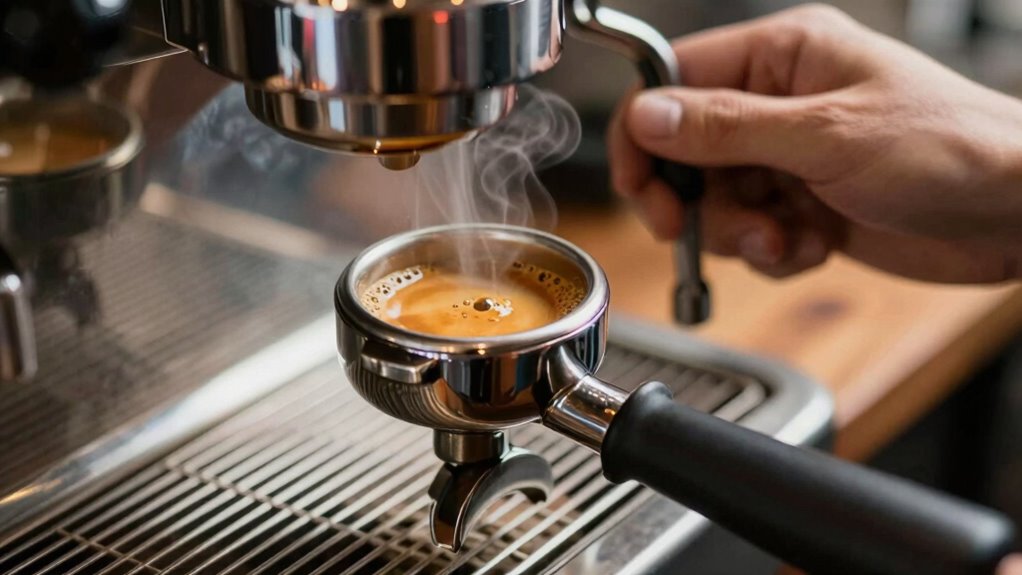
To get the best flavor from decaf espresso, you need to tweak your brewing technique to compensate for its unique characteristics. First, adjust your decaf grind to a slightly finer setting to improve extraction, since decaf beans often require a bit more contact time. Second, pay close attention to brewing temperature; increase it slightly to help extract more of the flavors hidden within the beans. Third, consider shortening or lengthening your shot time based on taste, ensuring the coffee isn’t under- or over-extracted. Remember, decaf beans are more sensitive to these adjustments, so small changes can make a big difference. Additionally, choosing high-quality ground coffees can significantly enhance the flavor of your decaf espresso. By fine-tuning your grind and temperature, you’ll unlock richer, more vibrant flavors in your decaf espresso.
How Understanding Decaf’s Properties Helps You Brew Better Cups

Understanding the unique properties of decaf coffee helps you make smarter brewing choices, leading to better-tasting cups. Decaf flavor can be more delicate and susceptible to over-extraction, so knowing how it behaves allows you to adjust your grind size and brew time accordingly. Bean stability is also essential; decaf beans often have less structural integrity, meaning they can break down more easily during extraction. This knowledge helps you prevent under- or over-extraction, ensuring a balanced, flavorful shot. Recognizing that decaf may require slightly different parameters allows you to fine-tune your technique for ideal results. Being aware of Bean stability and its impact on brewing helps you adapt your approach to get the best flavor. By understanding these properties, you gain control over the brewing process, turning decaf into a rich, satisfying espresso experience.
Frequently Asked Questions
Can Decaf Espresso Taste as Rich as Regular Espresso?
Yes, decaf espresso can taste as rich as regular espresso. To achieve flavor consistency, focus on high-quality bean selection and proper decaffeination methods. Beans with strong, robust profiles tend to maintain their richness even after decaffeination. You might need to tweak your brewing process slightly, but with the right beans and attention to detail, you’ll enjoy a decaf espresso full of depth and flavor, just like its caffeinated counterpart.
Does Decaffeination Affect Coffee’s Acidity and Bitterness?
You might notice that decaf coffee often has a different flavor profile—its acidity and bitterness are usually milder. This change happens because decaffeination can reduce some of the natural acidity and alter the decaf aroma, making the taste smoother but sometimes less vibrant. The process strips away certain compounds, so your decaf might lack the bright, lively notes of regular coffee, creating a subtler, more subdued experience.
Are There Specific Beans Better Suited for Decaf Espresso?
You’ll want to focus on decaf bean selection when choosing beans for decaf espresso. Specialty decaf varieties often deliver richer flavor and better aroma, making your espresso more satisfying. Look for beans labeled as decaf from reputable sources or specific regions known for quality beans. These options guarantee you get a balanced, flavorful shot without the caffeine kick, elevating your espresso experience even with decaffeination.
How Does Decaf Processing Impact Caffeine Content Variability?
Imagine a painter mixing colors; decaf processing acts like a filter, selectively removing caffeine while leaving other elements intact. This process causes caffeine variability because different beans respond uniquely to decaffeination methods like Swiss Water or CO2 extraction. As a result, you may find decaf espresso with slightly different caffeine levels, depending on the process and beans used, making each cup subtly unique in its caffeine content.
Is Decaf Espresso Suitable for All Brewing Methods?
Decaf espresso isn’t suitable for all brew methods because its grind size and extraction process differ. You should use a fine grind for espresso machines, but decaf may need adjustments in brew time to prevent under or over-extraction. For methods like pour-over or French press, decaf might not perform as well due to its unique solubility. Always tweak your grind size and brewing time to optimize flavor, no matter your chosen method.
Conclusion
Understanding decaf espresso’s unique behavior helps you brew with confidence, adjust with purpose, and savor every sip. It’s about embracing the differences, appreciating the nuances, and mastering the craft. Whether it’s the chemistry, the method, or the technique, your journey to better decaf espresso is about curiosity, patience, and passion. So, keep experimenting, keep learning, and enjoy the rich, satisfying moments that come from brewing a cup that’s truly yours.