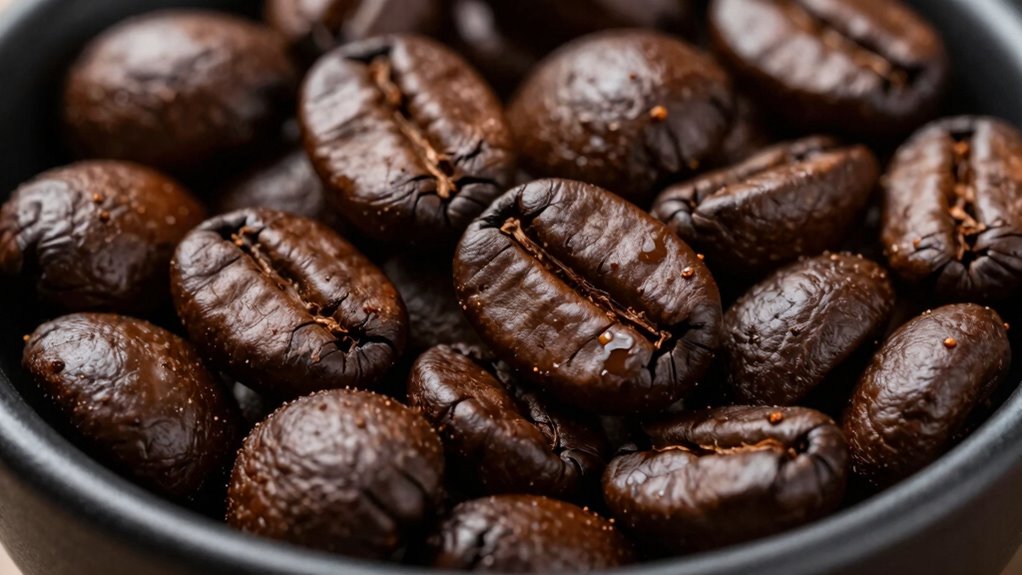

Fines in dark roasts interact differently because roasting alters their structure and chemical makeup, making them more oil-rich and prone to clogging filters. These tiny particles speed up extraction, increasing body and intensity, but can also cause over-extraction and bitterness if not managed properly. Dark roast fines tend to behave differently than lighter roasts, affecting flavor and brew clarity. To learn how to control and optimize these interactions, keep exploring these key factors.
Key Takeaways
- Dark roasts produce more fines due to chemical and physical changes during roasting, affecting extraction behavior.
- Fines in dark roasts accelerate extraction, leading to faster flavor release and increased body in the brew.
- Excessive fines can cause muddiness, bitterness, or clogging, especially in brewing methods sensitive to small particles.
- Proper grind size management is essential to balance fines and prevent over- or under-extraction in dark roasts.
- Mechanical and chemical changes in dark roasts influence fines’ interaction with water, impacting flavor development and clarity.
Why Do Grind Fines Cause Issues in Dark Roast Brewing?
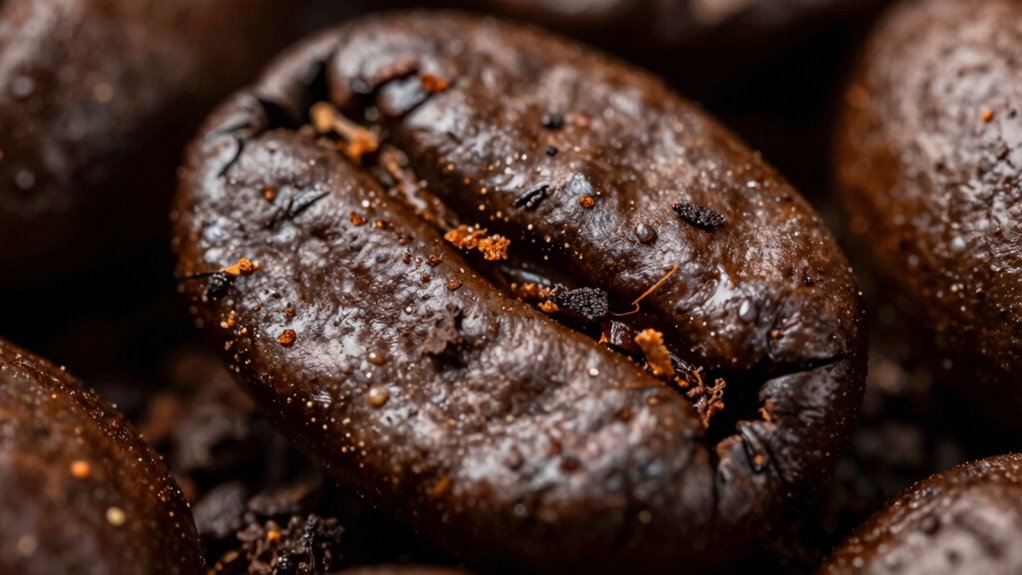
Because dark roasts tend to have a more fragile bean structure, grind fines can cause significant problems during brewing. Fines are tiny coffee particles resulting from inconsistent grind size, and they often vary in particle size. When your grind isn’t uniform, these smaller particles can clog filters or create uneven extraction. This can lead to poor water flow, which hampers proper extraction and flavor development. This leads to over-extraction of fines, resulting in bitter flavors, while larger particles may under-extract, leaving the brew weak. The key issue is that inconsistent particle size disrupts water flow and extraction balance. Fines can also increase sediment in your cup, affecting clarity and texture. To avoid these problems, focus on achieving a consistent grind with uniform particle size, especially when brewing dark roasts, which are more sensitive to uneven extraction.
How Do Fines Influence Extraction and Flavor in Dark Roasts?

Fines can speed up extraction, giving you a quicker brew. However, this may affect flavor clarity, making your coffee taste muddier or more bitter. Understanding how fines influence these factors helps you fine-tune your dark roast brewing. Additionally, the impact on perceived sharpness of the coffee can vary depending on the amount of fines present.
Fines Accelerate Extraction
Fines, the tiny coffee particles created during grinding, play a crucial role in accelerating extraction in dark roasts. Their small size allows them to quickly dissolve, increasing fines buildup in your brew. This rapid dissolution boosts coffee strength but can also lead to over-extraction if not controlled. To better understand their influence:
- Fines fill the gaps between larger particles, creating a dense extraction matrix.
- They promote faster solubilization of flavors, enhancing body and intensity.
- Excess fines can cause clogging and uneven extraction, leading to bitterness.
- Incorporating European cloud innovation in brewing techniques can help optimize extraction control.
Flavor Clarity Affected
While fines can enhance extraction speed, they often compromise flavor clarity in dark roasts. The abundance of tiny particles can lead to over-extraction, causing you to notice increased acidity and muddled flavors. This over-extraction suppresses the aroma, dulling the vibrant notes you expect from a well-roasted bean. As a result, your coffee may taste flat or overly bitter, masking the nuanced flavors that make dark roasts unique. The presence of fines can also cause a muddy mouthfeel, making it harder to distinguish individual flavors. To maintain clarity, you might need to adjust your grind size or brew time, but be aware that excessive fines tend to obscure the clean, crisp qualities that define a high-quality dark roast.
What Makes Dark Roast Fines Behave Differently?
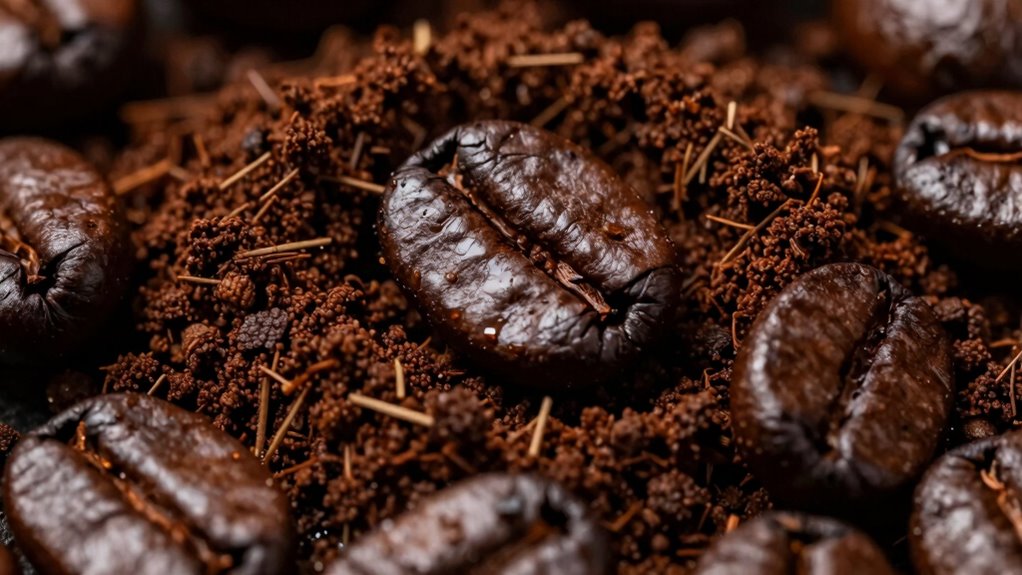
Dark roast fines behave differently from those in lighter roasts because the roasting process alters their structure and chemical composition. This impacts how they interact with water during brewing, affecting extraction and flavor. For example, darker roasts tend to have lower caffeine content per bean because longer roasting breaks down caffeine molecules. Additionally, bean origin influences how fines behave; beans from different regions respond uniquely to roasting, affecting grind consistency. The mechanics of French press can also influence how these fines interact with water, further impacting the brewing outcome.
How Can You Manage Grind Fines for a Balanced Coffee?

Managing grind fines effectively guarantees your coffee achieves a balanced extraction, highlighting both flavor and body. To do this, focus on maintaining grind size consistency, which prevents over- or under-extraction caused by uneven fines. Additionally, controlling water temperature ensures fines don’t extract too quickly or slowly, preserving the desired flavor profile. Consider this quick reference:
| Grind Size Consistency | Water Temperature Control | Result |
|---|---|---|
| Uniform grind | Stable temperature | Even extraction, balanced flavor |
| Fine particles | Higher temp | Over-extraction, bitter notes |
| Coarser grind | Lower temp | Under-extraction, sour taste |
| Adjust grind and temp | Monitor brew time | Ideal flavor and body |
Furthermore, understanding thermal behavior of the grind particles can help optimize extraction and prevent undesirable flavors.
How Do You Adjust Grind Size and Brew Time to Control Fines?
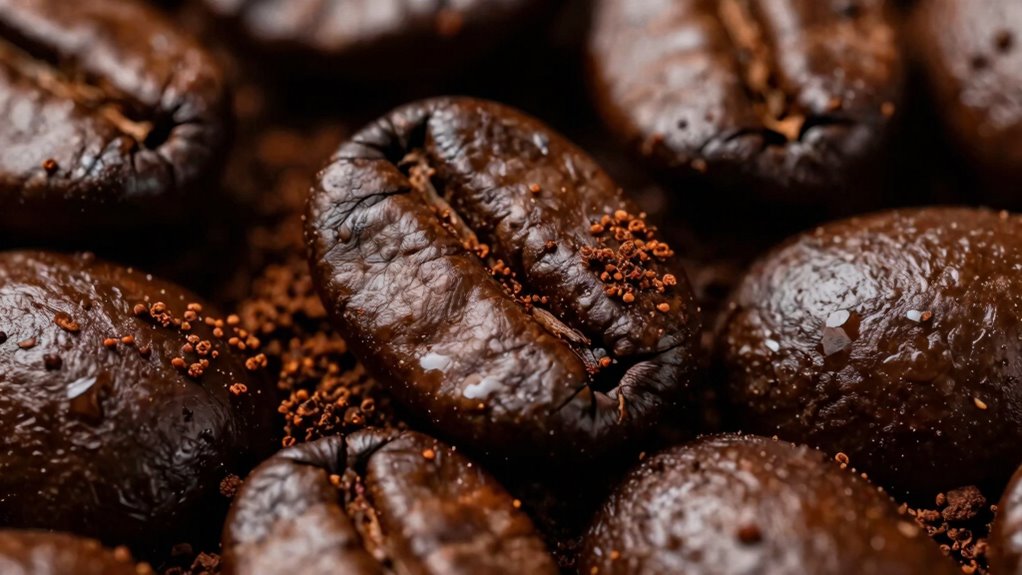
Adjusting grind size and brew time is essential for controlling fines and achieving ideal extraction. When working with a coffee bean, your chosen brewing method impacts how fines influence flavor. To minimize over-extraction from fines, consider these adjustments:
- Use a coarser grind for methods like French press or pour-over to reduce fine particles passing through filters.
- Shorten brew time for espresso or AeroPress to prevent fines from over-extracting and creating bitterness.
- Fine-tune grind size gradually, testing small adjustments to find the balance where fines don’t overpower the brew.
These steps help ensure your dark roast coffee maintains rich flavor without excessive fines, resulting in a smoother, more balanced cup. Proper regulation over grind size and brew time is key to optimizing your brewing method’s performance.
Top Tips to Optimize Extraction and Flavor in Your Dark Roast Coffee

To get the most out of your dark roast, you should focus on adjusting your grind size and managing brew time. Fine-tuning these factors helps you control extraction and enhances flavor. Small changes can make a big difference in achieving a richer, more balanced cup. Paying attention to grind size and how it interacts with your brewing process can significantly impact the final taste.
Adjusting Grind Size
Finding the right grind size is essential for revealing the rich flavors of your dark roast coffee. Adjusting your grind size can dramatically improve extraction and taste. If your coffee tastes bitter or over-extracted, try coarsening the grind. Conversely, if it’s weak or sour, fine-tune to a slightly smaller grind. Keep in mind that brewing temperature also influences extraction—higher temperatures may require a coarser grind to prevent over-extraction. Here are some tips to optimize your grind size:
- Experiment gradually, adjusting in small increments to find the ideal balance.
- Match your grind size to your brewing method—espresso needs fine, French press prefers coarse.
- Consider brewing temperature adjustments when changing grind size, ensuring consistent extraction for bold, smooth flavors.
Managing Brew Time
Managing brew time plays a vital role in extracting the full flavor profile from your dark roast coffee. To maximize extraction, focus on maintaining grind consistency, which guarantees water interacts evenly with the coffee grounds. This consistency helps prevent over- or under-extraction, both of which can dull flavors. Additionally, controlling brew time preserves freshness by limiting exposure to oxygen; brewing too long can cause bitterness and diminish aroma. Use a timer to keep your brewing process precise, adjusting based on your grind size and brewing method. Experimenting within ideal time ranges enhances flavor balance and highlights the nuanced qualities of dark roasts. Proper net worth management contributes to overall coffee enjoyment by enabling access to quality beans and brewing equipment. By managing brew time carefully, you preserve freshness and achieve a richer, more satisfying cup every time.
Frequently Asked Questions
How Do Grind Fines Affect Brewing Equipment Longevity?
Grind fines can accelerate equipment wear because their small size causes more friction and buildup inside your brewing device. When you use a fine grind size, especially with dark roasts, the increased sediment can clog filters and strain components like grinders and espresso machines. To prolong your equipment’s longevity, opt for a slightly coarser grind when possible and regularly clean your equipment to reduce wear caused by fine particles.
Are There Specific Grind Fineness Levels Ideal for Dark Roasts?
For dark roasts, aim for a slightly coarser grind to maintain grind size consistency and prevent over-extraction. This balance helps you achieve ideal flavor extraction without harsh bitterness. You should also monitor your grind fineness regularly, adjusting as needed to keep the extraction smooth. Finding the right fineness level ensures your dark roast develops rich, balanced flavors while protecting your equipment from excessive fines buildup.
Can Adjusting Water Temperature Mitigate Fines-Related Issues?
Yes, adjusting water temperature can help mitigate fines-related issues. By increasing water temperature slightly, you promote better extraction balance, which can reduce over-extraction caused by fines. Conversely, lowering the temperature may slow down extraction, helping prevent bitterness or over-extraction from fines. Experimenting with water temperature allows you to find a sweet spot that minimizes fines’ negative effects, ensuring a smoother, more balanced brew with dark roasts.
How Do Grind Fines Impact the Crema in Espresso Shots?
Grind fines can negatively impact the crema in your espresso shots by disrupting the ideal brew time and flavor extraction. Fines create a tighter pack, increasing resistance and slowing water flow, which leads to over-extraction and a thin, unstable crema. To improve this, adjust your grind size to reduce fines, ensuring proper flow and a richer crema. This balance helps you achieve a more flavorful, well-formed crema in your espresso.
What Are the Best Storage Practices to Maintain Grind Consistency?
Think of your grind storage as a treasure chest for your coffee’s flavor. To keep your grind’s freshness preservation intact, store it in an airtight container, away from light, heat, and moisture—like a secret vault. Avoid the fridge or freezer, which can introduce humidity. By doing so, you lock in the rich aromas and maintain grind consistency, ensuring every brew tastes as vibrant as the first sip.
Conclusion
Think of your dark roast coffee as a delicate dance, where grind fines are the tricky partners. By understanding how fines interact with your brew, you can lead the dance smoothly—adjusting grind size and brew time to keep everything in harmony. With a little finesse, you’ll turn a chaotic swirl into a perfectly balanced cup that sings with rich, bold flavors. Master the steps, and your coffee will always perform at its best.