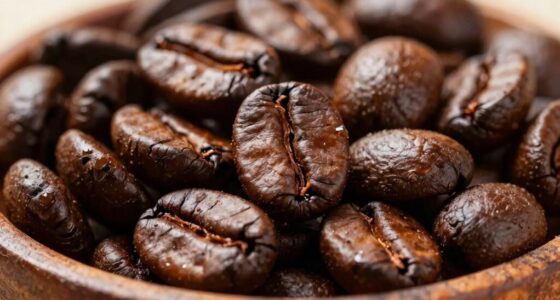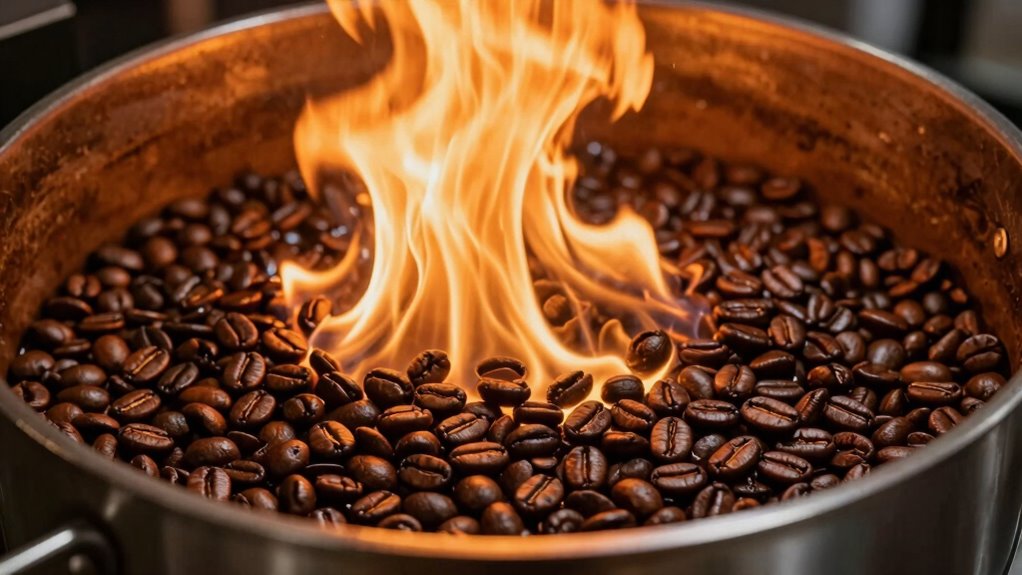

Roast development is the key behind those rich, baked flavors you love, created through precise temperature control and chemical reactions like the Maillard reaction. When heat interacts with proteins and sugars, it produces complex flavors and aromas, forming a caramelized crust with nutty and smoky notes. By managing heat stages—starting high then lowering—you can master this process for deep, flavorful results. Keep exploring this science to discover even more delicious potential.
Key Takeaways
- Maillard reactions during roasting create the rich, baked flavors by transforming amino acids and sugars under heat.
- Proper temperature control ensures the development of complex, caramelized, and roasted notes without burning.
- Initial high heat promotes rapid browning, while later lower temperatures deepen flavors and prevent surface charring.
- Resting the roasted product allows flavors to settle and enhances the baked, savory profile.
- Mastering heat management and timing optimizes flavor development, making the baked taste more pronounced and appealing.

Have you ever wondered what goes into creating the perfect roast? It’s not just about timing or temperature; a lot of the magic lies in the complex chemistry happening inside your oven. When you roast food, especially meat or vegetables, you’re triggering a series of chemical reactions that develop flavor and aroma. This process is driven by what food scientists call flavor chemistry, which involves transforming raw ingredients into rich, savory, and sometimes caramelized flavors. The key player here is the Maillard reaction, a chemical process that occurs when amino acids and sugars are exposed to heat. It’s responsible for the enticing browning on your roast’s surface and the depth of flavor that makes each bite memorable.
As your roast heats up, the Maillard reactions kick into gear, creating new compounds that produce complex flavors and appealing aromas. These reactions are not just about color; they’re about building the foundation of taste. When proteins and sugars interact under high heat, they form hundreds of new molecules—some that give off nutty, roasted, or even smoky notes, and others that contribute to the savory umami profile. The precise control of temperature and cooking time influences how extensively these reactions occur, meaning that a slight variation can dramatically change your final flavor profile. Too little heat, and the Maillard reactions won’t develop fully, resulting in a bland, underdeveloped taste. Too much heat, and you risk burning the surface before reaching the interior’s ideal doneness, producing bitter flavors and an unpleasant char.
Understanding flavor chemistry and the Maillard reactions allows you to master roast development. For example, increasing oven heat initially promotes rapid browning, but lowering it later helps develop deeper flavors without burning. Resting the roast after cooking allows the flavors to settle and ensures juices are redistributed, making every bite tender and flavorful. Proper temperature control is essential for optimizing tanning trends and flavor development during roasting. The caramelized crust you see and taste is a direct result of these chemical transformations, giving your roast that irresistible, baked character. By paying close attention to how heat influences these reactions, you can fine-tune your roasting technique to maximize flavor development. This knowledge transforms cooking from guesswork into a science, empowering you to produce consistently delicious, richly flavored roasts that showcase the magic of flavor chemistry and Maillard reactions.
Frequently Asked Questions
How Does Ambient Temperature Affect Roast Development?
Ambient temperature impacts roast development by affecting temperature stability and bean density. When the environment is warmer, it’s harder to control temperature, risking uneven roasting and baked flavors. Cooler temperatures help maintain consistent heat, allowing better control over the roast process. Bean density also plays a role; denser beans require more precise temperature management. So, keeping the ambient temperature stable guarantees your beans develop evenly without unwanted baked notes.
What Role Does Humidity Play During Roasting?
Humidity plays a vital role in roasting by influencing humidity control and moisture retention. When you control humidity levels, you help maintain consistent moisture in the beans, preventing them from drying out too quickly or becoming overly moist. This balance allows for even heat transfer, better flavor development, and prevents unwanted baked flavors. Proper humidity management ensures your roast develops complex aromas while maintaining ideal bean integrity.
Can Roast Development Be Precisely Measured?
You can’t precisely measure roast development, but you can get close by monitoring factors like bean age and equipment calibration. Some coffee professionals use data like temperature curves and time, yet variables like bean freshness influence outcomes. While tools help, sensory evaluation remains essential. Trust your senses, refine your calibration, and consider bean age to better understand roast development, even if it’s not perfectly quantifiable.
How Does Bean Origin Influence Roast Development?
Your bean origin substantially influences your roast profile because different origins have unique bean structures and moisture levels. For example, African beans might require a lighter roast to highlight bright acidity, while South American beans can handle darker roasts for richer flavors. Adjust your roast development accordingly, considering how the bean’s origin affects heat absorption and flavor development, ensuring you reveal the best potential from each unique coffee.
What Are Common Mistakes in Controlling Roast Development?
You often make mistakes by not maintaining proper temperature control, which causes uneven roast development. Inconsistent profiles can lead to baked flavors or underdeveloped beans. To avoid this, monitor your temperature closely and stick to a consistent roasting profile. Regularly adjusting your heat based on the beans’ response ensures even development. By focusing on profile consistency, you’ll enhance flavor complexity and prevent those unwanted baked notes.
Conclusion
Understanding roast development open the full potential of your coffee’s flavor. By paying attention to how your beans transform during roasting, you can craft profiles that truly stand out. Don’t overlook this hidden factor—it’s the key to turning a good brew into a great one. Remember, a little knowledge goes a long way, and once you get the hang of it, you’ll find that perfect roast is well within your reach. Keep experimenting, and you’ll see your coffee’s true colors shine through.