
The blonding point signals when your espresso’s flow begins to lighten from rich caramel to a pale, golden hue, indicating over-extraction and the risk of bitterness. It’s essential to stop as the color shifts, ensuring a balanced, flavorful shot. Pay attention to the visual cue of color change and aroma, rather than relying solely on timers. To master this subtle art, you’ll find useful tips that help you perfect your technique.

Get kitchen gear delivered free — and shop member deals
- Fast, free delivery on millions of items
- Access to Prime Big Deal Days deals on October 6–7
- Prime Video, Amazon Music and more included
Key Takeaways
- The blonding point signals the transition from proper extraction to over-extraction, marked by a color shift from caramel to pale gold.
- It indicates the optimal moment to stop extraction to avoid bitterness and preserve flavor balance.
- Visual cues include a lighter, translucent stream and lighter crema, with aroma and mouthfeel providing additional signs.
- Extraction should be halted once the espresso reaches the blonding stage, typically around 25-30 seconds.
- Recognizing blonding ensures a balanced shot with desirable sweetness and prevents over-extraction.
As an affiliate, we earn on qualifying purchases.
How to Recognize the Blonding Point During Espresso Extraction
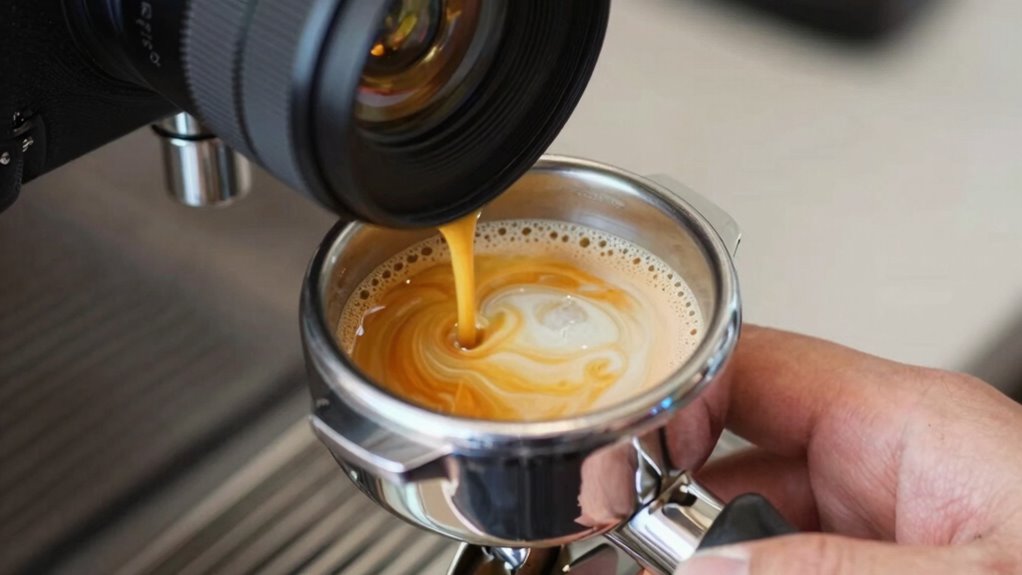
To recognize the blonding point during espresso extraction, pay close attention to the color of the stream as it flows from the spout. You’ll notice the crema formation gradually lightening from rich caramel to a pale, almost translucent hue. This change indicates the coffee’s oils and sugars are breaking down, signaling the shot is nearing its end. Temperature control plays a vital role here; maintaining the right temperature guarantees consistent extraction and clearer visual cues. As the espresso begins to blond, the flow may slow slightly, and the stream turns from dark to a lighter, golden shade. Being attentive to these visual cues helps you stop the shot at the perfect moment, avoiding over-extraction and ensuring a balanced, flavorful espresso. Additionally, understanding the blonding process can help you refine your technique for optimal results. Incorporating balanced designs into your brewing setup can also enhance your ability to observe these subtle changes, making it easier to identify the precise blonding point. Paying attention to visual cues during extraction is essential for developing a consistent brewing routine. Recognizing the extraction stage is crucial for adjusting your technique and achieving the desired flavor profile. Being aware of timing and flow rate can further improve your ability to catch the blonding point accurately.
As an affiliate, we earn on qualifying purchases.
Why the Blonding Stage Matters for Flavor and Quality
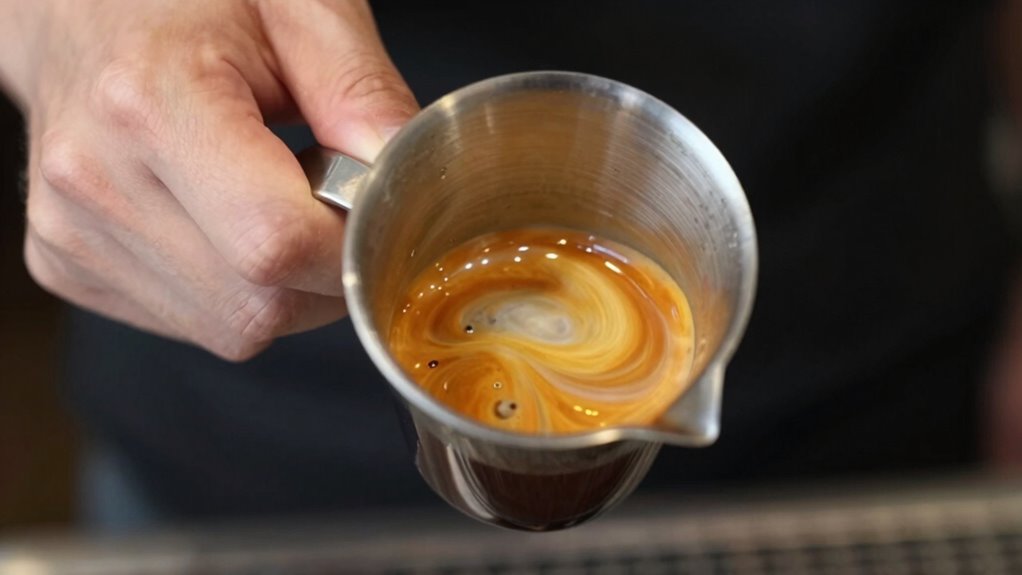
The blonding stage is crucial because it signals a shift in the espresso’s flavor profile, often indicating that the extraction is nearing its ideal point. During this phase, coffee chemistry changes as more bitter compounds and unwanted flavors begin to emerge. Recognizing this shift through sensory analysis helps you determine when the shot is reaching peak flavor. If you stop too early, you risk under-extraction, resulting in sour or weak notes. Waiting too long can lead to over-extraction, producing bitter, burnt flavors. Understanding the chemistry behind these changes enables you to fine-tune your extraction process. Paying attention to the blonding stage ensures you capture the espresso’s nuanced flavors and achieve a balanced, high-quality shot.
As an affiliate, we earn on qualifying purchases.
What the Color Shift During Blonding Indicates About Extraction

As the blonding stage begins, the espresso’s color shifts from a rich, deep brown to a lighter, golden hue, signaling important changes in extraction. This color shift reflects the evolving extraction chemistry, where the initial sweet, balanced flavors give way to more bitter, astringent notes as the brew becomes over-extracted. The changing coffee aesthetics serve as a visual cue, indicating that the solubles released are shifting from desirable to undesirable compounds. When you see this lightening, it means the extraction is progressing beyond its ideal point. Recognizing this visual cue helps you gauge whether the shot is headed toward over-extraction, which can diminish flavor quality. Understanding this color shift allows you to fine-tune your process for the best balance of taste and aesthetics. Additionally, monitoring contrast ratio can help assess the depth and clarity of the shot’s visual profile, further informing your extraction technique.
As an affiliate, we earn on qualifying purchases.
When and How to Stop Your Espresso Shot for Perfect Blonding
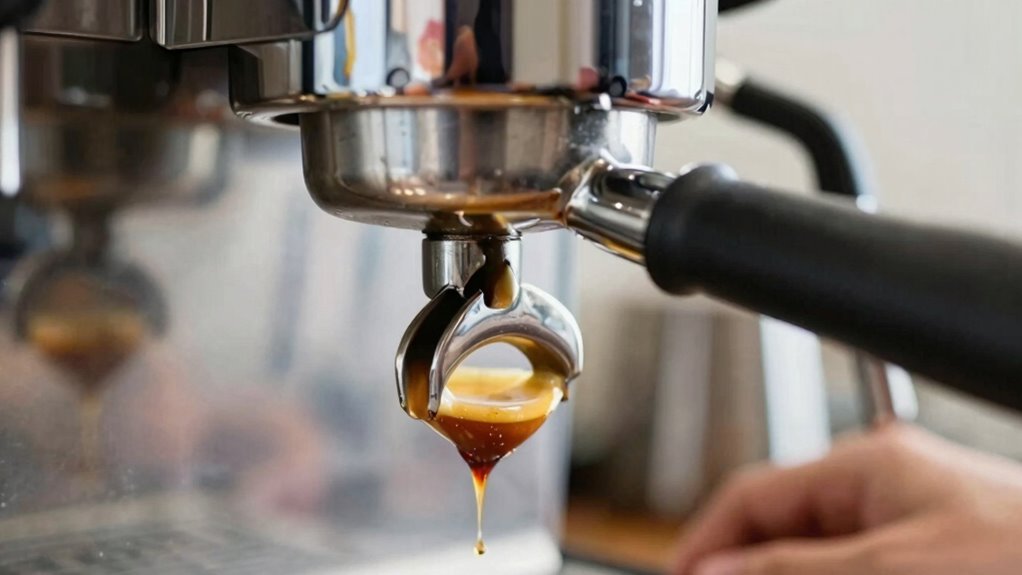
To achieve perfect blonding, you need to recognize the color change in your espresso shot and understand the right timing to stop. Keep an eye on the extraction process and adjust your grind size if the shot progresses too quickly or slowly. Mastering these cues ensures you hit that ideal point for a balanced, flavorful espresso.
Recognize Color Changes
Recognizing the color changes during extraction is crucial for achieving the perfect blonding in your espresso shot. As the shot pulls, you’ll notice a clear color shift from deep brown to a lighter, caramel hue. This visual cue signals the coffee’s flavor profile shifting, indicating the shot is nearing optimal blonding. Pay close attention to the crema; it should become slightly thinner and lighter in color. The key is to watch for these visual cues carefully—once the espresso reaches that pale, golden tone just before it turns too blonde, it’s time to stop. Acting on these color changes ensures you capture the ideal balance of sweetness and acidity without over-extracting, resulting in a smoother, more flavorful shot. Understanding the blonding process can help you consistently pull shots that highlight the coffee’s nuanced flavors. Additionally, being aware of the building herbalism skills related to coffee extraction can help refine your technique for better results.
Monitor Extraction Timings
Timing is essential when aiming for perfect blonding in your espresso shot. Monitoring extraction timings helps guarantee consistency, giving you a reliable foundation for flavor development. As you pull your shot, keep an eye on the clock, aiming for a total extraction time around 25-30 seconds, but focus on when the blonding begins. When you see the color lighten and the flow rate slows, it signals that the extraction is nearing its ideal point. Stopping too early may result in under-extraction, lacking depth, while going too long risks over-extraction, leading to bitterness. By paying close attention to these timings, you can fine-tune your process for balanced flavor and consistency every time. Proper monitoring ensures you hit that perfect blonding stage without sacrificing quality.
Adjust Grind Accordingly
Adjusting your grind size is essential for hitting the blonding point at the right moment. If your shot blondes too early, try a finer grind to increase resistance. If it takes too long, coarsen the grind for quicker extraction. Remember, tamp pressure also influences flow rate; applying consistent tamp pressure guarantees uniform extraction. Additionally, maintaining proper lifestyle habits such as stress management and adequate sleep can improve your overall coffee brewing skills. To fine-tune your shot:
- Use a finer grind if the shot blondes too quickly
- Coarsen the grind if the shot takes too long
- Maintain steady tamp pressure for even extraction
- Adjust grind size gradually for precise control
- Ensuring your equipment is properly maintained can prevent inconsistencies in extraction performance. Regularly calibrating your grinder and cleaning your espresso machine are key maintenance practices to achieving optimal results.
Common Mistakes to Avoid When Monitoring Blonding

One common mistake is ignoring visual cues, which can lead to over-extraction or under-blonding. You need to stay attentive as the shot progresses, watching for the right color and consistency. Missing these signs can compromise your espresso’s flavor and quality.
Over-Extraction Risks
While monitoring the blonding process, it’s easy to fall into the trap of over-extraction, which can lead to bitter, harsh flavors in your espresso. Over-extraction occurs when water pulls too many compounds, resulting in undesirable tastes. Be cautious of these common pitfalls:
- Continuing extraction past the blonding point, increasing the risk of a bitter aftertaste
- Ignoring subtle visual cues that indicate over-extraction
- Using too fine a grind, which prolongs extraction time
- Rushing the shot before the blonding stage is clear, risking a sour taste
Over-extracting can mask the delicate sweetness and highlight bitterness, ruining the balance. To avoid this, stop once the shot reaches the blonding point, and don’t push it further. This helps maintain a clean, nuanced espresso.
Ignoring Visual Cues
Ignoring visual cues during the blonding process is a common mistake that can easily lead to over-extraction or under-extraction. Relying solely on timer or taste ignores the importance of visual cues, which provide real-time feedback on extraction quality. Watch for changes in the color of the espresso as it approaches blonding—this indicates the coffee’s oils are beginning to emerge and the shot is nearing its ideal point. Sensory cues, like aroma and mouthfeel, also inform you when the shot is ready. By focusing only on time, you risk missing these critical signals. Paying close attention to visual cues ensures you stop the shot at the right moment, preserving flavor and preventing bitterness or weak extraction. Always stay alert to both visual and sensory cues for excellent results.
Tips to Practice and Master Recognizing the Blonding Effect

Practicing to recognize the blonding effect requires careful observation and consistency. Focus on developing a routine that emphasizes key factors like grind consistency and tamping pressure, which influence shot color and flow. To improve, try these tips:
Consistently observe grind and tamping to master the blonding effect in espresso shots.
- Adjust your grind size gradually, noting how it affects the shot’s color and timing.
- Use a consistent tamping pressure to ensure uniform extraction.
- Record your shots to compare changes and identify the blonding point more easily.
- Practice with different beans and roast levels to see how they influence the blonding effect.
Frequently Asked Questions
Does the Type of Coffee Bean Affect the Blonding Point?
Yes, the type of coffee bean affects the blonding point. Coffee bean origin and roasting level influence how quickly the shot reaches that stage. Lighter roasts or beans from specific regions might take longer to blond, signaling different extraction stages. You should pay attention to these variations to perfect your shot, as each bean type has unique characteristics that impact when and how blonding occurs.
How Does Grind Size Influence the Blonding Stage?
You might think grind size doesn’t matter, but it actually hugely impacts the blonding stage. Finer grinds slow extraction timing, causing the blonding point to appear later, while coarser grinds speed things up, making it happen sooner. Adjusting grind size helps you control extraction, ensuring you hit that perfect blonding stage at the right moment. So, experiment with your grind to master timing and get the best flavor.
Can Machine Pressure Settings Impact the Blonding Process?
Yes, machine pressure settings can impact the blonding process. Proper pressure calibration guarantees water flows consistently through the coffee, affecting extraction and color development. Regular machine maintenance keeps pressure components functioning correctly, preventing fluctuations that might cause premature or delayed blonding. You should routinely check and adjust your machine’s pressure to maintain ideal extraction, ensuring you hit the blonding point at the right time for a balanced espresso shot.
Is Blonding Consistent Across Different Espresso Machines?
Blonding is like a sunrise, but it varies across machines. You’ll find consistency depends on proper machine calibration and your barista technique. Each espresso machine has unique quirks, so you need to watch closely and adjust accordingly. Trust your senses over a fixed time. When you see the shot lighten, it’s time to stop, regardless of the machine — making your technique the true guiding star.
How Does Altitude or Humidity Affect the Blonding Timing?
Altitude adjustments and humidity effects influence blonding timing because higher altitudes lower boiling points, causing water to extract faster, so you should watch for blonding sooner. Humidity adds moisture to the environment, which can slow extraction, meaning you might need to extend brewing time slightly. Pay close attention to these factors, and adjust your timing accordingly to prevent over or under-extraction, ensuring a perfect shot every time.
Conclusion
Mastering the blonding point transforms your espresso from good to legendary—it’s like revealing a secret level of flavor perfection. By paying close attention to the color shift, you’ll avoid over- or under-extraction and craft shots that burst with clarity and depth. With practice, you’ll spot the blonding stage faster than a barista on a caffeine high. So, keep honing your skills—soon, you’ll be pulling espresso shots that rival the legendary baristas themselves!
Fall Picks
fall essentials
As an affiliate, we earn on qualifying purchases.