
Channeling happens when water finds weak spots in your coffee puck, causing uneven extraction and ruining your espresso’s flavor. It starts with issues like inconsistent grind size, uneven tamping, or poor distribution of grounds. When water flows through these channels too quickly, it leads to weak or bitter shots. To fix this, you need to understand how proper technique and equipment maintenance prevent channeling—keep studying to discover the key tips and tricks.

Get kitchen gear delivered free with Prime
- Fast, free delivery on millions of items
- Prime Video, Amazon Music and more included
- Member-only deals all year
Key Takeaways
- Channeling occurs when water bypasses the coffee bed through weak spots, leading to uneven extraction.
- It starts from inconsistent dosing, uneven tamping, improper grind size, or poor grounds distribution.
- Signs include streaks in crema, irregular flow, and uneven shot color, indicating water is following channels.
- Prevent it by using precise dosing, even distribution, consistent tamping, and regular grinder calibration.
- Regular equipment inspection and using naked portafilters help detect and address channeling early.
As an affiliate, we earn on qualifying purchases.
What Is Channeling and Why Does It Ruin Your Espresso

Channeling occurs when water finds a path of least resistance through your coffee puck instead of evenly saturating the grounds. This often happens if your precise dosing isn’t accurate or if your tamping lacks consistency. When you don’t dose the right amount or tamp unevenly, you create weak spots or channels in the coffee bed. Water then escapes through these gaps, bypassing much of the coffee, which results in under-extracted, weak, and bitter espresso. Proper dosing ensures uniform coffee density, reducing the chances of channeling. Tamping with consistent pressure compacts the grounds evenly, preventing water from seeking easier routes. Consistent tamping helps maintain an even coffee bed and minimizes channel formation. By focusing on precise dosing and tamping consistency, you minimize channel formation, leading to a more balanced, flavorful shot every time.
As an affiliate, we earn on qualifying purchases.
How to Recognize the Signs of Channeling in Your Shots
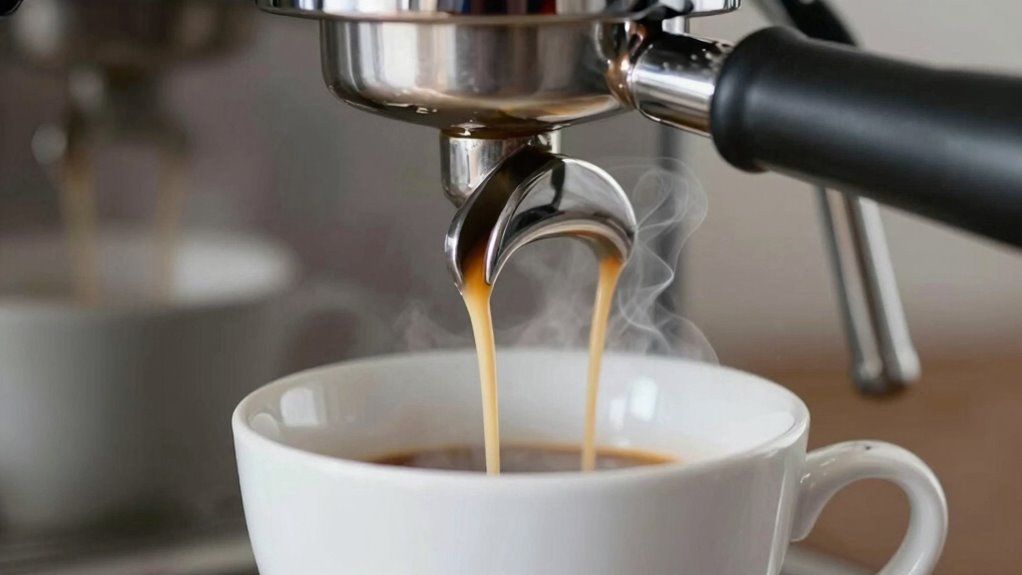
You’ll notice certain signs when channeling occurs during your espresso shot. Look for unusual discoloration in the crema, inconsistent flow rates, or a lingering bitter aftertaste. Recognizing these clues helps you identify and fix channeling before it ruins your brew. Additionally, improper tamping or uneven grind distribution can contribute to the problem, so maintaining consistent barista technique is essential for a smooth extraction.
Unusual Shot Discoloration
Unusual shot discoloration is one of the clearest signs that channeling might be occurring during extraction. When you notice uneven or strange coloration in your espresso, it’s a red flag that the water isn’t flowing evenly through the coffee bed. This can result in patches of over- or under-extraction, affecting flavor and crema. Recognizing these signs requires a keen eye, a skill cultivated through good espresso artistry and proper barista training. If your shot’s color varies markedly from the norm—such as streaks of darker or lighter hues—it suggests channeling is disrupting a smooth extraction. Addressing discoloration early helps you refine your technique and maintains the quality of your espresso. Paying attention to shot color is essential for any barista aiming for consistent, high-quality results. Incorporating connected equipment and proper training techniques can significantly improve your ability to detect and prevent channeling issues.
Inconsistent Espresso Flow
Inconsistent espresso flow is a clear indicator that something might be amiss during extraction, often signaling channeling. When you see uneven flow rates, it’s a sign that water isn’t passing through the puck evenly. This can happen if your grind consistency isn’t uniform or if tamp pressure varies. If the grind is too coarse in some spots, water will flow faster there, creating channels. Likewise, inconsistent tamp pressure can cause uneven resistance, leading to irregular flow. Pay attention to how your shot progresses; if it starts and stops unpredictably or flows unevenly, it’s a sign of channeling. Maintaining a consistent grind and applying even tamp pressure helps guarantee a steady, uniform flow, reducing the chances of channeling and improving your shot quality. Additionally, using a proper tamping technique ensures even resistance across the puck, further minimizing the risk of channeling.
Lingering Bitter Aftertaste
A lingering bitter aftertaste in your espresso often signals that channeling may be affecting your shot. When you notice this, pay attention to the coffee aroma—if it’s dull or overly harsh, it could be a sign of uneven extraction caused by channeling. Additionally, brewing temperature plays a vital role; if your shot tastes excessively bitter despite correct grind size, your machine might be running too hot or unevenly. Channeling creates inconsistent pressure, leading to over-extraction in some areas and under-extraction in others, which contributes to that unwanted bitter aftertaste. Recognizing these signs helps you identify when channeling is at play. Adjust your grind, tamping, or machine temperature to guarantee a smooth, balanced extraction and avoid that persistent bitterness. Proper machine maintenance can also prevent temperature fluctuations that contribute to channeling and bitterness.
As an affiliate, we earn on qualifying purchases.
Causes of Channeling: Grind Size, Tamping, and Distribution

Channeling often starts with issues related to grind size, tamping, and distribution because these factors directly influence how water flows through the coffee bed. If your grind is too fine or uneven, water finds easy paths, causing channeling. Tamping inconsistent pressure creates weak spots, while poor distribution leaves uneven coffee grounds. To avoid this, consider your coffee bean varieties, which affect grind consistency. Regular grinder calibration ensures uniform grind size, reducing channeling risks. Use the table below to understand common causes:
| Cause | Effect |
|---|---|
| Grind Size | Too fine or uneven causes water bypassing grounds |
| Tamping | Inconsistent pressure creates weak spots |
| Distribution | Uneven grounds lead to water channels |
| Coffee Varieties | Different beans require different grind settings |
| Grinder Calibration | Ensures uniform granularity for extraction |
Additionally, paying attention to brewing techniques can help minimize channeling issues by promoting a more even extraction.
As an affiliate, we earn on qualifying purchases.
Effects of Channeling on Extraction and Flavor

When water finds easy pathways through the coffee bed due to uneven grind size, tamping, or distribution issues, it accelerates extraction in those specific channels while leaving other areas under-extracted. This uneven extraction impacts both flavor and aroma, often resulting in a sour or bitter taste. Channeling disrupts the balance of compounds extracted, making the espresso less vibrant and more inconsistent. Additionally, brew temperature can exacerbate these effects; high temperatures may intensify over-extraction in fast-flowing channels, while lower temperatures can worsen under-extraction elsewhere. Grind uniformity is vital—irregular particles cause uneven flow paths, worsening channeling effects. Proper cleaning and maintenance of your espresso machine can help prevent buildup that contributes to uneven water flow. Ultimately, channeling compromises the overall flavor profile, making your espresso less smooth, complex, and enjoyable.
How to Prevent Channeling With Proper Dose and Distribution
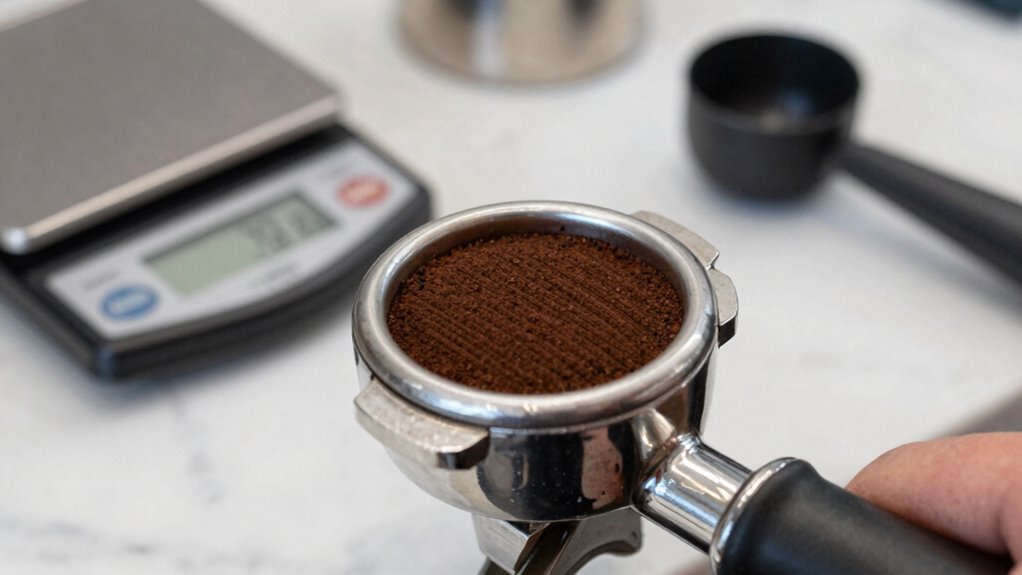
Making certain an even dose of coffee and proper distribution across the basket is essential for preventing channeling. Start by weighing your coffee to avoid under- or over-dosing, which can cause uneven extraction. Use a distribution tool or a gentle swirl to spread the grounds evenly, creating a uniform coffee bed. Proper distribution promotes consistent water flow, reducing the chances of channel formation. When steaming milk, focus on maintaining steady, even heat to support ideal espresso art—smooth crema and symmetrical patterns—indicating even extraction. A well-distributed coffee bed ensures water penetrates evenly, yielding balanced flavor. Paying attention to dose and distribution not only prevents channeling but also enhances your overall espresso quality, making every shot smoother, richer, and more enjoyable. Ensuring your grinder produces a consistent grind size is also critical for optimal extraction and avoiding channeling.
Tips for Ensuring Even Tamp Pressure and Consistent Coffee Bed

Achieving a uniform coffee bed starts with applying steady, even tamp pressure. Consistent tamp pressure ensures the coffee grounds are compressed evenly, reducing the risk of channeling. To do this, use proper distribution techniques before tamping—like a gentle swirl or leveled distribution—to create an even surface. When tamping, press down with a firm, controlled force, aiming for consistent tamp pressure each time. Avoid pressing too hard or too light, as uneven pressure can cause uneven extraction. Keep your hand steady and apply pressure in a smooth, horizontal motion. Practicing these techniques helps create a uniform coffee bed, which promotes even water flow and extraction. Remember, Consistent tamp pressure is key to brewing a balanced and flavorful espresso.
Tools and Techniques to Detect and Minimize Channeling

Detecting and minimizing channeling requires both the right tools and attentive techniques. Proper barista training helps you recognize signs of uneven extraction, such as inconsistent flow or taste. Use a flashlight or a mirror to inspect the coffee bed after tamping, checking for cracks or thin spots that indicate channeling. Equipment calibration is essential; regularly adjust your grinder to ensure consistent grind size, which reduces the chances of water bypassing the coffee. A pressure gauge on your espresso machine can help monitor extraction pressure, alerting you to irregularities. Additionally, employing a naked portafilter allows you to observe the espresso flow directly, making it easier to identify channeling early. Regularly inspecting your equipment and understanding grind consistency further enhances your ability to prevent channeling. Combining these tools with careful technique ensures a more even extraction and better espresso quality.
Troubleshooting Persistent Channeling Problems

Even after applying proper tools and techniques to prevent channeling, some issues can persist. If you notice uneven extraction or inconsistent flavors, check your coffee bean freshness first; stale beans can cause uneven grind and channeling. Next, verify your grinder calibration—an improperly calibrated grinder can produce inconsistent particle sizes, leading to uneven tamping and water flow. Adjust your grinder to ensure a uniform grind size across all doses. Also, pay attention to tamping pressure and distribution; uneven tamping often causes water to find the path of least resistance. If problems continue, consider experimenting with slight grind adjustments or re-evaluating your brewing parameters. Maintaining a consistent sleep environment and attention to these details can help eliminate stubborn channeling issues.
How Good Machine Maintenance and Fresh Coffee Reduce Channeling
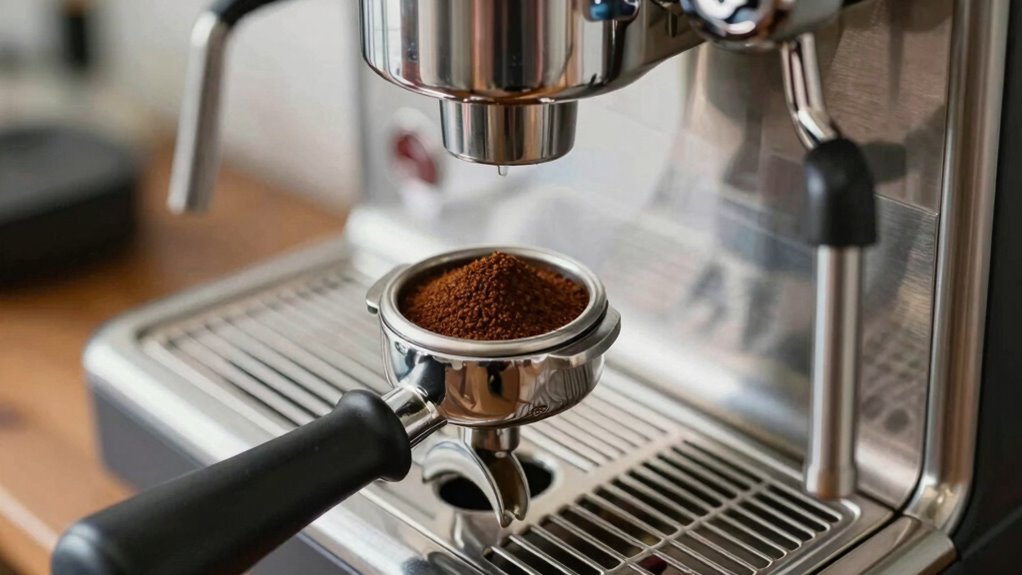
Maintaining your espresso machine and using fresh coffee beans are key steps in preventing channeling. Regular machine calibration ensures water flows evenly through the coffee bed, minimizing gaps that cause channeling. Well-maintained equipment keeps internal parts clean, preventing build-up that disrupts extraction. Fresh coffee beans contribute to a richer coffee aroma, which indicates proper freshness and quality. When beans are fresh, they have a consistent grind and moisture level, reducing uneven extraction. Proper machine calibration combined with fresh beans promotes uniform water distribution, leading to better extraction and avoiding channels. This synergy ensures your espresso pulls are even, flavorful, and free from the silent killer of espresso—channeling. Prioritize regular maintenance and fresh beans to enjoy consistently ideal espresso shots. Proper machine calibration is essential for achieving even extraction and preventing these issues from developing over time.
Frequently Asked Questions
Can Certain Coffee Beans Be More Prone to Channeling Than Others?
Yes, certain coffee beans are more prone to channeling. Beans from different bean origin and roast level affect grind size and consistency, influencing channeling chances. Light roasts tend to be denser, making them harder to extract evenly, while darker roasts are more brittle, potentially causing uneven extraction. Pay attention to bean origin and roast level, and adjust your grind and tamp accordingly to minimize channeling and improve espresso quality.
How Does Ambient Humidity Affect Channeling During Brewing?
Ambient humidity impacts your brewing by altering moisture levels in your coffee grounds. Higher humidity increases moisture, making grounds harder to evenly extract and more prone to channeling. Conversely, low humidity keeps grounds drier and easier to tamp evenly, reducing channeling risk. You should adjust your grind size or dosing based on the humidity impact to maintain consistent extraction and prevent those pesky channels from forming during brewing.
Are There Specific Tamping Techniques That Significantly Reduce Channeling?
Think of tamping as laying a sturdy foundation for your espresso. You should apply consistent tamping pressure—about 30 pounds—and use even distribution techniques, like pre-wetting or tapping the portafilter, to prevent channeling. This guarantees the water flows evenly through the coffee, giving you a rich, balanced shot. Mastering these techniques turns your brewing process into a symphony rather than a shaky performance.
Can Machine Temperature Fluctuations Influence Channeling Occurrence?
Yes, machine temperature fluctuations can influence channeling. When water temperature varies, it affects water viscosity and extraction consistency. If pressure stability isn’t maintained due to temperature swings, water may flow unevenly through the coffee, increasing the risk of channeling. To prevent this, keep your machine at a stable temperature, ensuring consistent water temperature and pressure stability, which helps produce an even extraction and reduces the chances of channeling.
What Role Does Grinder Calibration Play in Preventing Channeling?
Think of your grinder calibration as tuning a musical instrument—you want perfect harmony. When you dial in your grinder for consistency and precise grind size, you’re laying a smooth foundation that prevents channeling. Inconsistent grind size creates uneven water flow, like a bumpy road, leading to channeling. Regularly calibrate your grinder to guarantee your coffee bed is even and your espresso flows smoothly, avoiding the silent killer lurking in your brew.
Conclusion
Think of your espresso shot as a delicate bridge, where every crack and flaw can cause it to crumble. By recognizing and preventing channeling, you’re ensuring a smooth, even flow—like a well-built bridge supporting a steady passage. Keep your grind, tamp, and maintenance in check, and you’ll preserve that harmonious balance. When you do, your espresso will sing with rich flavor, unbroken and resilient, just like a masterpiece standing tall against time.
Halloween Picks
halloween
As an affiliate, we earn on qualifying purchases.