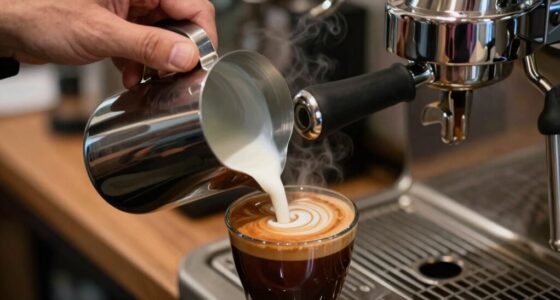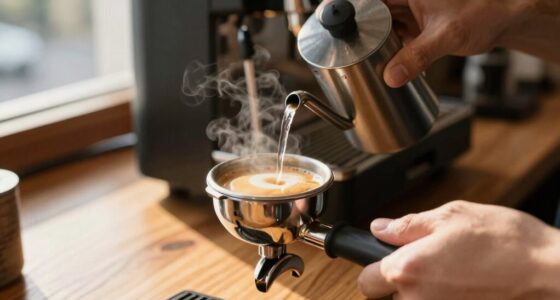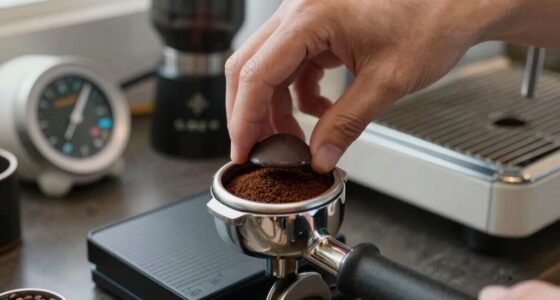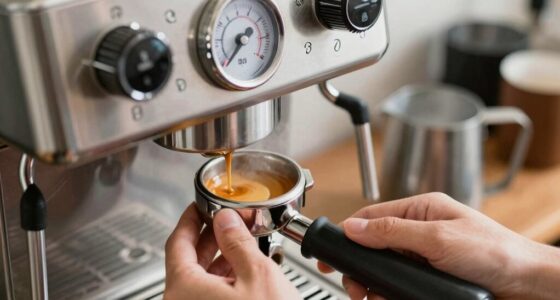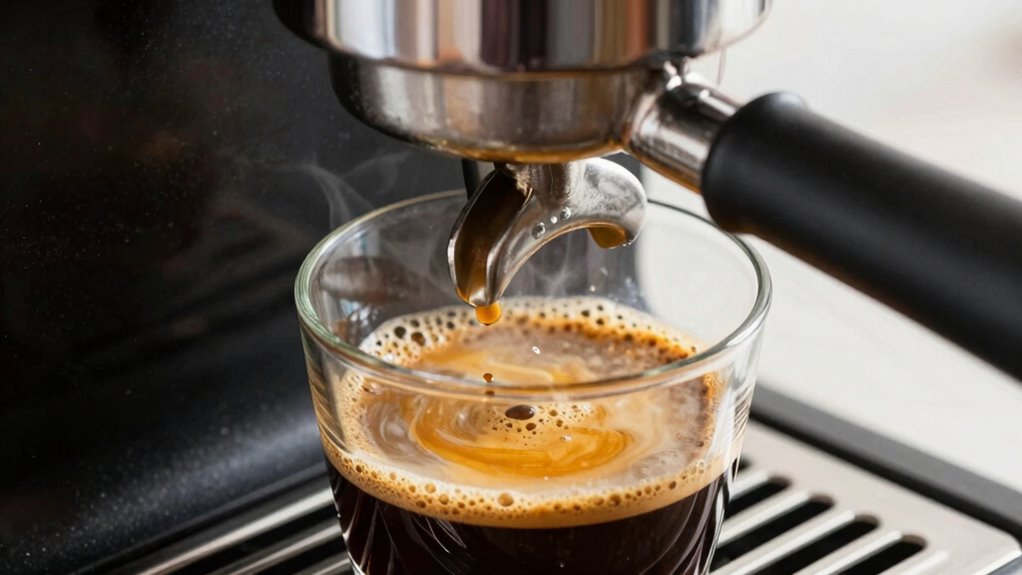
The first 10 seconds of espresso extraction are essential because they shape the shot’s flavor and balance by revealing how water first interacts with the coffee grounds. During this period, the flow rate and grind size influence which flavors get extracted, affecting sweetness, acidity, and bitterness. Getting this initial phase right guarantees a smooth, well-balanced espresso. If you want to discover how to optimize this key phase, you’ll find helpful insights if you keep exploring further.
Key Takeaways
- The first 10 seconds determine flavor balance by shaping the initial water-coffee interaction and extraction profile.
- Early flow speed influences the extraction of bright, complex flavors versus harsh, bitter notes.
- Monitoring initial extraction helps adjust grind size, brew ratio, and flow rate for optimal shot quality.
- Proper control during the initial phase ensures a balanced, well-rounded espresso with clarity and depth.
- The initial extraction curve guides baristas in fine-tuning parameters for consistent, high-quality espresso.

Understanding the espresso extraction curve is essential to brewing a perfect shot because it reveals how flavors develop over time. When you pull a shot, the way the water interacts with the coffee grounds during the first few seconds sets the tone for the entire extraction. This initial phase is critical because it influences the balance, sweetness, and overall quality of your espresso. To optimize this, you need to pay close attention to your brew ratios and grind size, which directly affect how quickly and evenly flavors are released. Recognizing the extraction profile during these first moments helps you make informed adjustments to improve your shot. Brew ratios, which compare the amount of coffee used to the amount of liquid espresso produced, are fundamental in controlling extraction. A typical ratio ranges from 1:1.5 to 1:2.5, but adjusting this ratio can influence how the coffee develops during those first seconds. A lower brew ratio, meaning less water relative to coffee, tends to produce a more concentrated shot with a richer flavor, emphasizing the initial extraction. Conversely, a higher ratio can lead to a more balanced, lighter taste but may risk over-extraction if the water flows through too quickly. The key is to find a ratio that allows the water to interact with the coffee grounds just long enough to extract the desirable flavors without pulling bitter or astringent notes. Grind size plays a pivotal role in shaping the extraction curve, especially during those initial seconds. When your grind is too fine, water struggles to flow through the coffee, causing over-extraction and a bitter taste. If it’s too coarse, water flows too quickly, leading to under-extraction and sour notes. The goal is to dial in a grind size that allows for a steady, controlled flow, enabling the water to extract the full spectrum of flavors within the first 10 seconds. This means you’ll likely need to experiment with different grind settings to find the sweet spot where the flow rate matches the desired brew ratio and extraction timing. In the first 10 seconds, your goal is to maximize the extraction of bright, complex flavors while avoiding the harshness of over-extraction. This is where the interplay between grind size and brew ratio becomes apparent. By fine-tuning these variables, you can influence how quickly the espresso begins to pour and how evenly it develops. Remember, the initial flow is a strong indicator of how well your parameters are set—if it’s too fast or too slow, it’s time to make adjustments. Paying close attention to this early phase helps you craft a shot with clarity, balance, and depth, making those first 10 seconds truly matter in perfecting your espresso.

Maestri House S2 Espresso Coffee Scale with Timer 0.1g Precision Shot Scale
- Compact and Portable Design: Fits in your palm, lightweight for travel
- High Precision Measurement: 0.1g accuracy for perfect brewing
- Multiple Units and Timer Modes: Switch between g/oz/ml and timing modes
As an affiliate, we earn on qualifying purchases.
As an affiliate, we earn on qualifying purchases.
Frequently Asked Questions
How Does Grind Size Affect the Extraction Curve?
You’ll find that grind size directly impacts the extraction curve by influencing how water flows through the coffee. Finer grinds increase resistance, leading to slower extraction and a more balanced curve, while coarser grinds speed up extraction but risk under-extraction. Maintaining grind consistency is key, as uneven particle size causes uneven extraction, making it harder to control the curve and achieve your ideal shot.
What Equipment Is Best for Monitoring Extraction in Real-Time?
You’ll want a machine with built-in pressure profiling and precise calibration features for real-time monitoring. These tools let you adjust pressure during extraction, ensuring consistency and ideal flavor. Look for espresso machines that allow you to track pressure curves live, giving you immediate feedback. Proper machine calibration is essential to maintain accuracy, helping you fine-tune your espresso process and achieve the perfect extraction every time.
Can Adjusting Tamping Pressure Improve Initial Extraction?
Yes, adjusting tamping pressure can significantly improve initial extraction. When you focus on tamping consistency and pressure calibration, you control the espresso’s foundation, ensuring even water flow right from the start. Think of it as a secret weapon—tiny tweaks in tamping pressure can reveal a smoother, richer shot. By mastering your tamping, you make those critical first seconds count, resulting in a perfect extraction every time.
How Does Ambient Temperature Influence the Extraction Process?
Ambient impact and temperature effects can markedly influence your espresso extraction. Warmer surroundings help maintain consistent water temperature, ensuring even extraction and richer flavors. Conversely, cooler environments may cause your brew to be under-extracted, resulting in sour or weak shots. To optimize your results, keep your equipment in a stable, controlled temperature setting, and be mindful of ambient temperature changes that could alter your espresso’s taste and extraction quality.
Are There Differences in the Extraction Curve for Different Coffee Beans?
You’ll find that different coffee beans produce distinct extraction curves, affecting flavor consistency and freshness. Bean variety and roast level influence the rate at which flavors flow, so some beans extract quickly while others take longer. Pay attention to these differences, as they impact your brew’s balance and brightness. Adjust your grind size and extraction time accordingly to maximize flavor and maintain freshness, ensuring each shot is sensational.
Maestri House S2 Espresso Coffee Scale with Timer 0.1g Precision Shot Scale
- Compact and Portable Design: Fits in your palm, lightweight for travel
- High Precision Measurement: 0.1g accuracy for perfect brewing
- Multiple Units and Timer Modes: Switch between g/oz/ml and timing modes
As an affiliate, we earn on qualifying purchases.
As an affiliate, we earn on qualifying purchases.
Conclusion
Remember, the first 10 seconds of your espresso extraction are essential because they set the foundation for flavor and body. Some experts suggest that this initial phase captures the most complex compounds, shaping the final taste. If you pay close attention during this window, you might just reveal richer, more balanced shots. So, don’t underestimate those early seconds—they truly matter, and mastering them could elevate your espresso game considerably.

Apexstone Coffee Stirrer Tool, Coffee Stirring Tamper WDT Distribution Tool, Needle Distribution Tool Espresso, WDT Tool Espresso with Stand Black, WDT Tool Espresso Needle
- Material: 304 stainless steel needles
- Needle Diameter: 0.3 mm
- Adjustable Pins: Includes extra pins for customization
As an affiliate, we earn on qualifying purchases.
As an affiliate, we earn on qualifying purchases.
As an affiliate, we earn on qualifying purchases.