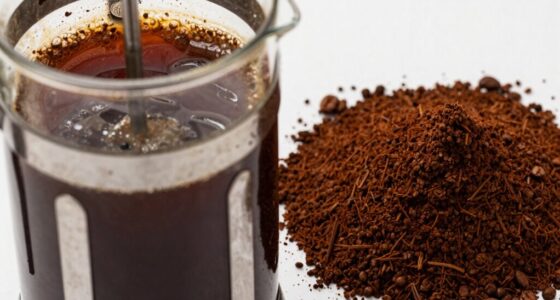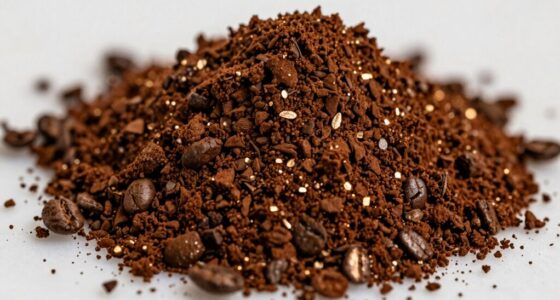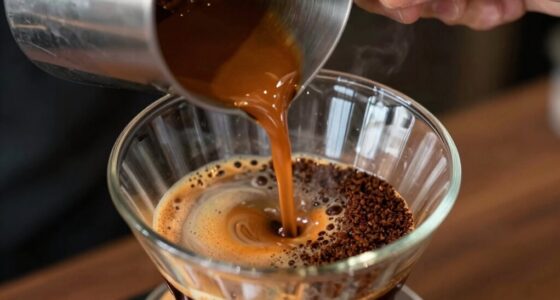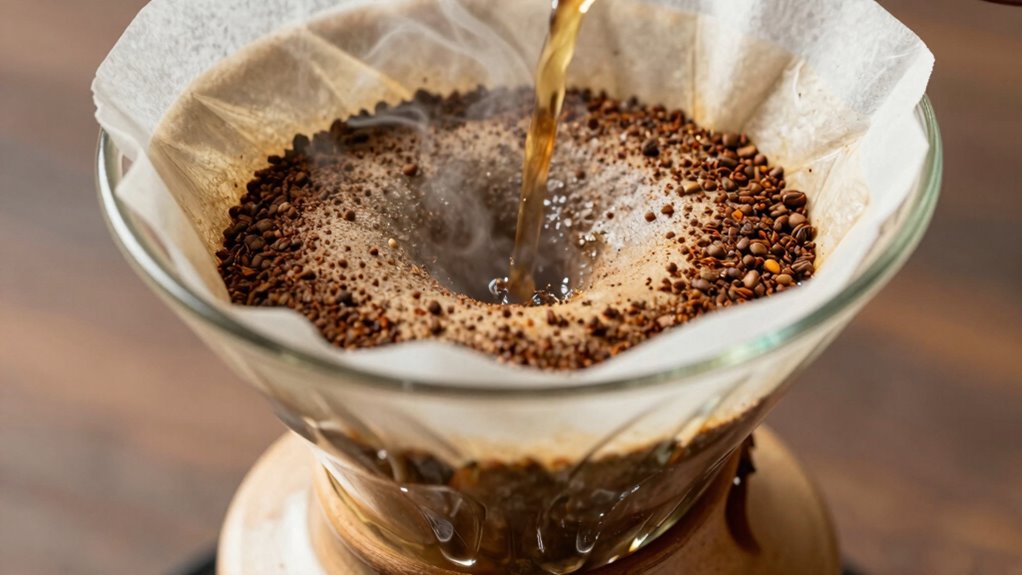
Using just a “slightly coarser” grind for your Chemex isn’t enough because extraction depends on more than grind size alone. Factors like brewing temperature and bean freshness play a big role in flavor. Too fine or too coarse a grind can result in weak, bitter, or flat coffee. To truly optimize your brew, you need to adjust grind size based on these variables. Keep going, and you’ll learn how to fine-tune your perfect cup.

Get kitchen gear delivered free with Prime
- Fast, free delivery on millions of items
- Prime Video, Amazon Music and more included
- Member-only deals all year
Key Takeaways
- Grind size must be tailored to brewing temperature and bean freshness, not just a fixed “slightly coarser” setting.
- Proper extraction depends on balancing grind size with water temperature to prevent under- or over-extraction.
- Fresh beans may require a finer grind, while older beans benefit from coarser to avoid bitterness.
- Relying solely on a preset “slightly coarser” setting ignores variables like brew time and bean condition.
- Adjusting grind size based on specific brewing parameters ensures a more flavorful, balanced Chemex cup.

Choosing the right grind size for your Chemex is essential to brewing a perfect cup of coffee. If your grind is too fine or too coarse, it can throw off the extraction process, resulting in weak, bitter, or overly bitter flavors. But simply settling on a “slightly coarser” grind isn’t enough. You need to understand how factors like brewing temperature and coffee bean freshness influence the ideal grind size.
Choosing the right Chemex grind depends on temperature and bean freshness, not just a fixed coarseness.
When you’re brewing with a Chemex, the brewing temperature plays a critical role in how your coffee extracts. Ideally, you want your water to be between 195°F and 205°F. If your water is too hot, even a slightly coarser grind can lead to over-extraction, pulling out bitter compounds. Conversely, if it’s too cool, your coffee may end up under-extracted, tasting flat or sour. The grind size must complement your brewing temperature to guarantee proper extraction. A coarser grind allows water to flow more freely, reducing contact time, which helps prevent over-extraction when your water is at the higher end of the temperature range. On the other hand, if your water temperature is lower, a slightly finer grind might be necessary to improve extraction without risking bitterness. Additionally, understanding how extraction works can help you better tailor your grind and brewing parameters for optimal flavor.
Coffee bean freshness also impacts how you should adjust your grind size. Fresh beans tend to have higher moisture content and more volatile oils, which can make them more resistant to extraction. If your beans are very fresh, you might find that a slightly finer grind results in better flavor extraction without bitterness. But if your beans have been sitting for a while, their oils and solubles start to deteriorate, and a coarser grind can help mitigate over-extraction. Essentially, fresher beans might require a finer grind to unlock their full flavor potential, while older beans may benefit from a coarser setting to avoid bitterness and over-extraction.
Simply sticking to a “slightly coarser” grind is a common misconception. Instead, pay attention to the specific variables at play—your brewing temperature and coffee bean freshness—and adjust your grind accordingly. This approach guarantees you’re optimizing extraction, flavor, and clarity. Remember, the perfect cup isn’t just about the grind size in isolation; it’s about how it interacts with your brewing conditions. When you fine-tune both, you’ll consistently brew a clean, balanced Chemex coffee that highlights the nuanced flavors of your beans.
As an affiliate, we earn on qualifying purchases.
Frequently Asked Questions
How Does Grind Size Affect Extraction Time in Chemex Brewing?
You’ll notice that grind size directly impacts your brew time because finer particles create more surface area, leading to faster extraction. Conversely, coarser grind results in longer brew times, as water flows through more slowly. If your grind is too coarse, it might under-extract, making your coffee weak. Adjust particle size carefully to control extraction time, ensuring your Chemex produces a balanced, flavorful brew without over- or under-extracting.
Can the Wrong Grind Size Cause Over-Extraction or Under-Extraction?
Yes, using the wrong coffee particle size can cause over-extraction or under-extraction by affecting brew time. If your coffee particles are too fine, water takes longer to pass through, leading to over-extraction and a bitter taste. Conversely, too coarse a grind results in quick brew time, under-extraction, and a weak flavor. Adjusting your grind size guarantees ideal extraction, balancing flavors for a better Chemex brew.
What Are the Signs of Using an Incorrect Chemex Grind?
Imagine your Chemex brew drips like a sluggish river or rushes through like a rapid. If your grind is off, you’ll notice longer brew times or too quick flows, affecting flavor. Sediment might clog your filter, leaving cloudy cups, or your coffee could taste bitter or flat. These signs point to an incorrect grind size—so tune it just right for smooth, balanced pours every time.
How Often Should I Adjust My Grind Size for Consistent Results?
You should adjust your grind size every few brews to maintain consistent results, especially if you notice changes in flavor or extraction time. Keep an eye on your brew method, as different variables can affect the grind needed. Regular grinder calibration helps, so fine-tune it as needed to keep your Chemex grind just right. This guarantees your coffee stays balanced and flavorful with each brew.
Does Grind Size Impact the Flavor Profile of My Chemex Coffee?
Think of your grind size as the paintbrush for your coffee’s flavor. Yes, it impacts the flavor nuances and body enhancement you experience. A finer grind can intensify the richness, while a coarser one reveals brighter notes. Adjusting grind size controls extraction, shaping your coffee’s profile. By fine-tuning it, you craft a balanced cup that highlights the specific flavors you love, making every brew uniquely yours.
coffee brewing temperature thermometer
As an affiliate, we earn on qualifying purchases.
As an affiliate, we earn on qualifying purchases.
Conclusion
Remember, settling for just “slightly coarser” is like trying to tame a wild river with a gentle stream—ineffective. To reveal the full flavor and clarity of your Chemex brew, you need a grind size that dances just right between too fine and too coarse. Think of it as tuning a delicate instrument—small adjustments make all the difference. So, don’t settle for vague answers; fine-tune your grind and let your coffee truly shine.
As an affiliate, we earn on qualifying purchases.
As an affiliate, we earn on qualifying purchases.
Halloween Picks
halloween
As an affiliate, we earn on qualifying purchases.