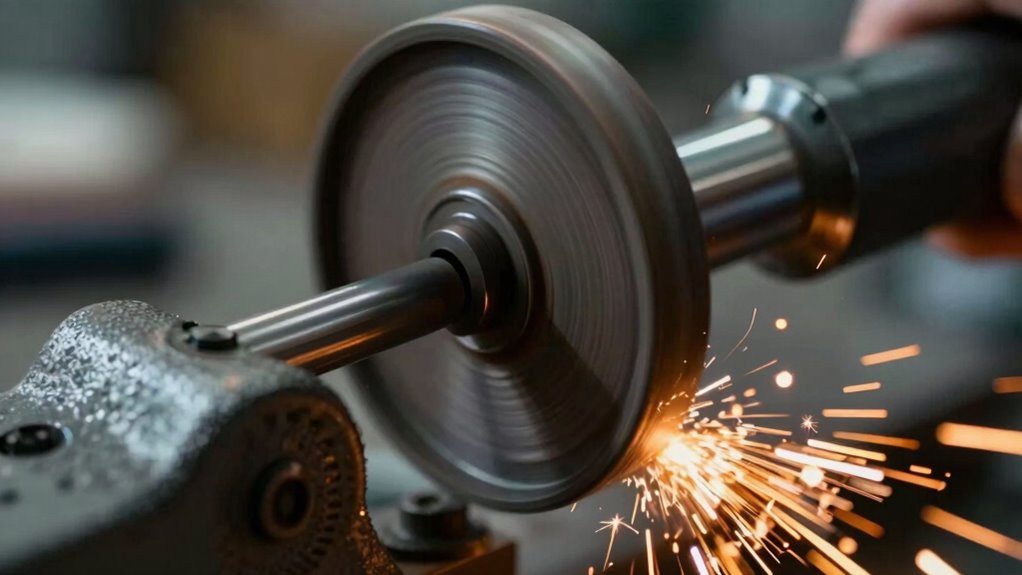
Your grinder’s RPM shows how fast the disc spins, but it doesn’t tell you how well the tool performs overall. A high RPM can mean faster grinding, but it may also cause heat buildup and uneven results if the motor isn’t strong enough. Motor quality and design play a big role in maintaining consistent speed and efficiency. To get the best results, it’s essential to take into account both RPM and motor performance—more details await if you keep exploring.

Get kitchen gear delivered free with Prime
- Fast, free delivery on millions of items
- Prime Video, Amazon Music and more included
- Member-only deals all year
Key Takeaways
- RPM indicates speed but doesn’t reflect motor strength or grinding efficiency.
- High RPM can cause heat buildup and uneven results without a powerful motor.
- Motor performance determines if high RPM can be maintained under load.
- Different tasks require specific RPM ranges for optimal results, not just maximum speed.
- Effective grinding depends on both RPM and motor quality, not RPM alone.
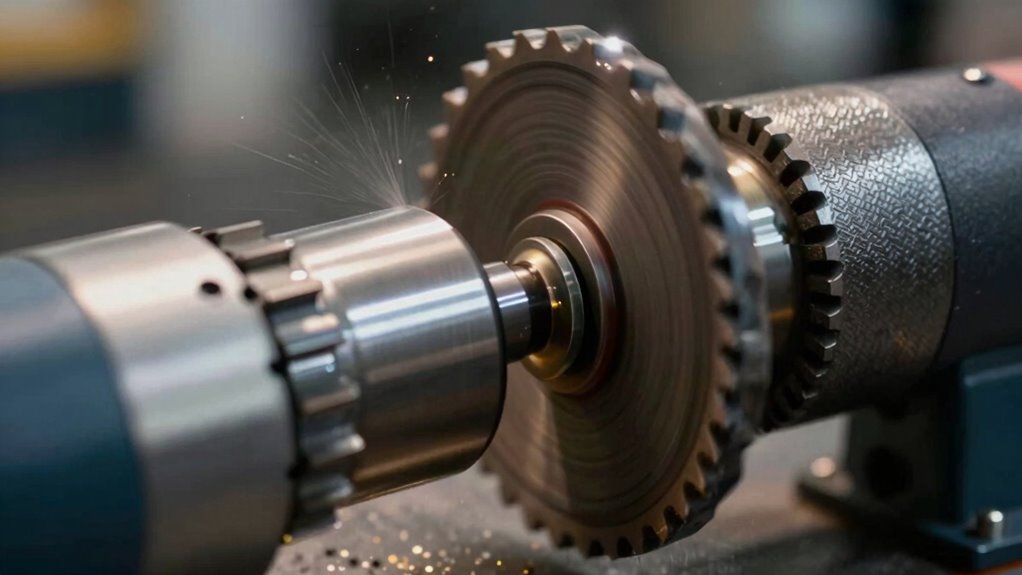
Have you ever wondered what the RPM on a grinder really means? It’s tempting to see a high RPM number and assume faster is better, but the reality is more nuanced. RPM, or revolutions per minute, indicates how quickly the grinder’s disc spins, but it doesn’t tell you the full story about its grinding efficiency or motor performance. When choosing a grinder, understanding this number helps you make smarter decisions about how well it will perform for your specific tasks.
RPM shows how fast a grinder’s disc spins but doesn’t reveal its overall efficiency or motor quality.
A higher RPM often suggests a faster grinding process, but it doesn’t automatically mean you’ll achieve better results. If the motor isn’t designed to handle increased speeds efficiently, you might face issues like excessive heat, uneven grinding, or quicker wear on the grinding wheel. This can reduce the overall grinding efficiency, making your work more time-consuming and less precise. Conversely, a grinder with a lower RPM but better motor performance can deliver more consistent results, especially for delicate or detailed work. The key is balancing speed with the motor’s ability to maintain steady, reliable power without overheating or bogging down under load.
Motor performance plays a crucial role in how the RPM translates into actual grinding power. A robust motor can sustain high RPMs without losing torque or overheating, resulting in smooth, efficient grinding. When the motor is underpowered or poorly designed, even a high RPM setting becomes less meaningful because the grinder can’t maintain that speed during heavy-duty tasks. Instead, it stalls or slows down, reducing grinding efficiency. This is why the specs sheet alone can be misleading—without considering the motor’s capacity and quality, you might end up with a tool that’s fast on paper but underperforms in practice. Motor capacity is an essential factor to evaluate alongside RPM for a comprehensive understanding.
Moreover, the intended application influences how you should interpret RPM. For example, cutting or rough grinding might benefit from higher RPMs for quick material removal, but finishing or polishing tasks require slower, more controlled speeds to prevent damage. Knowing how RPM interacts with motor performance allows you to choose a grinder that aligns with your specific needs, ensuring you’re not just chasing numbers but maximizing efficiency and results. Additionally, considering grinding efficiency can help you better match the tool to your work, saving time and improving outcome quality. Selecting a grinder with the right balance of RPM and motor strength can extend the tool’s lifespan and ensure consistent performance over time.
Understanding the relationship between RPM and motor performance can help you select a grinder that maintains consistent power and efficiency over time. In short, RPM isn’t just a spec sheet number—it’s a piece of a bigger puzzle involving motor performance, grinding efficiency, and your particular application. Don’t get caught up in the speed alone; instead, look at how well the motor can sustain that speed and how it impacts your work quality. Recognizing the importance of motor design in this context can lead to smarter purchasing decisions and better overall results. Understanding this connection helps you pick the right grinder for the task, ultimately improving your workflow and outcomes.
As an affiliate, we earn on qualifying purchases.
Frequently Asked Questions
How Does RPM Affect Grinding Efficiency?
Higher RPM can boost your grinding efficiency by increasing the speed at which beans are ground, leading to finer, more consistent results. However, if RPM is too high, it may reduce grinding consistency and cause overheating, potentially shortening your motor’s lifespan. You need to find a balance that maximizes grinding efficiency without compromising the motor’s durability or the quality of your grind.
Can Higher RPM Damage the Grinder?
Higher RPM can damage your grinder if you overlook proper maintenance and safety precautions. Excessive speed causes more wear and tear, risking overheating or component failure. To prevent this, regularly check your grinder, follow manufacturer guidelines, and avoid pushing it beyond recommended RPM. Implementing proper grinder maintenance and safety measures guarantees longevity, safe operation, and consistent performance, protecting both your equipment and personal safety during use.
Is RPM Consistent Across Different Grinder Models?
RPM isn’t consistent across different grinder models because each design prioritizes different aspects like grinder durability and motor efficiency. Higher RPMs may wear out parts faster, increasing maintenance frequency. You should consider how the grinder’s build quality and intended use affect RPM stability. Regular maintenance helps sustain performance, especially in models with higher RPMs. Always match the grinder’s RPM with its purpose to avoid unnecessary wear and guarantee longevity.
How Does RPM Influence the Quality of the Grind?
Think of grinder RPM like a chef’s knife speed—faster or slower, it shapes the outcome. Higher RPM can produce a consistent grind size, enhancing flavor extraction, but too fast might heat the beans and dull flavor. A balanced RPM ensures you get the right grind size, revealing the beans’ full potential for rich flavor and aroma. Ultimately, RPM directly impacts your brew’s quality and taste.
What’s the Ideal RPM for Specific Materials?
The ideal RPM depends on your material compatibility; for softer materials, lower speeds around 10,000 RPM work best, while harder materials benefit from higher speeds up to 20,000 RPM. Always consider safety considerations, ensuring the grinder’s RPM matches the tool’s specifications to prevent accidents. Adjust RPM carefully, and consult manufacturer guidelines to optimize performance without compromising safety or material integrity.
professional grinding machine with motor quality
As an affiliate, we earn on qualifying purchases.
As an affiliate, we earn on qualifying purchases.
Conclusion
Remember, that shiny number on the spec sheet isn’t just a digit—think of it as the engine’s heartbeat, not the entire ride. When you’re wielding that grinder, it’s like steering a speeding train, where RPM is just one part of the journey. The real magic happens with how you control it, the materials you tackle, and your skill. So, don’t just chase the numbers—feel the rhythm, and master the art of grinding.
As an affiliate, we earn on qualifying purchases.
heavy-duty grinder for metalworking
As an affiliate, we earn on qualifying purchases.
As an affiliate, we earn on qualifying purchases.
Fall Picks
fall essentials
As an affiliate, we earn on qualifying purchases.