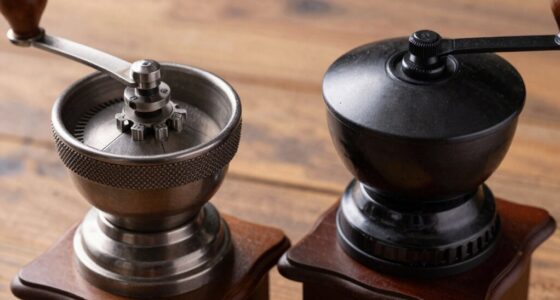
When you grind light roasts, your grinder sounds different because these beans are denser and contain more moisture, making them more resistant to grinding. This resistance causes the grinder to work harder, producing higher-pitched noises and altered rhythms. The increased cohesion and density lead to a strain on the grinder, affecting the noise profile and grind consistency. Keep going, and you’ll find out how to adjust your process for a smoother, quieter grind.

Get kitchen gear delivered free with Prime
- Fast, free delivery on millions of items
- Prime Video, Amazon Music and more included
- Member-only deals all year
Key Takeaways
- Light roasts are denser and retain more moisture, increasing resistance and causing higher-pitched, strained grinder sounds.
- Fresh, light roasts are firmer and more cohesive, leading to more resistance during grinding and a different noise profile.
- Higher density and moisture content in light roasts make the beans harder to grind finely, affecting sound and grind consistency.
- Finer grounds from light roasts create more resistance within burrs, resulting in increased noise and strain.
- Changes in grind size or regular grinder maintenance can help manage sound differences caused by light roast properties.
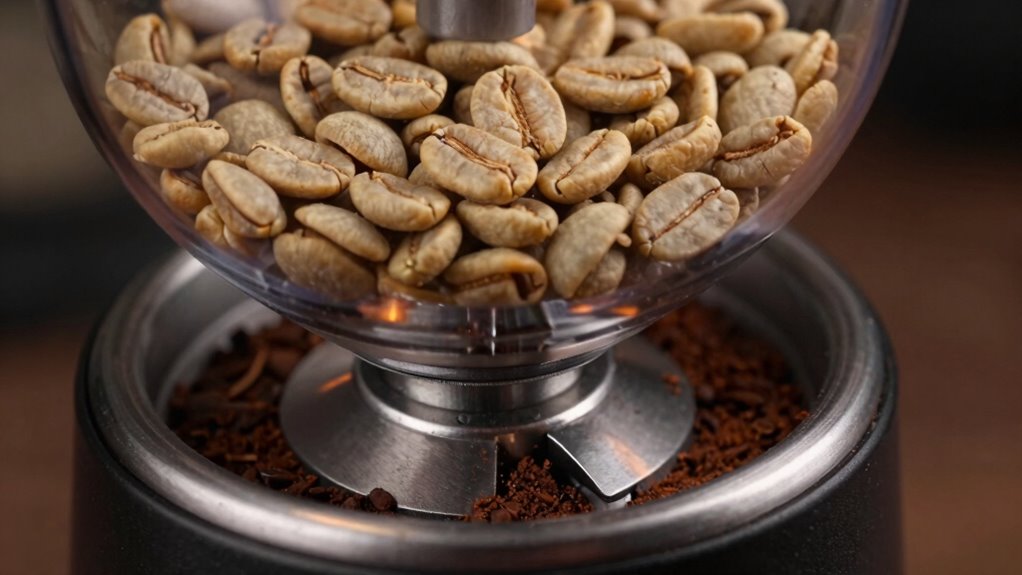
If you’ve noticed that your grinder sounds different when you’re preparing light roasts, you’re not imagining it. The change in sound is directly linked to the unique properties of light roasted beans and how they interact with your grinder. Light roasts tend to be denser and retain more of the bean’s original moisture and structure, which can make the grinding process feel noticeably different. This altered grinding dynamic impacts your ability to achieve consistent brew results, especially if you’re aiming for ideal brew consistency every time.
One major factor influencing this change is bean freshness. Light roasts are typically fresher because they’re often used sooner after roasting to preserve their delicate flavors. Fresh beans are firmer and more resilient, which means they resist the grinding process differently than darker, more aged beans. As a result, you might hear a higher-pitched noise or a different grinding rhythm because the beans require more force to break down, or they tend to clog the burrs more quickly. This can cause your grinder to work harder, leading to increased noise levels or a different sound profile altogether.
Fresh, light roasted beans are firmer and resist grinding, causing higher-pitched noises and increased grinder effort.
The increased density and moisture content of fresh, light roasted beans also influence how they break apart during grinding. When beans are fresh, they haven’t lost much of their moisture, making them more cohesive and resistant to being ground finely. This resistance can cause your grinder to produce an uneven grind, which directly affects brew consistency. If your grind isn’t uniform, your coffee extraction will be inconsistent, leading to a less balanced cup. The sound your grinder makes during this process can serve as an early indicator that your beans are fresh and that adjustments may be needed to maintain the best consistency. Additionally, bean density plays a crucial role in how the beans respond during grinding, further affecting the noise and grind quality. Recognizing the importance of grind size** helps in understanding how to adapt your process for optimal results. Using the right grind settings tailored for light roasts can also help prevent common issues like clogging and uneven extraction. Moreover, understanding how moisture content** influences grinding can help you select the best techniques for different roasts.
Furthermore, the finer grind often needed for light roasts can also contribute to the different sounds. Finer grounds create more resistance within the burrs, which can make the grinder sound more strained or high-pitched. If you’re noticing this, it’s a sign that you might need to tweak your grinder settings or clean your burrs to maximize performance. Regular maintenance becomes even more critical when working with fresh, light roasts since their density and moisture content tend to cause more buildup or clogging. Properly adjusting your grind size or using appropriate grinder settings can help mitigate these issues and improve consistency.
In essence, the way your grinder sounds on light roasts is a reflection of the beans’ freshness, density, and the grind size you’re aiming for. Recognizing these differences helps you fine-tune your process, ensuring you maintain the brew consistency you desire, no matter the roast level.
coffee grinder for light roast beans
As an affiliate, we earn on qualifying purchases.
As an affiliate, we earn on qualifying purchases.
Frequently Asked Questions
Can Grind Size Affect the Noise Level for Light Roasts?
Yes, grind size can affect the noise level for light roasts. When you adjust to a finer grind for light roasts, your grinder works harder, generating more noise due to increased resistance. Poor grind consistency can also cause irregular sounds. Regular machine maintenance, like cleaning burrs and blades, guarantees smooth operation, reducing noise and maintaining consistent grind quality. Properly maintained equipment helps you achieve the desired grind size without extra noise.
Do Different Grinder Brands Produce Varying Sounds With Light Roasts?
Your grinder brands definitely produce different sounds with light roasts—some sound like a jet engine, others more like a whisper. This variation impacts flavor extraction because some grinders are built for durability and smooth operation, reducing noise and preserving bean quality. Higher-quality brands often have better construction, ensuring consistent grind size and ideal flavor. So, choose wisely; your grinder’s sound can reveal its ability to reveal the best taste from light roasts.
How Does Moisture Content in Light Roasts Influence Grinder Noise?
Moisture variability in light roasts affects your grinder’s noise because wetter beans increase resistance during grinding, making it louder. The higher bean density in light roasts also contributes, as denser beans require more force to grind. When moisture content fluctuates, it changes how the beans break apart, leading to inconsistent sounds. So, both moisture variability and bean density influence your grinder’s noise levels with light roasts.
Is There a Way to Reduce Noise When Grinding Light Roasts?
To reduce noise when grinding light roasts, focus on maintaining your grinder regularly and ensuring ideal coffee freshness. Clean your grinder blades and burrs often to prevent buildup, which can cause louder operation. Using a burr grinder instead of blade grinders can also minimize sound. Additionally, grinding in a quieter environment and adjusting grind size to avoid overworking the motor helps. Proper grinder maintenance and fresh coffee help make the process quieter and more efficient.
Do Burr and Blade Grinders Sound Differently With Light Roasts?
Burr grinders tend to sound steadier with light roasts, like a calm river, thanks to their consistent grind size, which helps preserve flavor. Blade grinders, however, produce a more erratic noise, like a storm, affecting grind consistency. This difference impacts flavor preservation, as burrs offer a more uniform grind that extracts flavors evenly. So, your grinder’s sound reflects its ability to maintain grind consistency and preserve the delicate flavors of light roasts.
As an affiliate, we earn on qualifying purchases.
Conclusion
Ever notice how your grinder sounds different with light roasts? It’s all about the beans’ density and moisture content, which change how the grinder’s burrs interact. Next time you brew, ask yourself: does the noise tell me something about the beans I’m using? Recognizing these subtle differences can help you fine-tune your grind for the perfect brew every time. So, are you listening closely to your grinder’s sounds?
As an affiliate, we earn on qualifying purchases.
As an affiliate, we earn on qualifying purchases.
Halloween Picks
halloween
As an affiliate, we earn on qualifying purchases.