Over time, your coffee grinder burrs wear down, leading to inconsistent grind size and flavor. Signs include increased residue buildup, dull or chipped edges, strange noises, and uneven grounds. You might notice a decline in brew quality or difficulty cleaning the burrs. Regular visual checks help detect damage early, and replacing burrs when grind consistency drops will restore performance. Keep exploring to learn effective ways to extend their lifespan and maintain perfect grinding.
Key Takeaways
- Inconsistent grind size and uneven extraction indicate burr dullness or wear.
- Increased noise, vibration, or static during grinding signals declining burr sharpness.
- Visible signs like rounded edges, chips, cracks, or residue buildup suggest wear.
- Changes in flavor, such as off-tastes or bitterness, point to worn or damaged burrs.
- Difficulty cleaning or persistent residue indicates burr deterioration and potential need for replacement.
How Do Coffee Grinder Burrs Wear Down Over Time?

As you use your coffee grinder regularly, the burrs naturally start to wear down. The type of burr material you have plays a significant role in how quickly this happens. Ceramic burrs tend to resist wear longer than metal ones, but both materials gradually dull over time. As the burrs wear, you’ll notice a decline in grinding consistency—your coffee grounds may become uneven or too coarse. This inconsistency affects extraction and flavor, making it harder to achieve your perfect brew. The wear process is gradual, often taking months or years depending on use and material quality. Regular maintenance and understanding how burrs wear help you know when it’s time to replace or service them, ensuring your coffee remains flavorful and your grinder performs best. Proper maintenance practices can extend the lifespan of your burrs and improve overall grinding performance. Additionally, being aware of burr material durability can help you choose the right grinder or replacement parts to maximize longevity and prevent premature burr degradation.
What Are the Common Signs Your Burrs Are Worn Out?
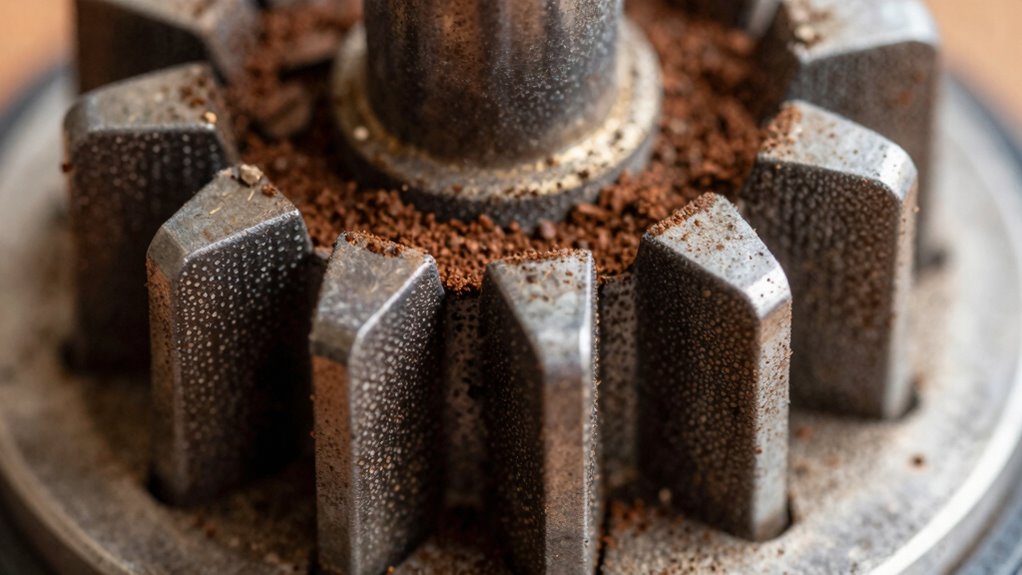
When your coffee grinder’s burrs start to wear out, you’ll likely notice changes in the quality of your grounds. One common sign is inconsistent grind size, which affects extraction and flavor. You might also see a reduction in grind sharpness, especially if your burr material is prone to dulling over time. Another indicator is increased grinder noise or vibration, signaling that your burrs aren’t functioning smoothly. Poor grind consistency can also lead to uneven extraction, impacting your brew. Regular grinder maintenance becomes essential at this stage, as neglecting burr wear can accelerate damage. If you notice these signs, it’s time to contemplate replacing or sharpening your burrs to restore ideal performance and guarantee your coffee continues to taste its best. Additionally, paying attention to wear indicators can help you determine the optimal time for maintenance before performance declines significantly. Recognizing the natural deterioration process helps you plan timely replacements and maintain the quality of your coffee. Furthermore, understanding burr material properties can assist in selecting the right replacement parts for your specific grinder model. Being aware of features like burr design can also influence how long your burrs last before needing replacement. Proper cleaning and routine maintenance play a crucial role in extending the lifespan of your burrs and ensuring consistent grind quality.
How Can You Visually Check for Burr Damage or Dull Edges?
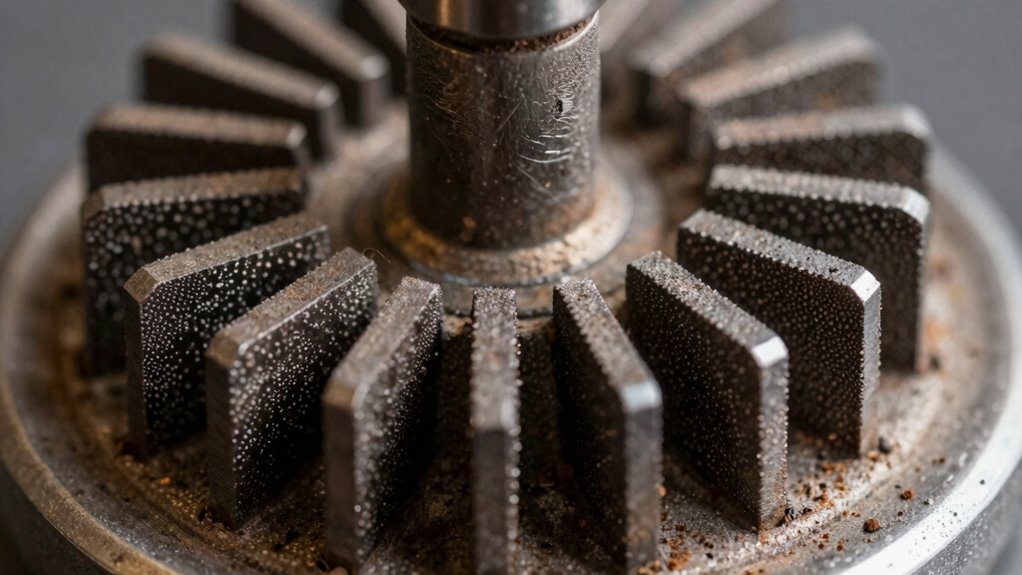
To spot burr damage or dull edges, start by checking if the edges still feel sharp to the touch. Look closely for any chipping, cracks, or other visible flaws on the burr surface. Also, examine the surface condition for signs of wear or unevenness that could affect performance.
Check Burr Edge Sharpness
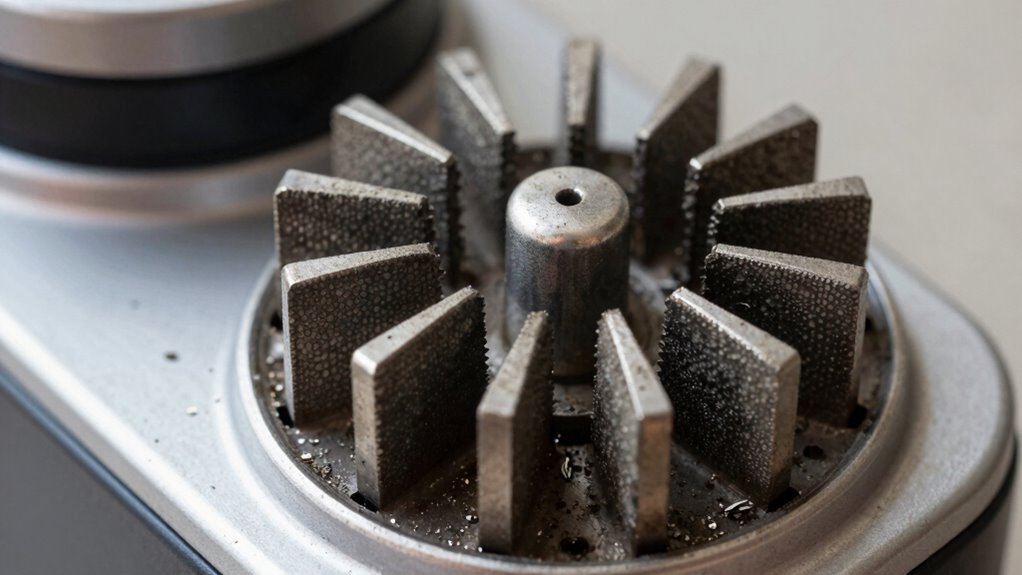
Visually inspecting your burr edges is a straightforward way to determine if they’re dull or damaged. Look closely at the edges for signs of wear or dullness, as these affect burr edge sharpness and grind consistency. Dull or chipped edges may appear rounded or uneven. Use the table below to guide your inspection:
| Sharp Edges | Dull or Chipped Edges | Uneven Edges |
|---|---|---|
| Clean, crisp edge | Rounded or chipped | Irregular or jagged |
| Reflects light evenly | No shine or dull | Asymmetrical surface |
| Consistent grind | Variable grind quality | Uneven burr surface |
Regular visual checks help maintain optimal performance and prevent inconsistent grinds, ensuring you get fresh grounds every time. Additionally, understanding burr maintenance can extend the lifespan of your burrs and improve your coffee quality. Being aware of wear indicators can also help you schedule timely replacements before performance declines.
Inspect for Chipping or Cracks
How can you quickly identify if your burrs have suffered damage? Start by inspecting the edges closely. Look for any chips, cracks, or visible dents—these are signs of damage that can affect grinding performance. Damaged burrs, often made from specific burr material, may show signs of wear or stress fractures caused by manufacturing defects or prolonged use. Cracks can appear as fine lines radiating from the edges, while chips are small missing pieces along the grinding surface. Use a bright light and a magnifying glass if needed, to spot even subtle damage. If you notice any chipping or cracks, it’s a clear sign your burrs are compromised and may need replacing to ensure consistent grind quality and avoid further damage. Regularly monitoring burr condition can help prevent unexpected wear and maintain optimal performance.
Examine Burr Surface Condition
Examining the surface of your burrs is essential for spotting damage or dullness. Look closely at the burr material for signs of wear, such as rounded or uneven edges. Dull burrs often lose their sharpness, leading to inconsistent grinding and poor grind quality. Check for any visible chips, cracks, or flat spots that may have developed over time. If the burr edges appear smooth or worn down, your grinding consistency will suffer, resulting in uneven particle sizes. Use a strong light or magnifier if needed to identify subtle imperfections. Maintaining sharp, intact burr surfaces ensures peak performance and flavor extraction. Regular visual inspection helps you catch early signs of wear, preventing more significant damage and prolonging your burrs’ lifespan. Burr surface condition is a key factor in determining when to replace or service your grinding components.
How Do You Know If Your Burrs Need Replacing Based on Grind Quality?
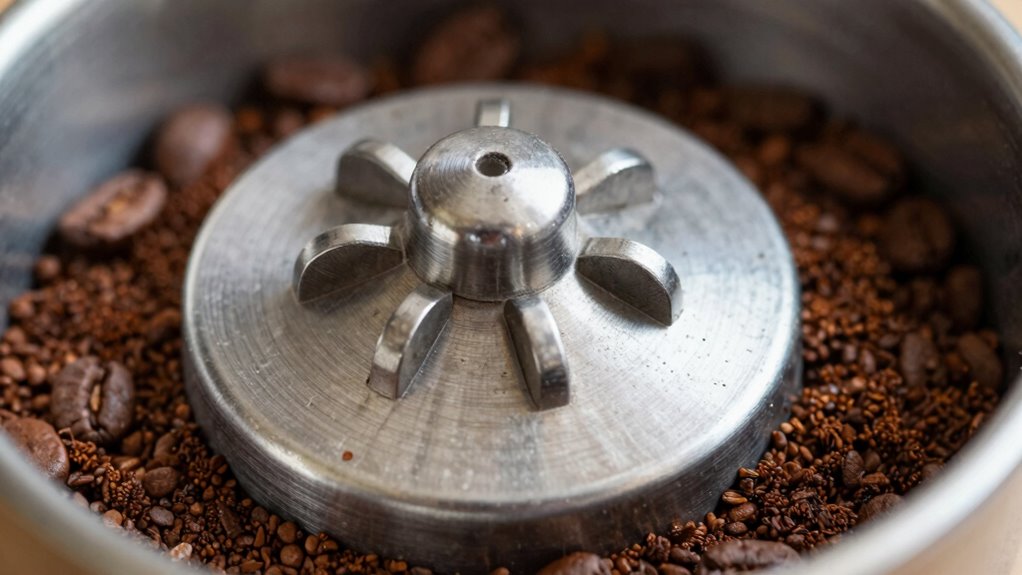
If your coffee grounds become inconsistent in size, it’s a sign your burrs might be dull or damaged. You’ll also notice more residue leftover in your grinder or filter, indicating inefficient grinding. Additionally, changes in brew flavor, like dull or off-tasting coffee, often point to worn burrs needing replacement. Regular maintenance and understanding burr lifespan can help prevent these issues and ensure optimal performance. Moreover, monitoring the grind consistency can serve as a performance indicator, alerting you when it’s time to replace your burrs. Tracking grind quality over time can provide further insights into when your burrs are nearing the end of their effective life.
Inconsistent Grind Size
When your coffee grounds start to vary in size, it’s a clear sign that your burrs may be wearing out. This inconsistency can result from dull or damaged burr material, affecting your grinder maintenance routine. If your grind size fluctuates, you might notice uneven extraction, leading to inconsistent flavor. To diagnose, check for:
- Variations in grind size despite using the same setting
- Increased static or coffee grounds clumping
- A need to frequently adjust the grind setting
These issues often indicate the burrs are no longer cutting evenly. Over time, burr material wears down, causing uneven grinding. Regular grinder maintenance and inspecting the burrs can help you catch wear early, ensuring ideal performance and consistent coffee quality. Recognizing signs of wear can also be influenced by understanding the burr lifespan, which varies depending on usage and material. Additionally, grinder durability is affected by how well you maintain the equipment and the type of beans used.
Excessive Coffee Residue
Excessive coffee residue buildup on your burrs is a strong sign that they may need replacing. When burr surface contamination occurs, leftover grounds can cling to the surfaces, affecting grind quality. If you notice a thick layer of coffee residue on your burrs, it indicates wear that impacts performance. This buildup can cause inconsistent grind sizes and clogging issues. To check, inspect your burrs regularly for dark, sticky residue. Here’s a quick visual guide:
| Coffee Residue Buildup | Burr Surface Contamination |
|---|---|
| Thick, sticky residue | Contaminated burr surfaces affecting grind consistency |
| Visible grounds on burrs | Potential flavor transfer or uneven grinding |
| Difficult to clean off | Sign of worn burrs needing replacement |
Addressing this buildup promptly ensures ideal grind quality and signals when to think about replacing your burrs.
Changes in Brew Flavor
Changes in brew flavor often signal that your grinder’s burrs may be worn and in need of replacement. When burrs become dull or damaged, they fail to produce a consistent grind, leading to uneven extraction and off-flavors. The burr material also influences how quickly this degradation occurs; ceramic burrs tend to last longer than metal ones but still wear over time. Regular maintenance frequency can help you detect these issues early. If you notice a metallic or stale taste, it’s a sign your burrs may no longer be performing ideally. Understanding your grinder’s maintenance schedule can help you stay ahead of wear and ensure optimal performance.
- Inconsistent grind size affecting flavor extraction
- Increased bitterness or sourness in your coffee
- Changes in aroma and overall brew profile
How Long Do Coffee Grinder Burrs Usually Last?
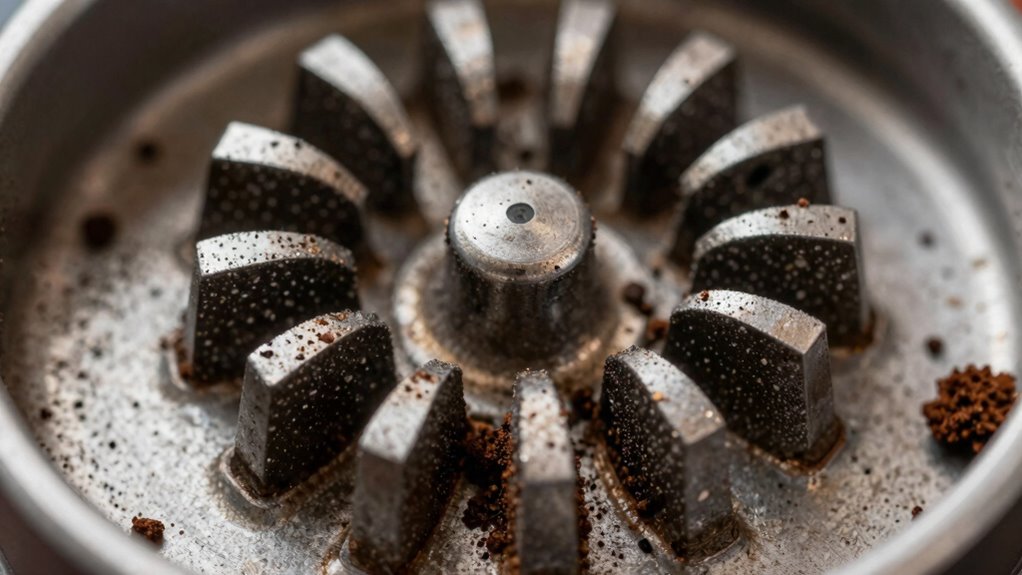
Coffee grinder burrs typically last between 1,000 and 2,000 pounds of coffee grounds, but their lifespan depends on several factors. The burr material plays a crucial role; ceramic burrs tend to last longer than steel ones because they’re more durable and resistant to wear. Proper grinder calibration is also essential—if your grinder isn’t calibrated correctly, it can cause uneven grinding and accelerate burr wear. Regularly maintaining your grinder and ensuring consistent grind size can extend the lifespan of your burrs. Environmental conditions, such as humidity and coffee bean quality, further influence how long your burrs stay sharp. Additionally, using proper cleaning methods can help prevent premature dullness and maintain optimal performance. While you can expect a typical lifespan within that range, monitoring for signs of dullness helps determine when replacement is necessary. Burr wear can be accelerated by using the wrong cleaning methods or neglecting routine maintenance, and understanding wear patterns can help you better predict when to replace your burrs. Keep in mind that consistent maintenance plays a vital role in extending the life of your burrs and ensuring high-quality grounds over time. Moreover, selecting the right burr material for your specific grinding needs can significantly influence how long your burrs last.
What Are the Best Ways to Test Your Burrs’ Condition?
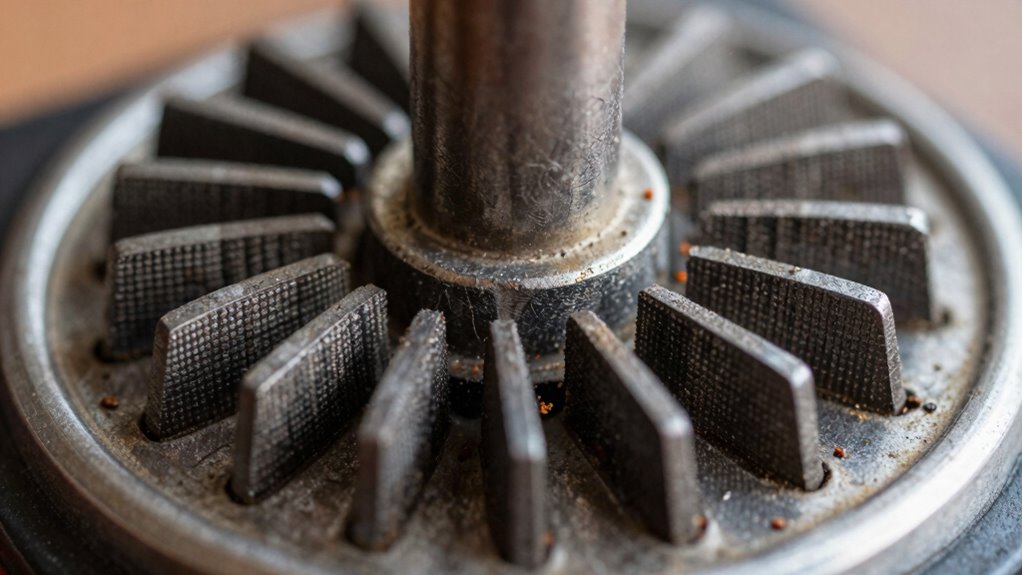
To effectively determine if your burrs need replacing, you should regularly inspect their performance and condition. Testing methods include visually examining the burrs for chips or dullness, measuring the consistency of your grind size, and evaluating the flavor of your coffee. You can also test the grinder’s noise level and the time it takes to produce a specific amount of grounds, which can indicate wear. Incorporate maintenance tips like cleaning burrs to prevent buildup that mimics wear. Additionally, try grinding the same coffee beans and comparing the grounds to previous results, noting any inconsistencies. Monitoring your smart home fitness equipment and connected devices can also provide insights into grinder performance over time. These testing methods help you catch early signs of wear, ensuring ideal performance and prolonging your burrs’ lifespan.
When and How Should You Replace Your Coffee Grinder Burrs?

Knowing when to replace your grinder burrs is key to maintaining consistent coffee quality. Typically,, you’ll want to replace them when you notice a decline in grinding consistency or if the burrs show visible signs of wear, such as uneven edges or dullness. The burr material plays a role here; ceramic burrs tend to last longer than steel but can be more brittle. If your grind size becomes inconsistent or if your brew tastes off despite proper cleaning, it’s time for a replacement. Regularly check for signs of wear and consider your burr material’s lifespan. Replacing your burrs at the right time ensures you preserve the flavor profile of your coffee and avoid uneven extraction, leading to a better overall brewing experience.
Tips for Maintaining Your Burrs and Extending Their Lifespan

Maintaining your burrs properly can substantially extend their lifespan and ensure consistent grinding performance. The key is understanding your burr material and sticking to regular maintenance routines. Proper cleaning removes buildup that can cause uneven wear, while gentle handling prevents damage. For burrs made of ceramic, avoid using metal tools during cleaning, and for metal burrs, ensure you use appropriate brushes. Also, consider the grind setting; using the correct setting reduces unnecessary strain. Implementing these routines helps prevent premature wear and keeps your grinder functioning smoothly. Regular inspection for signs of wear allows you to address issues early. With consistent care, you’ll maximize your burrs’ lifespan and enjoy better-tasting coffee every time.
- Clean burrs after every use with a soft brush or cloth
- Use the correct grind size to minimize strain on burr material
- Follow manufacturer maintenance routines diligently
Frequently Asked Questions
Can Using Different Coffee Beans Affect Burr Lifespan?
Using different coffee beans can affect your burr lifespan because beans vary in hardness, which influences wear on your burrs. Harder beans, like robusta, put more stress on burr material durability, causing them to dull faster. Softer beans cause less wear, extending your burrs’ life. So, switching between beans with different hardness levels can impact how quickly your burrs wear out, depending on their material and how often you change beans.
Do Burrs Wear Out Faster With Certain Grind Settings?
You might think that certain grind settings wear out burrs faster, but it’s more about grind consistency and burr material durability. Finer or inconsistent grinds put extra stress on burrs, speeding up wear. Cheaper burrs or those made from softer materials can also deteriorate quicker. To keep your grinder running smoothly, stick to moderate settings and choose high-quality burrs designed for durability—think of it as giving your grinder a fighting chance.
How Does Humidity Impact Burr Wear and Tear?
Humidity impacts burr wear and tear by increasing moisture absorption, which can cause rust formation on your grinder’s burrs. When exposed to high humidity, moisture settles on the metal, accelerating corrosion and weakening the burrs over time. This not only shortens their lifespan but also affects grind consistency. To prevent this, keep your grinder in a dry environment and consider using moisture-absorbing packets to reduce humidity’s effects.
Are There Specific Cleaning Routines to Prolong Burr Life?
Regular burr cleaning is key to prolonging your grinder’s burr life. For example, if you clean your burrs weekly with a brush and grinder maintenance solution, you prevent residue buildup that can dull the blades. Incorporate routine burr cleaning into your maintenance schedule, ensuring you remove oils and coffee particles. This simple step keeps your burrs sharp, maintains consistent grind quality, and extends their lifespan.
Can Improper Storage Damage Coffee Grinder Burrs?
Yes, improper storage can damage your coffee grinder burrs. Storage issues like exposing your grinder to high humidity, extreme temperatures, or dust can cause corrosion or affect the burr material’s integrity. Keep your grinder in a cool, dry place, and avoid areas with moisture or direct sunlight. Proper storage helps maintain burr sharpness and prolongs their lifespan, ensuring consistent grind quality and better coffee flavor.
Conclusion
Keeping an eye on your burrs guarantees your coffee stays top-notch. Regular checks and proper maintenance can extend their lifespan, saving you money and hassle. Don’t wait until they’re completely worn out—catch the signs early before your brew suffers. Remember, a stitch in time saves nine. By staying proactive, you’ll keep your grinder in tip-top shape and enjoy fresh, flavorful coffee every time.