When your grinder warms the coffee, it can cause subtle but significant flavor loss by affecting the coffee oils and aromatics. Excessive heat from prolonged or heavy grinding creates chemical changes, leading to burnt or stale tastes. To prevent this, you should use grinders with good heat management, grind in short bursts, and avoid overfilling. If you want to protect your coffee’s freshness and flavor, keep exploring ways to prevent overheating and maintain ideal performance.
Key Takeaways
- Excessive heat from grinding can cause chemical changes in coffee oils, degrading flavor and aroma.
- Overheating during grinding may produce burnt or smoky flavors, masking the coffee’s natural nuances.
- Using grinders with good heat dissipation and avoiding prolonged operation helps prevent heat buildup.
- Small, short bursts of grinding with breaks minimize heat accumulation and preserve coffee freshness.
- Regular cleaning and proper storage of beans reduce friction and heat, maintaining optimal flavor and aroma.
Why Heat During Grinding Affects Your Coffee’s Flavor
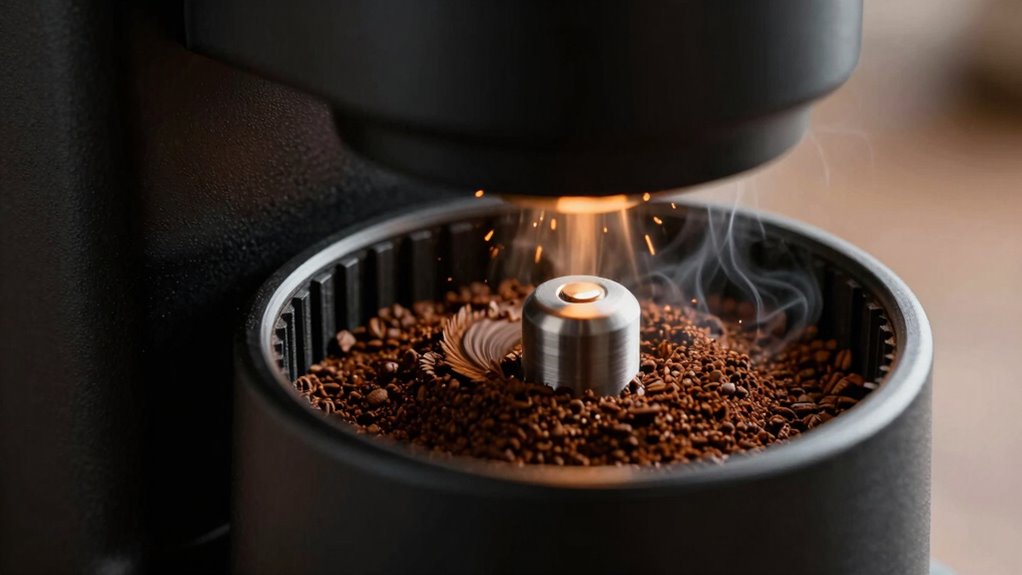
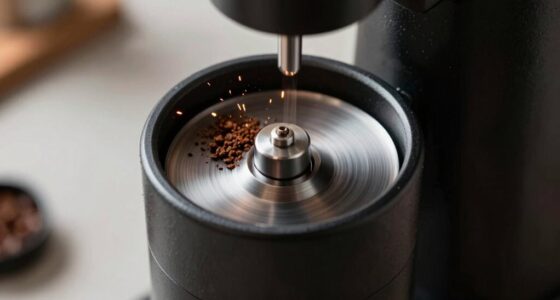
Heat generated during grinding can considerably impact your coffee’s flavor because it causes the beans’ oils and volatile compounds to degrade quickly. When your grinder lacks proper insulation, heat builds up faster, accelerating this deterioration. Grinder insulation helps maintain a consistent temperature, preventing excessive heat from reaching the beans. Additionally, cooling systems, such as fans or water-based methods, actively draw heat away during grinding. Without these features, the high temperatures can cause the delicate aromatics and flavors to evaporate or become burnt-tasting. This results in a dull, flat cup of coffee. Investing in a grinder with good insulation and cooling systems ensures your beans stay cooler, preserving their fresh flavor and aroma from grind to brew. Effective heat management is essential for maintaining optimal coffee quality and flavor profile.
How to Tell If Your Grinder Is Overheating
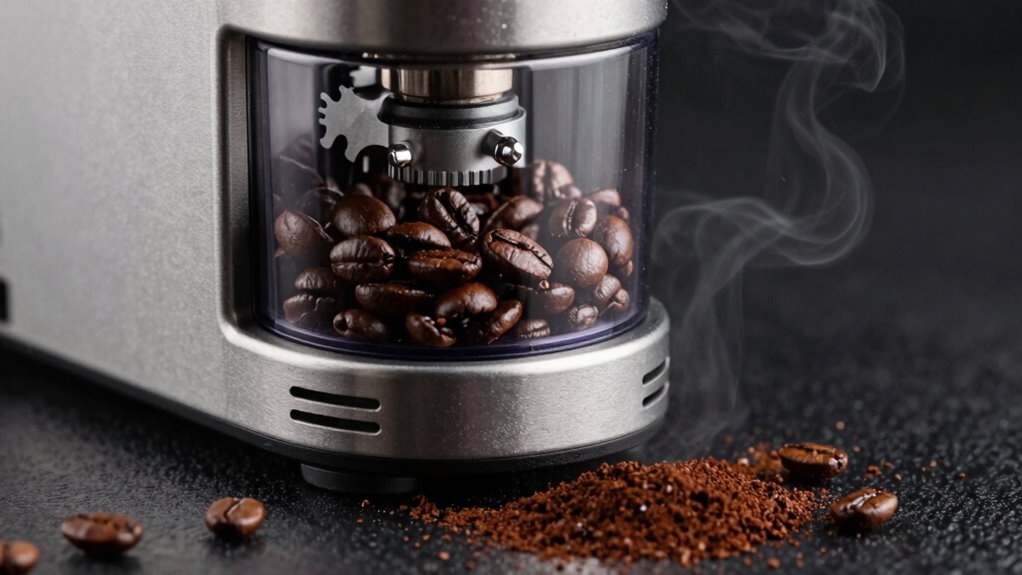
If your grinder starts making unusual noises, it could be a sign it’s overheating. You might also notice a change in your coffee’s flavor or texture, indicating heat damage. Pay attention to these signs to prevent damage and guarantee consistent results. Additionally, regularly inspecting your grinder for overheating signs can help you catch issues early and maintain optimal performance.
Unusual Grinder Noises
Have you noticed strange noises coming from your grinder during use? A loud metal noise or unusual grinding vibrations often signal issues like overheating or worn parts. If you hear a high-pitched squeal or a grinding sound that intensifies, it could mean the motor is straining or the burrs are misaligned. These noises aren’t normal and suggest your grinder is working harder than it should, which can lead to overheating. Free floating Grinding vibrations that feel excessive or irregular can also indicate a problem. Ignoring these sounds may cause damage or reduce your grinder’s lifespan. Always pay attention to unusual noises, and if they persist, turn off your grinder and inspect it for blockages, loose parts, or signs of wear.
Changes in Coffee Quality
Noticing a sudden change in your coffee’s flavor or consistency can be a sign your grinder is overheating. Overheated grinders can cause uneven particle size, leading to sour or burnt-tasting coffee. To prevent this, regularly perform grinder maintenance, including cleaning burrs and ensuring proper ventilation. Pay attention to your coffee bean selection, as oily beans generate more heat during grinding. If your coffee suddenly tastes off or lacks aroma, it might be due to overheating affecting grind quality. Consistent, high-quality coffee depends on a well-maintained grinder that stays cool during use. By monitoring these signs, you can avoid compromising your brew and extend your equipment’s lifespan. Proper grinder maintenance and mindful coffee bean selection are key to maintaining excellent coffee quality. Surface treatments such as proper cleaning and ventilation can help dissipate heat more effectively, ensuring the grinder remains at optimal operating temperatures.
What Happens to Coffee Oils and Chemistry When You Grind
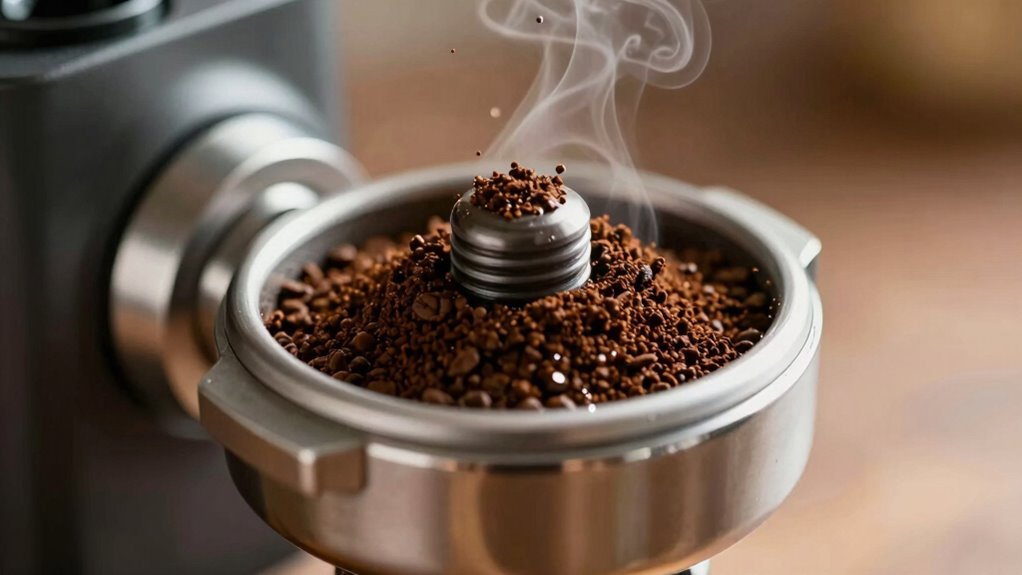
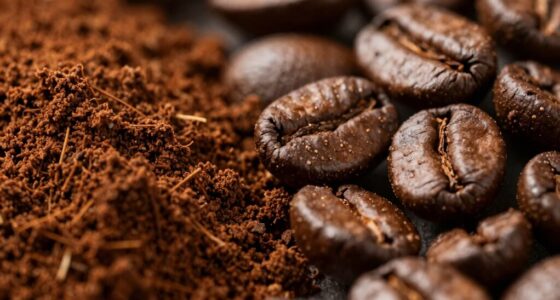
When you grind coffee, the oils inside are quickly released, impacting flavor and aroma. This process also triggers chemical changes that can alter the bean’s profile, especially when heat builds up. Understanding how oil release and chemistry shift during grinding helps you control freshness and brew quality. Proper handling of coffee during grinding can help preserve its optimal flavor profile.
Oil Release Dynamics
Grinding coffee beans disrupts their cellular structure, causing oils trapped inside to be released more readily. As you grind, the oils surface and become part of the coffee grounds, influencing aroma and flavor. The process also impacts grinder lubrication, as the oils can coat burrs and other components, potentially affecting performance. Additionally, increased motor temperature from extended grinding can accelerate oil evaporation, altering oil dynamics. Proper calibration minimizes excessive heat, preserving oil integrity and ensuring excellent flavor extraction. Moreover, understanding oil release dynamics can help optimize grinding techniques for better coffee quality.
Chemical Composition Changes
As you grind coffee beans, the mechanical disruption alters their chemical composition, particularly affecting the oils’ structure and behavior. The heat generated causes thermal expansion within the beans, leading to subtle chemical changes that influence flavor release. When your grind consistency is uneven, some particles heat up more than others, accelerating these chemical shifts. These temperature fluctuations can break down complex oils and aromatic compounds, making them more volatile. As a result, the coffee’s aroma and flavor profiles change more rapidly than expected. The breakdown of oils also affects the extraction process, potentially leading to over-extraction or under-extraction. Additionally, heat buildup during grinding can promote oxidation reactions, further impacting flavor integrity. Understanding how heat and grind consistency influence these chemical composition changes helps you optimize your brewing for richer, more balanced coffee.
Practical Tips to Keep Your Coffee Grinder Cool

To prevent your coffee grinder from overheating and losing performance, it’s essential to adopt practical cooling techniques. Regular grinder maintenance helps avoid unnecessary heat buildup. You can also implement these cooling techniques to keep your grinder cool during use:
Regular maintenance and mindful use keep your coffee grinder cool and functioning optimally.
- Avoid grinding large amounts at once; grind in smaller batches.
- Allow your grinder to rest for a minute between heavy grinding sessions.
- Keep the grinder clean to prevent clogging, which can cause overheating.
- Use a lower grind setting if your grinder tends to heat up quickly.
- Be aware that heat buildup can impact the grinder’s performance and longevity, so monitoring and managing it is crucial.
Best Grinders for Managing Heat and Preserving Flavor
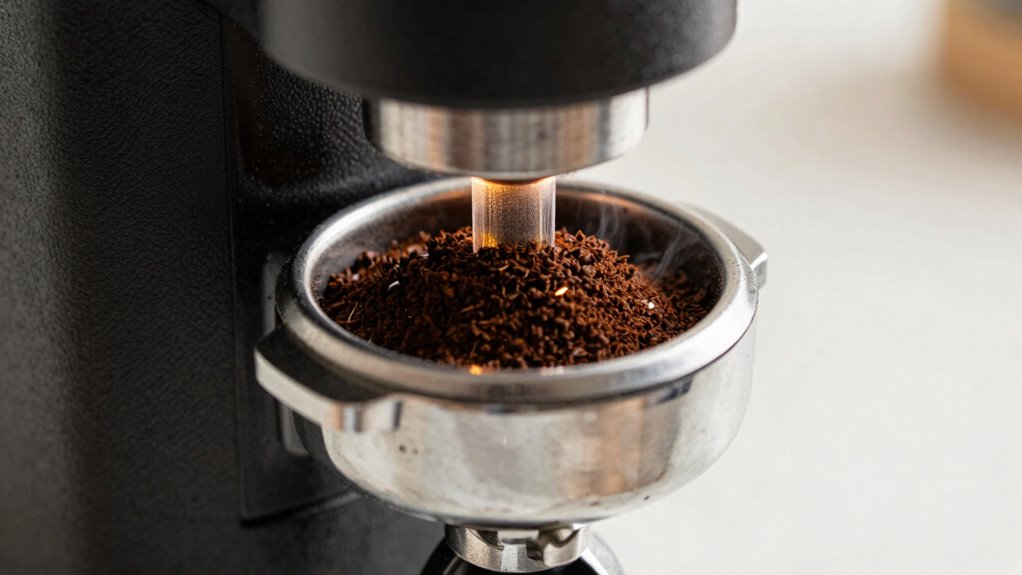
Choosing the right coffee grinder is essential for managing heat and preserving flavor, especially if you frequently grind large amounts. Look for models with effective cooling mechanisms, such as built-in fans or airflow systems, to prevent heat buildup during heavy use. These features help maintain the beans’ integrity and prevent flavor loss. Additionally, pay attention to blade design; burr grinders generally produce less heat than blades because they crush beans more evenly and generate less friction. If you prefer blades, opt for those with sharp, durable blades that minimize heat generation. Combining good cooling mechanisms with a thoughtful blade design ensures your grinder preserves the coffee’s fresh, nuanced flavors while reducing the risk of overheating during extended grinding sessions. Considering heat management features like these can significantly extend the lifespan of your grinder and improve your coffee experience.
Common Heat-Related Coffee Tastes and How to Fix Them
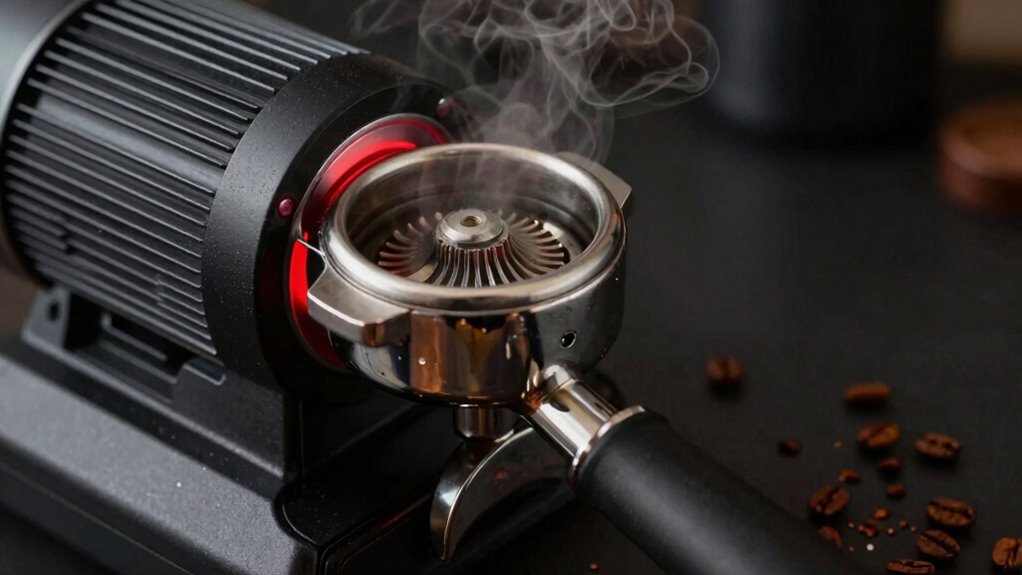
Heat during grinding can cause certain undesirable flavors in your coffee, often resulting in a burnt or smoky taste that masks the beans’ natural nuances. To fix this, focus on proper grinder maintenance and smarter coffee storage. Overheating can lead to these flavors, so make certain your grinder’s blades or burrs are clean and well-lubricated. Store beans in airtight containers away from heat and sunlight to prevent pre-grind temperature rise. Additionally, consider grinding in smaller batches to avoid prolonged contact with heat. Regularly monitor your grinder’s filtration system to ensure optimal airflow and heat dissipation.
Heat during grinding can cause burnt flavors; maintain your grinder and store beans properly to preserve coffee’s natural taste.
- Use a grinder with better heat dissipation.
- Regularly clean and lubricate your grinder.
- Store coffee beans properly in cool, dark places.
- Grind only what you need, avoiding extended continuous operation.
Quick Steps to Prevent Overheating and Keep Your Coffee Fresh

Preventing your coffee from overheating starts with simple, proactive steps that preserve its flavor and freshness. Regular grinder maintenance guarantees your machine operates smoothly and prevents excess heat buildup. Keep your grinder clean and free of old grounds, which can cause friction and increase temperature. Use proper temperature regulation by avoiding overfilling the hopper or grinding for extended periods without breaks. Grind in short bursts if needed, allowing the machine to cool down between sessions. Opt for burr grinders over blade types, as they generate less heat during grinding. Store beans in a cool, airtight container to reduce the amount of heat transferred during grinding. Being aware of your grinder’s heat generation can help you take additional steps to prevent overheating and maintain optimal coffee quality. These quick steps help maintain ideal temperature, keep your coffee fresh, and prevent heat-related flavor degradation.
Frequently Asked Questions
Does Grinder Material Affect Heat Retention and Coffee Flavor?
The material impact of your grinder considerably affects heat retention and flavor preservation. Metal grinders, especially stainless steel, tend to absorb and transfer heat more efficiently, which can warm the coffee and impact flavor. Plastic grinders generally retain less heat, helping preserve freshness. Choosing a grinder with better heat dissipation helps maintain coffee’s ideal flavor, so consider material when aiming for the freshest, most flavorful brew.
How Does Ambient Temperature Influence Grinder Heat Buildup?
Your grinder’s heat buildup skyrockets when ambient warmth is high, especially during temperature fluctuations. If you leave it in a hot kitchen or near a sunny window, the grinder absorbs that heat like a sponge, causing rapid temperature spikes. This excess warmth can transfer to your coffee beans, risking flavor loss. To avoid this, keep your grinder in a cool, stable environment, and minimize exposure to ambient temperature swings.
Can Using Burr Grinders Reduce Heat Compared to Blade Grinders?
Using burr grinders can markedly reduce heat buildup compared to blade grinders. Burr grinders offer advantages like consistent grinding and less friction, which helps prevent warming your coffee. In contrast, blade grinders risk uneven grinding and generate more heat due to their high-speed blades, potentially affecting flavor. So, if you’re concerned about heat, opting for a burr grinder is a smarter choice to preserve your coffee’s aroma and freshness.
What Are Signs of Heat Damage in Ground Coffee?
Imagine a once-vibrant melody now muffled—that’s how heat damage affects your coffee. Signs include dull aroma, losing its rich coffee aroma, and uneven grind consistency, like a broken record. If your ground coffee smells flat or stale, and the grind feels inconsistent, heat likely compromised it. You might also notice a burnt or scorched taste, signaling your beans suffered from excessive warmth during grinding.
Are There Specific Grinding Durations That Minimize Heat Exposure?
You should aim for shorter grinding durations, typically under 20 seconds, to minimize heat exposure. Use a slow, steady grinding speed, which produces less heat, and consider the moisture content of your coffee beans — drier beans generate more heat. Grinding in smaller pulses rather than continuous sessions also helps prevent overheating, preserving the coffee’s flavor and aroma.
Conclusion
Think of your grinder as a delicate dance partner—too much heat, and the rhythm falls apart. When you keep it cool, your coffee’s true flavor shines through, like a perfectly timed melody. I once watched a barista carefully pause to let the grinder rest, and the difference was clear—more vibrant, complex coffee. Stay mindful of heat, and you’ll keep your coffee tasting just right, every time.