Heat from grinding is real when excessive friction causes surface discoloration, warping, or material damage, often indicated by blue hues or dull finishes. However, not all friction generates dangerous heat; factors like cooling, grinding speed, and material properties influence temperature levels. Misinterpreting signs or ignoring proper cooling can lead to damage or unsafe workpieces. To avoid issues, it’s crucial to understand when heat is genuinely a concern and how to manage it effectively—more tips ahead.

Get kitchen gear delivered free with Prime
- Fast, free delivery on millions of items
- Prime Video, Amazon Music and more included
- Member-only deals all year
Key Takeaways
- Excessive heat from grinding is real when surface discoloration, such as blue or rainbow hues, is visibly present.
- Not all grinding produces dangerous heat; factors like cooling, grinding parameters, and material properties influence temperature.
- Overheating signs include surface tarnishing, warping, cracking, or dullness, but noise and smell alone are unreliable indicators.
- Proper coolant application, optimized grinding parameters, and tool selection effectively manage and reduce heat buildup.
- Monitoring surface temperature or using sensors ensures accurate assessment of grinding heat levels.
What Causes Heat During Grinding and How Is It Made

When you grind a material, heat is generated mainly due to friction and deformation at the contact points between the grinding wheel and the workpiece. This friction causes abrasion effects, where material is removed through rubbing and scraping, creating localized heat. As the material deforms slightly under pressure, thermal expansion occurs, which can further influence the grinding process. The heat buildup results from energy conversion as mechanical work transforms into thermal energy. Factors like grinding speed, pressure, and material hardness affect how much heat is produced. Understanding these causes helps you manage heat generation, preventing issues like thermal damage or distortion. Recognizing the role of abrasion effects and thermal expansion in heat formation is key to optimizing grinding efficiency and quality. Additionally, heat management techniques are essential for maintaining the integrity of both the workpiece and the grinding tool during operation. Proper control of heat dissipation can significantly reduce the risk of thermal damage and improve surface quality, especially considering how material properties influence heat generation during grinding.
How to Tell When Grinding Heat Is Too Much

If you notice colors changing on the material or see it turn blue or purple, that’s a sign the heat is too high. Unusual grinding noises, like squealing or grinding sounds, can also indicate excessive heat buildup. Keep an eye out for these signs to prevent damage and maintain a safe grinding process. Additionally, proper tool maintenance can help prevent overheating during grinding. Being aware of anodized surface discoloration can also serve as an indicator of excessive heat affecting the material’s surface. Monitoring temperature control during grinding is essential to avoid damaging the material or compromising the process. Regularly inspecting your equipment and using appropriate filtration techniques can further reduce the risk of heat-related issues and ensure a smoother operation.
Visible Material Discoloration
Ever notice a change in the color of your material after grinding? That’s a clear sign of heat buildup. Metal tarnishing, often seen as a dull or bluish hue, indicates the material has been overheated. The color change isn’t just cosmetic; it reveals that the heat has affected the metal’s structure, potentially weakening it. You might see streaks, discoloration, or a rainbow-like sheen on the surface. These visual cues are quick indicators that your grinding process is generating too much heat. If you spot discoloration, it’s time to pause, cool the material, and adjust your technique. Ignoring these signs can lead to compromised material integrity or even failure of the material later on. Incorporating proper cooling methods, like using water or air cooling, can help prevent free floating heat buildup during grinding. Being aware of heat dissipation techniques is essential for preventing overheating, and practicing proper cooling methods further improves safety and material longevity.
Unusual Grinding Noises
Have you noticed unusual grinding noises during your work? These sounds often signal excessive heat or improper tool selection. If the grinding noise becomes high-pitched or irregular, it’s time to check your coolant application—insufficient cooling can cause heat buildup and noise. Also, review your tool choice; using the wrong tool can lead to increased friction and noise. Here’s a quick guide:
| Noises | Possible Causes |
|---|---|
| High-pitched squealing | Insufficient coolant, dull tool, wrong tool type |
| Rattling or grinding sounds | Excessive heat, improper tool selection |
| Sudden stops or irregular | Overheating, tool wear, inadequate coolant flow |
Pay attention to these signs to prevent heat damage and maintain efficient grinding. For optimal performance, ensure your tools are compatible with the material being worked on and that you are using proper flushing techniques to manage heat.
Common Myths About Grinding Heat: Fact vs. Fiction
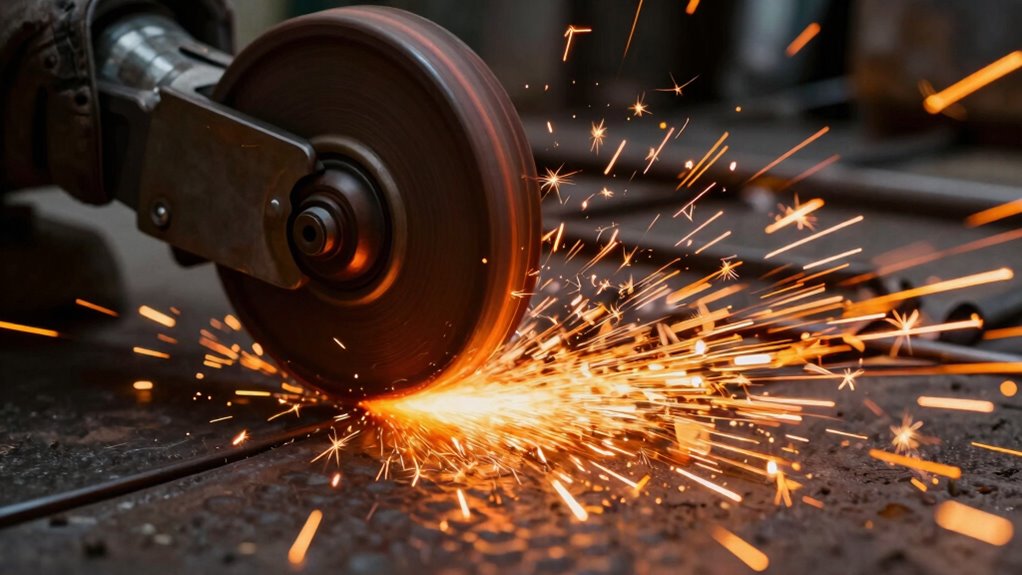
Many people believe that grinding heat always means excessive friction, but that’s not true. Temperature isn’t the only indicator of heat—factors like friction and material properties also play a role. Recognizing the real signs of overheating helps prevent mistakes and tool damage. Understanding safe operation practices is essential for avoiding unnecessary damage during grinding. Additionally, staying curious about material behaviors can improve your ability to anticipate and manage heat generation effectively. Being aware of crack formation and other material responses can further enhance your safety and efficiency. Knowing how to choose appropriate tools can also help minimize heat buildup and improve results. Paying attention to heat distribution patterns during grinding can provide valuable insights into potential issues and help optimize your technique.
Heat Generation Misconceptions
Despite common beliefs, the idea that grinding always produces excessive heat is a misconception. Not all grinding generates enough heat to cause thermal expansion or damage the workpiece. In reality, heat generation depends on factors like cutting speed, feed rate, and coolant use. Some assume that friction alone causes dangerous temperatures, but heat conduction away from the contact zone often prevents excessive buildup. Proper technique and machine settings can minimize heat and reduce the risk of warping or residual stress. It’s a myth that grinding inevitably leads to thermal damage; in many cases, heat remains controlled and localized. Understanding this helps you avoid unnecessary concern and focus on effective grinding practices that balance efficiency with safety.
Temperature vs. Friction
A common myth is that friction alone causes dangerous heat levels during grinding. While friction generates some heat, it’s not the sole factor affecting temperature. As the grinding process occurs, heat conduction from the workpiece and grinding wheel plays a significant role in temperature rise. The heat causes thermal expansion, which can influence material properties and grinding accuracy. However, the actual temperature depends on multiple factors, including contact time and cooling methods. Understanding the difference between the effects of friction and heat transfer is vital. Friction initiates heat, but heat conduction and the material’s thermal conductivity determine how quickly and how much temperature increases. Recognizing this distinction helps prevent misconceptions about grinding heat and guarantees better control during machining.
Misinterpreting Grinding Signs
Misinterpreting the signs of grinding heat can lead to faulty assessments and unnecessary process adjustments. A common misconception is that a grinding noise always indicates excessive heat, but noise can result from tool vibrations or machine settings. Similarly, a material smell isn’t always a sign of thermal damage; it could be from debris or lubrication issues. Relying solely on these cues may cause you to overreact or ignore real problems. Instead, focus on measurable indicators like surface temperature or surface discoloration. Recognizing that signs like noise and smell aren’t definitive proof of dangerous heat helps prevent unnecessary adjustments that could compromise the process. Accurate diagnosis ensures you address genuine issues without chasing false alarms.
Easy Ways to Reduce Grinding Heat During Your Work
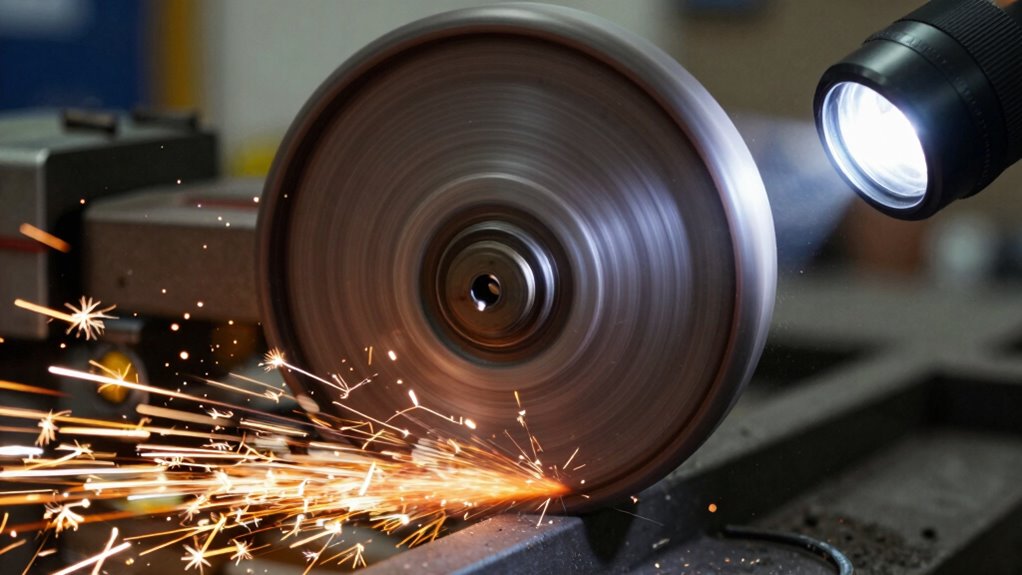
Reducing grinding heat is essential for preserving tool life and ensuring a high-quality finish. One effective method is coolant application, which helps dissipate heat and prevents overheating. Make sure to use the right coolant type for your specific tool material, as incompatible coolants can cause damage or reduce effectiveness. Adjust your grinding parameters, such as lowering the feed rate or increasing the grinding wheel’s speed, to decrease heat generation. Using appropriate grinding wheels designed for your material also helps minimize heat buildup. Additionally, taking regular breaks allows the workpiece and tool to cool down, preventing excessive heat accumulation. Proper thermal management during grinding is crucial for maintaining optimal performance. Monitoring the celestial influences on your work environment can help optimize conditions for precision. Understanding heat transfer principles enables better control over temperature during grinding processes. Effective coolant systems are vital for maintaining consistent temperature control and reducing thermal stress. By carefully controlling coolant application and selecting suitable tools, you can significantly reduce grinding heat and improve your overall grinding performance. Furthermore, implementing temperature sensors can provide real-time feedback, allowing for more precise adjustments during the process.
Is Your Grinding Heat Safe or Could It Damage Your Work?
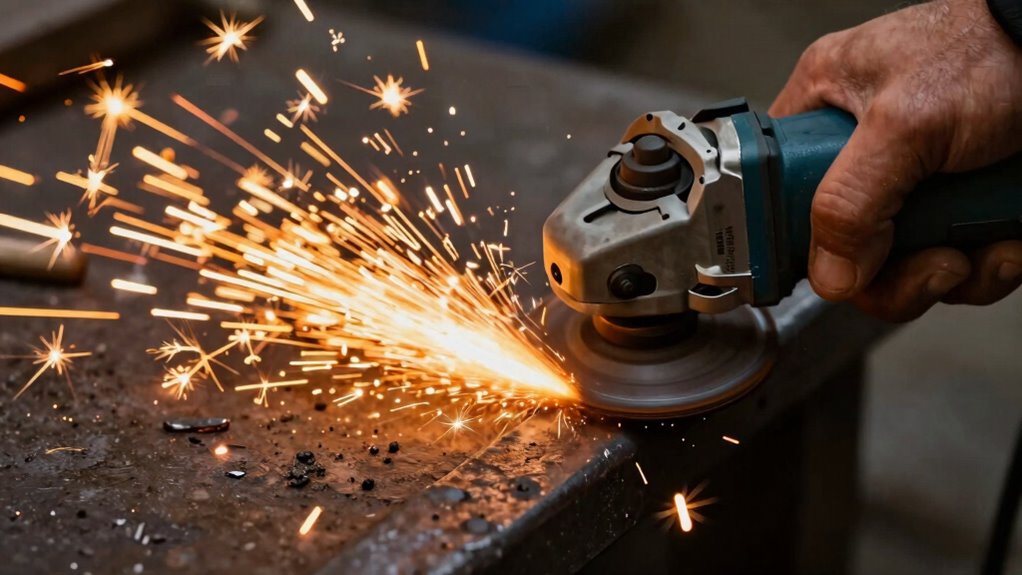
Properly managing grinding heat isn’t just about improving efficiency; it directly impacts the safety and integrity of your work. Excessive heat can cause warping, cracking, or weakening your material, risking failure. To prevent damage, consider these key points:
Effective heat management in grinding safeguards your work’s safety and durability.
- Ensure proper coolant application to keep temperatures in check and reduce thermal stress.
- Select the right grinding wheel or tool suited for your material to minimize unnecessary heat buildup.
- Monitor your grinding process closely—overly aggressive grinding increases heat and risks.
- Use appropriate techniques to distribute heat evenly, avoiding localized hotspots that can cause damage.
- Incorporate ventilation considerations to help dissipate heat and improve overall safety during grinding.
When Grinding Heat Isn’t a Problem: What You Need to Know
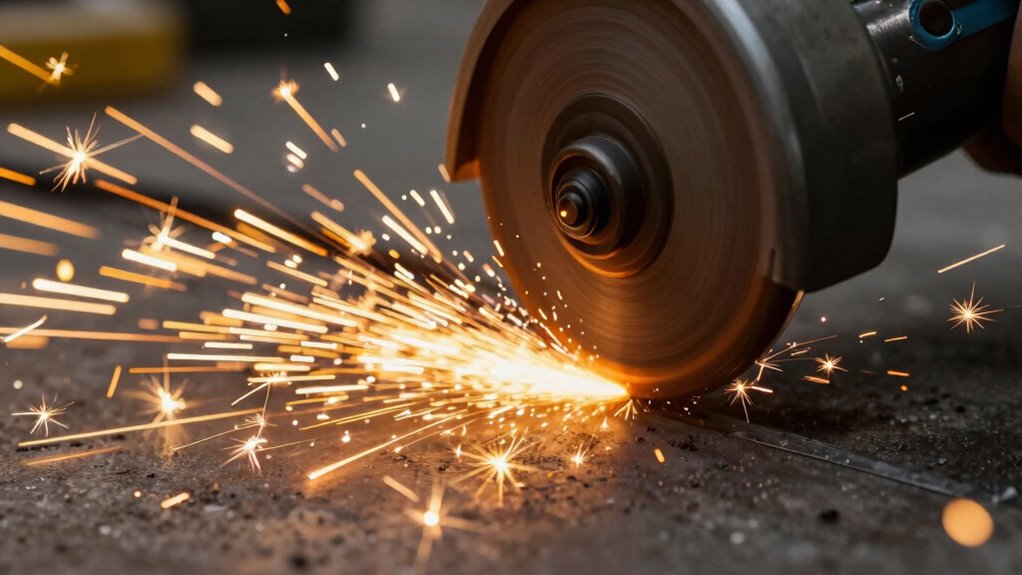
When grinding heat becomes manageable or even negligible, it’s usually because you’ve implemented effective techniques and proper equipment choices that prevent excessive temperature buildup. Using appropriate cooling methods, such as water or air cooling, helps dissipate heat efficiently, protecting both your workpiece and tool. Understanding material properties is vital; some materials tolerate higher temperatures without damage, while others are sensitive and require extra care. Selecting the right grinding parameters—like speed, feed rate, and grit size—also minimizes heat generation. When these factors are optimized, the risk of thermal damage drops markedly, ensuring your work remains precise and intact. Recognizing when heat isn’t an issue allows you to focus on efficiency without sacrificing quality.
Frequently Asked Questions
How Does Grinding Wheel Material Affect Heat Generation?
Your grinding wheel material directly affects heat generation through its abrasive properties and wheel composition. A harder, more abrasive wheel tends to produce more heat because it removes material faster and generates friction. Conversely, softer or more resilient materials absorb less heat. The wheel’s composition, including bonding agents, also influences heat because it impacts how quickly heat dissipates during grinding, helping you control heat buildup effectively.
Can Ambient Temperature Influence Grinding Heat Levels?
You might think ambient temperature doesn’t matter, but it definitely influences grinding heat levels. Higher ambient influence can cause the grinding zone to retain more heat, increasing the risk of thermal damage. Conversely, cooler surroundings help dissipate heat more effectively, reducing temperature effects. So, maintaining a controlled environment isn’t just about comfort—it’s vital for managing grinding heat, ensuring your process stays efficient and safe.
What Role Does Grinding Speed Play in Heat Production?
Grinding speed substantially impacts heat production because higher speeds increase friction and heat. When you use abrasive grit, faster grinding generates more heat, risking damage or warping. To manage this, you should incorporate cooling methods like water or air cooling. Slowing down the grinding speed allows heat to dissipate better, reducing the risk of overheating and prolonging your abrasive grit’s effectiveness.
Are There Specific Tools to Measure Grinding Heat Accurately?
Imagine you’re monitoring grinding temperature and want accuracy. You can use infrared thermometers for quick spot measurements or thermal imaging cameras for detailed heat maps. Infrared thermometers provide instant readings, ideal for spotting hot spots. Thermal imaging offers thorough visuals of heat distribution. Both tools help you assess heat buildup accurately, ensuring grinding processes stay within safe limits and preventing damage to materials or tools.
How Does Workpiece Material Impact Heat Absorption During Grinding?
You’ll find that workpiece material impacts heat absorption considerably. Harder materials tend to absorb less heat because they have higher thermal conductivity, allowing heat to dissipate quickly. Conversely, softer materials with lower thermal properties retain more heat, increasing the risk of thermal damage during grinding. Understanding the workpiece’s thermal properties and material hardness helps you adjust grinding parameters to prevent overheating and ensure better surface integrity.
Conclusion
Now you know when grinding heat is harmless and when it’s harmful. By paying attention, applying simple strategies, and avoiding common myths, you can prevent problems and produce pristine results. Remember, managing heat means mastering the moment, minimizing mishaps, and maximizing mastery. Stay mindful, stay motivated, and make every grind a great grind. With awareness and action, you’ll always achieve awesome, accurate, and abrasion-free outcomes—every time.
Halloween Picks
halloween
As an affiliate, we earn on qualifying purchases.