Choosing between single-dose and hopper grinding can transform your coffee routine. Single-dose grinders give you fresher beans, precise control, and less waste, perfect for specialty brews. Hopper grinders let you process larger amounts faster, ideal for daily use and convenience. Your choice depends on your routine and priorities. Keep exploring to discover which option aligns best with your brewing style and how to optimize your coffee experience.
Key Takeaways
- Single-dose grinders offer better freshness preservation and precise dosing, ideal for specialty brewing and flavor accuracy.
- Hopper grinders provide larger capacity and faster grinding for busy routines, with less focus on individual dose precision.
- Single-dose grinding minimizes oxidation and waste, maintaining complex coffee flavors and aromas longer.
- Hopper grinders enable quick processing of large bean quantities, reducing refill frequency and saving time.
- Choice depends on routine needs: prefer single-dose for control and freshness; hopper for convenience and efficiency.
Single-Dose vs. Hopper Coffee Grinders: Which Is Right for You?
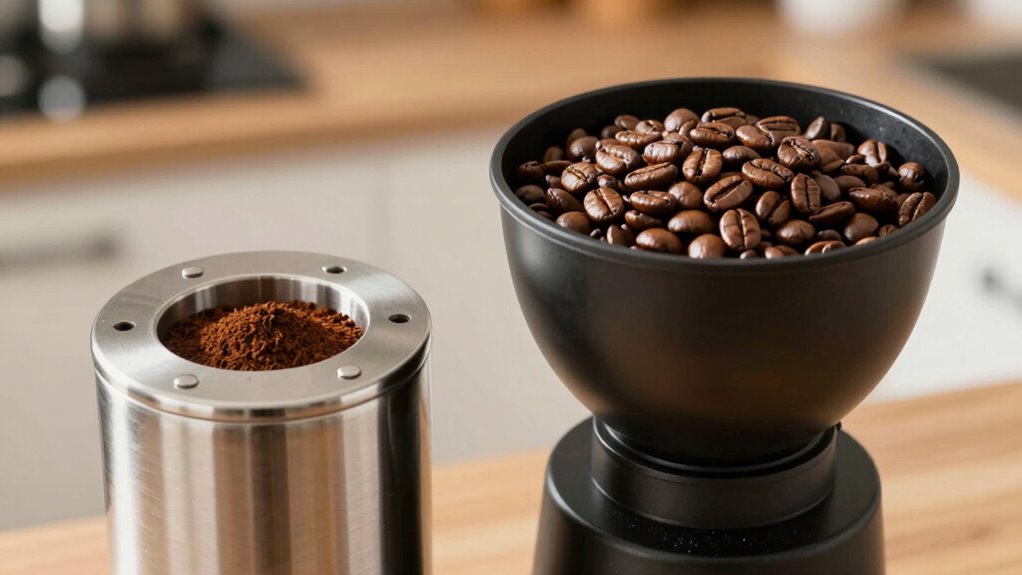
Choosing between a single-dose grinder and a hopper grinder depends on your brewing habits and priorities. If you prefer precise control over grind size for different brewing methods, a single-dose grinder might suit you best. It allows you to adjust and optimize each grind without leftovers. Hopper grinders, on the other hand, typically feature larger burr types and hold more beans, which is convenient for daily use. The type of burrs—flat or conical—also impacts grind consistency and flavor extraction. Flat burrs tend to produce more uniform grind size, ideal for espresso, while conical burrs handle a range of grind sizes efficiently. Your choice hinges on whether you prioritize customization and freshness or convenience and capacity. Additionally, energy efficiency is an important factor to consider, especially when choosing a more sustainable option for daily use, as burr technology plays a significant role in overall performance and longevity.
What’s the Difference Between Single-Dose and Hopper Grinders?

You’ll notice that single-dose grinders typically offer faster grinding times and more precise dosing, making them more efficient for individual cups. Hopper grinders, on the other hand, can slow down your process but hold larger quantities of beans, which can affect freshness. Understanding these differences helps you choose a grinder that best matches your brewing style and priorities.
Grinding Speed and Efficiency
While both single-dose and hopper grinders aim to produce consistently fresh grounds, they differ markedly in their speed and efficiency. Hopper grinders typically have a larger grinder capacity, allowing you to grind more beans at once, which speeds up the process. However, this can lead to a louder grinding noise due to the larger motor and burrs working harder. Single-dose grinders, with their smaller capacity, focus on precision and fresh grinding for each shot, often resulting in slower operation. The trade-off is that they produce less noise and waste, but they might take longer to prepare multiple doses. If efficiency and quick turnaround matter most, hopper grinders excel, but if you prioritize consistency and freshness, single-dose grinders might be your better choice.
Coffee Freshness Preservation
When it comes to preserving coffee freshness, the type of grinder you choose makes a significant difference. Single-dose grinders minimize exposure to air, keeping beans fresher longer and reducing staling. With fewer beans stored at once, you avoid constant grinding noise that can degrade flavor over time. Hopper grinders, on the other hand, store larger quantities of beans, which can lead to oxidation and loss of aroma if not used quickly. The grinding noise from a hopper grinder tends to be more consistent, indicating ongoing bean movement and potential freshness decline. Proper bean storage is vital regardless of your grinder choice, but single-dose setups give you more control, ensuring each grind starts with fresher beans. This ultimately enhances your coffee’s aroma, flavor, and overall quality.
How Single-Dose Grinding Keeps Your Coffee Fresher
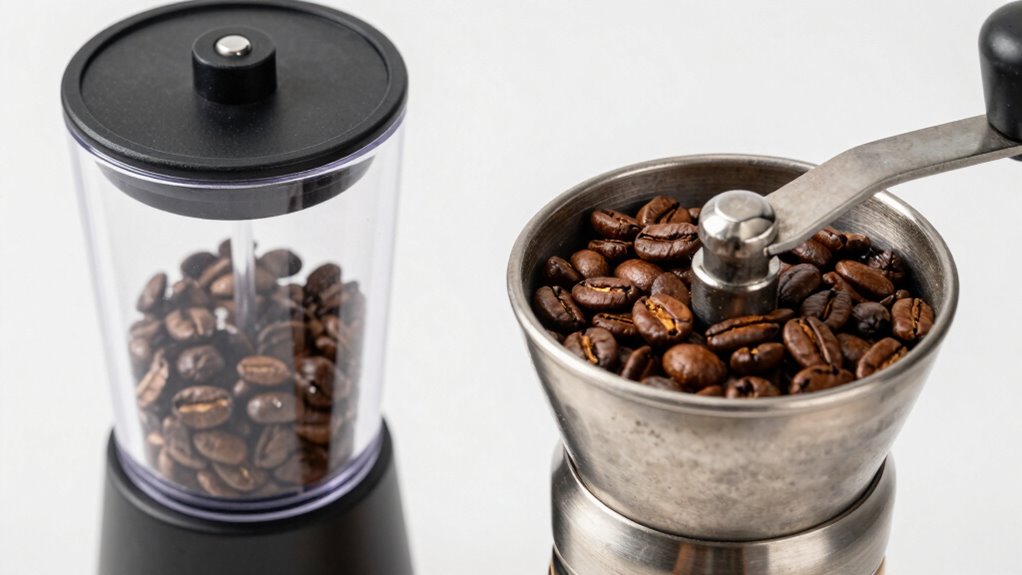
Single-dose grinding helps keep your coffee fresher by preserving its aromatic compounds, so you get a more vibrant flavor. It also reduces oxidation, which can quickly degrade coffee’s quality over time. As a result, your brew tastes better and stays fresh longer. Additionally, natural filtration systems in some setups can further maintain water quality and overall freshness.
Preserves Aromatic Compounds
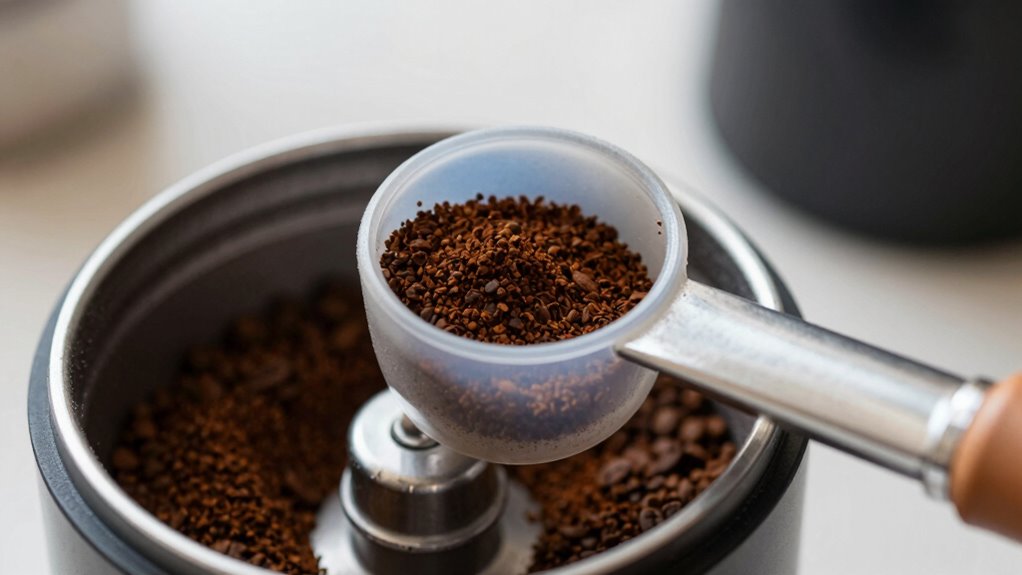
Because aromatic compounds in coffee are highly volatile, exposure to air and light can quickly diminish their freshness, leaving your brew flat and dull. Single-dose grinding minimizes this exposure by grinding only what you need, which markedly improves flavor preservation. When you grind coffee fresh for each brew, you enhance aroma retention, ensuring those delicate floral, fruity, and nutty notes stay vibrant. Unlike hopper grinding, which exposes large quantities of beans to air over time, single-dose methods reduce oxidation and prevent the loss of aromatic compounds. This means your coffee retains its complex aromas longer, delivering a more aromatic and flavorful cup. Additionally, freshness preservation is critical to maintaining the full spectrum of coffee’s nuanced flavors. If you value freshness and want to keep those aromatic nuances intact, single-dose grinding offers a clear advantage. By limiting oxidation, you can further preserve the coffee’s delicate aromatic profile over time.
Minimizes Oxidation Effects
Oxidation is a primary factor that accelerates the staling of coffee, causing it to lose freshness and flavor over time. With single-dose grinding, you gain better grind size control, which helps you produce a more consistent grind that reduces surface exposure to oxygen. This precision minimizes the coffee’s contact with air, slowing oxidation and preserving its aromatic qualities. Additionally, single-dose grinders tend to operate with lower noise levels, allowing you to grind quickly and efficiently without introducing unnecessary agitation that could increase oxidation. By grinding fresh beans just before brewing, you limit oxygen exposure and maintain ideal freshness. This approach ensures your coffee retains its vibrant flavors longer, giving you a richer, more satisfying cup every time.
Why Hopper Grinders Are Convenient for Daily Brewing

Hopper grinders are especially convenient for daily brewing because they allow you to quickly grind larger quantities of beans at once, saving you time in your routine. With a bigger hopper capacity, you don’t need to refill it constantly, making your mornings smoother. While some worry about grind noise, many hopper grinders operate quietly enough not to disturb your household. This convenience means you can prepare multiple cups or grind in advance without hassle. Plus, the ability to grind a consistent amount in one go minimizes interruptions during your brewing process. Additionally, material quality in premium hopper grinders ensures durability and a consistent grind over time. The connected technology integrated into some models can further enhance your brewing experience by providing precise control and customization. Overall, hopper grinders streamline your routine by offering ample capacity, reducing refill frequency, and maintaining a manageable noise level, making them an excellent choice for daily use. The grind consistency achieved by hopper grinders is also crucial for extracting the best flavor from your beans. For instance, automatic dose control can help ensure each brew is optimized for flavor and strength. Incorporating smart features can also allow you to customize grind settings remotely, adding to the overall convenience.
How Grind Consistency Differs Between Single-Dose and Hopper Models
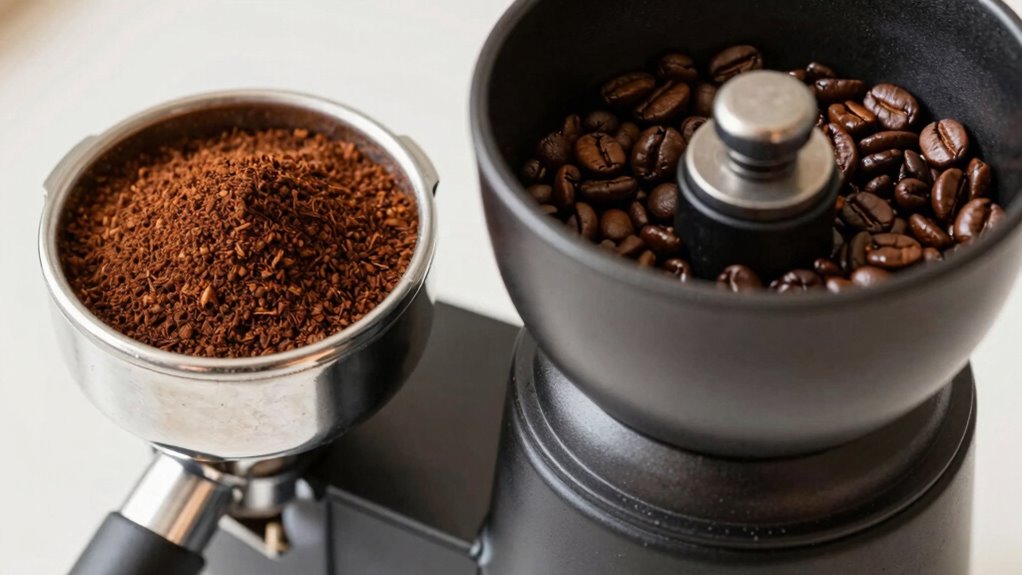
When it comes to grind consistency, the design and operation of your grinder play a crucial role. Single-dose grinders often deliver more uniform grind size because each dose is freshly ground, reducing variability. Hopper models, however, may experience fluctuations in grind size due to the larger bean reservoir and continuous operation. Consider these points:
- You get precise, consistent grind size with single-dose setups, ensuring your brew has ideal flavor.
- Hopper grinders can sometimes produce uneven grind consistency, especially as beans settle or shift.
- Your choice impacts your routine—if you crave precision, single-dose offers steadiness; for convenience, hopper models may introduce variability.
- Grind consistency is also affected by how the grinder’s burrs are aligned and maintained, which influences the uniformity of the grounds.
Ultimately, your grind consistency hinges on the grinder’s design, influencing your coffee’s flavor profile and your daily experience.
Cost, Setup, and Maintenance: Which Grinder Fits Your Budget?
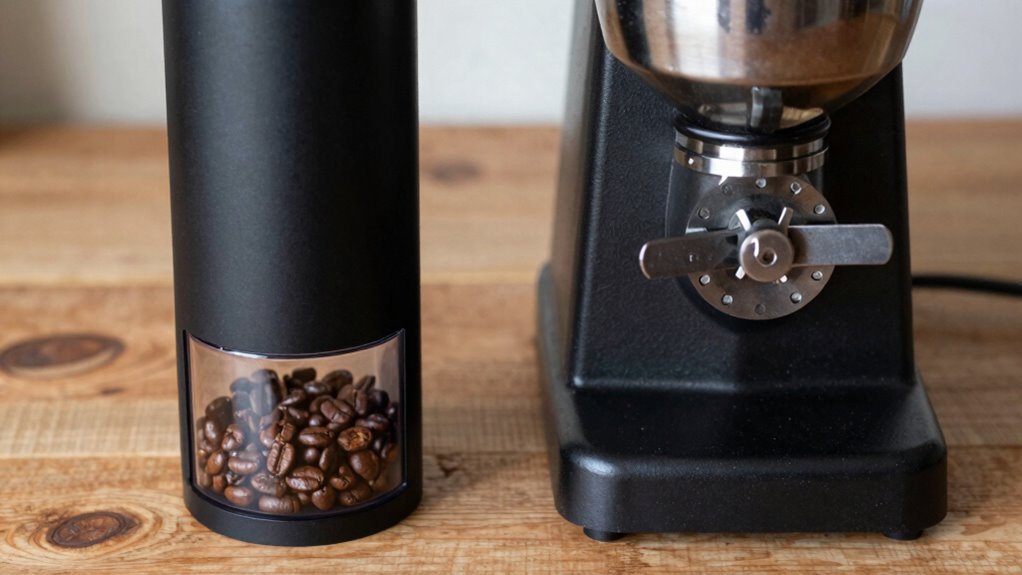
Choosing the right grinder depends heavily on your budget and how much you’re willing to invest upfront and ongoing. Single-dose grinders tend to cost more initially due to precise components, but they often have lower energy consumption and quieter operation, reducing long-term costs. Hopper grinders are generally cheaper upfront but may require more maintenance and produce more grinder noise over time. Consider setup complexity too—single-dose models usually need less adjustment, saving you time. Additionally, maintenance requirements can influence the overall lifespan and performance of your grinder, regardless of type.
Troubleshooting Common Grinder Problems

Even the most reliable grinders can encounter issues that disrupt your brewing routine. If you notice uneven grounds, strange noises, or inconsistent grind size, don’t panic. Here’s what to check:
Even reliable grinders can face issues; check calibration, noise, and clogs to keep brewing smooth.
- Grinder calibration – Recalibrate your grinder to ensure the burrs are aligned properly; miscalibration causes uneven extraction. Proper calibration is essential for consistent results and can be checked periodically. Regular calibration checks help maintain optimal grind quality. Consulting manufacturer guidelines can provide specific calibration procedures for your model. Using the right maintenance routines ensures your grinder remains in top condition and prevents common problems.
- Noise reduction – Unusual sounds often signal worn bearings or debris; cleaning or replacing parts can restore quiet operation.
- Clogging or jams – Coffee oils or grounds can clog the burrs; regularly cleaning your grinder prevents blockages and maintains performance.
- Proper maintenance practices – Regularly clean and maintain your grinder to prevent buildup and ensure consistent performance. Additionally, following manufacturer maintenance guidelines can help extend your grinder’s lifespan and reliability.
Addressing these problems promptly keeps your grinder functioning smoothly. Maintaining proper calibration and reducing noise not only extends your grinder’s lifespan but also guarantees a consistently excellent brew.
Which Coffee Grinder Is Best for Your Brewing Routine?
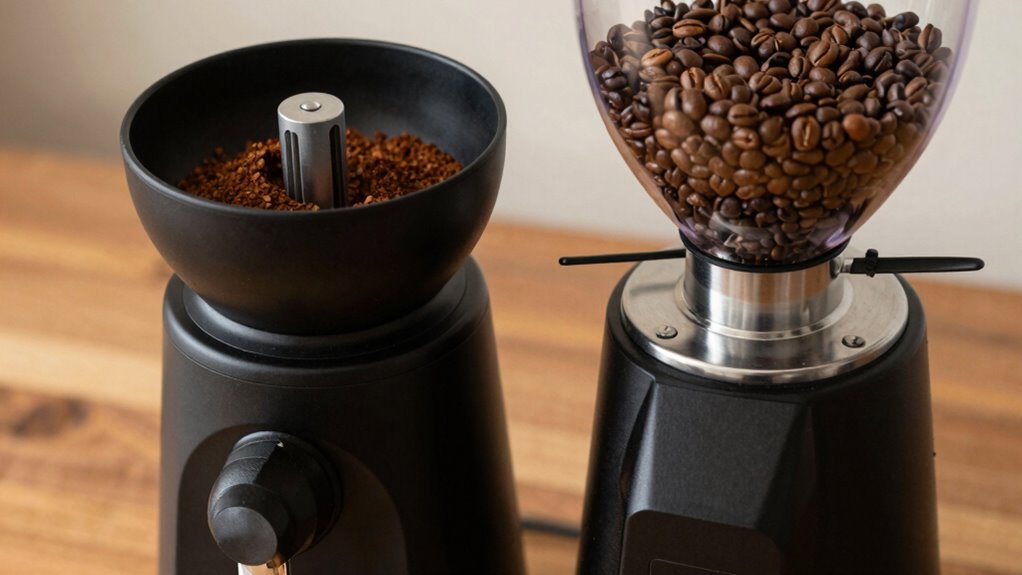
Finding the right coffee grinder depends on your brewing routine and specific preferences. If you prefer pour-over or AeroPress, a single-dose grinder offers precise control and minimal waste, enhancing flavor extraction. For drip or espresso, a hopper grinder with larger capacity and consistent grind size simplifies daily use. Consider your brewing techniques—some methods demand fine, uniform grinds, so a conical burr grinder made with durable materials like ceramic or stainless steel can provide longevity and precision. If you grind frequently, materials that resist wear are essential. Think about convenience versus control: single-dose grinders reduce oxidation and preserve freshness, ideal for specialty brews, while hopper grinders are more efficient for everyday routines. Match your brewing style with the grinder’s features and materials for ideal results. Additionally, selecting a suitable grinder material can significantly impact durability and performance over time. Incorporating ergonomic design features can also enhance comfort during frequent use, making your grinding experience more enjoyable. Moreover, understanding grind consistency can help you choose a grinder that maintains uniform particle size, crucial for optimal extraction.
Frequently Asked Questions
Can Both Grinder Types Accommodate Different Coffee Bean Sizes?
Yes, both grinder types can accommodate different bean sizes. You’ll find that bean size compatibility varies, but most grinders offer grind size flexibility to handle small or large beans effectively. Single-dose grinders excel at precision, while hopper grinders provide convenience. By choosing the right grind settings, you guarantee consistent extraction regardless of bean size, making your brewing process smoother and more enjoyable.
How Does Grinder Size Impact Kitchen Counter Space?
A compact grinder saves counter space, making your kitchen look tidy and efficient, while larger models demand more room, potentially cluttering your space. You’ll want to weigh counter space efficiency against storage considerations—smaller grinders tuck away easily, freeing up surface area, whereas bigger ones may require dedicated storage. Think about your countertop’s size and how often you use your grinder to find the perfect fit for your routine.
Are There Specific Brands That Excel in Single-Dose or Hopper Models?
You’ll find that brands like Baratza and Breville excel in hopper models, offering reliable performance and solid warranty coverage. For single-dose grinders, you might consider Mythos or Niche Zero, which have strong reputations for precision and durability. Always check brand reputation and warranty coverage to guarantee your investment lasts, especially since quality grinder brands prioritize customer service and long-term support, making your choice smarter and more satisfying.
What Are the Environmental Impacts of Each Grinding Method?
You should consider that single-dose grinding generally has lower energy consumption, making it more environmentally friendly, while hopper grinding can use more power due to continuous operation. Both methods can adopt sustainable practices, like energy-efficient machines or recycling grounds. By choosing a method aligned with eco-conscious goals, you reduce your environmental impact. Ultimately, your choice affects energy use and sustainability, helping you make a more responsible coffee routine.
Do Grinder Types Influence the Flavor Profile of Different Coffee Beans?
Think of your grinder as an artist’s brush, where different types influence the painting’s final flavor. You realize that grinder types affect flavor extraction and bean preservation, shaping each sip’s unique profile. A burr grinder, like fine-tuned tools, preserves bean integrity, boosting nuanced flavors. Conversely, blade grinders can cause uneven extraction, dulling the taste. Your choice directly impacts how vividly the coffee’s character comes alive in your cup.
Conclusion
Choosing between single-dose and hopper grinders is like picking the perfect dance partner—each has its rhythm and charm. Think of single-dose as your precision instrument, keeping your beans fresh and dance-ready. Hopper grinders are your reliable partner for daily routines, quick and steady. Whichever you choose, you’ll be shaping your coffee experience—turning simple beans into a symphony of flavor. So, pick your rhythm and let your mornings sing.