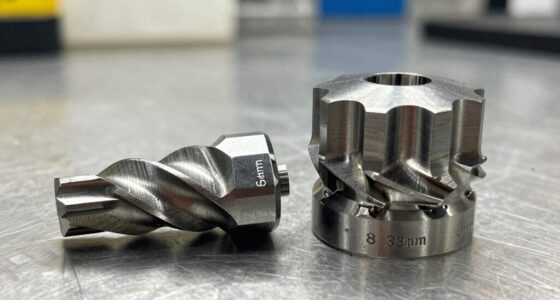
Grinder purging is necessary when switching beans, changing grind sizes, or cleaning buildup to guarantee consistent flavor and grinder performance. However, over-purging can waste coffee and reduce freshness, especially if done too often without real need. To avoid waste, purge only during significant changes or maintenance, and stick to proper cleaning routines. If you want to maximize coffee quality while minimizing waste, understanding when to purge is key—more tips follow.
Key Takeaways
- Purge when changing beans, adjusting grind size, or cleaning to prevent flavor transfer and residue buildup.
- Avoid unnecessary purging when grind consistency and bean freshness are stable to reduce waste.
- Regular purging maintains grinder calibration and flavor quality but should be limited to avoid wasting coffee.
- Use minimal purging techniques, such as tapping or brushing, instead of full cycles to conserve coffee.
- Proper storage and maintenance reduce the need for frequent purging, minimizing waste while preserving freshness.
What Is Grinder Purging and Why Does It Matter?

Have you ever wondered why proper grinder purging is essential? It helps maintain grinder calibration, ensuring each dose delivers consistent grind size. Without purging, residual coffee oils and old grounds can mix with fresh beans, affecting flavor. This buildup can disrupt flavor consistency, making your coffee taste off or uneven. Grinder purging involves clearing out leftover grounds before brewing, which keeps the grinder clean and functioning at its most favorable. Proper purging also supports energy-efficient operation, reducing unnecessary strain on your equipment and conserving resources. When done correctly, it prevents stale flavors from contaminating your brew and preserves the grinder’s accuracy. Regular cleaning routines play a vital role in maintaining optimal performance and extending the lifespan of your grinder. Proper purging is also crucial for preventing clogging and wear that can occur over time, ensuring your equipment remains in optimal condition. Skipping this step may seem minor, but over time, it impacts your coffee’s quality. Proper purging is a simple yet effective way to protect flavor integrity and keep your grinder performing at its best.
Signs You Need to Purge Your Coffee Grinder
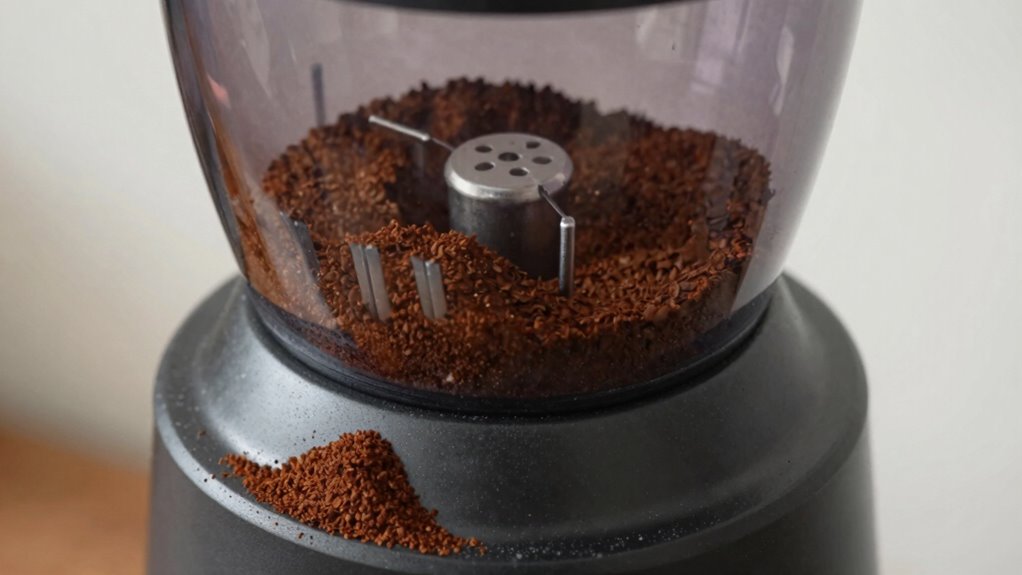
If you notice your coffee tastes stale or uneven, it’s a clear sign you need to purge your grinder. Changes like increased grinder noise or a dull coffee aroma indicate build-up or old grounds. You might also experience inconsistent grind size or difficulty achieving your preferred extraction. These signs suggest that residual coffee particles are impacting flavor and performance. Regular purging clears out old grounds and oils, restoring ideal function. Keep an eye on the following indicators:
| Symptom | Cause | Action |
|---|---|---|
| Stale coffee taste | Old grounds lingering | Purge to refresh grinder |
| Increased noise | Blockages or build-up | Clean and purge |
| Weak aroma | Residual oils accumulated | Purge for better flavor |
| Uneven grind | Coffee residue buildup | Purge and recalibrate |
| Difficult grinding | Clogged burrs or chamber | Purge to clear debris |
Additionally, understanding the signs of grinder deterioration can help prevent flavor issues before they become severe. Implementing proper grinder preservation techniques, such as regular cleaning routines, can also reduce the frequency of necessary purging. Developing a consistent maintenance schedule ensures your grinder remains in optimal condition and extends its lifespan.
How Often Should You Purge Your Coffee Grinder?
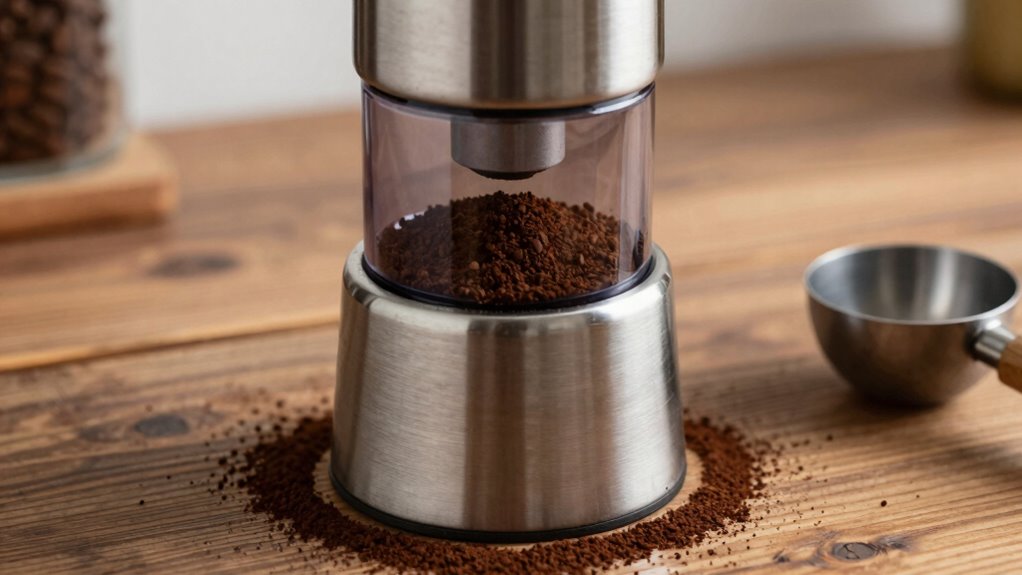
To keep your coffee grinder performing at its best, it’s important to purge it regularly. Frequent purging helps maintain proper grinder calibration, ensuring consistent grind size for ideal extraction. How often you should purge depends on bean freshness; fresher beans tend to produce more oils and residue, so purging every few days or after switching bean types is advisable. If you notice uneven grind size or flavor inconsistencies, it’s a sign you need to purge more often. On the other hand, over-purging can waste coffee and reduce flavor complexity. Generally, a weekly purge suffices for daily coffee drinkers, while occasional purging may work for less frequent use. Adjust your routine based on your beans, usage, and taste preferences. Additionally, understanding grinder maintenance can help extend the lifespan of your equipment and improve overall coffee quality. Proper cleaning and regular clog removal can prevent buildup that affects grind consistency, and implementing a cleaning schedule can streamline your grinder care routine.
Easy Ways to Purge Your Coffee Grinder Effectively
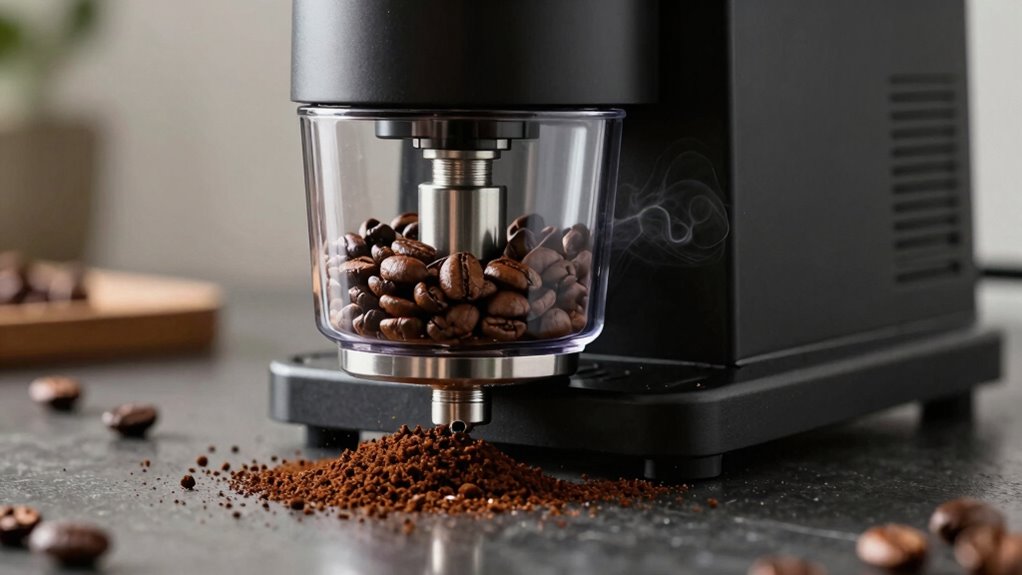
To purge your coffee grinder effectively, start by using fresh coffee beans each time to prevent buildup. Make sure to clean the grinder parts regularly to remove any residual grounds and oils. These simple steps help keep your grinder clean, ensuring better-tasting coffee and easier maintenance.
Use Fresh Coffee Beans
Ever wonder how to effectively purge your coffee grinder? The key is to start with fresh beans. Using fresh beans helps clear residual flavors and oils that can affect your brew. Before purging, make sure your grinder is properly calibrated for your desired grind size. Fresh beans are denser and more consistent, making it easier to flush out old grounds. Run a small amount of fresh coffee through the grinder, then discard it. This process clears out leftover grounds and oils, preventing flavor contamination. Be sure to repeat if necessary, especially after switching beans or roast levels. Using fresh beans in combination with proper calibration ensures your grinder is clean and ready for ideal extraction, improving your coffee’s taste and aroma.
Regularly Clean Grinder Parts
After purging your grinder with fresh beans, maintaining its cleanliness becomes even more important to guarantee consistent flavor. Regularly cleaning grinder parts prevents residue buildup that can affect grinder calibration and lead to uneven grinds. Remove the hopper and burrs periodically, brushing away coffee dust and oils. Store beans in airtight containers to reduce excess oils that cling to components, making cleaning easier. Use a soft brush or a damp cloth to wipe down surfaces, avoiding harsh chemicals that could damage parts. Consistent cleaning ensures uniform particle size, preserving the grinder’s calibration. Well-maintained parts also prolong your equipment’s lifespan and improve flavor extraction. Making cleaning part of your routine keeps your grinder in top shape, delivering fresh, balanced coffee with every brew. Proper maintenance is essential for preserving the quality of your coffee and ensuring optimal grinder performance.
When Is Purging Wasteful, and How to Avoid Wasting Coffee

You might be wasting coffee if you purge too often without a real reason. Recognizing when purging is unnecessary helps you save beans and money. Using proper techniques and strategies can keep waste to a minimum while keeping your grinder and brew fresh. Understanding the importance of craftsmanship in maintaining your grinder can also prevent unnecessary purging.
Recognizing Unnecessary Purges
Purging coffee unnecessarily can lead to waste and increased costs, especially when it doesn’t improve the quality of the shot. If your grind consistency is stable and your coffee storage is airtight, frequent purging is likely wasteful. You only need to purge when changing beans, adjusting grind settings, or if there’s a noticeable buildup that affects flavor. Over-purging doesn’t enhance extraction; it just wastes coffee. To recognize unnecessary purges, monitor your workflow and equipment cues. Use the table below to understand when purging adds value versus when it’s redundant:
| Situation | Benefit of Purging | When to Skip Purging |
|---|---|---|
| Changing bean types | Clears old flavors | When grind consistency is stable |
| Adjusting grind settings | Ensures uniform grind | If grind remains consistent |
| Equipment buildup | Removes stale grounds | When equipment is clean |
| Routine start-up | Prepares machine for use | If machine has been idle briefly |
Proper Purgers for Coffee
While purging coffee is essential in certain situations, it becomes wasteful when done unnecessarily. To avoid wasting coffee, use proper purgers that minimize waste and protect coffee freshness. Regular grinder maintenance ensures that the burrs and blades stay clean, reducing the need for frequent purging. When switching beans or grind sizes, purge only a small amount—just enough to clear old grounds without excess. Avoid long purging cycles that discard usable coffee; instead, develop a routine that targets specific changes to your grinder or beans. Proper grinder setup and understanding when purging is truly needed help preserve coffee freshness and save valuable beans. This approach keeps your coffee flavorful while preventing unnecessary waste.
Minimizing Waste Strategies
Although purging is necessary at times to maintain freshness, it becomes wasteful when done more often than needed, especially with small or infrequent changes. To minimize waste, focus on proper coffee storage to keep beans fresh longer, reducing the need for frequent purging. Regular grinder maintenance also helps by keeping your burrs clean and aligned, preventing stale buildup that prompts unnecessary purging. Limit purges to significant changes in grind size or bean type, rather than routine adjustments. When possible, tap or brush out residual coffee instead of full purges. Monitoring your grinder’s performance and adjusting only when essential ensures you conserve coffee and reduce waste, making every shot more efficient and flavorful. Utilizing precise grinder calibration can also help avoid unnecessary purging by maintaining consistent grind settings. Additionally, understanding creative storytelling can help you better communicate the importance of sustainability and efficiency in your coffee practices.
How to Keep Your Coffee Fresh Without Over-Purging

To keep your coffee fresh without over-purging, maintaining a balance between protecting the beans from moisture and preserving their flavorful oils is vital. Proper grinder maintenance ensures you don’t expose beans to unnecessary air or humidity, which can speed up staling. To maximize coffee freshness, consider these practices:
- Store beans in an airtight, opaque container away from light and heat
- Grind only what you need just before brewing
- Use a burr grinder for consistent, even particles
- Keep your grinder clean to prevent stale build-up affecting flavor
- Regularly inspecting your grinder can help identify bioluminescent organisms or other buildup that may impact flavor preservation. Additionally, understanding grinder purging techniques can help optimize freshness without causing unnecessary loss of aromatic oils. Implementing proper storage methods is essential for maintaining the optimal flavor profile over time.
Common Mistakes When Purging and How to Avoid Them

One common mistake when purging your grinder is using excessive force or rushing the process, which can lead to uneven removal of stale residues and dust that compromise your coffee’s flavor. Failing to properly calibrate your grinder can also cause inconsistent grind sizes, making purging less effective and affecting grind consistency. When you skip or rush calibration, you risk leaving behind old grounds or uneven particles that impact taste. To avoid this, take your time during purging, use gentle movements, and make certain your grinder is well-calibrated before and after purging. Proper calibration helps achieve consistent grind size, making purging more efficient and preventing the buildup of stale coffee. Maintaining grinder performance is crucial for preserving flavor and ensuring your coffee tastes its best.
Does Your Grinder Type Affect How Often You Should Purge?

The type of grinder you use considerably influences how often you should purge it. Burr grinders, for example, maintain bean freshness longer and require less frequent purging to prevent flavor transfer. In contrast, blade grinders mix beans unevenly, leading to more frequent purging needs to avoid stale flavors. Your grinder’s design impacts grinder maintenance, especially when switching bean types or roast levels. Factors to think about include:
- Grinding mechanism: Burrs versus blades
- Bean freshness: fresher beans need less purging
- Frequency of use: more use equals more cleaning
- Flavor consistency: to prevent cross-flavor contamination
Understanding your grinder type helps you balance maintenance and purging, ensuring ideal coffee quality without unnecessary waste.
Balancing Cost, Quality, and Purging Frequency for Better Coffee
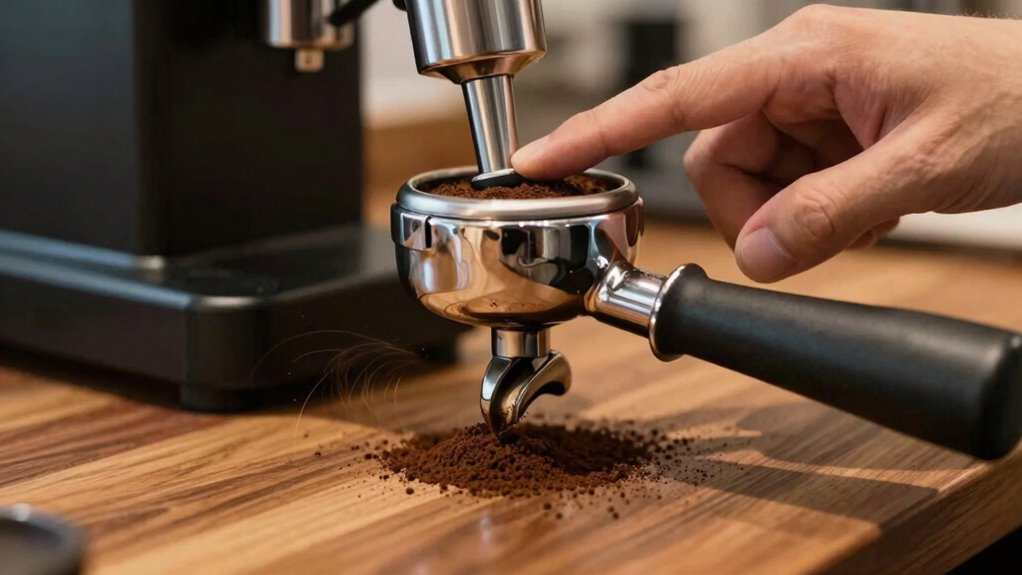
Balancing cost, quality, and purging frequency requires careful consideration because each factor impacts your overall coffee experience. Purging too often can waste coffee and increase costs, while infrequent purging might cause stale coffee scent and inconsistent flavor. To find the right balance, weigh your budget against quality needs. Keep in mind that frequent purging may reduce grinder noise and improve aroma, but at a price. Here is a visual to help you decide:
| Purge Often | Moderate Purge | Rarely Purge |
|---|---|---|
| Higher cost | Balanced cost | Lower cost |
| Better scent, less noise | Good balance | Risk of stale coffee scent |
Adjust your purging based on your setup and taste preferences for ideal coffee quality. Understanding the “why” behind food can help you make informed decisions about your brewing process.
Frequently Asked Questions
Can Purging Improve the Flavor of Stale Coffee?
Purging your grinder can sometimes improve the flavor of stale coffee by removing residual old grounds, which helps preserve freshness and prevents off-flavors. However, it’s not a guaranteed solution for flavor enhancement, especially if the coffee is already substantially stale. Regular purging can maintain freshness between brews, but don’t rely solely on it to revive old coffee. Instead, focus on using fresh beans for the best flavor.
Is It Better to Purge Before or After Brewing?
Think of purging like hitting the reset button. It’s better to purge before brewing to clear old grounds and preserve flavor, ensuring your coffee tastes fresh. Regular grinder maintenance, including timely purging, prevents stale flavors from lingering. Purging after brewing isn’t as effective and can waste coffee. By doing it beforehand, you maintain ideal flavor preservation, giving you that perfect cup every time.
How Does Grinder Type Influence Purging Frequency?
Your grinder type substantially influences purging frequency. For burr grinders, regular purging helps maintain grind consistency and prevents old coffee residues from affecting flavor, so you might purge more often during grinder maintenance. Blade grinders, on the other hand, require less frequent purging but can cause inconsistent grinds if not cleaned regularly. Understanding your grinder’s design helps you decide when purging is necessary to keep your coffee fresh and consistent.
Can Too Much Purging Damage My Grinder?
You’ll be glad to know that excessive purging won’t damage your grinder if you practice proper grinder maintenance. Studies show that frequent purging can waste up to 30% of your coffee, impacting freshness and cost. Over-purging can cause wear on grinder burrs or blades over time, but if you’re gentle and regular with maintenance, you’ll prolong your grinder’s longevity and ensure your coffee stays fresh without unnecessary waste.
What Are the Environmental Impacts of Frequent Purging?
Frequent purging can increase your environmental impact by generating more coffee waste, which may end up in landfills. Additionally, if your grinder uses plastic parts, disposing of or replacing them contributes to plastic disposal issues. To minimize this, only purge when necessary and consider reusing excess coffee or recycling plastic components. Being mindful helps reduce waste and supports eco-friendly practices in your coffee routine.
Conclusion
Understanding when and how to purge your grinder can make all the difference in your coffee’s flavor. But what if you’re missing hidden signs or over-purging unnecessarily? The key lies in striking the right balance—yet that balance isn’t always clear. Stay alert to your grinder’s needs, because the next adjustment could release a whole new level of freshness. Don’t underestimate the power of timing—your perfect cup might depend on it.