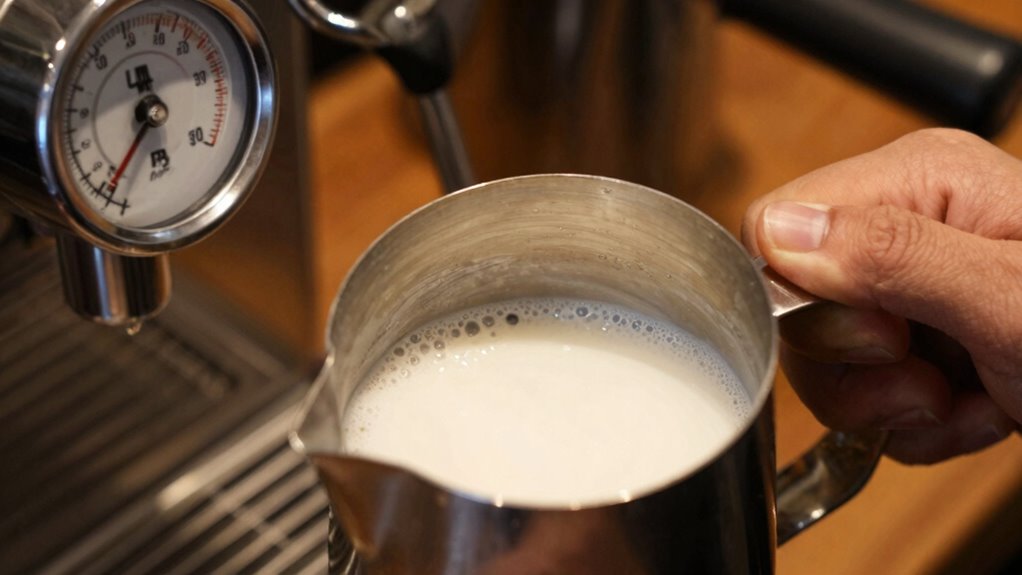

To achieve the perfect flavor and foam stability, aim to heat your milk to between 140°F and 150°F. This range enhances sweetness, smoothness, and foam longevity without risking scorching or flavor damage. Use a reliable thermometer for precise control, and avoid overheating past 160°F. Keeping the milk at this ideal temperature guarantees you get rich taste and dense foam every time. Keep exploring, and you’ll discover how to master your milk steaming technique perfectly.
Key Takeaways
- The ideal milk temperature for flavor and foam stability is between 140°F and 150°F.
- Proper temperature enhances sweetness, smoothness, and prevents burnt flavors.
- Temperatures above 160°F can scald milk, damaging flavor and foam quality.
- Maintaining consistent heat ensures proteins support dense, long-lasting foam.
- Using reliable thermometers helps achieve and sustain the perfect milk temperature.
Why Is Milk Temperature Important for Great Coffee?

Milk temperature plays a pivotal role in achieving the perfect coffee experience because it directly affects the taste, texture, and overall balance of your drink. Understanding milk chemistry helps you grasp how heat impacts the proteins and fats that create smoothness and richness. Proper temperature control ensures these components react effectively, resulting in a velvety texture and ideal sweetness. When milk is heated too much, the proteins can break down, leading to a scorched flavor and poor foam stability. Conversely, too little heat won’t develop the desired creaminess or sweetness. Temperature regulation is a key aspect of mastering milk for optimal flavor and foam stability, as it influences the chemical reactions that occur during heating. By mastering temperature control, you influence the chemical reactions in milk, enhancing flavor and creating a harmonious balance between the milk and coffee. This precision is essential for consistently great coffee.
What Is the Perfect Milk Temperature Range?

You should aim for a milk temperature between 140°F and 150°F to get the best flavor and texture. Staying within this range enhances the milk’s sweetness while preventing burnt or flat tastes. Additionally, maintaining the right temperature helps create stable, silky foam that holds its shape well. Proper temperature control can also be managed with smart home automation devices that monitor and adjust heating elements to ensure optimal milk steaming. Understanding thermal dynamics in milk can further improve your steaming technique for consistent results, especially when using temperature regulation tools to maintain precise heat levels throughout the process. Incorporating field‑of‑view considerations can also assist in achieving more uniform heating and foam quality during steaming.
Optimal Temperature Range
Finding the ideal milk temperature is essential for achieving the best flavor and texture, especially when preparing beverages like coffee or tea. The optimal range is typically between 140°F and 150°F (60°C–65°C). Staying within this range ensures your milk maintains good milk texture and temperature consistency. Temperatures above 160°F can scald the milk, affecting flavor and foam stability, while cooler temps may lack the desired mouthfeel. To help you visualize, here’s a quick overview:
| Temperature (°F) | Effect |
|---|---|
| 120–130 | Too cool, poor milk texture |
| 130–140 | Slightly lower, acceptable |
| 140–150 | Perfect for flavor and foam |
| 150–160 | Slightly hot, risk of scalding |
| 160+ | Too hot, damages flavor |
Maintaining this range ensures consistent results every time, and utilizing a temperature control device can help achieve precise heating. Additionally, using a milk thermometer can help you monitor and maintain the ideal temperature more accurately. Being aware of the energy efficiency of your heating method can also contribute to more sustainable practices in your milk preparation. Proper temperature regulation not only enhances flavor but also preserves the integrity of the milk’s natural components, leading to better overall quality. Implementing precise temperature control techniques can make a significant difference in the final taste and texture of your beverages.
Temperature and Flavor
Achieving the perfect flavor in your beverages depends heavily on maintaining the ideal milk temperature. When milk is heated within the optimal range, it enhances milk chemistry, *unlocking* richer, sweeter notes that improve sensory perception. Too cold, and flavors may seem dull or muted; too hot, and they can become burnt or overly sharp. The ideal milk temperature range, typically between 140°F and 150°F (60°C to 65°C), balances these factors, allowing natural sugars and proteins to develop fully. This range *ensures* your milk’s flavor profile is vibrant and smooth, providing a satisfying sensory experience. By carefully controlling the temperature, you *preserve* the delicate balance of milk’s components, resulting in beverages that taste as good as they look.
Foam Stability Factors
Maintaining the right milk temperature is essential for achieving stable foam, as temperature directly influences the proteins that form the foam’s structure. When milk reaches the ideal range—around 140-150°F (60-65°C)—its milk composition supports better foam stability. Too hot, and proteins denature, weakening the foam structure; too cold, and the foam may be thin and unstable. Temperature fluctuations disrupt this delicate balance, causing inconsistent foam quality. Consistent temperature control ensures the proteins work effectively, creating a dense, long-lasting foam. Understanding how milk composition reacts to temperature helps you prevent over- or under-heating, ensuring your milk produces the perfect, stable foam every time. This precise temperature range maximizes both flavor and foam integrity for your coffee experience. Proper application techniques can further enhance foam quality and consistency.
How Does Milk Temperature Impact Flavor and Foam?

Your milk’s temperature influences its flavor by highlighting or muting certain notes, so getting it just right makes a big difference. When milk is heated properly, its foam becomes more stable, giving your drinks a creamy texture. Understanding these effects helps you craft better-tasting coffee with perfect foam every time.
Flavor Enhancement Factors
Milk temperature plays a vital role in enhancing flavor and creating appealing foam, as it influences how the milk’s natural sweetness and richness are perceived. When you heat milk to the right temperature, flavor extraction becomes more efficient, revealing subtle notes and intensifying the overall taste. Cooler milk preserves delicate flavors, but slightly warming it enhances milk sweetness, making your coffee more flavorful. If it’s too hot, bitterness can develop, diminishing the milk’s natural appeal. Ideal temperature helps balance these factors, ensuring you get a richer, fuller flavor without sacrificing sweetness. By understanding this, you can fine-tune your milk heating process to maximize flavor enhancement, resulting in a more satisfying coffee experience with vibrant taste and a pleasing aroma.
Foam Stability Dynamics
Temperature markedly influences the stability of foam created from milk, affecting how long it lasts and how well it holds its shape. When milk is heated, microfoam elasticity increases, making the foam more resilient and able to maintain its structure longer. Optimal temperature ranges are essential to prevent overheating and ensure consistent foam quality. Proper temperature control guarantees a consistent microfoam, with even heat distribution maintaining ideal elasticity. This balance prevents the foam from collapsing prematurely, allowing you to enjoy a smooth, lasting foam texture. Understanding how temperature impacts microfoam elasticity and temperature gradients helps you craft foam that’s both stable and visually appealing. Additionally, Free Floating techniques can be employed to optimize the overall milk frothing process, ensuring even heat distribution and foam consistency. Recognizing the importance of temperature control is key to achieving the perfect foam in every cup. Furthermore, understanding the net worth of individuals like Kate from Breaking Amish can inspire confidence in managing your own financial stability as you perfect your craft.
How to Measure Milk Temperature Accurately?
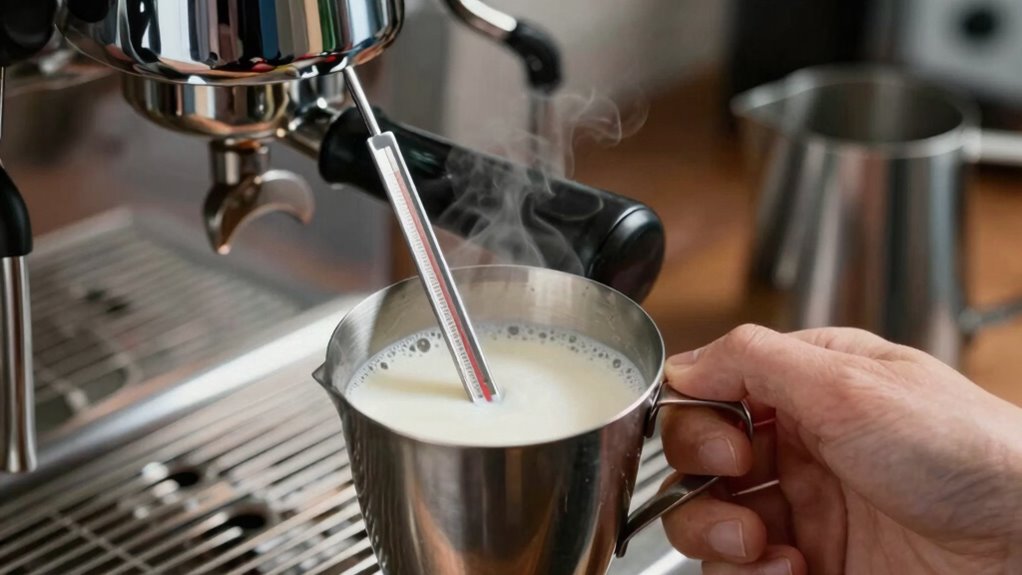
Accurately measuring milk temperature is vital for guaranteeing ideal quality and safety. To do this, use a reliable thermometer with high accuracy. Digital or dial thermometers designed for steaming techniques provide precise readings. Always insert the thermometer deep enough into the milk but avoid touching the pitcher’s sides or bottom. Keep in mind:
| Thermometer Type | Pros | Cons |
|---|---|---|
| Digital | Fast, accurate | Battery dependency |
| Dial | Easy to read | Slower, less precise |
| Infrared | Non-contact, quick | Less accurate for steaming |
Proper thermometer calibration and correct placement are essential for consistent readings. This guarantees you hit the ideal milk temperature every time. Regularly checking and maintaining your thermometer ensures ongoing accuracy, which is crucial for safe milk preparation.
Common Mistakes When Heating Milk (And How to Avoid Them)
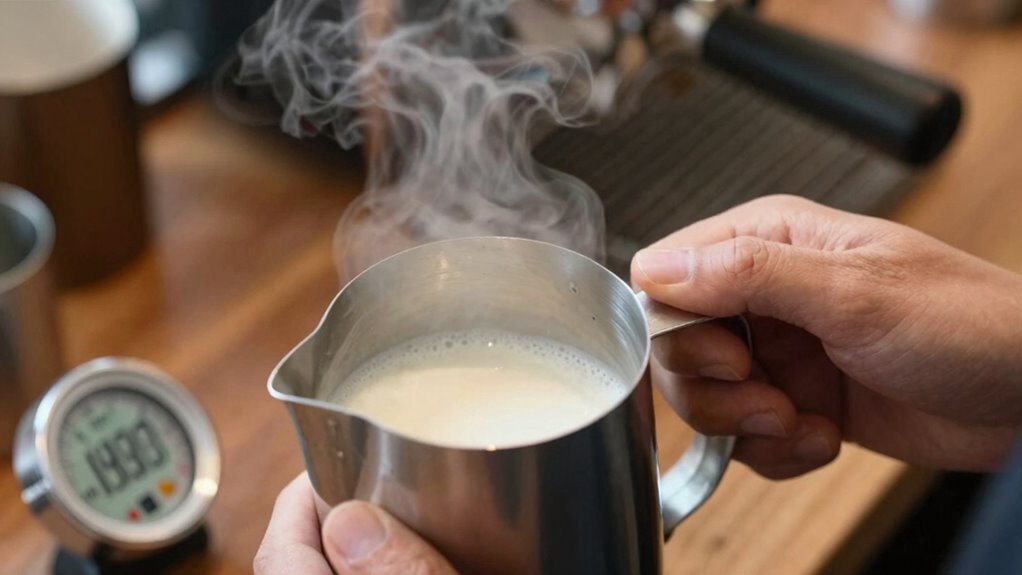
Even with a reliable thermometer, many people make common mistakes when heating milk that can compromise quality and safety. One mistake is overheating the milk past the scalding point, which can cause milk scalding and alter flavor. Using temperature gauges improperly, like relying solely on the visual cues instead of the thermometer, leads to inaccurate readings. Another error is not pre-warming the milk gradually, which can cause uneven heating and create hot spots. Some people also neglect to clean their equipment properly, risking contamination. It’s also important to understand the proper temperature range for heating milk to avoid these issues. To avoid these mistakes, monitor the milk carefully with a quality thermometer, stay within the recommended temperature range, and heat the milk slowly. Proper technique guarantees safe, delicious milk without scalding or ruining its texture. Additionally, regularly clean and maintain your equipment to prevent bacteria buildup and ensure consistent performance. Being aware of thermal expansion can also help in preventing accidental overheating during the warming process. Moreover, understanding how heat transfer mechanisms work can improve your control over the heating process. Incorporating techniques for even heating can further enhance your ability to reach the ideal temperature consistently.
Tips for Consistently Steaming Milk to the Right Temp

To guarantee your milk reaches the perfect temperature every time, start by pre-warming your steaming pitcher and milk jug slightly before adding cold milk. This helps with temperature control and prevents rapid heat loss. Use a thermometer to monitor the milk’s temperature closely, aiming for around 150°F (65°C). Keep your hand on the pitcher’s side to feel when it’s getting too hot or too cool. Practice consistent steaming techniques, such as positioning the steam wand just below the surface for milk frothing and then submerging it deeper. Here’s a quick reference:
| Tip | Benefit |
|---|---|
| Pre-warm equipment | Maintains consistent temperature |
| Use a thermometer | Ensures precise control |
| Adjust steam wand position | Achieves silky foam and proper heat |
Master these tips for steady, perfect milk steaming every time.
Troubleshooting: Why Your Milk Isn’t Foaming or Tasting Right?
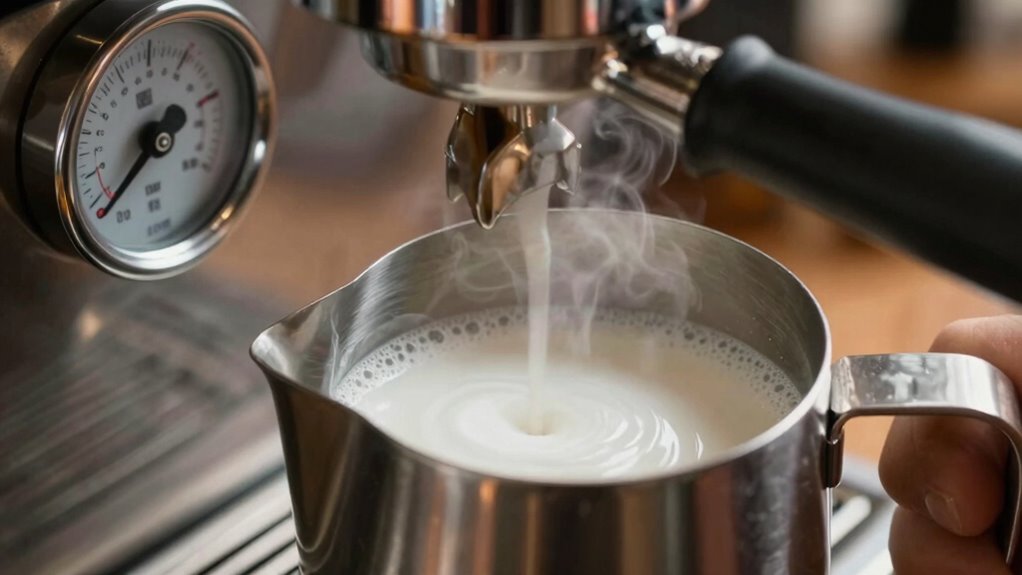
If your milk isn’t foaming properly or tastes off, the issue often stems from common mistakes during steaming or milk selection. Poor foam can result from overheating milk, which denatures milk protein, reducing its ability to trap air. Additionally, lactose crystallization may occur if milk is too cold or stored improperly, affecting texture and flavor. Here are four common issues:
- Using milk past its expiration or low-quality milk.
- Steaming at too high a temperature, causing protein breakdown.
- Not properly aerating milk, leading to thin or unstable foam.
- Storing milk at incorrect temperatures, promoting lactose crystallization.
Addressing these points helps improve both foam stability and flavor, ensuring your milk reaches the ideal temperature for perfect taste and texture.
Frequently Asked Questions
Can Milk Temperature Affect the Nutritional Value of My Coffee?
Yes, milk temperature can affect the nutritional value of your coffee. When you heat milk too much, it may lead to vitamin degradation, especially vitamins like B and C. This process reduces nutritional preservation, meaning you get fewer nutrients in your drink. To maximize health benefits, aim for a moderate temperature that enhances flavor and foam stability without compromising the vitamins, ensuring you’re drinking a nutritious and delicious coffee.
Does Milk Temperature Influence the Shelf Life of Steamed Milk?
Yes, milk temperature influences the shelf life of steamed milk. Higher storage temperatures accelerate milk spoilage, so keeping it refrigerated at or below 4°C (39°F) helps prevent bacterial growth. When you steam milk, it’s best to use it promptly, as warm temperatures can hasten spoilage. Proper storage at ideal temperatures extends shelf life, ensuring your milk stays fresh longer and maintains safety and quality.
How Does Ambient Room Temperature Impact Milk Steaming?
Ambient room temperature plays a key role in your milk steaming process. When the room is warm, steaming efficiency improves because the environment helps heat the milk more quickly. Conversely, in a cooler room, it takes longer to reach the ideal temperature, and you might need to adjust your steaming technique. Keep an eye on room temperature to maintain consistent results and guarantee your milk is perfectly steamed every time.
Are There Specific Milk Types That Perform Better at Certain Temperatures?
You’re hitting the nail on the head by asking about milk types and temperature compatibility. Whole milk, for example, performs best around 140-150°F, offering rich flavor and stable foam. Skim milk whips up lighter froth at slightly lower temps, while plant-based options like almond or soy milk vary in heat tolerance. Knowing each milk’s ideal temperature helps you craft perfect drinks without a hitch.
What Are the Safety Considerations When Heating Milk to High Temperatures?
You should be cautious about milk scalding when heating milk to high temperatures, as it can cause the milk to develop a burnt taste and destroy valuable nutrients. Also, overheating creates an environment for bacterial growth, increasing safety risks. To avoid these issues, heat milk gradually and avoid boiling. Use a thermometer to monitor temperature and guarantee you stay below 212°F (100°C) for safety and ideal flavor.
Conclusion
Getting your milk to the right temperature isn’t just about safety — it’s key to perfect flavor and foam. Did you know that milk heated above 160°F can start to taste burnt and lose its natural sweetness? By staying within the ideal range, you’ll ensure your coffee tastes rich and your foam stays silky. Keep an eye on the temp, and enjoy consistently great drinks every time. It’s worth the effort for that perfect sip!