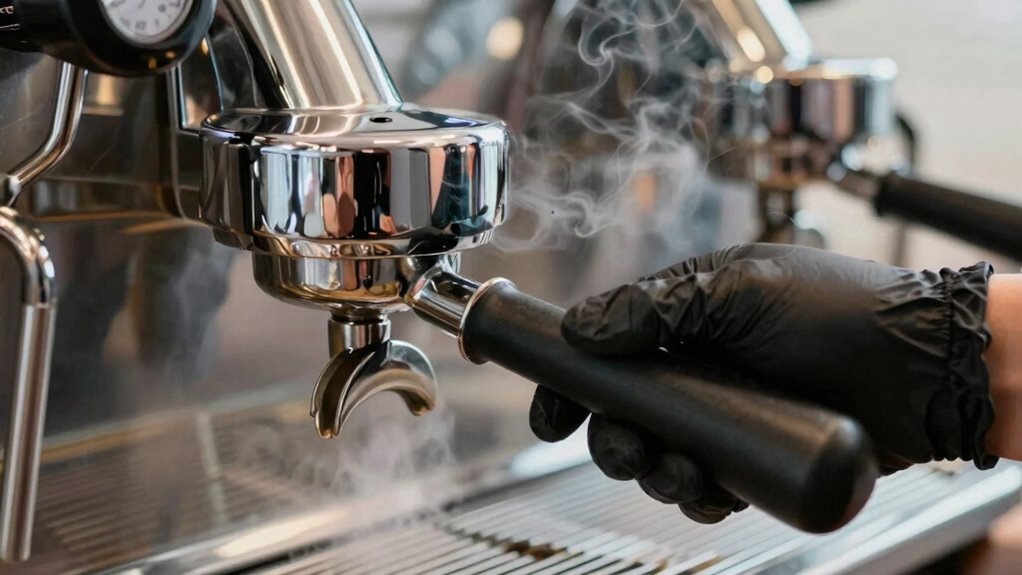

Before removing the portafilter, make sure all pressure has been fully released to prevent hot water or steam from escaping suddenly. Wait until your machine’s indicator shows it’s safe or use any built-in pressure release features. Carefully vent residual pressure by opening the steam wand if needed, and avoid forcing the portafilter off. Wearing protective gloves can help prevent burns. Understanding these steps guarantees your safety and the longevity of your machine—learn more to do it right every time.
Key Takeaways
- Ensure the machine has completed its brewing cycle and pressure indicators show it’s safe to remove.
- Use the built-in pressure release features or run a venting cycle to dissipate residual pressure.
- Carefully open the steam wand or pressure relief valve to vent any remaining pressure before removal.
- Wait for visual or indicator cues confirming pressure has been fully released.
- Wear protective gloves and handle the portafilter by the handle to avoid burns or spills.
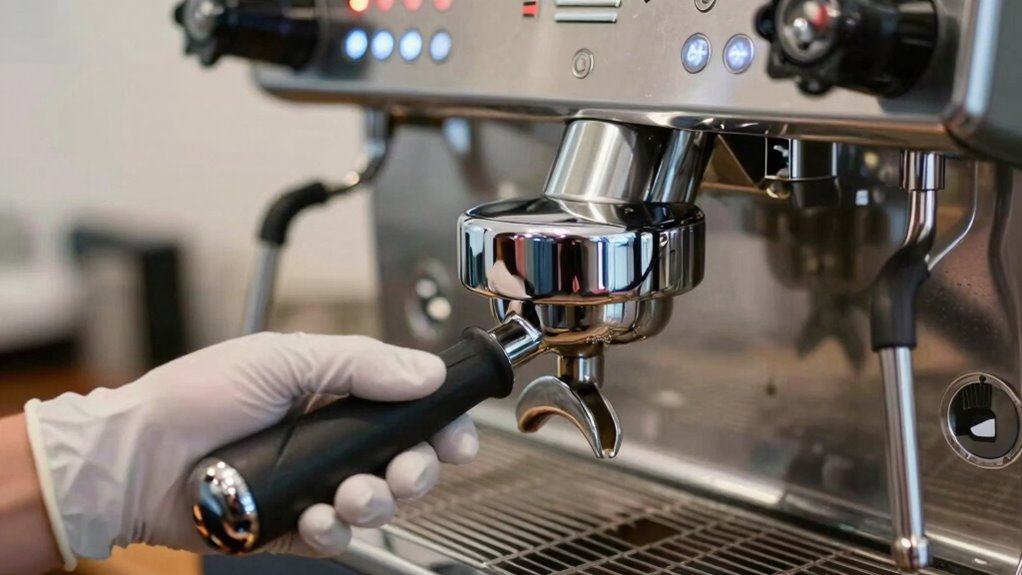
If you regularly use a portafilter for espresso, understanding pressure safety is vital to prevent accidents and guarantee ideal brewing. Espresso machines operate under high pressure, which means that when you remove the portafilter, residual pressure can pose a risk. Before you take out the portafilter, you need to verify that pressure has been properly released. This step is essential because if pressure remains trapped, you could face hot water or steam suddenly escaping, risking burns or other injuries. Always follow the manufacturer’s instructions for your specific machine, as different models might have slightly different procedures for pressure release.
One of the most important safety precautions is to wait for the pressure to fully dissipate before removing the portafilter. Many machines have a pressure release process, often involving a quick turn or a specific button that releases excess pressure safely. If your machine lacks a dedicated pressure release feature, you should run a brief brewing cycle with no coffee or carefully open the steam wand to vent residual pressure. Never force the portafilter off immediately after brewing; doing so can cause a sudden release of hot water or steam, which could cause burns or damage to the machine.
It’s also wise to familiarize yourself with your espresso machine’s safety features. Some models have built-in pressure relief valves or indicators that show when it’s safe to remove the portafilter. Always wait for these indicators to confirm that pressure has been released. Never bypass safety precautions or attempt to remove the portafilter before pressure has been fully vented. This could not only lead to injury but also damage your equipment, reducing its lifespan or causing costly repairs.
In addition to waiting for pressure to release, you should wear protective gloves or use a towel when handling the portafilter, especially if you suspect residual heat. Keep your hands away from the spout and handle the portafilter by the handle only, avoiding contact with the metal parts that can become very hot during brewing. These safety precautions help you avoid burns, spills, or other accidents.
Frequently Asked Questions
Can Portafilter Pressure Cause Injury During Removal?
Yes, portafilter pressure can cause injury during removal if you don’t follow proper portafilter safety and pressure release techniques. The pressure built up during extraction can cause hot coffee or steam to spray out unexpectedly. To avoid injury, always release pressure safely by using the machine’s pressure release methods before removing the portafilter. This guarantees you stay safe and prevent burns or other accidents.
How Often Should I Check Portafilter Pressure Settings?
Think of your portafilter pressure like tuning a musical instrument — it needs regular checkups. You should check your pressure gauge calibration weekly or at least once a month, depending on usage. Follow a maintenance schedule to keep everything in harmony and prevent surprises. Regular checks ensure ideal espresso extraction and safety, so don’t let your pressure slip out of tune; stay vigilant to keep your coffee game on point.
What Tools Are Best for Safely Releasing Pressure?
You should use pressure gauges and release valves to safely release pressure from your portafilter. Attach a pressure gauge to monitor the pressure levels accurately, then open the release valve slowly to vent excess pressure. This prevents sudden releases that could cause injury or damage. Always make certain the machine is turned off and cooled down before starting, and wear protective gloves for added safety during the process.
Is It Necessary to Wear Protective Gear?
Wearing protective gear is like armor for a knight—essential for safety. You should always wear safety equipment, such as gloves and eye protection, when handling a portafilter under pressure. This gear shields you from hot liquids or sudden releases that could cause burns or injuries. Prioritizing protective gear guarantees you minimize risks and work confidently, knowing you’re well-protected during the process.
What Are Signs of a Malfunctioning Portafilter Pressure System?
You’ll notice signs of a malfunctioning portafilter pressure system if the pressure gauge calibration is off or fluctuates unexpectedly. Over-pressurization may trigger safety release valves, causing leaks or hissing sounds. Also, difficulty locking or removing the portafilter, unusual noises, or inconsistent espresso extraction can indicate issues. Regularly verify these signs to ensure your machine operates safely and efficiently, preventing potential damage or safety hazards.
Conclusion
Before you remove the portafilter, remember to release pressure, release steam, and check your machine. Think of it as calming the storm before stepping into quiet waters—peaceful, safe, and secure. By following these steps, you protect yourself and your equipment, creating a smooth, worry-free experience. Stay vigilant, stay safe, and enjoy every perfect shot. Your careful actions turn brewing into an art, a ritual, a moment of mastery.