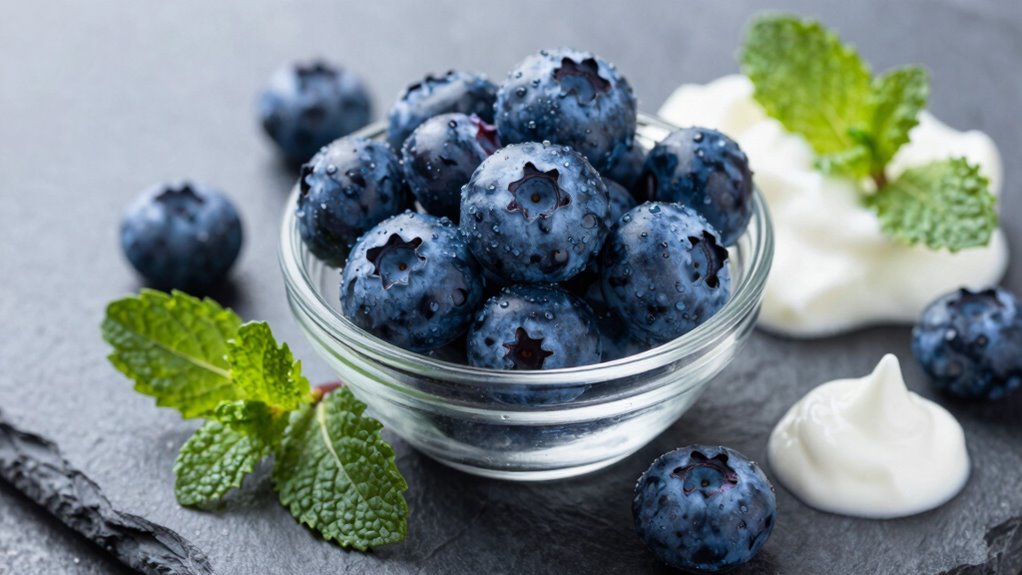

When you see “blueberry” in tasting notes, it’s describing a flavor profile, not an actual ingredient. These notes come from aroma and taste signals created through processing, fermentation, or blending, aiming to evoke a specific sensory experience. It’s about how the product tastes and feels, not what’s physically inside. If you want to understand how these flavor impressions are crafted and why they matter, keep exploring the details behind flavor creation.

Get kitchen gear delivered free with Prime
- Fast, free delivery on millions of items
- Prime Video, Amazon Music and more included
- Member-only deals all year
Key Takeaways
- “Blueberry” in tasting notes describes a flavor profile, not an actual ingredient in the product.
- Flavors like “blueberry” are crafted through processing techniques, not necessarily from real blueberries.
- Tasting notes focus on aroma and taste impressions, reflecting flavor development, not ingredient lists.
- Recognizing flavor notes enhances appreciation of flavor creation, separate from the physical ingredients used.
- Flavor profiles are designed perceptions, not direct indicators of specific ingredients present.

Many people assume that “blueberry” is an ingredient, but in the context of tasting notes, it’s actually a descriptor of flavor. When you taste a food or beverage, your brain processes the aroma and taste signals together, resulting in a flavor profile that might evoke the image of blueberries—think sweet, slightly tart, with a hint of floral or fruity notes. However, that doesn’t mean blueberries are necessarily present. Instead, the flavor development in products like wine, coffee, or baked goods is crafted through a blend of ingredients and processing techniques to evoke that specific profile.
Understanding this distinction is vital because it shifts your perspective from ingredient lists—what’s physically in the product—to the sensory experience it aims to deliver. For example, a wine may have tasting notes of “blackberry” or “vanilla,” but these are not literal ingredients. They’re flavor impressions created through fermentation, aging, and blending. Similarly, a craft beer might have tasting notes of “citrus” or “pine,” which reflect the aroma compounds and hop varieties used, not the actual fruit or plant.
This knowledge also enhances your appreciation for the art of flavor development. Chefs and producers carefully craft their products to evoke specific flavor impressions, often using natural or artificial flavorings, but always aiming for a balanced and memorable sensory experience. Recognizing the role of flavor perception helps you understand how different techniques influence the final product. When you read tasting notes, you’re engaging with the product’s flavor development—its designed aroma and taste profile—rather than just identifying ingredients.
In essence, understanding that flavor notes like “blueberry” describe the flavor experience rather than the ingredient itself allows you to become a more discerning taster. You’ll start to notice how different products evoke similar flavor impressions through various methods, deepening your appreciation for the craftsmanship behind what you consume. So next time you encounter a tasting note, remember: it’s about flavor perception and development, not necessarily the literal presence of that ingredient.
As an affiliate, we earn on qualifying purchases.
Frequently Asked Questions
How Do Tasting Notes Differ From Actual Ingredients?
Tasting notes differ from actual ingredients because they reflect your sensory perception and flavor development rather than listing specific components. When you experience tasting notes, you’re describing how a product tastes, smells, and feels, which may hint at flavors like blueberry without containing the fruit itself. Ingredients are the raw materials, while tasting notes capture your subjective experience, helping you understand the complexity and nuances of the flavor profile.
Can “Blueberry” Be Used as an Ingredient in Recipes?
You can use “blueberry” as an ingredient in recipes, but it’s often better to opt for fruit extracts or flavor additives instead. Fresh or frozen blueberries can be incorporated directly, providing natural flavor and texture. However, using blueberry flavorings or extracts guarantees consistency and convenience, especially in baked goods or beverages. So, while “blueberry” isn’t always an ingredient itself, its essence can definitely be added through these alternatives.
Why Do Flavors Sometimes Not Match Tasting Notes?
You’ll notice flavors sometimes don’t match tasting notes because artificial flavoring often aims for a specific taste profile, not an authentic one. In culinary applications, this means the flavor might be exaggerated or simplified, leading to discrepancies. While tasting notes describe the actual sensory experience, artificial flavors prioritize consistency and intensity, which can cause the mismatch you observe. So, always consider the purpose behind the flavoring when evaluating its accuracy.
Are Tasting Notes Subjective or Standardized?
Tasting notes are subjective because they rely on your sensory perception, which varies from person to person. While some standards exist, flavor variability means your experience might differ from someone else’s. You might detect different nuances or intensities based on your palate, mood, or environment. So, tasting notes serve as a guide, but they’re not absolute, reflecting your unique perception rather than a fixed, standardized description.
How Do I Identify Real Fruit in Processed Foods?
Ever wonder how to spot real fruit in processed foods? You start by checking ingredient verification labels; look for whole fruit pieces or recognizable fruit names. To guarantee fruit authenticity, avoid vague terms like “fruit flavor” or “natural flavors,” which often don’t mean actual fruit. Trust clear ingredient lists, and if unsure, research brands known for transparency. Are you ready to become a savvy shopper and verify your food’s true ingredients?
artificial flavoring for beverages
As an affiliate, we earn on qualifying purchases.
As an affiliate, we earn on qualifying purchases.
Conclusion
Understanding the difference between tasting notes and flavors helps you make better food and drink choices. Remember, tasting notes describe the sensory experience, while flavors are actual ingredients. Did you know that a survey found 65% of consumers confuse these terms? By knowing this, you can better appreciate what you’re tasting and avoid expecting blueberry as an ingredient when it’s just a flavor profile. Now, you’ll enjoy your food with a sharper, more informed palate.
As an affiliate, we earn on qualifying purchases.
craft beer flavoring ingredients
As an affiliate, we earn on qualifying purchases.
As an affiliate, we earn on qualifying purchases.
Halloween Picks
halloween
As an affiliate, we earn on qualifying purchases.