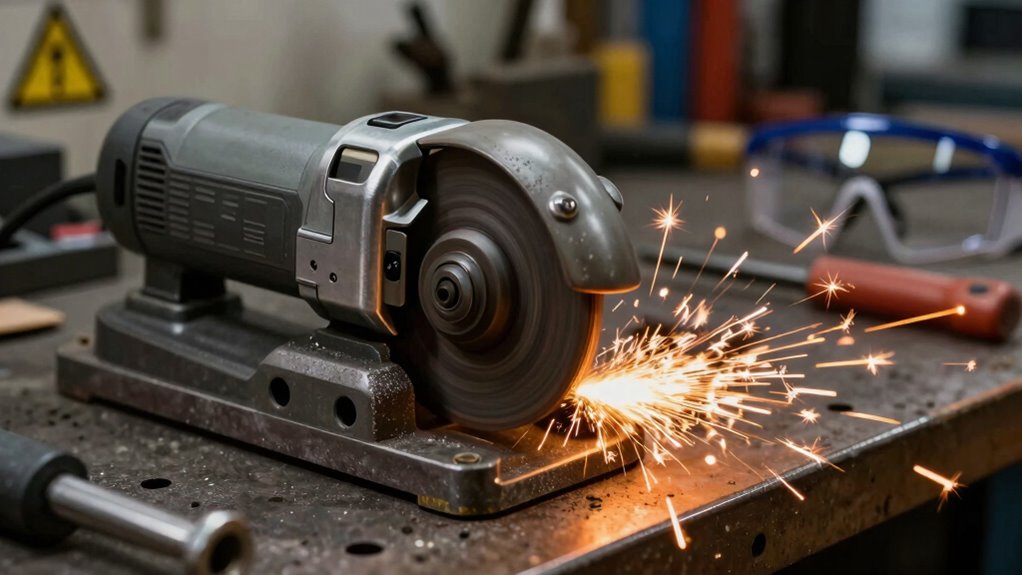

If your grinder suddenly sounds different, don’t ignore the signs. Unusual noises like grinding, squealing, or vibrations often indicate worn bearings, loose belts, or debris buildup. These issues can cause further damage if not addressed quickly. Regular maintenance such as cleaning, lubricating, and tightening parts can help prevent problems. Staying alert to sound changes allows you to catch issues early and avoid costly repairs—keep going to discover more tips to protect your equipment.
Key Takeaways
- Sudden changes in noise levels may indicate worn bearings or loose components requiring immediate inspection.
- Unusual sounds like grinding, squealing, or knocking suggest mechanical issues needing prompt maintenance.
- Increased noise can result from debris buildup or misalignment, which should be cleaned or adjusted promptly.
- Ignoring sound changes risks further damage, potentially leading to motor failure or costly repairs.
- Regularly monitor noise patterns and perform preventive maintenance to extend grinder lifespan and ensure safe operation.

If you’ve recently noticed a change in your grinder’s noise levels, it’s important to pay attention, as it can indicate underlying issues. Unusual sounds or increased noise often signal that something isn’t working as smoothly as it should. Addressing these signs early can prevent further damage and extend the lifespan of your equipment. One of the first steps is to follow some basic maintenance tips. Regular cleaning, lubricating moving parts, and inspecting for wear and tear can make a significant difference. Keeping the grinder free of dust, debris, and buildup prevents blockages that might cause noise fluctuations. Additionally, ensuring that all screws, bolts, and fittings are tight helps maintain stability and reduces vibrations that could contribute to loud or irregular sounds. Understanding the importance of preventive maintenance can help you avoid many common problems before they escalate.
Understanding the common causes behind a noisy grinder can help you diagnose and fix issues more efficiently. For example, worn-out bearings are a frequent culprit. When these parts deteriorate, they often produce grinding or squealing noises. Similarly, misaligned or loose belts can create slapping sounds or vibrations that make your grinder sound different. Overloading the machine or grinding materials that exceed its capacity can also strain the motor, resulting in louder operation or unusual noises. Sometimes, simply accumulated dust or debris in the motor housing can cause overheating or imbalance, leading to increased noise levels. It’s crucial to identify whether the noise is consistent or sporadic, as this can point to different issues requiring specific solutions.
In addition to routine maintenance tips, pay attention to how your grinder sounds during operation. If it suddenly becomes considerably louder or produces a different pitch, don’t ignore it. Often, these changes happen gradually, but they can quickly escalate into more serious problems if left unaddressed. Lubricating moving parts, replacing worn components, and checking alignment are straightforward steps you can take. If you’re unsure about inspecting internal parts or fixing mechanical issues, it’s wise to consult the manufacturer’s guidelines or seek professional assistance. Ignoring these signs can lead to costly repairs or even complete equipment failure.
Ultimately, staying proactive and attentive to your grinder’s noise patterns is key. By practicing regular maintenance tips and understanding common causes, you can troubleshoot effectively and keep your machine running smoothly. Remember, a little preventive care goes a long way in avoiding unexpected breakdowns and ensuring the longevity of your equipment. When in doubt, don’t hesitate to seek expert advice or perform more detailed inspections to keep your grinder operating quietly and efficiently.
Frequently Asked Questions
Can a Changing Grinder Noise Indicate a Motor Problem?
Yes, a changing grinder noise can indicate a motor problem. If you notice unusual sounds, it’s a sign you need to perform grinder maintenance and motor troubleshooting. These noises might come from worn-out bearings or electrical issues within the motor. Ignoring these signs can lead to more severe damage. Regularly check your grinder, clean it, and inspect the motor to prevent costly repairs and ensure smooth operation.
How Often Should I Inspect My Grinder for Wear?
You should inspect your grinder for wear at least once a month to keep it running smoothly. Think of it as giving your machine a gentle check-up, catching small issues before they become big problems. Stick to a consistent maintenance schedule, and don’t skip inspections—especially if you notice unusual noises or performance drops. Regular checks help guarantee your grinder stays in top shape and extends its lifespan.
Is It Safe to Keep Using a Noisy Grinder?
No, it’s not safe to keep using a noisy grinder. The strange sound is a sign that you need to perform proper grinder maintenance and check for worn parts. Ignoring these safety precautions can lead to further damage or accidents. Always inspect your grinder regularly, address any unusual noises promptly, and verify it’s functioning smoothly before continuing use. Prioritize safety to prevent injuries or costly repairs.
What Tools Are Best for Cleaning Grinder Components?
You should use a brush, compressed air, or a damp cloth to clean grinder components effectively. For thorough grinder maintenance, remove parts like burrs or blades and clean them with a soft brush or cloth. Avoid harsh chemicals, and guarantee everything’s dry before reassembling. Regular cleaning techniques help prevent buildup and noise issues, keeping your grinder running smoothly and quietly. Proper maintenance extends its lifespan and enhances performance.
When Should I Replace Grinder Blades or Burrs?
Replacing grinder blades or burrs is like changing worn-out shoes; it keeps your machine running smoothly. You should consider blade replacement when you notice uneven grind size, increased noise, or a decline in performance. Regular grinder maintenance helps extend the lifespan of your equipment, but don’t wait too long—worn blades can damage your grinder. Keep an eye on these signs to guarantee peak grinding and fresh coffee every time.
Conclusion
If your grinder suddenly sounds different, don’t ignore it—think of it like a warning bell ringing loud and clear. Ignoring unusual noises can lead to bigger, costlier problems down the line. Stay attentive to the signs, and address issues promptly. Regular maintenance keeps your grinder running smoothly, much like a well-oiled machine. Remember, catching problems early is the best way to prevent a breakdown and keep your work seamless and efficient.