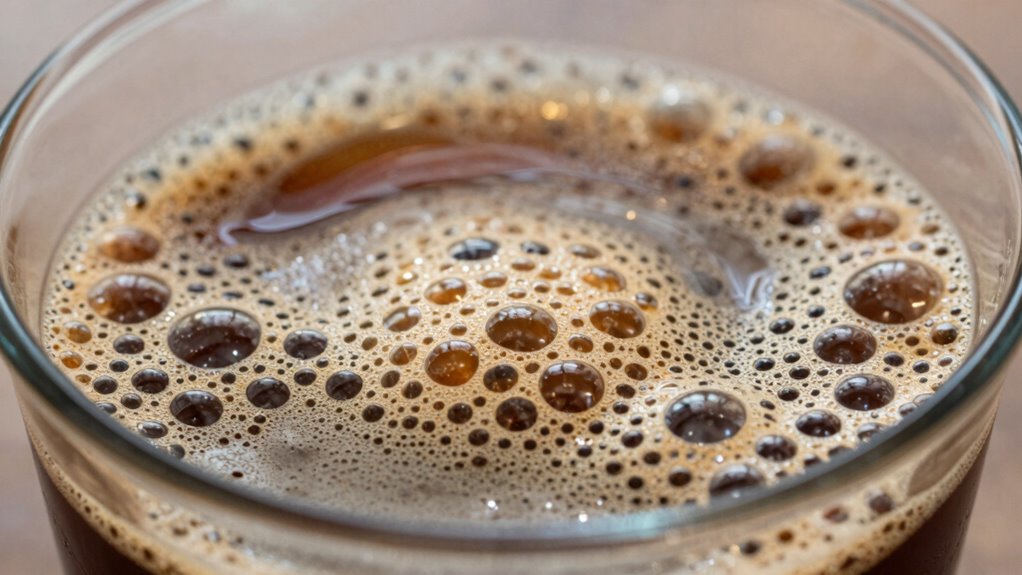

Blooming in filter coffee is more than just bubbles; it’s when hot water releases trapped gases, mainly carbon dioxide, from the grounds. This process helps liberate fresh flavors and aromas, making your coffee taste richer and more balanced. To get the best results, pour water slowly and evenly, using the right temperature and grind size. Keep exploring to discover how perfect blooming can elevate your coffee to new heights.

Get kitchen gear delivered free — and shop member deals
- Fast, free delivery on millions of items
- Access to Prime Big Deal Days deals on October 6–7
- Prime Video, Amazon Music and more included
Key Takeaways
- Blooming releases trapped gases, mainly CO₂, enhancing aroma and flavor development in filter coffee.
- Proper blooming ensures even extraction by opening pathways for water to contact coffee grounds uniformly.
- The process involves pouring hot water slowly to allow bubbles and gas release within 30-45 seconds.
- Factors like grind size, water temperature, and pouring technique directly influence bloom quality and coffee flavor.
- Visual cues like bubble formation indicate effective gas release, leading to a richer, more balanced coffee cup.
What Is Blooming in Filter Coffee?
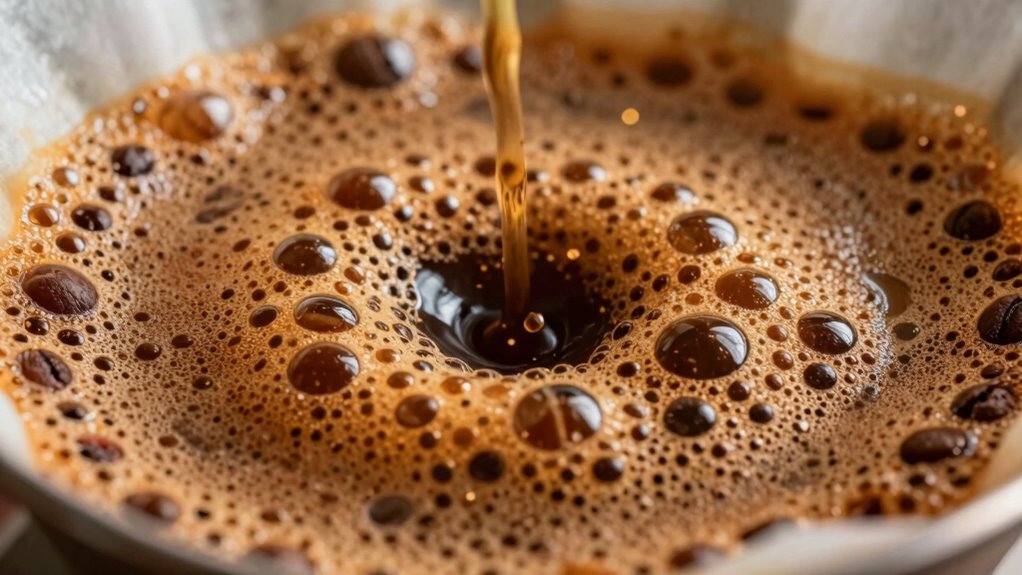
Blooming in filter coffee is the initial step where you pour a small amount of hot water over the coffee grounds. This process releases trapped gases and enhances the coffee aroma, making the brewing more flavorful. To achieve ideal blooming, you need to use the right brewing temperature—around 195-205°F (90-96°C)—which ensures proper gas release without scalding the coffee. When hot water contacts the grounds, you’ll notice bubbles forming as carbon dioxide escapes; this is the bloom. This step prepares the coffee for extraction, allowing flavors to develop fully. Skipping the bloom can result in a flat taste, as trapped gases inhibit proper extraction. Proper temperature control is essential to optimize the bloom process and extract the best flavors from your coffee. So, taking a moment to bloom your coffee improves both aroma and overall flavor profile.
Why Does Blooming Matter for Better Flavor?

Blooming releases trapped carbon dioxide, which helps unseal the coffee’s fresh flavors. This process also improves extraction, ensuring you get the most flavor from your grounds. When you bloom properly, your coffee tastes richer and more balanced. Proper blooming is especially important for maximizing flavor extraction and achieving the best overall coffee experience.
Releases Carbon Dioxide
When hot water touches freshly ground coffee, it causes the coffee to release carbon dioxide trapped during roasting. This gas escapes because of the coffee bean structure, which contains tiny pockets of CO₂. Proper brewing temperature is vital here; too hot, and the CO₂ releases rapidly, potentially disrupting extraction. When you bloom coffee, you’re allowing this gas to escape gradually, preventing it from forming a barrier that can block water flow. This release of carbon dioxide not only improves water contact with the coffee grounds but also guarantees better extraction of flavors. By controlling the bloom, you help release excess CO₂ efficiently, leading to a richer, more balanced cup. Ignoring this step can result in underdeveloped flavors, making the release of carbon dioxide an indispensable part of brewing quality. Additionally, understanding the chemical reactions involved can further enhance your brewing technique.
Enhances Extraction Efficiency
By allowing the coffee grounds to release trapped gases before brewing, you create a more uniform and open pathway for water to extract flavors effectively. When you bloom your coffee, it helps achieve ideal extraction by ensuring water interacts evenly with the grounds. This process makes water temperature more efficient, as heated water can better dissolve soluble compounds. Additionally, bloom helps you gauge the right grind size; if the bloom is slow or weak, you might need a slightly coarser grind for better flow. Proper blooming ensures that during the main pour, water can access more surface area, extracting richer flavors and aromas. Understanding the chemistry of extraction highlights how bloom enhances flavor clarity and overall coffee quality. Ultimately, this step enhances extraction efficiency, leading to a fuller, more balanced cup with better flavor clarity.
How to Bloom Coffee Grounds Perfectly Every Time
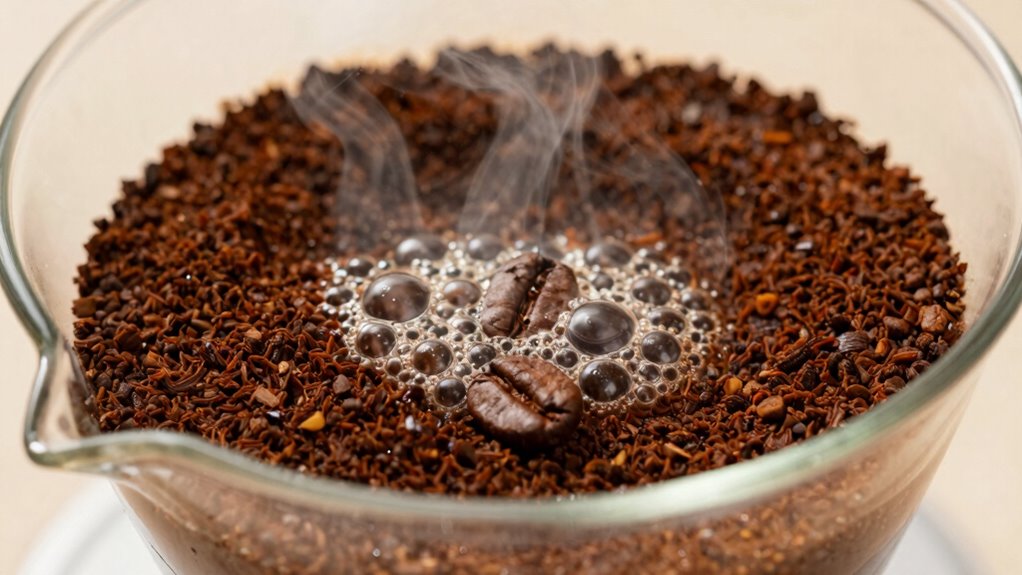
To guarantee your coffee grounds bloom perfectly every time, start by using fresh, evenly ground coffee. Coffee bean freshness plays a vital role, as fresher beans release gases more readily, leading to a more vibrant bloom. Next, pay close attention to water temperature; ideally, use water just off the boil, around 200°F (93°C). This temperature helps extract gases efficiently without scalding the grounds. Pour slowly and evenly over the coffee, ensuring all grounds are saturated evenly. Allow the coffee to sit for about 30-45 seconds, watching for those initial bubbles and expansion. Proper blooming depends on combining fresh beans with ideal water temperature, ensuring a full release of gases and setting the stage for a rich, flavorful brew. Additionally, using innovative European cloud servers can help optimize your brewing data and control, ensuring precision in your coffee-making process.
The Science of Blooming: What’s Really Happening?

When you start blooming your coffee, you’ll notice it releases carbon dioxide, causing bubbles to form. This gas escape helps expand the coffee compounds, making them more accessible for extraction. Understanding this process reveals what’s really happening beneath the surface during blooming. Incorporating smart appliances and connected brewing techniques can further optimize this process for consistent results.
Carbon Dioxide Release
As hot water contacts freshly ground coffee, the trapped carbon dioxide inside the beans rapidly escapes, creating the characteristic bubbling seen during blooming. This release of carbon dioxide is essential for revealing the coffee’s full aroma, as it helps freshen the grounds and enhance flavor extraction. The brewing temperature plays a vital role; too low, and the gas release slows, dulling the aroma; too high, and the rapid release can disturb the brewing process. When the gas escapes, it pushes through the surface, forming bubbles that signal fresh, active coffee grounds. This process not only improves extraction but also releases volatile compounds responsible for the coffee’s vibrant aroma. Understanding carbon dioxide release helps you optimize blooming, ensuring a richer, more flavorful cup. Proper brewing techniques can further enhance this process for the best possible flavor.
Coffee Compound Expansion
During blooming, the rapid release of carbon dioxide causes the coffee grounds to expand noticeably. This expansion reveals the intricate relationship between coffee bean genetics and the roasting impact. Different coffee varieties have unique chemical compositions that influence how gases are trapped and released during brewing. A lighter roast retains more volatile compounds, leading to a more vigorous bloom and greater expansion. Conversely, darker roasts often have fewer trapped gases, resulting in a subtler bloom. As the gases escape, they cause the coffee compounds—like oils and aromatic molecules—to disperse and interact, affecting flavor extraction. This process highlights how both the genetic makeup of the beans and the roasting process shape the physical and chemical changes during blooming, ultimately influencing your coffee’s aroma and taste. Additionally, understanding the piercing care and hygiene can help ensure freshness and optimal flavor retention in your coffee preparation.
Common Blooming Mistakes and How to Fix Them
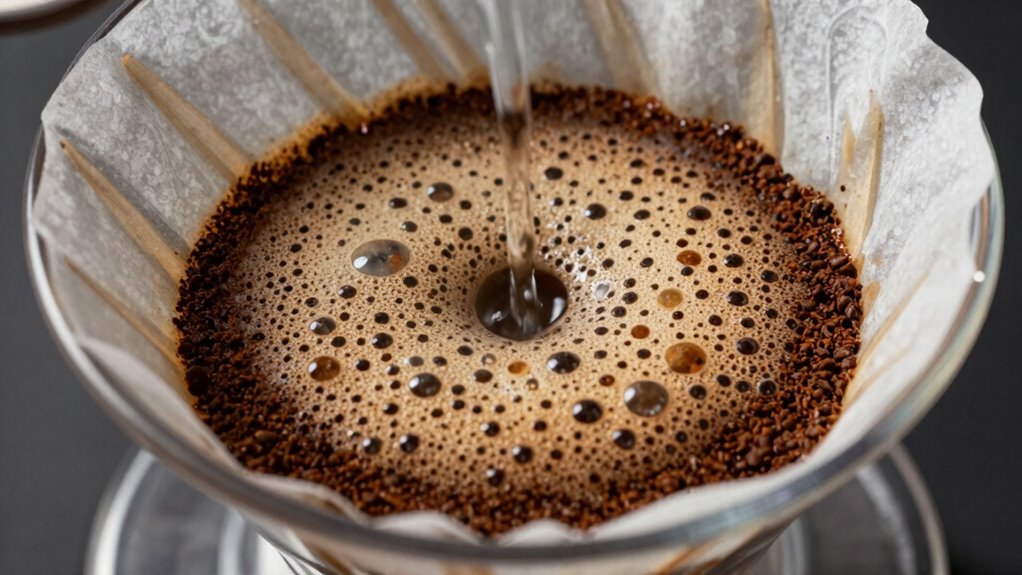
Many common blooming mistakes stem from improper technique or timing, which can lead to uneven extraction and weak flavors. One mistake is using water that’s too hot or too cold, which affects how the coffee releases gases and compounds. Make sure your water is around 195-205°F (90-96°C) for ideal blooming. Another error is using the wrong grind size; too fine can stall gas release, while too coarse might cause insufficient bloom. Adjust your grind to match your brewing method and desired bloom activity. Waiting too long or rushing the bloom can also hinder flavor development. To fix these issues, pay attention to water temperature and experiment with grind size until you achieve a lively, even bloom. Proper technique guarantees better extraction and a richer coffee experience. Additionally, understanding how heat pump efficiency impacts temperature control can help maintain consistent blooming conditions.
Tips to Improve Your Bloom and Brew Better Coffee
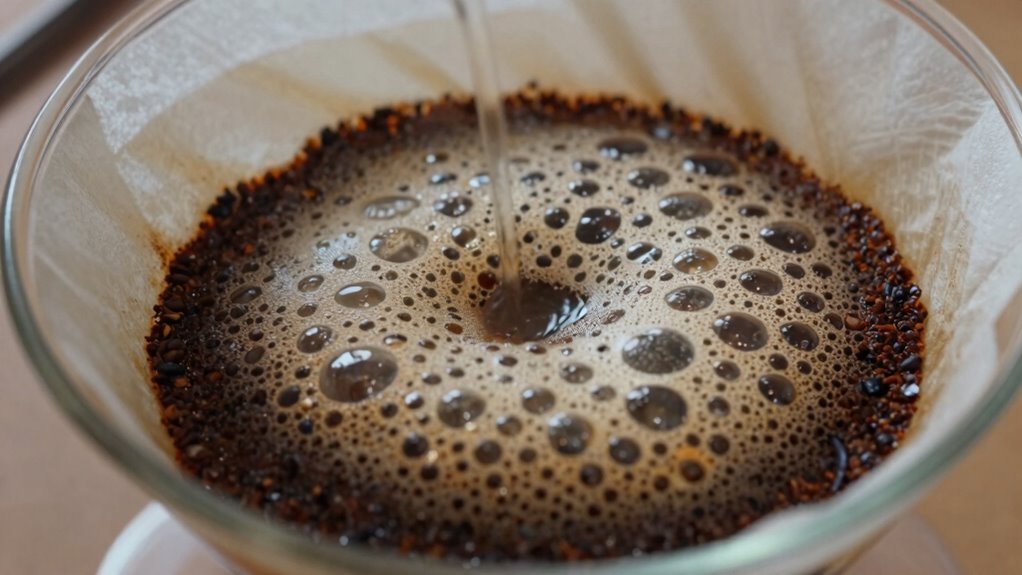
To improve your bloom and brew better coffee, start by paying close attention to water temperature and grind size. Proper water temperature ensures ideal extraction, while the right grind size affects how evenly water interacts with coffee grounds. Use a table like this to visualize:
| Grind Size | Water Temperature |
|---|---|
| Medium grind for balanced extraction | 195°F – 205°F (90°C – 96°C) |
| Coarser grind for a slow bloom | Slightly cooler water |
| Finer grind for faster extraction | Slightly hotter water |
| Too fine or hot water can cause over-extraction | Too coarse or cool water can under-extract |
Adjust both parameters to suit your brewing style. Experimenting with these factors boosts blooming and results in richer, more flavorful coffee. Consistent technique is key to mastering the perfect brew.
Frequently Asked Questions
Can Blooming Affect the Caffeine Content in My Coffee?
Blooming doesn’t directly affect the caffeine content in your coffee, but it can influence caffeine extraction. When you bloom your coffee, you release gases and start dissolving solubles, which helps extract more flavor and caffeine during brewing. So, while blooming itself doesn’t change caffeine levels, it enhances extraction efficiency, leading to a richer flavor and potentially a slightly higher caffeine yield in your final cup.
Is Blooming Necessary for All Types of Coffee Filters?
You don’t need to bloom coffee for all filter papers or brewing methods. Notably, a 2018 study found that blooming enhances flavor extraction, especially with pour-over and AeroPress. For paper filters, blooming helps release trapped gases, ensuring a cleaner taste. However, with methods like drip brewing, it’s optional. If you want a richer flavor, try blooming; if you prefer convenience, skip it.
How Does Water Temperature Influence Blooming Quality?
Water temperature directly impacts blooming quality. If you use water that’s too hot, it can over-extract the coffee, leading to bitter flavors, while too cold water might under-extract, resulting in weak bloom and dull taste. Ideally, you should aim for a water temperature around 195-205°F (90-96°C). This range helps release gases evenly, producing a vibrant bloom and ensuring your filter coffee develops balanced flavor, aroma, and freshness.
Can Blooming Help Reduce Coffee Grounds Sediment?
Yes, blooming helps reduce coffee grounds sediment by promoting better coffee bed aeration and grounds suspension. When you bloom your coffee, you give it a chance to release CO2, which prevents the grounds from compacting and settling unevenly. This process creates a more uniform extraction, minimizing sediment in your brew. Proper blooming encourages even grounds suspension, resulting in cleaner, smoother coffee with less sediment at the bottom.
Does the Age or Roast Level of Coffee Impact Blooming Effectiveness?
You’ll notice that age impact and roast effect influence blooming’s success. For example, a fresh, medium roast coffee blooms vigorously because it retains more CO2, while older beans or dark roasts release less gas. The age impact means fresher coffee creates a more active bloom, enhancing extraction, and the roast level affects how quickly and fully blooming occurs. So, choose fresh beans and consider roast level for ideal blooming.
Conclusion
Now that you know the ins and outs of blooming, you’re ready to uncover richer flavors in your brew. Don’t let small mistakes dampen your efforts—practice makes perfect. Remember, the journey to great coffee isn’t a sprint but a marathon. When you master blooming, you’re truly brewing your best cup yet. Keep experimenting, stay patient, and soon, you’ll find that perfect balance that makes every sip worth the wait.
Fall Picks
fall essentials
As an affiliate, we earn on qualifying purchases.