TL;DR

Get kitchen gear delivered free with Prime
- Fast, free delivery on millions of items
- Prime Video, Amazon Music and more included
- Member-only deals all year
House Beautiful reports that designers are using marbling across interiors, including murals, wallpaper, furniture, textiles and lampshades. Designers describe the pattern as a way to add movement and handmade character, but the source does not establish that it is replacing beige walls across the market.
Designers are applying marbling to walls and home furnishings, from large-scale murals and wallpaper to lampshades, chairs and textiles, according to a 2026 report by House Beautiful. The examples show how the heritage technique is being adapted for contemporary interiors, though the report does not establish that marbling is broadly replacing beige or other plain walls.
The designers interviewed describe marbling as a way to bring color, movement and irregular pattern into a room. Cara Woodhouse told House Beautiful that clients are looking for surfaces with more character after years of greige interiors. She said marbling can look painterly, graphic or soft depending on its colors.
The technique is appearing in more than wall coverings. Designer Sasha Bikoff said its appeal lies in the movement of color and the unpredictable patterns, which can be applied to wallpaper, furniture, textiles and decorative objects. The report also features resin chairs, hand-marbled lampshades, a marbled silk sink skirt and a powder room with billowy marbled fabric.
Several projects illustrate different uses. Michelle Fahmy chose a large-scale mural for a stairwell and living area, while Bikoff selected flowing, liquid-effect wallpaper for a project in a Zaha Hadid-designed building. In a bathroom, Marta St. Amour used Lee Jofa Taplow wallpaper as the starting point for a palette of amber, blue and sandy tones alongside stone and tile.
Marbling Moves Beyond Wallpaper
The examples matter because they show marbling being treated as a flexible design motif, rather than only a traditional paper pattern. Designers in the report use it at different scales: as a prominent wall treatment, a fabric detail or a single accent object. That range gives homeowners options for adding pattern without committing every surface to a busy look.
Marbling’s irregularity is part of the stated appeal. Woodhouse described it as “pattern without repetition,” saying its variation can make a wall read more like art than standard wallpaper. Jo Plant, chief creative officer at lighting brand Pooky, linked its renewed appeal to demand for craft, texture and character. Those are designers’ assessments, not survey findings or evidence of a measured shift in consumer demand.
Products Worth Considering

Le Creuset Enamemed Cast Iron Oval Dutch Oven, 5 qt., White/Crucible
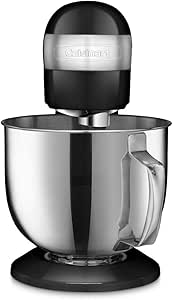
Cuisinart SM-50BK Stand Mixer, 5.5 Quart, 12 Speed, Onyx

Cuisinart 8-in-1 Air Fryer Toaster Oven with Grill, 1800W, Stainless Steel
As an affiliate, we earn on qualifying purchases.
A Technique With Long Roots
Decorative marbling has a history that predates its current use in interiors. The source report traces paper marbling to 10th-century Japan, where artisans made designs by placing ink on water and manipulating its movement. By the 15th century, the practice was known in Turkey as “the art of clouds,” and later reached Venetian and Florentine bookbinders.
The modern applications described by House Beautiful retain the technique’s flowing, unpredictable look but use different materials and settings. Designers are translating the effect into wallpaper, resin, silk and lighting, rather than limiting it to marbled paper. The report presents selected projects and designer commentary; it does not provide sales data, market research or a comparison of marbling’s popularity with plain wall finishes.
““People are tired of flat, safe walls.””
— Cara Woodhouse, designer, quoted by House Beautiful
How Broad Is the Shift?
The report does not provide data showing how many homeowners or designers are choosing marbling, whether demand has increased over a defined period, or whether it is displacing beige and other plain finishes. Its examples come from selected designers and projects. It is also not clear how the styles compare in cost, installation demands, durability or upkeep across materials.
“Replacing” is therefore stronger than the evidence supplied. The source supports a report of designers using marbling in varied ways and describing renewed interest; it does not confirm a widespread change across the interior-design market.
Watch for Broader Market Evidence
The supplied report does not identify a forthcoming survey, sales release or industry milestone that would establish whether marbling’s use is growing beyond the featured projects. Readers looking for evidence of a broader shift would need comparable market data or additional reporting on client demand and product sales.
For now, the concrete development is the range of applications documented by House Beautiful: marbling is appearing on walls and across furnishings and accessories. Whether that translates into a lasting or widespread move away from plain finishes remains unresolved.
Key Questions
What is the reported interior-design trend?
House Beautiful reports that designers are using marbling on wallpaper, murals, furniture, textiles and decorative objects. It describes selected projects rather than proving a market-wide trend.
Is marbling replacing beige walls?
The source does not establish that. Designers quoted in the report describe interest in more expressive surfaces, but it includes no market data showing that marbling is replacing beige or other plain finishes broadly.
Where are designers using marbling?
The examples include a stairwell mural, flowing wallpaper, resin chairs, lampshades and a marbled silk sink skirt. The report shows the motif used on walls and furnishings.
What makes marbling different from repeating wallpaper?
Designer Cara Woodhouse describes it as “pattern without repetition.” Marbling’s irregular, flowing marks vary rather than forming a uniform repeated motif, according to the designers quoted.
Source: housebeautiful.com