
TL;DR

Get kitchen gear delivered free with Prime
- Fast, free delivery on millions of items
- Prime Video, Amazon Music and more included
- Member-only deals all year
An Ideal Home report recommends six habits for drying laundry indoors while limiting moisture build-up: spin clothes again, space them out, use suitable drying equipment, position the rack thoughtfully and ventilate the room. These steps may help reduce damp conditions, but the source does not quantify their effects or guarantee they will prevent mould.
Ideal Home has published six tips for drying laundry indoors while limiting moisture in the home, recommending an extra washing-machine spin, space between garments, suitable airer placement and ventilation. The advice matters because water in wet clothes evaporates into indoor air, where inadequate airflow or moisture removal can contribute to condensation and damp conditions.
The report advises running an extra spin cycle before hanging clothes, where the machine and garments permit it. Removing more water at the outset can shorten drying time and reduce how much moisture laundry releases into the room. The article singles out towels, jeans and bedding as heavier items that may retain substantial water, and cautions readers to use a suitable spin speed.
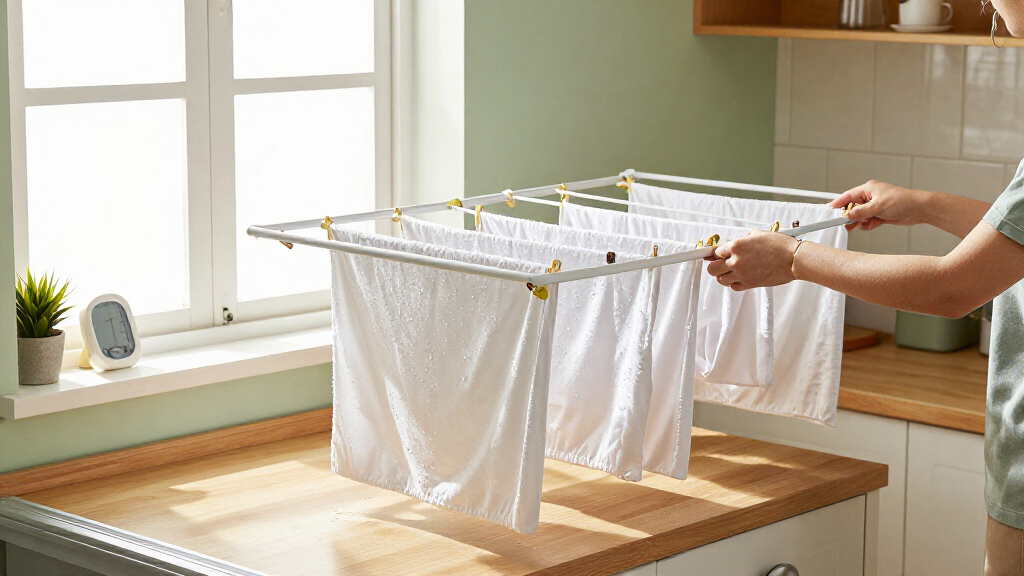
It also recommends leaving space between garments on the rack so air can circulate. Spread out sleeves, open shirts and avoid folding trouser legs over one another. Lauren Roelofs, a laundry expert at Brabantia, said avoiding an overcrowded rack is a simple way to help clothes dry more evenly. She also recommends turning heavier pieces partway through drying to limit damp patches.
For households that often dry clothes inside, the report suggests a heated clothes airer, potentially used with a compatible cover. Lakeland buying lead Catrin Parry described a heated airer as a practical option when outdoor drying is not possible; she said a cover can trap warm air and may cut drying time by a couple of hours, depending on the load and conditions. The article stresses that a heated airer does not remove moisture from the room, and recommends pairing it with a dehumidifier. It also advises keeping the rack slightly away from walls and ventilating the room.
How Indoor Laundry Adds Moisture
Wet clothes release water into indoor air as they dry. When that moisture is not dispersed or removed, it can contribute to condensation and damp, especially in rooms with limited ventilation. The six suggestions address different parts of the process: removing water before drying, improving airflow around clothes, and managing moisture in the room.
The advice is relevant to people who cannot dry clothes outside during cold or wet weather or who do not use a tumble dryer. It also distinguishes between drying laundry and controlling household humidity: a heated airer may help clothes dry, while a dehumidifier removes moisture from the air. The report does not establish that any one measure will prevent mould in every home.
Products Worth Considering

Ninja Foodi Smart 6-in-1 Indoor Grill and Air Fryer, 4 Qt, FG551

Instant Pot Duo 6-Quart 7-in-1 Electric Pressure Cooker

Le Creuset Signature Enameled Cast Iron Round Dutch Oven, 5.5 qt, Deep Teal
As an affiliate, we earn on qualifying purchases.
The Six Recommended Drying Habits
The report presents these measures for households relying on indoor drying during colder, wetter weather: run an extra spin cycle; leave gaps between clothes; consider a heated airer; pair the rack with a dehumidifier; place the airer where air can circulate; and ventilate the room. It says the appropriate spin speed depends on the laundry and machine, while the benefits of heated-airer covers vary with conditions.
Rack design and capacity are discussed as practical considerations, particularly where floor space is limited. A taller rack can use vertical space, but the article’s central advice is to avoid crowding garments and to allow airflow around the rack. It also notes that positioning a dehumidifier where air can circulate freely is preferable to placing it in a tight corner.
“One of the simplest ways to speed things up is to avoid overcrowding your drying rack. Leaving space between garments allows air to circulate, helping clothes dry more evenly.”
— Lauren Roelofs, laundry expert at Brabantia, as quoted by Ideal Home
What the Advice Cannot Guarantee
The report offers practical recommendations rather than controlled test results. It does not quantify how much an extra spin, a heated airer, a dehumidifier or ventilation changes indoor humidity, nor does it compare the measures across different homes. Its estimate that a cover may reduce drying time by a couple of hours is attributed to Parry and is qualified by the load and conditions.
Whether these steps are enough to address damp depends on factors such as room size, airflow, outdoor conditions and existing moisture problems. The source does not claim that following the tips will prevent mould in all circumstances, and it provides no advice on diagnosing or repairing established mould or persistent damp.
Practical Steps for the Next Load
For the next indoor load, the report’s advice is to remove as much water as appropriate with a spin cycle, then hang items with gaps between them and keep heavier garments from overlapping. Position the rack away from walls where possible and provide room ventilation. If using a heated airer, remember that it helps dry clothes but does not itself remove moisture from indoor air; a dehumidifier is the suggested companion.
Readers dealing with recurring condensation or damp may need to look beyond laundry-drying habits. The report does not set out a diagnostic process or a follow-up test, so the cause and suitable remedy for persistent household damp remain case-specific.
Key Questions
What is the main advice for drying clothes indoors?
Remove excess water and improve airflow. Ideal Home recommends an extra spin cycle where suitable, spacing clothes on the rack, positioning the rack to allow air circulation and ventilating the room.
Does a heated clothes airer remove moisture from the room?
No. The report says a heated airer helps dry laundry but does not remove the moisture released into the room. It recommends using a dehumidifier alongside it to remove excess moisture from the air.
Why should clothes be spaced out on an airer?
Gaps between garments let air circulate, which can help clothes dry more evenly. Brabantia laundry expert Lauren Roelofs also advises spreading sleeves and turning heavier items during drying.
Will these tips prevent mould?
The report presents the habits as ways to limit moisture and condensation, but it does not guarantee they will prevent mould. Results depend on the room and conditions, and persistent damp may need separate investigation.
Source: idealhome.co.uk