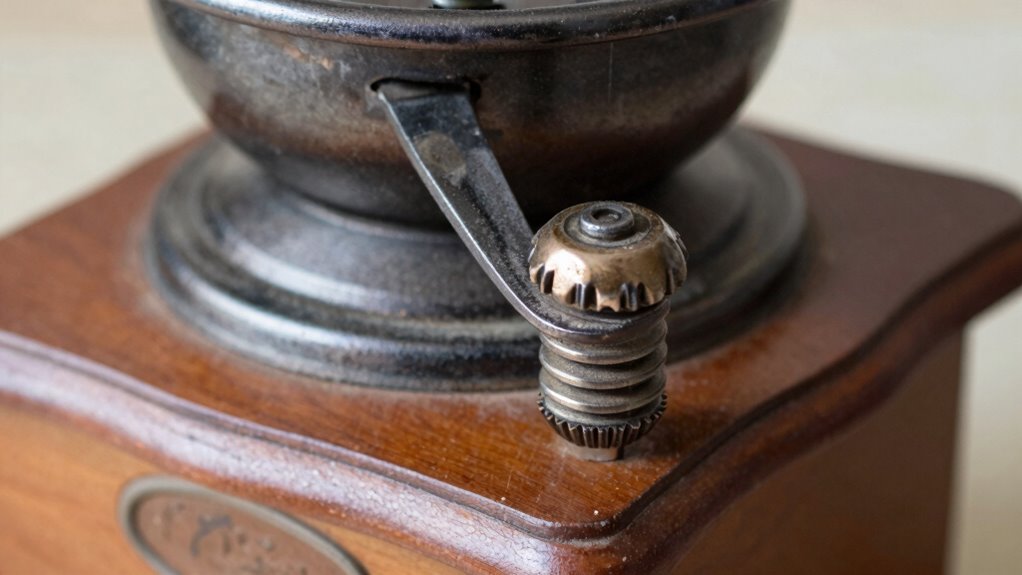

Your coffee grinder’s setting can shift over time due to wear on burrs or blades, loose components, and environmental changes like heat and humidity. Frequent use, handling, and varied bean types also impact grind consistency. Proper maintenance, careful adjustments, and controlling storage conditions help fight drift. If you want to keep your grind stable, understanding these factors and how to address them can make a big difference—more tips await if you explore further.
Key Takeaways
- Wear and tear on internal components cause misalignment, leading to gradual changes in grind settings over time.
- Environmental factors like temperature and humidity cause material expansion or residue buildup, affecting calibration.
- Mechanical looseness, gear misalignment, and part fatigue from frequent use can result in setting drift.
- Regular cleaning, lubrication, and maintenance help preserve component alignment and reduce adjustment drift.
- Bean type, roast level, and storage conditions influence grind behavior, causing settings to shift with different beans.

Professional Coffee Grind Size Chart 304 Stainless Steel Laser-Engraved Reference Card for 8 Brewing Methods 16-Level Comparison Guide (Silver, 10cm*10cm)
COMPREHENSIVE GUIDE: Professional coffee grind size chart featuring 8 brewing methods from Turkish coffee to Cold Brew, with…
As an affiliate, we earn on qualifying purchases.
As an affiliate, we earn on qualifying purchases.
Why Does My Coffee Grinder’s Setting Change Over Time?
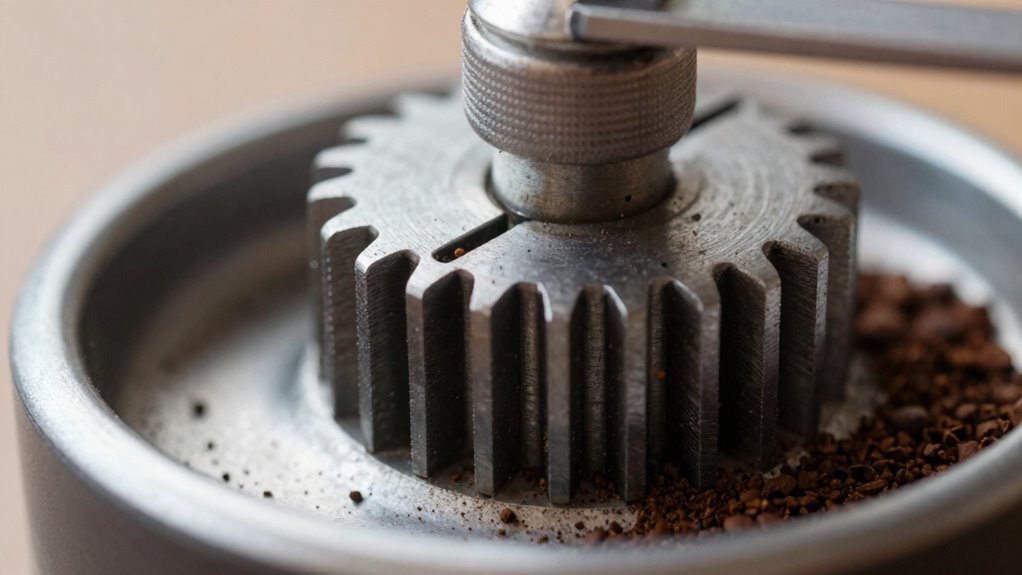
Over time, your coffee grinder’s setting can shift due to wear and tear on its components. As parts like burrs or blades experience friction, they may become slightly misaligned, affecting grind consistency. This component degradation is a common cause of drift, emphasizing the importance of regular maintenance. Regularly inspecting and cleaning your grinder can help prevent component wear from impacting performance. This drift causes your coffee to vary in texture, leading to uneven extraction. To combat this, you should regularly check and calibrate your grinder using simple calibration techniques, such as measuring the grind size and adjusting accordingly. Overuse or frequent adjustments can also lead to subtle changes in the grinder’s accuracy. Recognizing these signs early allows you to maintain more consistent results. Modern kitchen technology offers smart solutions that can assist in monitoring and maintaining your grinder’s performance. By understanding how wear impacts your grinder and employing proper calibration techniques, you can keep your grind consistent and ensure your coffee always tastes its best.

Coffee Grinder Cleaning Brush Set, Espresso Machine Brush Cleaner Tool with Walnut Wood Handle and Natural Bristles for Barista Home Kitchen
【Good tool for coffee lover】: This coffee grinder brush set is specially designed to brush away coffee grounds…
As an affiliate, we earn on qualifying purchases.
As an affiliate, we earn on qualifying purchases.
What Is Grind Adjustment Drift and Why Is It a Problem?
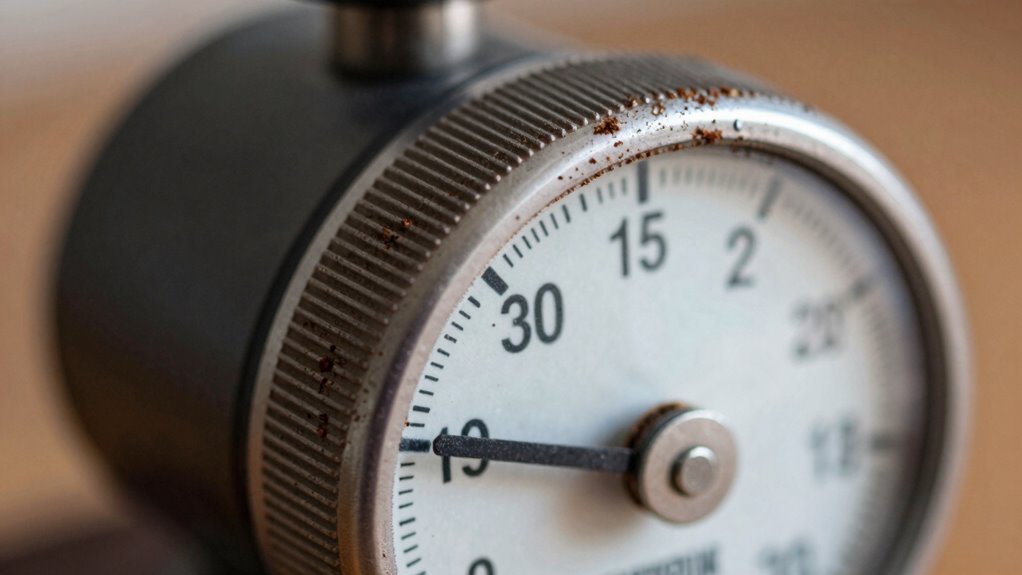
What exactly is grind adjustment drift, and why does it matter? It’s when your coffee grinder’s setting gradually shifts, affecting grind consistency and ruining your brew. Over time, even small changes can throw off your adjustment calibration, leading to inconsistent espresso or drip coffee. This drift can appear as a subtle change in flavor or extraction time, but it’s a sign your grinder isn’t maintaining stable settings. Here’s why it’s a problem:
- It compromises grind consistency, making your coffee unpredictable.
- It forces you to readjust your settings frequently.
- It impacts overall brewing quality and flavor.
Understanding grind adjustment drift helps you troubleshoot and maintain ideal grind calibration, ensuring each cup meets your standards.

MIGAKU HOME Coffee Grinder Cleaning Kit – 5Pcs Large Soft Brush, Small Hard Brush, Group Head Brush, Long-reach Brush & Air Blower for Coffee & Espresso Machine Parts & Accessories
5Pcs Espresso Cleaning Kit: MIGAKU HOME set includes Black Walnut Large Soft Brush, Black Walnut Small Hard Brush,…
As an affiliate, we earn on qualifying purchases.
As an affiliate, we earn on qualifying purchases.
What Causes Grind Adjustment Drift? (Environmental, Mechanical, and User Factors)
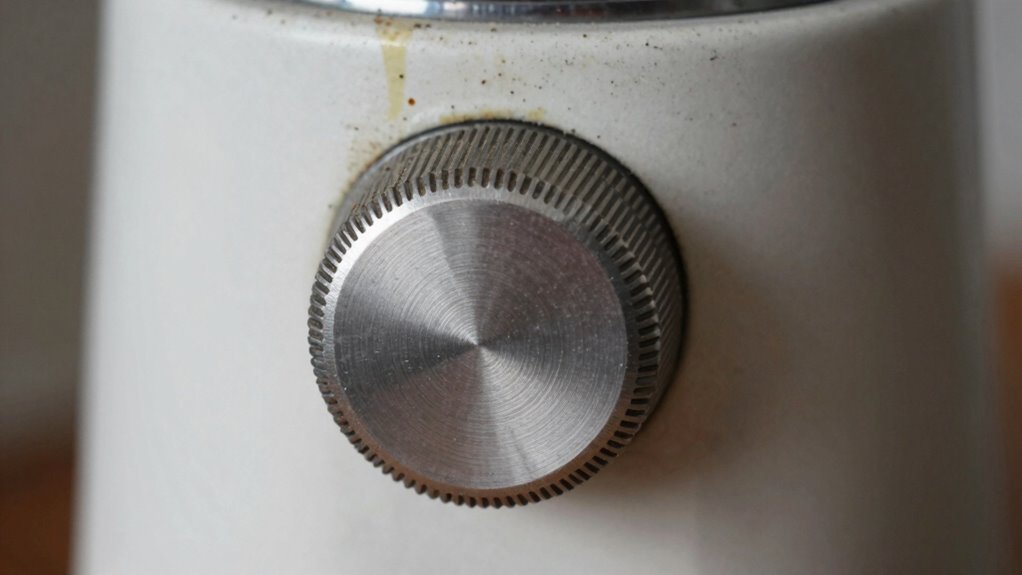
Various factors can cause grind adjustment drift, affecting your coffee consistency. Environmental changes, like temperature and humidity, can alter settings, while mechanical wear can loosen components over time. Additionally, how you handle and adjust your grinder plays a significant role in maintaining proper grind settings.
Environmental Changes Affect Settings
Environmental factors like temperature and humidity can profoundly impact your grinder’s settings. Changes in these conditions alter how coffee beans respond during grind calibration, causing your settings to shift over time. Here’s what you should consider:
- Temperature fluctuations affect bean moisture and grind consistency, requiring adjustments. For instance, higher temperatures can cause beans to dry out, affecting grind size.
- Humidity levels influence bean weight and grind size, impacting shot quality.
- Seasonal changes can cause subtle shifts in grind calibration, making regular recalibration necessary. Recognizing the importance of environmental factors can help you better understand and manage your grinder’s performance over time.
- Being aware of grind adjustment drift can help you anticipate and correct these shifts proactively, especially since ambient conditions directly impact grinder calibration accuracy.
- Regular calibration and maintenance are essential to compensate for environmental variations that can compromise grind consistency. Proper storage and handling of beans can also minimize the effects of moisture content variations, ensuring more stable grind calibration.
Mechanical Wear and Tear
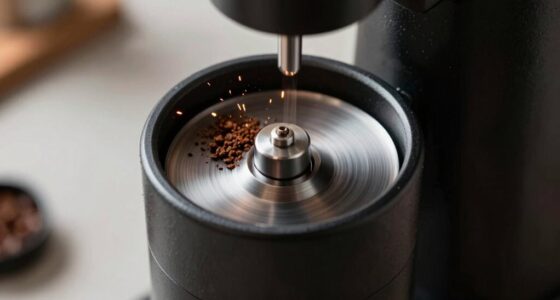
Mechanical wear and tear are common causes of grind adjustment drift, especially as components like burrs, gears, and calibration mechanisms degrade over time. As these parts experience friction and use, they can loosen or become misshapen, leading to inconsistent grind settings. Regular maintenance tips, such as cleaning to remove buildup and inspecting parts for wear, help prevent drift. Over time, calibration techniques may need adjustment to compensate for worn components. If you notice your grind setting shifting, check for worn gears or burrs and replace them if necessary. Proper lubrication and avoiding over-tightening can also extend the life of internal parts. Staying proactive with maintenance ensures your grinder stays accurate and reduces the chances of drift caused by mechanical deterioration. Additionally, understanding the impact of mechanical alignment on consistent grinding performance can guide more effective adjustments and prevent future drift. Implementing visual and auditory cues during calibration can further improve accuracy and consistency over time. Recognizing signs of misalignment early can help you address issues before they cause significant performance problems, and paying close attention to environmental factors can also help maintain optimal operation.
User Handling and Adjustments
User handling and adjustments play a significant role in grind adjustment drift, often amplifying issues caused by mechanical wear. When you frequently change settings or don’t handle your grinder carefully, it impacts grind consistency and adjustment calibration. To minimize drift, consider these factors:
- Consistent Handling: Always grip the grinder firmly and avoid sudden movements that can shift settings.
- Regular Calibration: Recheck and adjust your settings periodically to compensate for environmental or mechanical changes.
- Avoid Over-tightening: Excessive force when adjusting can damage components, leading to inaccurate settings over time.
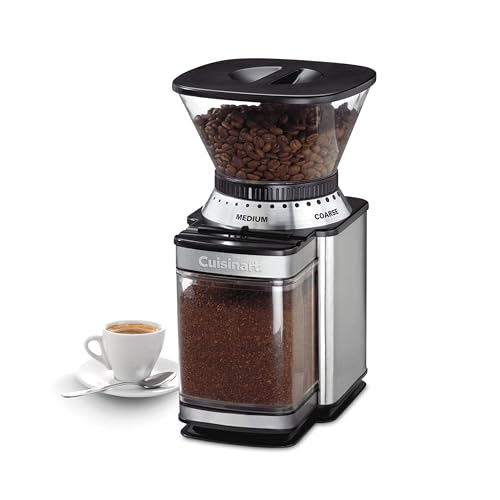
Cuisinart Coffee Grinder, Electric One-Touch Automatic Burr Coffee Grinder with 18-Position Grind Selector, Cup Size Selector for 4 – 18 Cups, DBM-8P1, Black Stainless
ENJOY OPTIMUM FLAVOR: The Cuisinart Coffee Grinder with 18-position slide-dial grind selector provides a uniform grind from ultra-fine…
As an affiliate, we earn on qualifying purchases.
As an affiliate, we earn on qualifying purchases.
How Temperature and Humidity Affect Your Grinder’s Accuracy?
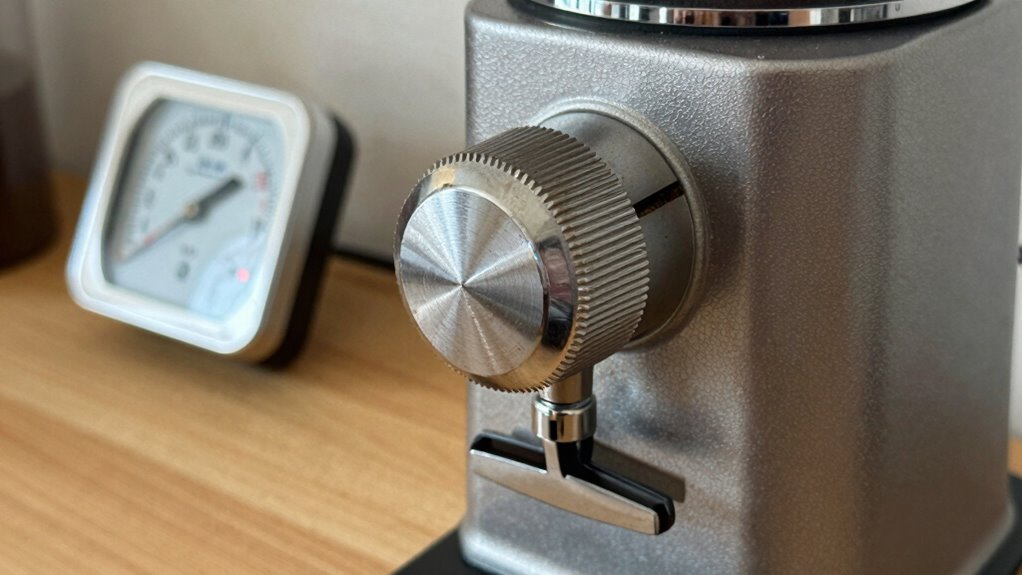
Temperature and humidity play a significant role in your grinder’s accuracy, often causing subtle drift that can impact your brew. Temperature effects can cause metal parts to expand or contract slightly, leading to minor changes in grind size. This shift may seem small but can alter extraction and flavor over time. Humidity impact is equally important; high moisture levels can cause residues or clumping inside the grinder, affecting consistency. Conversely, dry conditions may cause parts to stiffen or wear more quickly. Both factors influence the precision of your grind setting, especially if your equipment isn’t housed in a climate-controlled environment. Monitoring ambient conditions and making routine adjustments help maintain your grinder’s accuracy and ensure that your coffee remains consistently excellent. Additionally, using vetted equipment can help mitigate some of these environmental effects by providing more stable and durable performance.
How Wear and Mechanical Parts Impact Grind Consistency?
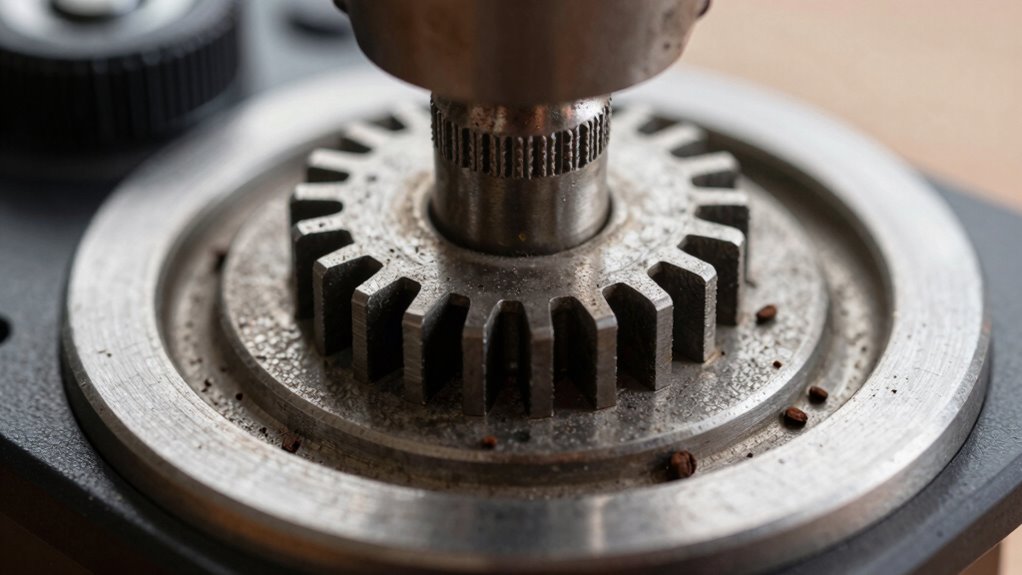
As your grinder wears, gear alignment can shift, causing inconsistencies in your grind size. Over time, mechanical looseness may develop, making adjustments less reliable. Additionally, part fatigue can reduce the precision you expect, leading to uneven results. Staying informed about technological advancements can help you maintain optimal performance over time and better understand wear patterns that influence equipment longevity.
Wear Alters Gear Alignment
Wear and mechanical parts can substantially impact gear alignment, leading to inconsistencies in grind quality. Over time, worn components cause gear misalignment, which affects the precision of your grind. To maintain consistency, you should:
- Regularly inspect gears for signs of wear and replace them as needed.
- Use proper calibration techniques to realign gears after maintenance.
- Keep mechanical parts lubricated to reduce uneven wear and maintain alignment.
- Understanding credit card terms can help you better manage your equipment and avoid costly errors.
Ignoring these factors can cause subtle shifts in your settings, making your grind less consistent. By understanding how wear impacts gear alignment, you can proactively adjust your calibration techniques and prevent drift. Staying attentive to gear condition is key to preserving grind quality and ensuring your machine performs at its best over time.
Mechanical Looseness Develops Over Time
Over time, mechanical parts in your grinder can become loose due to continuous use and wear. This looseness affects grind consistency, causing your settings to drift. Regular maintenance routines help detect and tighten worn components before they impact performance. Incorporating calibration techniques during routine checks ensures your grinder maintains accurate settings despite mechanical looseness. Monitoring for wear and tear can help prevent unexpected issues and extend the lifespan of your equipment.
Part Fatigue Affects Precision
Mechanical parts in your grinder weaken and lose their ability to perform precisely as they age, leading to inconsistencies in your coffee grounds. This is due to part fatigue, which diminishes the effectiveness of components involved in grind adjustments. To maintain precision, you should:
- Regularly inspect and replace worn parts to prevent further fatigue.
- Tighten mechanical connections to avoid looseness that affects grind consistency.
- Perform routine precision maintenance to ensure all components work smoothly together.
- Understanding part fatigue helps you identify when components are no longer reliable, preventing unexpected drift. Recognizing signs of mechanical wear allows you to address issues before they impact your grind quality.
Ignoring part fatigue causes your settings to drift over time, reducing grind uniformity. Staying proactive with maintenance helps prevent grind adjustment drift, keeping your coffee grounds consistent and your brew flavorful. Recognizing how wear impacts parts is essential for preserving your grinder’s accuracy.
How Bean Density and Roast Level Influence Grind Stability?
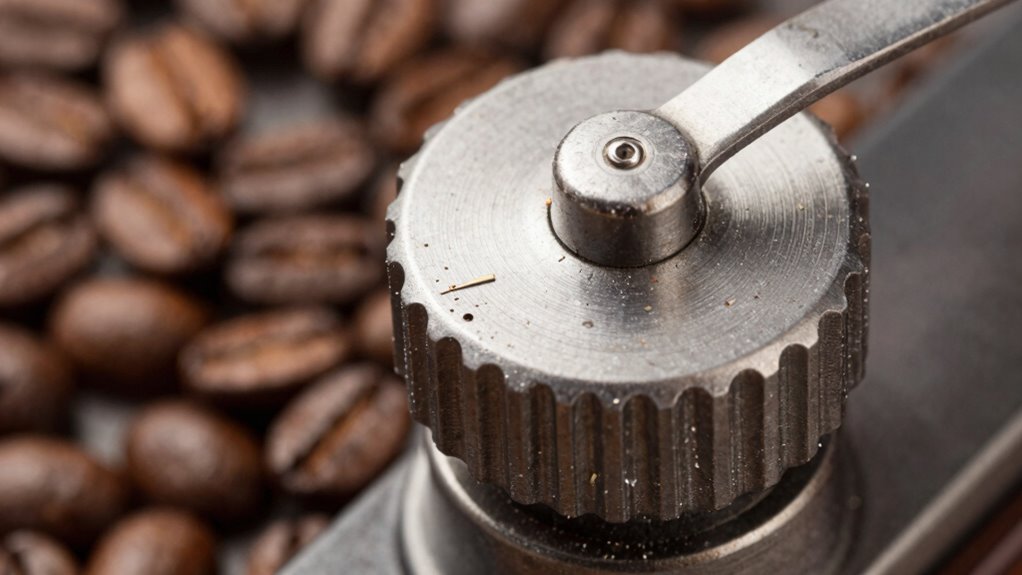
Bean density and roast level play essential roles in determining grind stability, directly affecting how consistently your coffee grounds behave during brewing. Higher bean density means the beans are more compact, which can lead to uneven grinding if your grinder isn’t adjusted properly. Conversely, lower-density beans are easier to break down but may produce inconsistent sizes. Roast level also impacts grind behavior: light roasts tend to be denser because they retain more moisture, making them harder to grind uniformly. Dark roasts are less dense and brittle, leading to easier, more uniform grinding. Understanding these factors helps you anticipate how your beans will respond to your grinder settings, reducing drift over time and ensuring a more stable, reliable grind every time you brew. Additionally, bean characteristics influence how different beans respond to grinding, and being aware of these can help you make more informed adjustments and improve your brewing consistency. Being familiar with grind stability can also help you troubleshoot issues and optimize your coffee preparation process, especially since grind consistency can vary based on bean type and roast level. Moreover, knowing how bean density varies across different origin regions can further refine your approach to achieving a stable grind.
Tips to Keep Your Grind Size Consistent During Coffee Preparation?
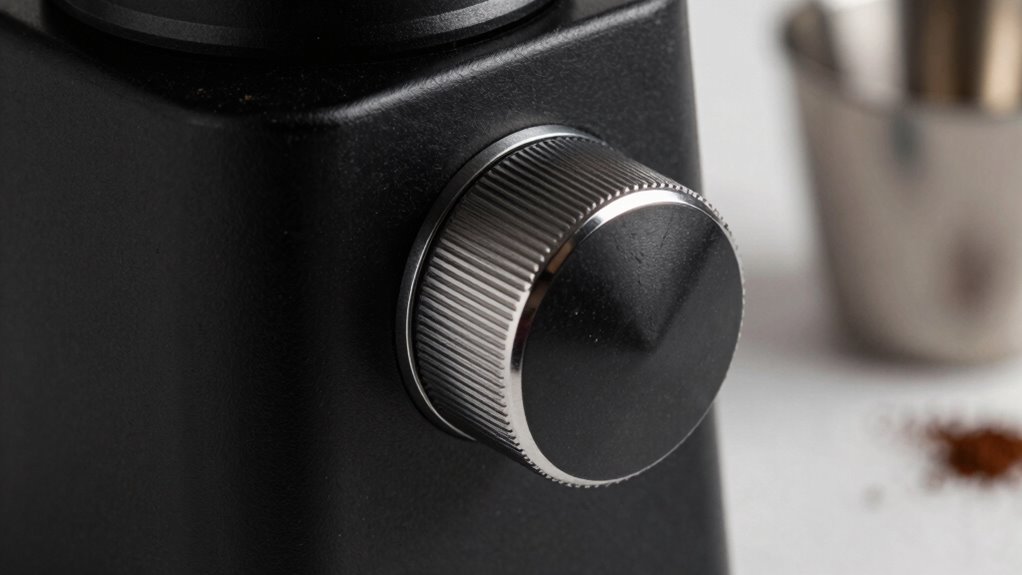
To keep your grind size consistent during coffee preparation, it’s important to implement some practical techniques that minimize variability. First, use a burr grinder instead of a blade grinder, as burrs provide more uniform grind size, leading to better coffee extraction. Second, measure your beans accurately with a scale for consistent dosing, which helps maintain stable grind size and extraction. Third, avoid adjusting your grinder frequently; instead, calibrate it periodically and stick with your settings. Also, keep your grinder clean to prevent old grounds from affecting grind consistency. These steps help ensure that your grind size remains stable, resulting in more predictable coffee extraction and a better overall brew. Consistency is key for achieving the flavor profile you desire.
When and How to Recalibrate or Service Your Coffee Grinder?
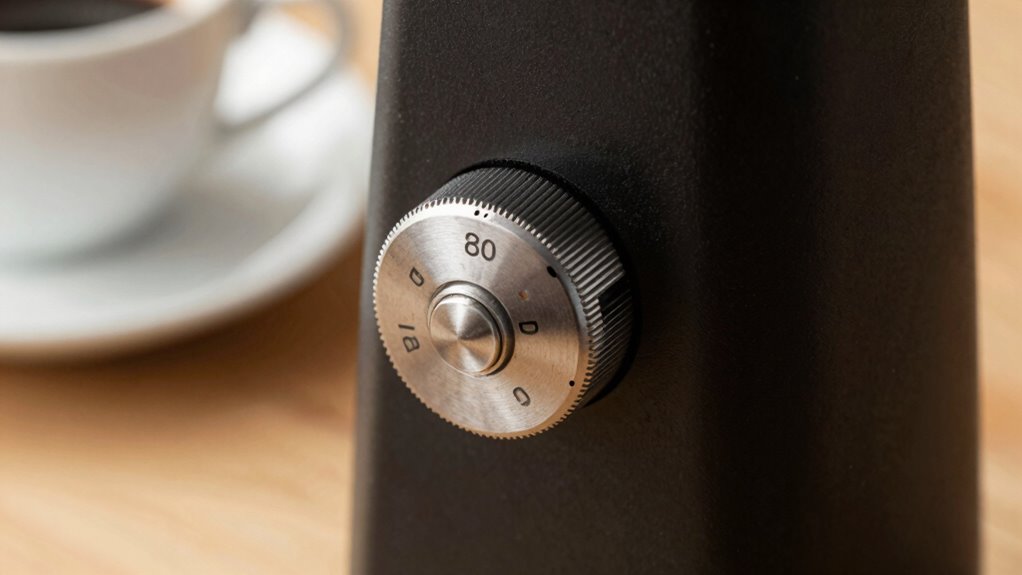
Regularly recalibrating or servicing your coffee grinder is essential to maintain consistent grind size and ideal performance. You should perform calibration techniques whenever you notice changes in grind consistency, such as uneven extraction or inconsistent flavor. Follow a maintenance schedule that includes checking burrs for wear, cleaning out residual coffee grounds, and verifying the accuracy of your settings. Generally, it’s advisable to recalibrate every few months or after grinding a significant amount of coffee. Use calibration tools or reference marks to ensure your grinder’s settings remain precise. Proper maintenance helps prevent drift and extends your grinder’s lifespan. By sticking to these schedules and techniques, you keep your grinder performing at its best, ensuring every brew is as flavorful and balanced as intended.
Troubleshooting Persistent Grind Adjustment Issues: What to Do Next?
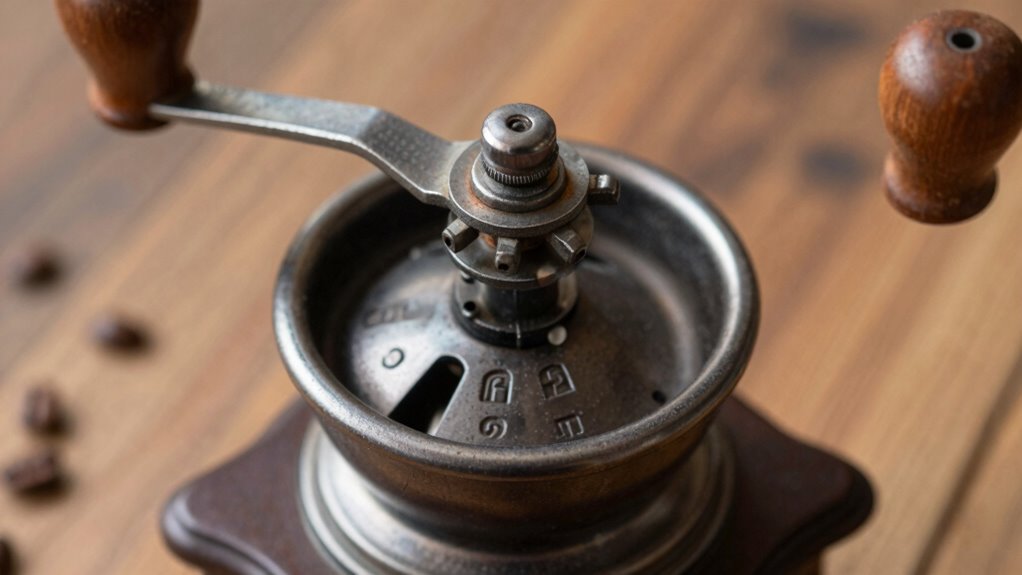
When grind adjustment issues persist despite following proper maintenance routines, it’s important to identify underlying causes rather than simply attempting to re-calibrate. Start by reviewing your grind setting calibration to ensure it’s accurate. Next, revisit your maintenance checklist to confirm you haven’t overlooked any essential steps, such as cleaning burrs or inspecting for wear. If problems continue, consider these actions:
- Check for worn or damaged components affecting grind consistency.
- Verify that the grind adjustment mechanism moves smoothly without obstructions.
- Experiment with a fresh grind setting to see if the issue resolves.
Addressing these points helps pinpoint the root cause of persistent issues, ensuring your grind adjustment remains stable over time.
Frequently Asked Questions
Can Grind Adjustment Drift Affect the Flavor of My Coffee?
Yes, grind adjustment drift can affect your coffee’s flavor. When your grind consistency shifts over time, it causes uneven extraction, leading to flavor instability. You might notice your coffee tasting too bitter or weak. Regularly checking and adjusting your grinder helps maintain consistent grind size, ensuring stable flavors and a better overall tasting experience. Staying attentive to these adjustments keeps your coffee flavorful and satisfying every time.
Are Certain Grinder Models More Prone to Adjustment Drift?
Certain grinder models are more prone to adjustment drift because their calibration and adjustment mechanisms lack stability. Precision-powered grinders with robust, reliable adjustment mechanisms tend to hold their settings longer, while cheaper or less sophisticated models often struggle with consistency. When choosing a grinder, consider those with sturdy calibration features, as they’re less likely to experience drift, ensuring your grind remains consistent and your coffee flavorful.
How Often Should I Check My Grinder’s Calibration?
You should check your grinder’s calibration at least once a week to guarantee consistent performance. Incorporate calibration checks into your regular maintenance routines, especially if you notice changes in grind size or shot quality. Frequent calibration helps catch adjustment drift early, preventing flavor issues. For high-use grinders, consider checking more often—every few days—to maintain ideal settings and avoid unexpected adjustments that can impact your brewing.
Does Using Pre-Ground Coffee Prevent Adjustment Issues?
Using pre-ground coffee doesn’t prevent adjustment issues, but it can help preserve flavor since you avoid frequent grinder tweaks. However, since pre-ground coffee is already processed, you won’t have control over grind size, which impacts extraction and flavor. If you prefer consistent flavor preservation and minimal adjustment, pre-ground coffee might be a good choice. Just remember, it’s less flexible than freshly grinding beans for ideal flavor and adjustment stability.
Are There Specific Cleaning Practices to Reduce Drift?
To reduce drift, you should follow regular cleaning routines and maintenance tips. Clean your grinder’s burrs and chute frequently to prevent buildup that causes inconsistency. Wipe down adjustment mechanisms and check for debris or residue. Establish a maintenance schedule, including deep cleaning every few weeks, to make certain your settings stay stable. Proper cleaning routines help maintain precise adjustments and prevent the settings from shifting over time.
Conclusion
Don’t let grind adjustment drift steal your perfect brew. Like a whisper in the wind, your settings can shift unnoticed, but with awareness and regular care, you can stay in control. Think of your grinder as a trusted partner—nurture it, recalibrate when needed, and it’ll reward you with consistent quality. Remember, a stable grind isn’t just a setting; it’s the secret to elevating every cup you brew.