
Chlorine in tap water can ruin your coffee by adding a harsh, chemical, or metallic taste that masks its natural flavors. To fix this today, you can boil your water for about 15 minutes, use activated carbon filters, or invest in a good filtration system like reverse osmosis. These methods effectively remove chlorine and improve your brew’s taste. Keep exploring to discover how to maintain consistently fresh, flavor-rich coffee every time.

Get kitchen gear delivered free — and shop member deals
- Fast, free delivery on millions of items
- Access to Prime Big Deal Days deals on October 6–7
- Prime Video, Amazon Music and more included
Key Takeaways
- Boiling tap water for 15 minutes effectively removes most chlorine, improving coffee flavor.
- Activated carbon filters trap chlorine molecules without stripping essential minerals.
- Regularly testing water with test strips helps identify chlorine presence and guides treatment.
- Proper maintenance of filtration systems ensures consistent removal of chlorine and contaminants.
- Using filtered or dechlorinated water enhances coffee’s aroma, flavor clarity, and overall quality.
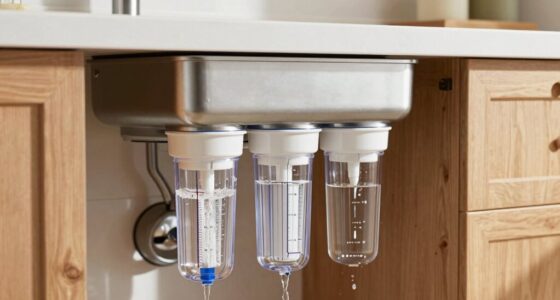
activated carbon water filter for coffee
As an affiliate, we earn on qualifying purchases.
As an affiliate, we earn on qualifying purchases.
Why Does Chlorine in Water Make Your Coffee Taste Off?
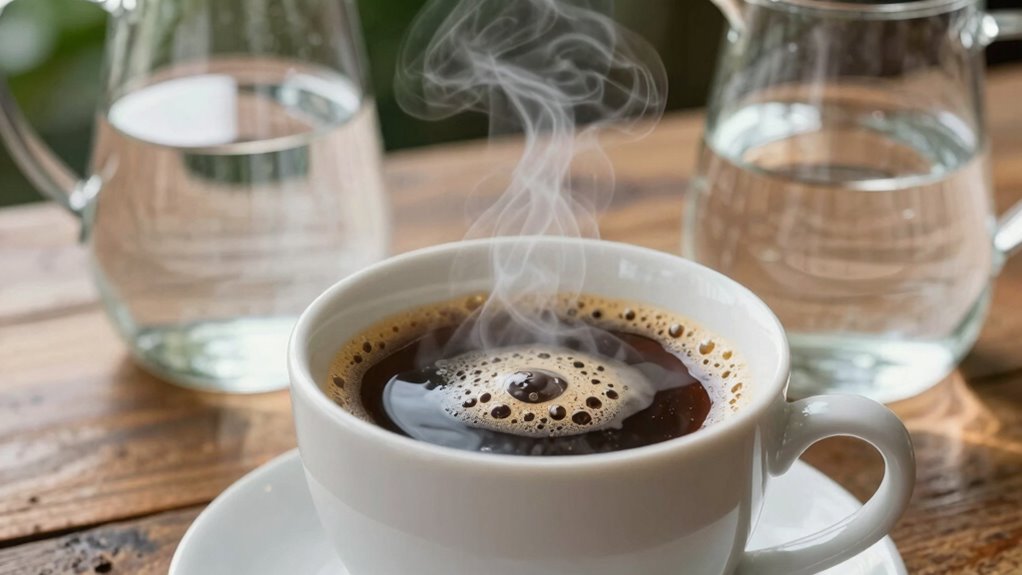
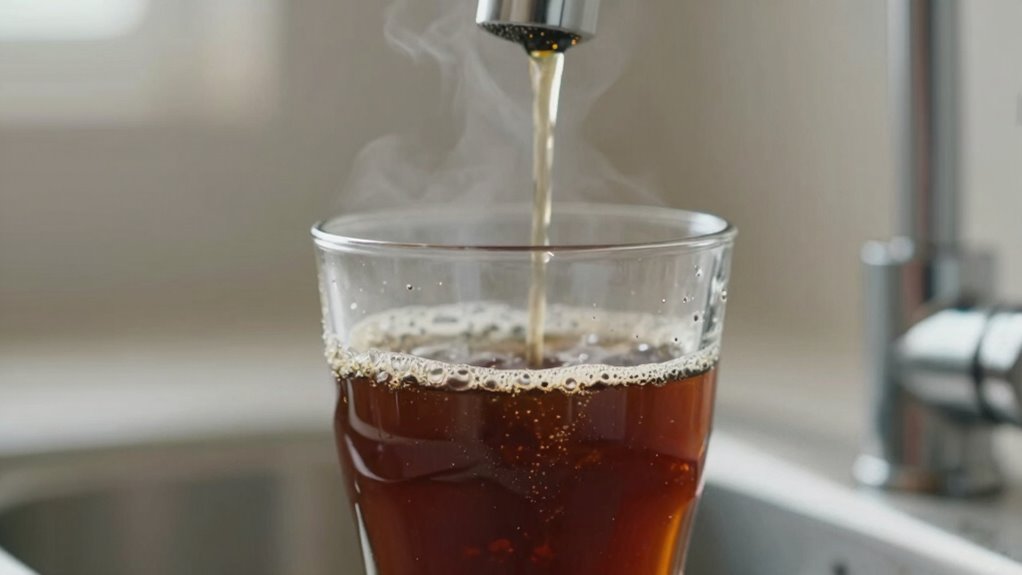
Chlorine in your water can considerably alter the taste of your coffee, often giving it a harsh or chemical flavor that masks the coffee’s natural aromas. This chlorine taste can make your brew seem dull or metallic, stripping away the complexity you expect. Additionally, you might notice a water odor that’s slightly chlorine-like or chemical in smell, which can be off-putting even before you taste your coffee. When chlorine is present, it reacts with organic compounds in the water, creating undesirable flavors and odors. These changes interfere with the delicate balance of coffee’s natural flavors, leaving you with a less enjoyable cup. Understanding how chlorine impacts water helps you recognize why your coffee might not taste as good as it should. For optimal results, water quality directly influences the overall flavor profile of your brew. Using a water purifier can effectively remove chlorine and other impurities, ensuring a fresher, more flavorful coffee experience. Proper water treatment methods can also help maintain the integrity of your water’s taste and odor, and implementing filtration systems can provide ongoing benefits for your daily coffee brewing. Investing in quality water filtration can further enhance your brewing process by removing additional contaminants that may affect flavor.
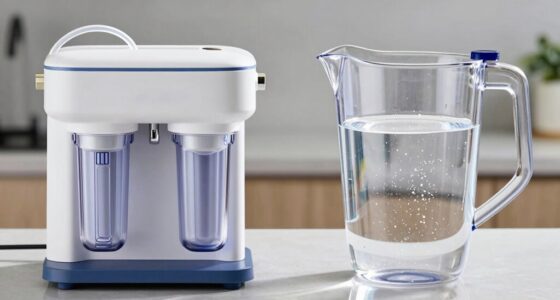
reverse osmosis water filtration system
As an affiliate, we earn on qualifying purchases.
As an affiliate, we earn on qualifying purchases.
How Can You Tell if Your Water Contains Chlorine?
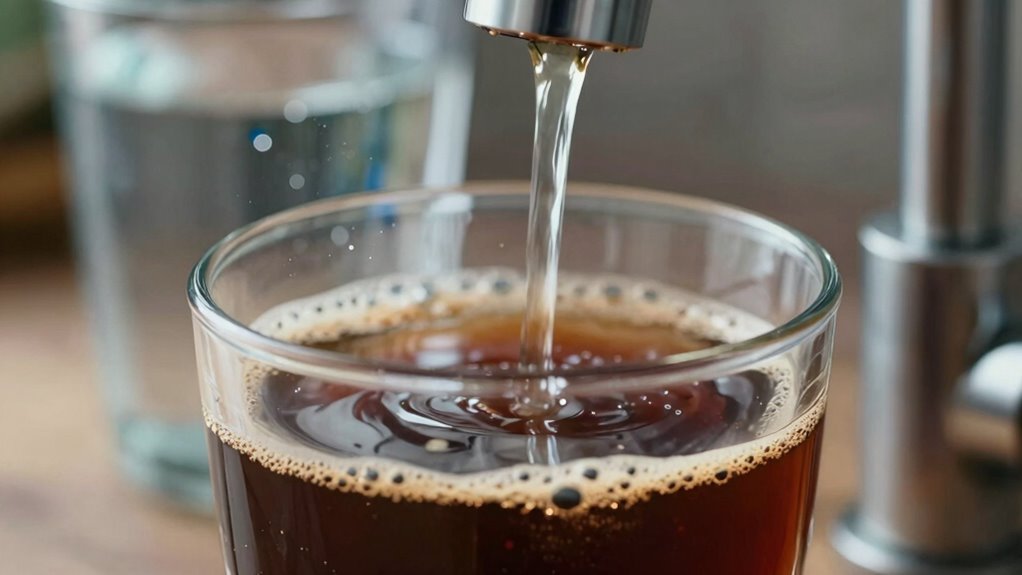
Wondering if your water contains chlorine? You can perform simple water testing or look for signs of chlorine detection. Here are four ways to tell:
- Smell test: Take a whiff of your tap water—if it has a strong bleach-like odor, chlorine is present.
- Taste test: Pour a glass, sip, and notice if it tastes like chemicals or has a medicinal flavor.
- Visual cues: Look for cloudiness or a slight haze; chlorine can sometimes cause this.
- Test strips: Use chlorine test strips available at stores—dip, wait, and check the color change for an accurate reading.
Additionally, understanding the electricity involved in water treatment can help you better grasp how chlorine is added and removed from tap water. Knowing about water purification processes enhances your awareness of how contaminants like chlorine are managed and how they might affect your health. Recognizing that water treatment often involves chemical disinfection can also help you make informed decisions about removing chlorine if desired. Moreover, being aware of contaminant removal methods enables you to choose appropriate filtration options to improve your water quality.
chlorine test strips for tap water
As an affiliate, we earn on qualifying purchases.
As an affiliate, we earn on qualifying purchases.
Easy Ways to Remove Chlorine From Tap Water at Home

Boiling your tap water can help reduce chlorine, but it might not remove all of it. Using activated carbon filters is another simple and effective option to improve water quality. Both methods are easy to try at home and can make a noticeable difference.
Boiling Water Effectiveness
When you boil tap water, you’re actively reducing its chlorine content through a simple and effective process. Boiling water causes chlorine to evaporate rapidly, making it a practical method for chlorine removal. As you bring water to a rolling boil, imagine:
- The steam rising, carrying away the chlorine molecules.
- Bubbles forming and bursting, releasing chlorine gas.
- The aroma of heated water filling your kitchen.
- The water turning clearer, hinting at cleaner taste.
This process typically takes about 15 minutes of boiling to markedly lower chlorine levels. Keep in mind, boiling doesn’t remove other contaminants, but it’s a quick way to improve taste and reduce chlorine in tap water for your coffee or cooking needs.
Using Activated Carbon
Have you considered using activated carbon to easily remove chlorine from your tap water? When water passes through activated carbon, chemical reactions occur that effectively trap chlorine molecules, improving water chemistry. The porous structure of activated carbon provides a large surface area, allowing it to adsorb chlorine efficiently. Unlike boiling, which relies on heat, activated carbon works at room temperature without changing water properties. Simply place a filter or a few tablespoons of activated carbon in a container of tap water and let it sit for 30 minutes. This process neutralizes chlorine without adding chemicals or affecting minerals essential to water quality. Using activated carbon is a simple, cost-effective way to ensure your tap water tastes better and reduces unwanted chemical reactions that could impact your coffee’s flavor. Additionally, water quality can be significantly improved through these simple filtration methods, making your drinking water safer and more pleasant. Properly filtering tap water can also help extend the lifespan of household appliances and fixtures.
water boiling kettle for chlorine removal
As an affiliate, we earn on qualifying purchases.
As an affiliate, we earn on qualifying purchases.
What Are the Best Water Filters for Coffee Lovers?
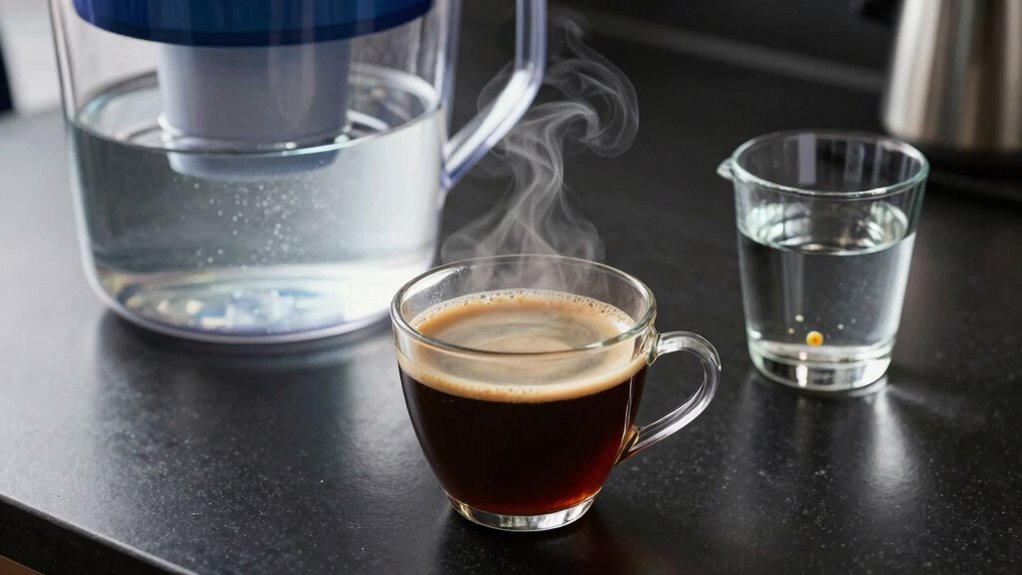
Choosing the right water filter can make a significant difference in your coffee’s flavor. To improve water purity and mineral content, consider filters designed specifically for coffee brewing. Imagine these options:
- A multi-stage filter that removes chlorine, sediments, and impurities while preserving essential minerals. These filters often include stages that target contaminant removal without stripping away beneficial minerals crucial for flavor. Properly filtered water ensures your coffee’s aroma and taste are not compromised by chemical contaminants, and some models utilize advanced filtration techniques for enhanced performance.
- Reverse osmosis systems that eliminate almost all contaminants, giving you ultra-pure water. Incorporating water purification technology ensures a clean, crisp taste in every cup.
- Activated carbon filters that target chlorine and organic compounds for a cleaner taste.
- Mineral cartridge filters that add back beneficial minerals, enhancing flavor complexity.
These filters guarantee your water maintains the right balance—free of unwanted chemicals but rich in minerals—so your coffee’s aroma and taste shine through without interference. Proper water filtration is essential for achieving consistent, high-quality brews. Choose wisely to elevate your brewing experience.
Tips for Maintaining Fresh, Chlorine-Free Water for Coffee
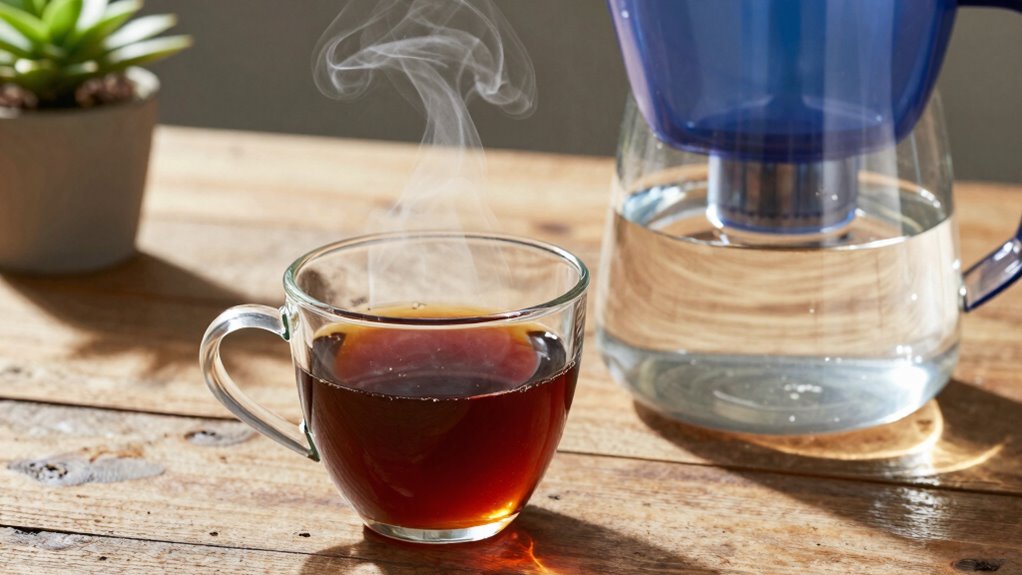
Maintaining fresh, chlorine-free water is key to consistently brewing great coffee. To do this, monitor your water’s mineral content, as too many minerals can affect flavor and machine performance, while too few can lead to flat-tasting coffee. Use water filters designed to reduce chlorine and improve mineral balance. Regularly check and adjust your water pH balance, aiming for a neutral or slightly alkaline range (around 7 to 8), which helps extract ideal flavors. Keep your water storage clean to prevent buildup of impurities. If you use tap water, consider adding a mineral cartridge or using a reverse osmosis system with remineralization. These steps ensure your water stays fresh, balanced, and free of chlorine, giving you the best foundation for brewing exceptional coffee every time. Additionally, understanding Bank SWIFT/BIC codes can be useful if you need to transfer funds securely for equipment or water treatment solutions. Incorporating smart water monitoring devices can also help you maintain optimal water quality effortlessly, especially when paired with home water testing kits to regularly assess your water’s purity and ensure it remains free of contaminants. Staying aware of water quality standards can further help you ensure your water remains safe and suitable for brewing.
Troubleshooting Water Issues That Affect Coffee Flavor
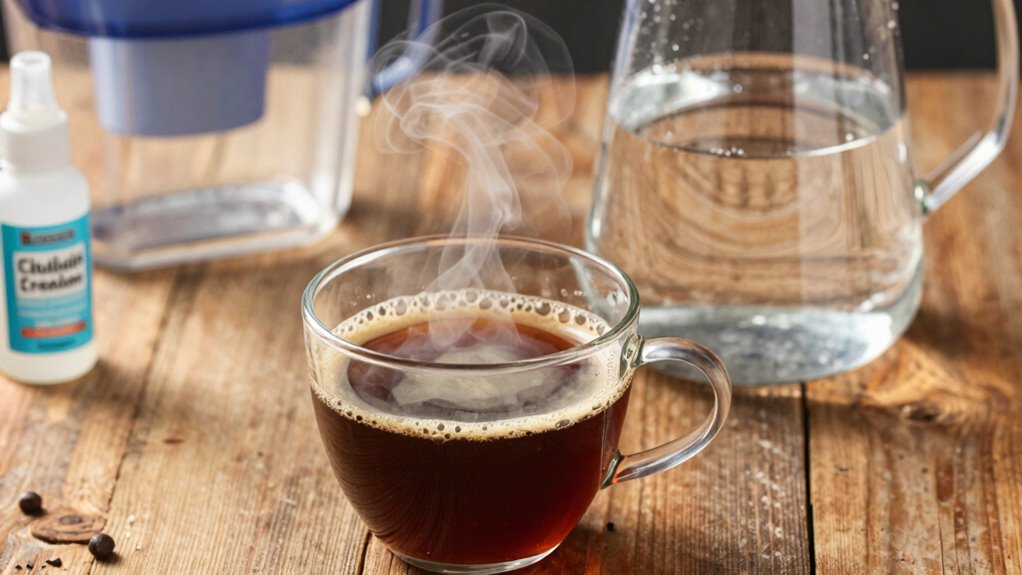
When water quality issues arise, they can substantially impact your coffee’s flavor, making it taste flat, sour, or off-putting. To troubleshoot, start by checking for common problems:
- Poor water filtration: Your water may contain chlorine or minerals that hinder ideal coffee extraction. Understanding filtration systems can help you choose the right solution. Regularly inspecting your filtration system ensures it functions effectively and removes unwanted substances.
- Hard water: Excess minerals can cause uneven extraction, resulting in bitter or dull flavors.
- Contaminants: Organic matter or residues can introduce off-notes or sourness.
- Temperature fluctuations: Inconsistent water temperature affects extraction consistency and flavor clarity.
- Monitoring water quality with analytical tools can help identify specific issues more precisely. Employing water testing kits can provide accurate readings and guide necessary adjustments to your water treatment process.
Address these issues by testing your water quality regularly, using appropriate filters, and maintaining your brewing equipment. Correcting water quality guarantees better coffee extraction, leading to a richer, more balanced cup.
Frequently Asked Questions
Does Boiling Water Remove Chlorine Effectively for Coffee Brewing?
Boiling water does remove chlorine effectively for coffee brewing by causing chlorine to evaporate. When you boil your tap water, the chlorine removal is quite efficient, making your coffee taste better. Just remember, boiling is a quick and easy method, but it might not eliminate other impurities. For the best flavor, you can combine boiling with filtration or use a dedicated water treatment system for complete chlorine removal.
Can Using Bottled Water Improve My Coffee’s Flavor Over Tap Water?
Using bottled water can be like upgrading to a clearer lens for your coffee, improving its flavor. Water quality directly affects coffee extraction, so better quality water results in a richer, more balanced brew. Bottled water often has fewer impurities and less chlorine, which can dull flavors. Switching to it helps you enjoy a fresher cup, letting your coffee’s true taste shine through without interference from tap water’s quirks.
Are There Natural or DIY Methods to Dechlorinate Water?
Yes, you can use DIY filtration and natural dechlorination methods to remove chlorine from your water. Try letting tap water sit out for 24 hours to allow chlorine to evaporate naturally. You can also use activated charcoal or boil water briefly to reduce chlorine levels. These natural methods are simple, cost-effective, and eco-friendly, helping you improve your coffee’s flavor without relying on commercial dechlorination products.
How Often Should I Replace My Water Filter for Optimal Coffee Taste?
You should replace your water filter every 2 to 3 months for peak coffee taste. Regular filter replacement maintains water quality by removing impurities and chlorine that can alter flavor. Keep an eye on your filter’s lifespan, and if your water source changes or tastes off, consider replacing it sooner. Consistent filter maintenance ensures your coffee remains fresh, flavorful, and free of unwanted tap-water flavors.
Does Water Temperature Affect Chlorine’s Impact on Coffee Flavor?
When it comes to chlorine volatility, water temperature plays a big role. Hotter water increases chlorine’s volatility, helping it dissipate faster and reducing its impact on your coffee’s flavor. So, if you want to keep that chlorine from ruining your brew, use hot water for your initial rinse or brew. Just remember, the higher the temperature, the quicker chlorine will leave, leaving you with a cleaner, better-tasting cup.
Conclusion
By removing chlorine from your tap water, you’re giving your coffee the gift of purity—a blank canvas ready to reveal its true flavor. Think of your water as the stage for your coffee performance; when it’s free of chlorine, every sip sings with richness and depth. Don’t let a simple fix hold back your best brew. Take control today, and transform your coffee into a masterpiece that warms your soul with every cup.
Fall Picks
fall essentials
As an affiliate, we earn on qualifying purchases.