
If you’re someone who consistently conserves water and prefers to avoid storing it, a direct plumb system is ideal. It minimizes water waste, reduces the risk of stagnation, and guarantees your water remains fresh and clean. However, if maintaining backup water during outages is essential for you, a water tank offers reliable supply. Your choice depends on your water habits—keep exploring to see which system aligns best with your lifestyle.
Key Takeaways
- Prioritize space availability; limited space favors direct plumb systems, while ample space suits water tanks.
- Consider your water usage habits; irregular or high demand may benefit from tank backup.
- Evaluate maintenance capacity; regular tank cleaning is essential for water quality.
- Assess reliability needs; tanks offer backup during supply disruptions, while direct plumb systems rely on consistent supply.
- Think about water quality concerns; direct plumb reduces contamination risks compared to tanks.
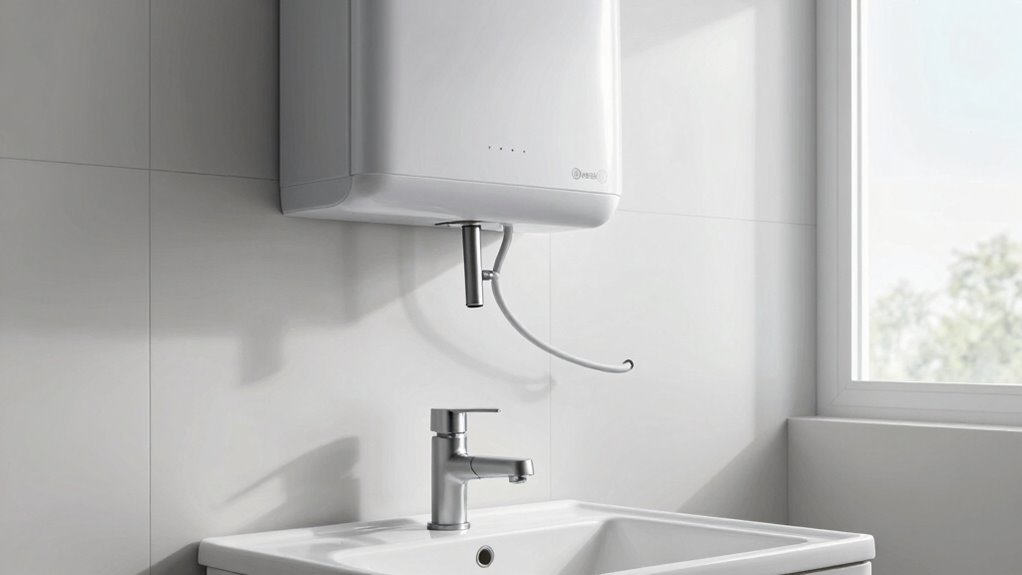
Deciding between a direct plumb system and a water tank often depends on your daily habits and water usage patterns. If you’re someone who values water conservation, a direct plumb system might be the better choice. This setup connects your water supply directly to your fixtures, guaranteeing that you use only the water you need without excess storage. It’s efficient because it eliminates the risk of water stagnation or contamination within a tank. Plus, since there’s no need to store large quantities of water, you’re likely to use less overall, supporting your efforts to conserve resources. Additionally, choosing a system with safe water quality in mind is essential for long-term health and sustainability.
A direct plumb system promotes water conservation and minimizes risks of stagnation and contamination.
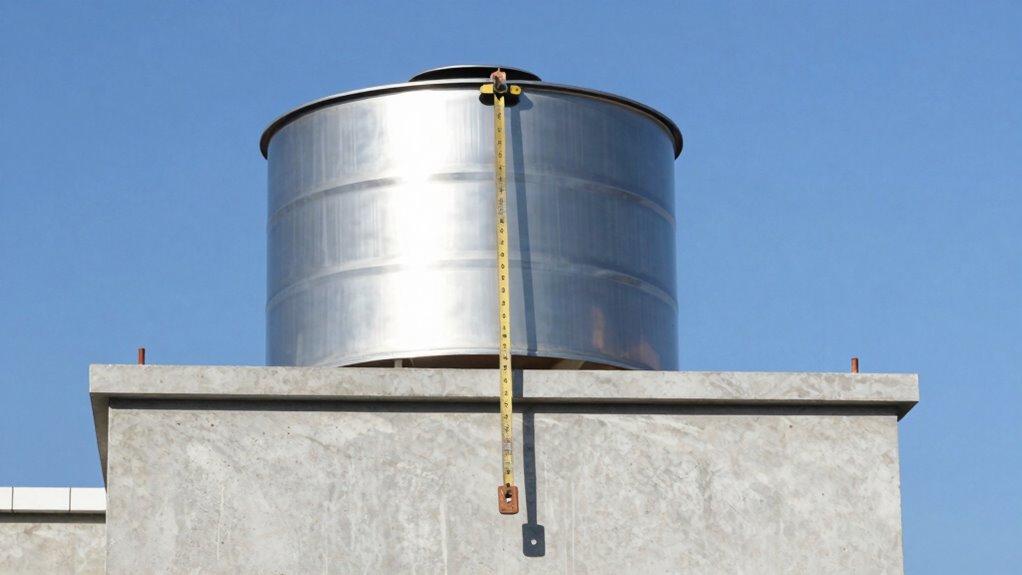
On the other hand, if you tend to have irregular water usage or live in an area prone to water supply disruptions, a water tank offers flexibility. You can store a reserve of water to rely on during shortages or maintenance. While this might seem less efficient in terms of water conservation, it provides peace of mind and ensures consistent access to water, especially during peak usage times. However, keep in mind that water tanks require space, and their size can influence how much space you need for installation. If space is limited, a tank might not be practical unless you opt for a smaller, more compact design. Moreover, water storage capacity can be a decisive factor when planning your household water system. Proper maintenance of tanks and plumbing systems is essential to prevent contamination and ensure long-term safety, which is especially important in areas with variable water quality.
Space efficiency becomes a key factor in your decision. A direct plumb system typically takes up less space because it doesn’t require a tank or additional storage infrastructure. This makes it ideal for smaller homes or apartments where every square foot counts. Conversely, a water tank may take up considerable space, especially larger models designed for extensive household needs. But if your home has ample room and you prioritize having a backup water source, the tank provides that extra layer of security. Additionally, considering the water quality and maintenance requirements is crucial to ensure your system remains safe and reliable over time. Proper maintenance of tanks and plumbing systems is essential to prevent contamination and ensure long-term safety.

LIMUXCG Large Capacity Water Tank with Faucet for Household and Outdoor Use – Portable and Durable Plastic Water Storage Cube (4 gallons)
- High-Quality Material: High-density polyethylene, eco-friendly and durable
- Portable Handle with Faucet: Easy to carry, leak-proof, simple to refill and drain
- Wide Caliber Design: Large opening for easy cleaning and quick water flow
As an affiliate, we earn on qualifying purchases.
As an affiliate, we earn on qualifying purchases.
Frequently Asked Questions
How Does Water Quality Differ Between Direct Plumb and Water Tanks?
Water quality differs between direct plumb and water tanks mainly due to water contamination risks. With a direct plumb system, water flows straight from the source, minimizing sediment buildup but increasing exposure to potential contaminants. Meanwhile, water tanks can accumulate sediment and impurities over time, affecting taste and safety. Regular cleaning helps tanks maintain better water quality, whereas direct plumb systems rely on source safety and filtration to prevent contamination.
What Maintenance Is Required for a Water Tank System?
You need to regularly clean your water tank to prevent sediment buildup and maintain water quality. Install a water filtration system to remove impurities and extend tank lifespan. Check for any signs of corrosion or leaks and guarantee vents and drains are clear. Periodic inspections and draining the tank help prevent stagnation, bacteria growth, and sediment accumulation, keeping your water safe and clean for daily use.
Are There Cost Differences Between Installing a Direct Plumb System and a Water Tank?
Installation costs for a direct plumb system are usually lower upfront since it’s simpler to set up, while water tanks tend to have higher initial expenses. However, long-term expenses differ, as tanks require ongoing maintenance and potential replacements, raising costs over time. So, if you want to save initially, a direct plumb system might be better, but consider future costs when making your choice.
Which System Is More Environmentally Friendly?
Think of your plumbing system as a garden—you want it to flourish without draining the earth. A direct plumb system often uses less water, reducing waste, making it more eco-friendly. It supports eco-conscious plumbing by minimizing energy and resource use, aligning with sustainable water systems. Choosing a direct plumb setup helps you lower your environmental impact, ensuring your home stays green and efficient for years to come.
How Does Usage Frequency Affect System Choice?
Your usage frequency directly impacts your system choice. If you have consistent usage, a direct plumb system is ideal because it provides instant hot water without storage limits. However, if your usage is irregular or you prefer having a backup, a water tank offers greater storage capacity, ensuring hot water availability during peak demand or outages. Consider your habits to select the system that best fits your needs.
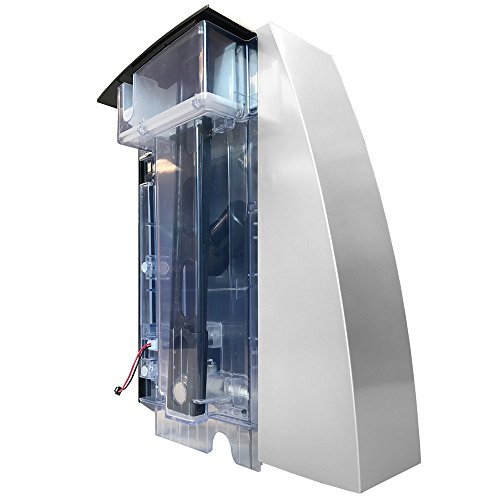
Keurig B150 or K150 Direct Water Line Plumb Kit
- Direct water line connection: Enables direct water hookup for Keurig
- Compatible models: Fits B150, K150, K155, B155 brewers
- Filter and fittings not included: Requires separate purchase of filter, line, fittings
As an affiliate, we earn on qualifying purchases.
As an affiliate, we earn on qualifying purchases.
Conclusion
So, whether you go with direct plumb or a water tank, remember this one habit: stay vigilant about your water habits. Ignoring this could turn your daily shower into a disaster movie—flooding, shortages, chaos! Choose what suits your routine, but keep this habit in check, or you’ll be caught in a plumbing nightmare that’s worse than a soap opera cliffhanger. Trust me, your sanity will thank you!

TankRo RO132-TNK, 4 Gallon Reverse Osmosis Water Storage Pressure Tank, Compact RO Water Filtration System Expansion (Packaging May Vary)
- Type: Reverse Osmosis Water Storage Tank
- Material: Durable Steel Construction
- Capacity: 4 Gallons
As an affiliate, we earn on qualifying purchases.
As an affiliate, we earn on qualifying purchases.

ICEPURE Under Sink Water Filter System, 3 Years or 22000 Gallons Ultra High Life NSF/ANSI 42 Certified, Removes Heavy Metals,Chlorine,Direct Connect Under Counter Drinking Water System, USA Tech
- Easy Installation: Quick plug-and-play setup in under 3 minutes
- High Flow Rate: Delivers 2.5 GPM at 60 PSI
- Certified Safe and Effective: NSF/ANSI 42 & 372 certified for safety
As an affiliate, we earn on qualifying purchases.
As an affiliate, we earn on qualifying purchases.