Even if your espresso looks great with a rich crema and appealing color, it may still taste hollow if your grind size isn’t quite right or if the water temperature isn’t ideal. Too coarse or too fine grinding can lead to weak or bitter flavors, while improper temperature can prevent full extraction of rich flavors. Tiny adjustments in these areas often make all the difference—if you want to discover how to fix this, keep going.

Get kitchen gear delivered free with Prime
- Fast, free delivery on millions of items
- Prime Video, Amazon Music and more included
- Member-only deals all year
Key Takeaways
- A visually appealing shot may have poor flavor due to improper grind size, causing under- or over-extraction.
- Using coarse grind results in fast water flow, extracting only surface flavors and leading to a hollow taste.
- Fine or overly fine grind can cause over-extraction, producing bitterness and dull flavor despite good appearance.
- Incorrect water temperature, either too low or too high, can prevent proper extraction, resulting in a flat taste.
- Visual cues alone don’t reflect extraction quality; focusing on grind adjustment and temperature ensures richer, fuller flavors.
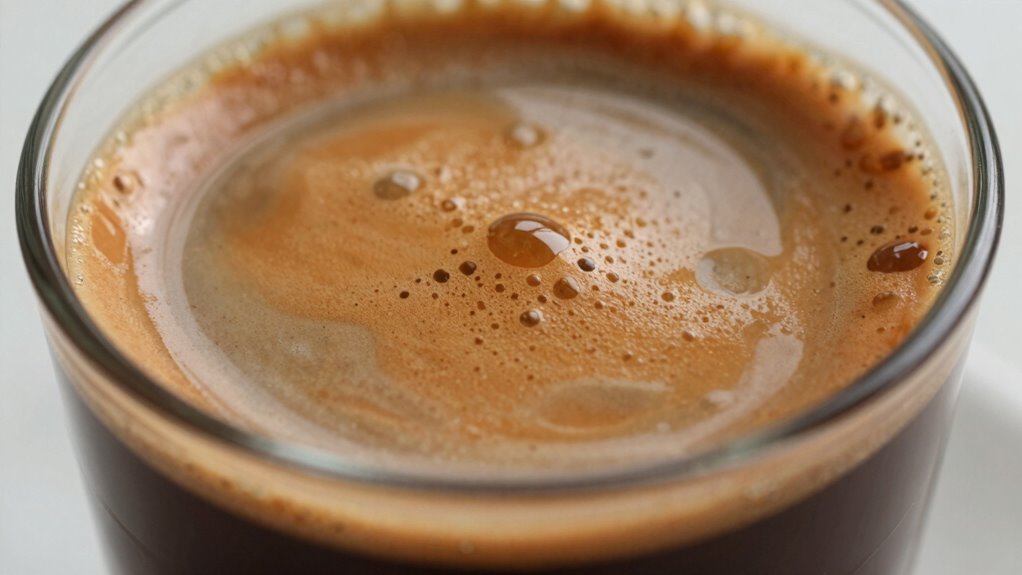
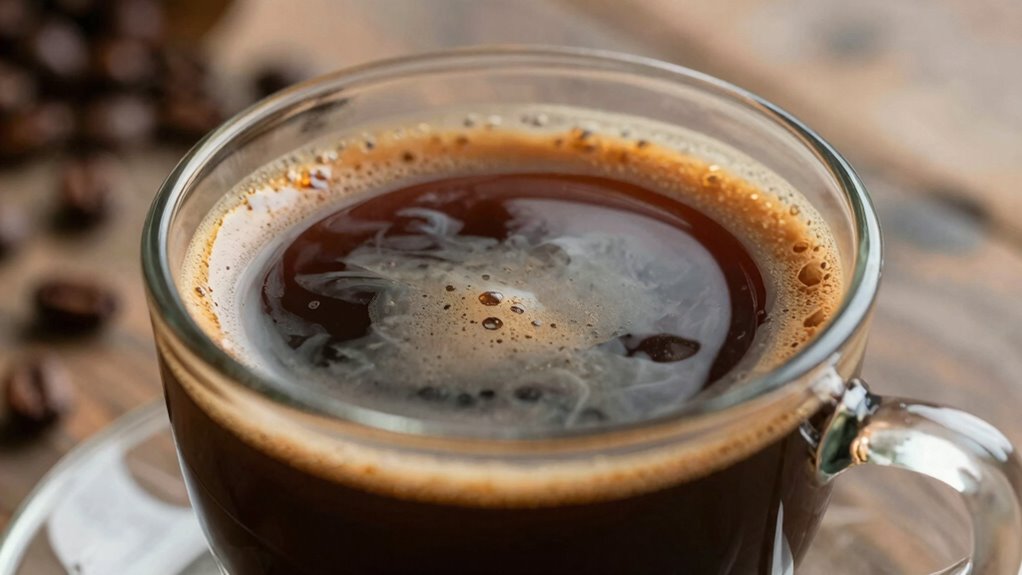
Even when your espresso pours perfectly with a rich crema and appealing color, it can still taste flat or hollow. This often happens because, despite the attractive appearance, something in the brewing process isn’t quite right. Two key factors that influence flavor more than you might realize are grind size and water temperature. If either of these isn’t dialed in correctly, your espresso can look perfect but lack the depth and richness you’re craving.
First, let’s talk about grind size. If your grind is too coarse, water flows through the coffee too quickly, extracting only the surface flavors and leaving behind the nuanced oils and compounds that give espresso its full-bodied taste. This results in a shot that looks good but tastes weak or insipid. Conversely, a grind that’s too fine can cause over-extraction, leading to bitterness and a chalky, hollow flavor profile. Achieving the right grind size is a delicate balance; it should be fine enough to slow water flow but not so fine that it causes clogging or over-extraction. Experimenting with your grinder settings is essential. Remember, slight adjustments can dramatically impact flavor, so don’t hesitate to fine-tune until you hit that sweet spot.
A perfect grind balances flow and extraction for rich, full-bodied espresso.
Water temperature plays an equally important role. If your water isn’t hot enough—typically around 195°F to 205°F—it won’t extract all the desirable flavors from the coffee grounds. Instead, it produces a weak, underwhelming shot that looks promising but tastes empty. On the other hand, water that’s too hot can over-extract bitter compounds, overshadowing the coffee’s inherent sweetness and complexity. Maintaining a consistent water temperature is crucial. Many espresso machines have temperature controls, but if yours doesn’t, preheating your equipment thoroughly and ensuring your water is at the correct temperature before brewing can make a big difference. A stable, properly heated water supply ensures the coffee grounds release their full spectrum of flavors, resulting in a more balanced and satisfying shot. Paying attention to temperature stability can significantly enhance your espresso’s quality.
In essence, even the most visually appealing espresso can fall flat without attention to grind size and water temperature. These elements are at the core of proper extraction, revealing the rich, complex flavors that give espresso its signature appeal. If your espresso looks great but tastes hollow, start by adjusting your grind size and ensuring your water is at the right temperature. Small tweaks here can transform a lackluster shot into a vibrant, flavorful experience that truly matches its beautiful appearance.
As an affiliate, we earn on qualifying purchases.
Frequently Asked Questions
Can Water Quality Affect the Espresso’s Taste?
Yes, water quality affects your espresso’s taste. If your water has high mineral content, it can make your coffee taste bitter or overly mineralized, while low mineral levels might result in flat flavors. Additionally, water pH levels influence extraction; water that’s too acidic or alkaline can distort the balance of your espresso. Using filtered water with balanced mineral content and pH guarantees a richer, more flavorful shot every time.
Does Grind Size Impact Flavor More Than Extraction Time?
You might be surprised, but grind size impacts flavor more than extraction time. Studies show that inconsistent grind size can cause up to a 40% variation in extraction efficiency. When your grind isn’t consistent, it disrupts flavor balance, leading to a dull or hollow taste. Focusing on achieving uniform grind consistency ensures best extraction, which enhances flavor and maintains the right balance, making your espresso taste richer and more satisfying.
How Does Tamping Pressure Influence Flavor Extraction?
Tamping pressure greatly influences flavor extraction by ensuring distribution uniformity and pressure consistency across the coffee bed. If you tamp too hard, you risk over-extraction, leading to bitter flavors. Too light, and you get under-extraction with weak taste. Aim for consistent pressure—about 30 pounds—to create an even surface. This balance helps water flow uniformly through the grounds, resulting in a rich, balanced espresso with ideal flavor.
Is Freshness of Beans Crucial for Taste?
They say “freshness is the soul of good coffee,” and it’s true—bean freshness is vital for great-tasting espresso. Using fresh beans guarantees peak flavor, aroma, and crema creation, giving you that rich, vibrant taste you crave. As beans age, their flavor longevity diminishes, leaving your espresso tasting dull and flat. Keep your beans fresh, and you’ll consistently enjoy a lively, satisfying shot every time.
Can Machine Temperature Fluctuations Cause Flavor Issues?
Yes, machine temperature fluctuations can cause flavor issues in your espresso. When the temperature isn’t stable, it disrupts extraction, leading to inconsistent flavor and a weak or hollow taste. To guarantee flavor consistency, you should prioritize temperature stability in your machine. Regular maintenance, proper calibration, and avoiding abrupt changes help maintain ideal temperature, resulting in a richer, more balanced espresso every time.
espresso machine temperature control
As an affiliate, we earn on qualifying purchases.
As an affiliate, we earn on qualifying purchases.
Conclusion
So, next time your espresso looks like a masterpiece but tastes hollow, remember that appearance can be deceiving. Think of your brew as a beautiful house with a shaky foundation—looks perfect on the outside, but the soul is missing. Focus on dialing in your grind, tamping pressure, and freshness. With a little attention, you’ll turn that empty cup into a rich, flavorful experience that satisfies both your eyes and your taste buds.
As an affiliate, we earn on qualifying purchases.
As an affiliate, we earn on qualifying purchases.
Halloween Picks
halloween
As an affiliate, we earn on qualifying purchases.