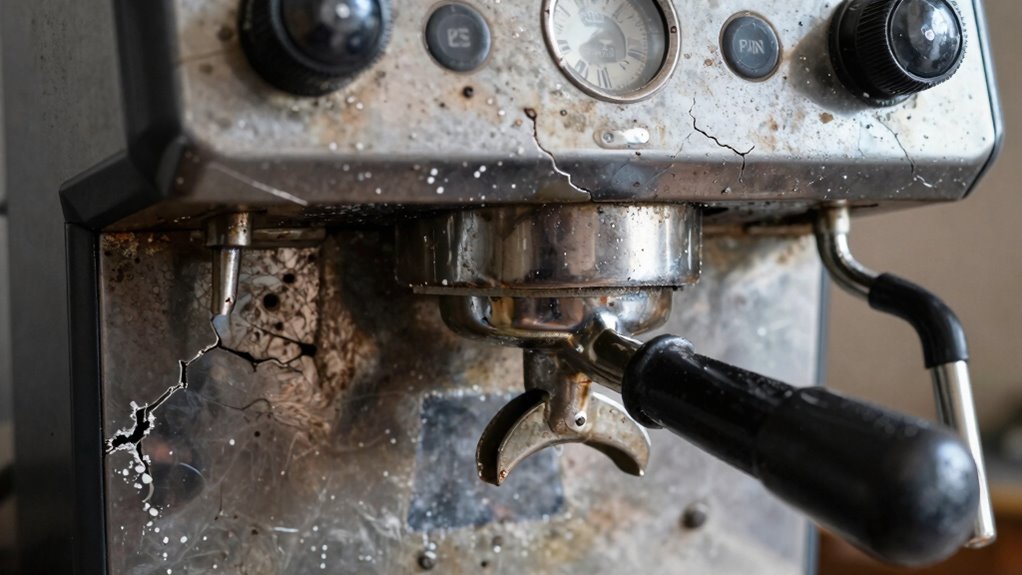
If you want to protect your espresso machine, pay attention to the water’s mineral content, especially hardness levels. Hard water, with high calcium and lime, is what gradually damages your machine over time by causing mineral buildup and clogs. This leads to poor performance, costly repairs, and shorter lifespan. Knowing your water’s mineral number helps you choose the right treatment. Stay with us to learn more about managing water quality and keeping your machine running smoothly.
Key Takeaways
- High mineral content, especially calcium and lime, in water causes mineral buildup that damages espresso machines over time.
- The “Water Number” typically refers to a measure of water hardness, with higher numbers indicating increased risk.
- Excessively hard water accelerates internal clogging, leading to poor extraction and machine failure.
- Regular testing and monitoring of water hardness help prevent damage caused by high “Water Numbers.”
- Using filtered or softened water reduces mineral levels, protecting machines from mineral-related deterioration.
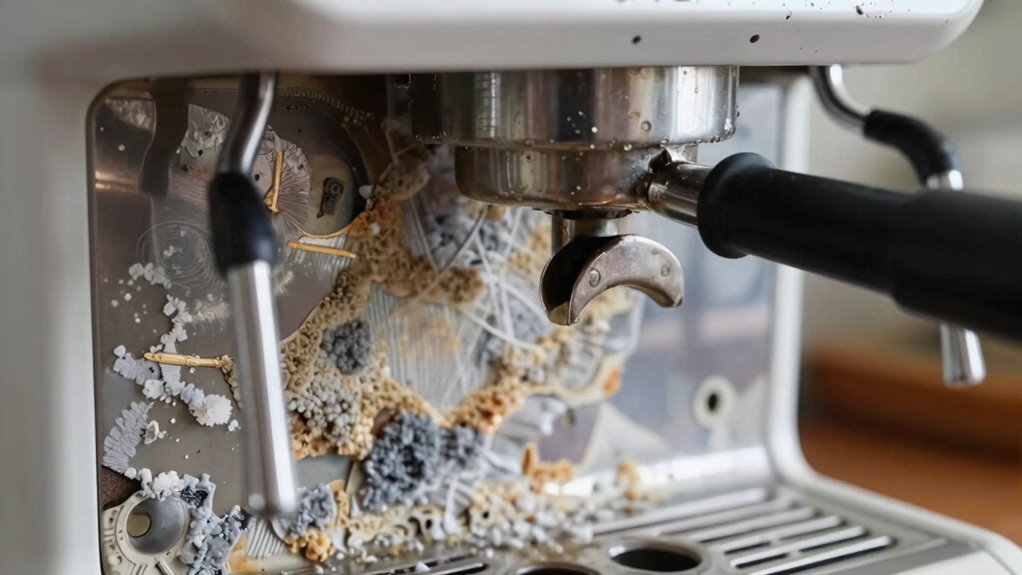
If you’re not careful with the water you use, it can quickly damage your espresso machine. The quality of water plays an essential role in maintaining your machine’s longevity, and understanding the water number—specifically, the water’s mineral content—can help you prevent costly repairs. Over time, water that’s too hard or contains excessive minerals leads to mineral buildup, which can clog the internal components of your espresso maker. This buildup results in poor performance, inconsistent extraction, and eventually, machine failure. To avoid this, you need to pay close attention to water quality testing, which allows you to determine your water’s mineral levels accurately. By knowing your water’s hardness, you can take the necessary steps to adjust it or choose a suitable water source.
Careful water quality testing prevents mineral buildup and protects your espresso machine’s performance and longevity.
Descaling techniques are indispensable in managing mineral deposits. Regular descaling prevents the accumulation of lime and calcium deposits that hard water leaves behind. Depending on your water hardness, descaling frequency can vary—from once a month to every few months. Using descaling solutions specifically designed for espresso machines helps dissolve mineral buildup effectively. It’s important to follow the manufacturer’s instructions precisely to avoid damaging sensitive internal parts. Additionally, descaling isn’t a one-time fix; it’s an ongoing maintenance practice that, combined with water quality testing, ensures your machine stays in top shape. Regular water quality testing can help you identify when descaling is needed, making your maintenance routine more effective. Being aware of your water mineral content allows you to better manage your water treatment choices and maintenance schedule.
You should also consider using filtered or bottled water if your tap water tests high in minerals. This step helps reduce the need for frequent descaling and prolongs your machine’s lifespan. There are water filters designed for espresso machines that reduce hardness and other impurities, making your water less abrasive. Paying attention to the water number means you’re actively managing your machine’s environment, rather than reacting to problems after they arise. It’s a proactive approach that saves time, money, and frustration. Being aware of your local water mineral content can help you choose the best water source for your espresso machine.
Understanding your water’s mineral content is especially important in areas with naturally hard water, where water hardness can significantly impact your machine’s performance and longevity. Ultimately, understanding your water’s mineral content and applying proper descaling techniques is essential. Test your water regularly to determine its quality, and adjust your maintenance routine accordingly. By doing so, you prevent the destructive effects of mineral buildup and keep your espresso machine functioning smoothly for years to come. Remember, good water is the foundation of great espresso, and taking care of it guarantees the best possible brew while protecting your investment.

Possiave 12-Pack Charcoal Water Filters Compatible with Breville BWF100 Machines, Breville Espresso Machine Water Filter Replacement
SUITABLE FOR MOST OF BREVILLE MACHINES – Well -designed for all Breville machine models: BES980XL, BES920XL, BES900XL, BES860XL,…
As an affiliate, we earn on qualifying purchases.
As an affiliate, we earn on qualifying purchases.
Frequently Asked Questions
Can Water Hardness Levels Vary by Geographic Location?
Yes, water hardness levels vary by geographic location due to regional testing differences in water sources. You might notice higher hardness in areas with limestone or mineral-rich aquifers, while softer water comes from regions with different geological features. To protect your espresso machine, check local water reports or conduct your own water testing. Adjustments like filters or softeners can help manage regional variations and prevent damage over time.
How Often Should I Test My Water for Mineral Content?
Think of your espresso machine as a delicate orchestra, where mineral levels are the unseen conductors. You should test your water for mineral content at least once every three to six months. Regular water testing helps catch hidden buildup before it wreaks havoc. By staying vigilant, you guarantee your machine performs perfectly, and your coffee remains a harmonious blend, free from the discord of mineral deposits.
Are There Specific Brands of Water Filters Recommended for Espresso Machines?
You should choose water filters compatible with your espresso machine, like those from brands such as Brita, PUR, or Everpure. These filters focus on mineral reduction, which helps prevent mineral buildup that damages your machine over time. Always check filter compatibility with your espresso maker to guarantee the best performance. Regularly replacing the filter ensures consistent water quality, protecting your machine and improving the taste of your espresso.
Does Water Temperature Affect Mineral Buildup in Machines?
Yes, water temperature affects mineral buildup in your espresso machine. When water reaches its boiling point, calcium deposits can form more quickly, leading to mineral buildup. Higher temperatures accelerate calcium deposits, which can clog your machine’s components over time. To prevent this, use water that’s not too hot during brewing and consider a water filter that reduces calcium levels, helping to minimize mineral buildup and extend your machine’s lifespan.
Can Using Bottled Water Prevent Water-Related Damage?
Using bottled water can help prevent water-related damage to your espresso machine, especially if it has low mineral content benefits. Bottled water minimizes mineral buildup risks, reducing scale and corrosion. However, not all bottled waters are equal—some may have high mineral content that could still harm your machine. Always choose a low-mineral, filtered bottled water to enjoy the benefits without risking damage from mineral buildup.

ACTIVE Coffee Machine Descaler Descaling Solution – 32oz (8 Uses) Compatible with Keurig,Nespresso,Breville,Delonghi, Jura, Ninja – Espresso Coffee Maker Cleaner,Coffee Pot Cleaning Limescale Remover
8 Uses Value-Size Bottle: Same as 4 x 8oz bottle kit of other products! Less Waste, Better Value!
As an affiliate, we earn on qualifying purchases.
As an affiliate, we earn on qualifying purchases.
Conclusion
If you ignore the water number, it’s like sailing a ship into a storm blindfolded—you won’t see the damage coming until it’s too late. Keep an eye on your water’s mineral levels and maintenance schedule, or your prized espresso machine could become a sinking ship. Think of it as tending a garden; with just a little care and attention, your machine will bloom, serving perfect coffee day after day, instead of sinking into decay.

Varify Water Hardness Test Kit – Water Testing Kit for Home, Drinking, Well, Spa, Swimming Pool, Softener, Dishwasher & More – Hard Water Test Strips for Calcium, Magnesium etc (0-425 pmm, 150 Strips)
PROTECT YOUR HOME AND WELLNESS: Understand the impact of hard water on your home and health. Hard water…
As an affiliate, we earn on qualifying purchases.
As an affiliate, we earn on qualifying purchases.
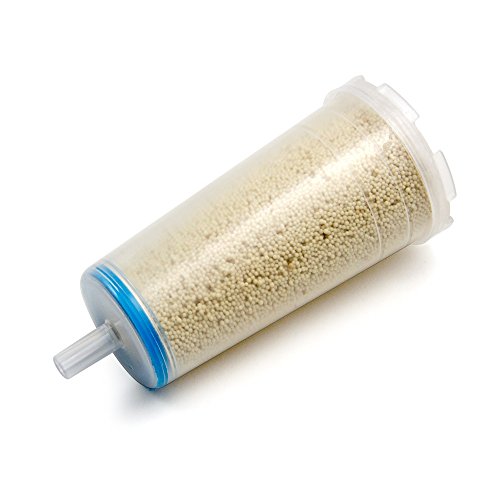
Espresso Machine Water Softener Filter for Ascaso, Isomac, Quickmill, Expobar, Lelit, VBM, and Many More!
Easy installation in seconds!
As an affiliate, we earn on qualifying purchases.
As an affiliate, we earn on qualifying purchases.