
The temperature control feature that truly helps maintain milk quality is your refrigerated storage system, which keeps temperatures consistently below 4°C (39°F). This prevents bacterial growth, slows spoilage, and preserves taste, nutrition, and safety. Proper calibration and steady cooling are key, minimizing temperature fluctuations that cause off-flavors and waste. If you want to discover how to optimize your temperature management for milk’s freshness, there’s more to uncover below.
Key Takeaways
- Continuous temperature monitoring ensures milk stays below 4°C, preventing bacterial growth and spoilage.
- Real-time data logging helps detect temperature fluctuations and maintain consistent cooling.
- Automated temperature control systems adjust refrigeration settings to keep optimal storage conditions.
- Alarm alerts notify staff of temperature deviations, enabling prompt corrective actions.
- Proper calibration of refrigeration units guarantees accurate temperature regulation for milk preservation.
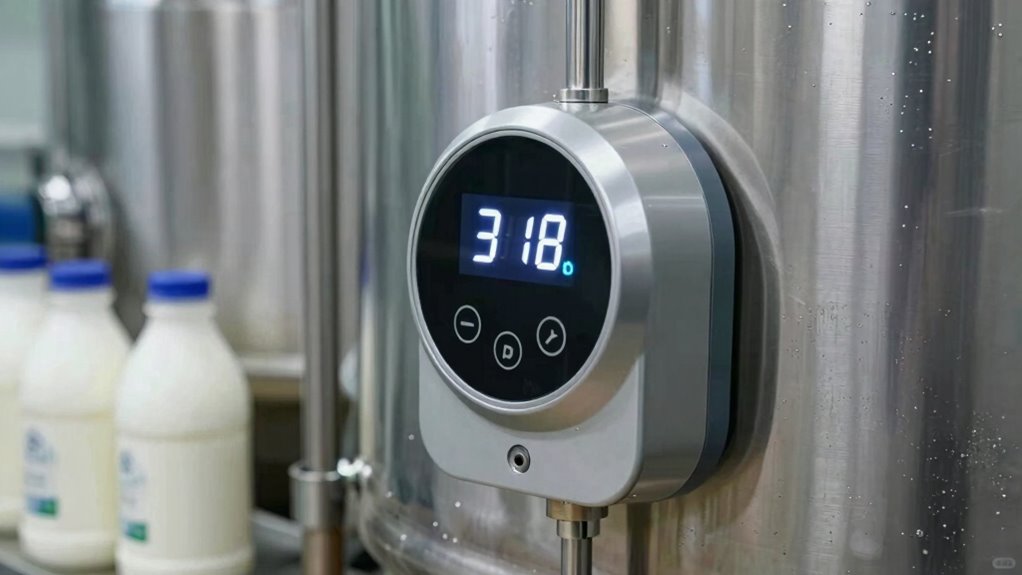
Maintaining proper temperature control is crucial to ensuring milk stays fresh and safe for consumption. When it comes to milk, temperature regulation isn’t just about keeping it cool; it’s about preserving its quality from the moment it’s collected to when it reaches your glass. One of the most critical processes in this regard is milk pasteurization, which involves heating milk to a specific temperature for a set period to kill harmful bacteria. Proper temperature control during pasteurization ensures that milk remains safe without compromising its nutritional value or taste. This process highlights the importance of dairy storage techniques that effectively maintain the right temperatures, preventing bacterial growth and spoilage.
Maintaining proper temperature control ensures milk stays fresh, safe, and preserves its quality from farm to glass.
Your role in managing milk quality begins with understanding how dairy storage techniques influence overall freshness. Once milk is pasteurized, it needs to be stored at consistent, low temperatures—typically below 4°C (39°F). This helps inhibit bacterial activity and extends shelf life. You should always use refrigerated storage units that are properly calibrated and maintain a steady temperature throughout the day. Fluctuations in temperature can create opportunities for bacteria to thrive, so monitoring and adjusting your refrigeration settings regularly is essential. Additionally, avoid overcrowding your storage to allow proper air circulation, which helps maintain uniform cooling. Proper refrigeration is essential for maintaining milk quality over time.
The benefits of precise temperature control become especially apparent when you consider the risks of improper dairy storage techniques. If milk is stored at higher temperatures or exposed to frequent temperature swings, it can develop off-flavors and spoil faster. This not only compromises taste but also raises health concerns. Implementing strict temperature management strategies means you’re actively preventing these issues. Using temperature loggers or digital thermometers provides real-time data, allowing you to make adjustments before quality deteriorates. These tools are particularly useful during transportation or when dealing with large quantities of milk, ensuring each batch remains within safe temperature ranges. Furthermore, consistent temperature control supports sustainable dairy practices by reducing waste caused by spoiled milk. Keeping a close eye on storage conditions can also help identify inefficient refrigeration systems that may need maintenance or upgrades.
In addition to maintaining proper storage temperatures, your handling practices matter. Always keep milk covered and stored away from direct sunlight or heat sources, which can cause temperature spikes. When transferring milk between containers or for cleaning purposes, do so quickly to minimize exposure to warmer environments. Proper dairy storage techniques also involve practicing good hygiene, preventing contamination that could be exacerbated by improper temperatures. By paying close attention to these details, you help preserve the milk’s freshness, flavor, and safety from farm to fridge. Understanding the biodiversity involved in dairy farming can further enhance sustainable practices and ensure the long-term health of ecosystems supporting milk production.
Ultimately, the key to keeping milk fresh and high-quality lies in your consistent application of effective temperature control. From pasteurization to storage, every step depends on maintaining ideal temperatures. When you implement these dairy storage techniques diligently, you ensure that the milk you provide or consume remains safe, nutritious, and delicious—no matter how long it spends in transit or on your shelves.
digital refrigerator temperature monitor
As an affiliate, we earn on qualifying purchases.
As an affiliate, we earn on qualifying purchases.
Frequently Asked Questions
How Does Temperature Fluctuation Affect Milk Shelf Life?
Temperature fluctuations accelerate milk spoilage by creating ideal conditions for bacterial proliferation. When temperatures rise, bacteria multiply quickly, reducing shelf life and risking unsafe consumption. Conversely, sudden drops can cause condensation, fostering bacterial growth. To keep milk fresh longer, you need consistent, ideal storage temperatures. Proper temperature control minimizes bacterial proliferation, slows spoilage, and extends milk’s freshness, ensuring it stays safe and tasty for as long as possible.
What Is the Optimal Temperature Range for Storing Milk?
Imagine a cool, shaded room where milk stays fresh; that’s your ideal storage temperature. Keep it between 1°C and 4°C to prevent spoilage and maintain quality. Proper temperature controls during milk pasteurization and storage prevent condensation, which can lead to bacterial growth. You should avoid temperatures above 4°C, ensuring the milk remains safe, fresh, and retains its natural flavor for as long as possible.
How Quickly Should Milk Be Cooled After Milking?
You should cool milk within two hours after milking to maintain quality and safety. Rapid cooling helps preserve milk pasteurization and keeps bacteria growth in check. Maintaining the cold chain is essential; the milk must stay at or below 4°C during transport and storage. Swift cooling minimizes spoilage, guarantees freshness, and protects the milk’s nutritional value, making it safe for consumers and compliant with health standards.
Are There Specific Temperature Settings for Different Milk Types?
Yes, different milk types require specific temperature settings to preserve their unique milk composition and guarantee quality. For example, cow’s milk is best stored at 1-4°C, while goat or sheep milk might need slightly different conditions. You should follow proper storage techniques, like maintaining consistent temperatures and avoiding temperature fluctuations, to prevent spoilage. Using precise temperature controls helps maintain milk’s freshness, flavor, and nutritional value effectively.
Can Temperature Control Prevent Bacterial Growth in Milk?
Yes, temperature control can prevent bacterial growth in milk. By maintaining precise temperatures, you inhibit bacteria, ensuring better bacterial inhibition. This control also enhances storage stability, keeping milk fresh longer and reducing spoilage risks. When you keep milk at ideal temperatures, you actively slow down bacterial activity, safeguarding quality. So, with proper temperature management, you’re doing more than just storing milk—you’re protecting its freshness and safety.
refrigeration temperature logger
As an affiliate, we earn on qualifying purchases.
As an affiliate, we earn on qualifying purchases.
Conclusion
You might think that simply keeping milk cold is enough, but precise temperature control truly makes a difference. It’s not just about slowing spoilage—it preserves flavor, nutrients, and freshness. Some believe that minor tweaks in temperature can dramatically extend shelf life and improve quality. So, next time you handle milk, remember: smarter temperature control isn’t just a myth—it’s your secret weapon to enjoying better, safer milk every time.
automatic temperature control refrigerator
As an affiliate, we earn on qualifying purchases.
As an affiliate, we earn on qualifying purchases.
As an affiliate, we earn on qualifying purchases.