Many thermometers hide the fact that their readings can be inaccurate if not regularly calibrated, leading to subtle brewing errors. You might think you’re brewing at the perfect temperature, but small inaccuracies can cause over- or under-extraction, drastically affecting flavor. Cheap or poorly-made thermometers often drift over time, giving a false sense of precision. If you want consistent, delicious coffee, understanding this hidden flaw is key—if you keep exploring, you’ll discover how to avoid these issues altogether.
Key Takeaways
- Many thermometers display inaccurate readings due to poor calibration, hiding true brew temperature errors.
- Ambient temperature fluctuations can skew thermometer accuracy, misleading brewers about actual water temperature.
- Cheap or poorly designed thermometers often drift over time, concealing gradual inaccuracies.
- Thermometers may hide small but critical temperature deviations that significantly impact extraction quality.
- Improper placement during brewing can cause misleading readings, masking true water temperature.
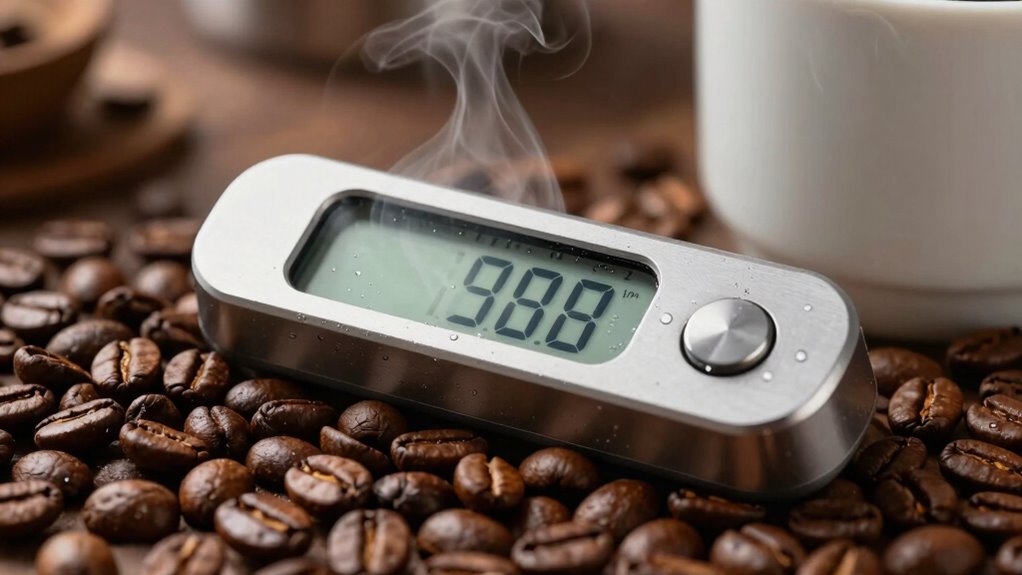
When it comes to brewing the perfect cup of coffee, temperature plays a vital role, and even a slight mistake can compromise the flavor. Yet, many home brewers and even baristas overlook the importance of precise temperature measurement, often relying on thermometers that hide the true readings. You might think your thermometer is accurate, but in reality, it can be off by a few degrees, especially if it’s not calibrated correctly or designed poorly. This small discrepancy can lead to over- or under-extraction, changing the flavor profile dramatically.
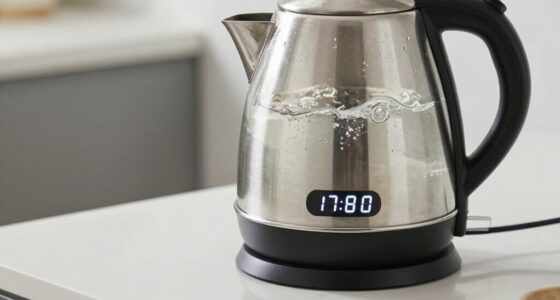
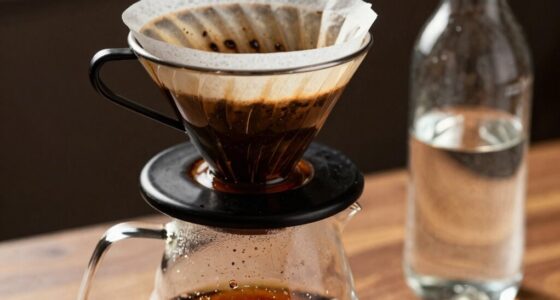
One often overlooked factor is the coffee grind. The size of your coffee grind affects how water interacts with the coffee grounds, and temperature influences this interaction. If your water isn’t at the optimal temperature—typically around 195°F to 205°F—it can cause uneven extraction, regardless of how perfect your grind may be. Too hot, and you risk extracting bitter compounds; too cold, and you won’t extract enough of the desirable flavors. When your thermometer hides its true temperature, you might be unknowingly brewing with water that’s too hot or not hot enough, leading to inconsistent results.
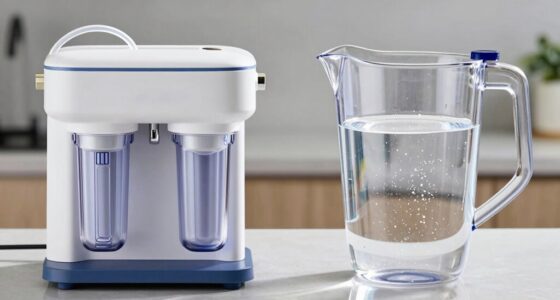
Another critical element that many neglect is water mineralization. The mineral content of your water impacts how heat transfers and how flavors develop during brewing. Hard water, rich in calcium and magnesium, can insulate the water, causing it to heat unevenly, while soft water might heat more quickly but extract fewer minerals that contribute to flavor complexity. If your thermometer isn’t giving an accurate reading, you might believe your water is at the perfect temperature when it’s actually too hot or too cold, influencing the extraction process and overall taste. Additionally, thermometer calibration is essential for maintaining your device’s accuracy over time. Regularly checking and adjusting your thermometer can ensure consistent results and prevent the temperature errors that undermine your brewing process. It’s also helpful to understand that some thermometers may be affected by ambient temperature, which can further skew readings if not accounted for.
Using a reliable thermometer designed for culinary precision can significantly improve your brewing consistency, as many inexpensive models tend to drift over time without calibration. Thermometers that hide their true temperature can give a false sense of precision. Some cheap models or poorly calibrated devices may be off by several degrees, which is enough to alter your brewing process. This discrepancy becomes especially problematic when you’re trying to dial in a specific temperature for your preferred coffee grind or water mineralization level. Without accurate readings, you can’t fine-tune your process, leading to inconsistent cups and missed flavor potential.
Furthermore, proper thermometer placement in the brewing process can also impact how accurately you measure temperature, emphasizing the importance of consistent technique. Ultimately, understanding that many thermometers are unreliable is crucial. You need to ensure your device is calibrated correctly and that it provides a truthful reading. Only then can you truly control your brew temperature, optimize the interaction between your coffee grind and water mineralization, and consistently craft the perfect cup. Because in coffee brewing, precision isn’t just a luxury—it’s a necessity.
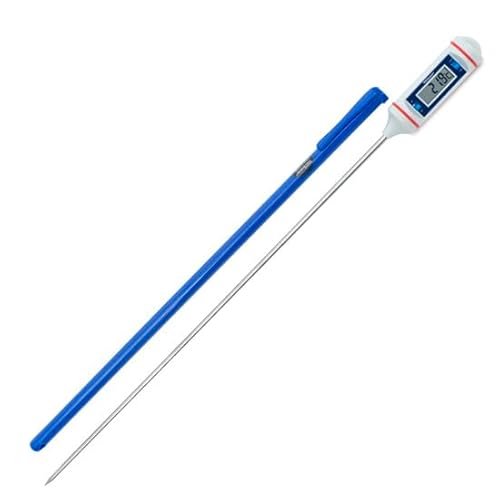
Traceable Digital Pocket Thermometer with Calibration, 302°F; 8" Long-Stem
Product Type: digital indicator
As an affiliate, we earn on qualifying purchases.
As an affiliate, we earn on qualifying purchases.
Frequently Asked Questions
How Do Different Types of Thermometers Impact Brew Temperature Accuracy?
Different types of thermometers impact brew temperature accuracy based on their design and calibration. Digital thermometers usually offer higher thermometer accuracy and quick readings, but they need regular calibration techniques to stay precise. Analog thermometers can be reliable if properly calibrated, but they might be less consistent. You should consistently check and recalibrate your thermometer to verify accurate readings, regardless of type, to maintain ideal brew temperature.
Can Ambient Room Temperature Affect Thermometer Readings During Brewing?
Imagine your thermometer as a sensitive dance partner, reacting to every move in the room. Yes, room temperature can influence its readings, especially if it’s not highly sensitive. When the room heats up or cools down, your thermometer might pick up those fluctuations, leading to inaccurate brew temperatures. To keep your brewing on beat, make certain your thermometer is designed for stability and calibrate it regularly, regardless of ambient changes.
Are There Specific Thermometer Brands Known for Hiding Brew Temperature Errors?
Some thermometer brands are known for hiding brew temperature errors due to precision inconsistencies and calibration challenges. You might notice that certain models, especially cheaper or poorly calibrated ones, give inaccurate readings, making it hard to maintain ideal brew temperatures. To avoid this, choose reputable brands with consistent quality and calibration features. Regularly checking and calibrating your thermometer helps guarantee accurate readings, giving you better control over your brewing process.
How Often Should I Calibrate My Thermometer for Consistent Results?
You should calibrate your thermometer at least once a month to ensure superior accuracy. Neglecting this can lead to massive brewing mishaps, like over- or under-extracting coffee. Follow a strict calibration schedule to maintain precision and avoid costly errors. Regular calibration keeps your thermometer reliable, making sure every brew hits the perfect temperature. Don’t risk your brew quality—prioritize accuracy maintenance with consistent calibration.
Does the Type of Coffee Beans Influence Ideal Brew Temperature Measurements?
Yes, the type of coffee beans influences ideal brew temperature measurements. Light roasts often need slightly higher temperatures to extract delicate flavors, while dark roasts perform well at lower temperatures. Proper coffee storage preserves bean freshness, impacting flavor extraction and temperature accuracy. Be mindful of bean roasting levels, as they affect your ideal brewing temp. Adjust your thermometer accordingly to guarantee consistent, flavorful results with different coffee beans.
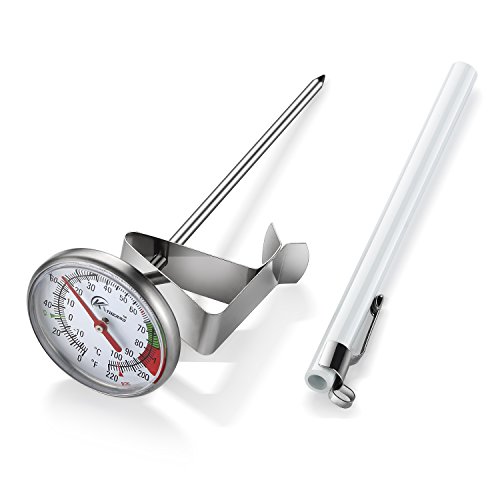
KT THERMO Instand Read 2-Inch Dial Thermometer,Best for The Coffee Drinks,Chocolate Milk Foam
DESIGN:Multi-stage design of the fixed clip, adjust the thermometer read the location of the disk surface to facilitate…
As an affiliate, we earn on qualifying purchases.
As an affiliate, we earn on qualifying purchases.
Conclusion
Now that you know about the hidden brew temperature error, don’t let it sneak past you like a shadow in the night. By understanding how thermometers can deceive you, you’re armed with the knowledge to perfect your coffee game. Remember, accuracy is your best brew buddy—without it, your perfect cup is just a mirage. Keep your thermometer honest, and enjoy every sip knowing you’ve mastered the art of temperature control.

BOMATA Digital Water Thermometer for Water, Liquid, Candle and Cooking. Instant Read Food Thermometer Waterproof IPX7 with Long Probe for Cooking, Meat, BBQ! T101 (Black Color)…
[ Waterproof – IPX7 ] With the strong waterproof ability, it’s very suitable for measuring the temperature of…
As an affiliate, we earn on qualifying purchases.
As an affiliate, we earn on qualifying purchases.
KT THERMO Instand Read 2-Inch Dial Thermometer,Best for The Coffee Drinks,Chocolate Milk Foam
DESIGN:Multi-stage design of the fixed clip, adjust the thermometer read the location of the disk surface to facilitate…
As an affiliate, we earn on qualifying purchases.
As an affiliate, we earn on qualifying purchases.