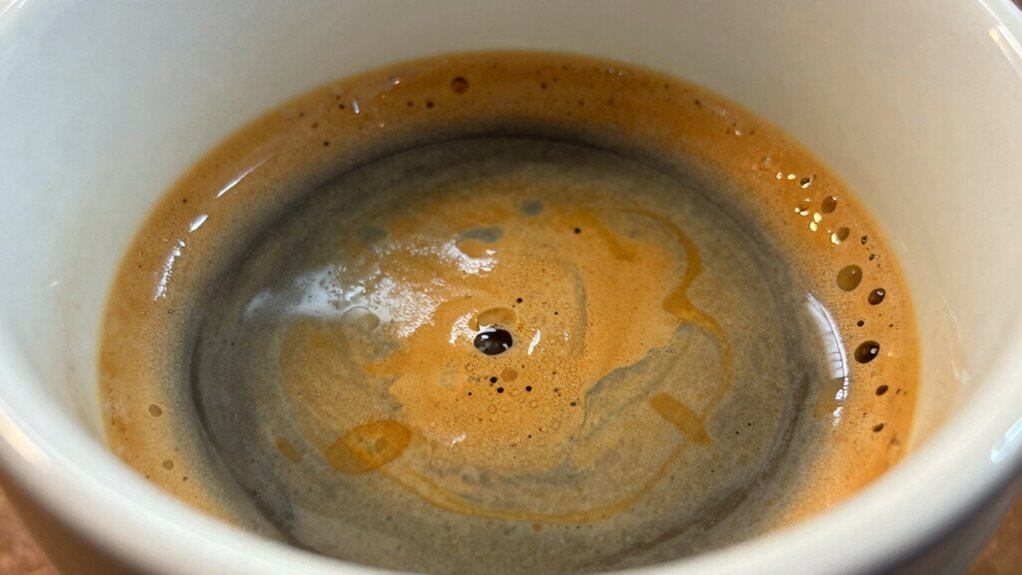

A nice crema on your espresso can hide a weak, under-extracted shot that lacks full flavor and richness. Even if it looks great on top, the underlying brew may be bland or watery due to improper extraction, stale beans, or incorrect brewing parameters. Crema alone isn’t a sign of quality, so don’t rely solely on its appearance. To get a truly flavorful shot, you need to pay attention to the details behind that alluring surface—if you want to uncover the truth.

Get kitchen gear delivered free with Prime
- Fast, free delivery on millions of items
- Prime Video, Amazon Music and more included
- Member-only deals all year
Key Takeaways
- Thick, attractive crema can mask under-extraction, resulting in weak, insipid flavor despite the surface appearance.
- Properly brewed espresso requires complete extraction; crema alone doesn’t guarantee strong, flavorful coffee.
- Using stale beans or poor water quality diminishes flavor regardless of crema quality.
- Adjusting grind size and shot timing is essential to reveal true espresso strength beyond crema appearance.
- Recognizing that crema is an illusion helps troubleshoot the underlying cause of weak espresso.

If you’ve ever brewed a cup of espresso only to find it weak and lacking flavor, you’ve encountered the so-called “Weak Espresso Problem.” This issue often stems from variables in the brewing process that cause the coffee to under-extract, resulting in a bland, underwhelming shot. One common cause is improper coffee extraction; if the extraction isn’t thorough enough, the flavors and oils haven’t fully dissolved from the coffee grounds, leading to a watery, tasteless espresso. This incomplete extraction can be tricky to diagnose because a beautiful crema might still sit atop the shot, masking the underlying issue. Many assume that a thick, rich crema signifies good espresso, but that’s not always the case. The crema could be a false indicator, hiding weak flavors beneath its frothy surface.
Another essential factor is bean freshness. Freshly roasted beans are necessary for achieving ideal coffee extraction because they contain more volatile oils and aromatic compounds, which are key to flavor. When beans are old or stale, these compounds diminish, making it harder to extract the full spectrum of flavors during brewing. Even if your grind size and tamping are perfect, stale beans can produce a weak, insipid espresso because the necessary solubles aren’t present in adequate amounts. Conversely, using very fresh beans can sometimes lead to over-extraction if your grind is too fine or your brewing time is too long, so balancing freshness with proper brewing parameters is indispensable. Additionally, proper storage of beans is crucial to preserve their freshness and aromatic oils, ensuring a more consistent extraction process. Proper storage helps maintain the aromatic oils, which are vital for a full-bodied flavor and better extraction. It’s also important to consider the water quality used in brewing, as impurities can negatively impact extraction and flavor. Using consistent brewing techniques can help stabilize the extraction process and prevent the weak espresso problem from recurring.
In practice, the weak espresso problem often arises from a combination of these factors. If your coffee extraction isn’t complete, you’re likely to end up with a shot that looks promising but tastes flat. Ensuring your beans are fresh and stored properly helps preserve their essential oils and flavors, making extraction more efficient. Adjusting your grind size and shot time can help maximize extraction, making sure water interacts evenly with the coffee grounds. Additionally, paying attention to brewing temperature can greatly influence extraction efficiency and flavor clarity. Remember, the presence of a nice crema doesn’t necessarily mean your espresso is strong or flavorful; it can be a surface illusion hiding an under-extracted shot. By paying attention to bean freshness and fine-tuning your extraction process, you can overcome the Weak Espresso Problem and produce shots that are as rich and flavorful as they look.
espresso grinder for perfect extraction
As an affiliate, we earn on qualifying purchases.
As an affiliate, we earn on qualifying purchases.
Frequently Asked Questions
How Does Water Temperature Affect Espresso Strength?
Water temperature directly impacts your espresso’s strength by influencing extraction temperature effects. If the water isn’t consistent, your espresso can be weak or over-extracted, leading to dull flavors. Ideally, maintaining water temperature consistency ensures you extract the best compounds, giving you a rich, balanced shot. Too hot, and you risk bitter over-extraction; too cold, and your espresso will be weak and underdeveloped. Proper temperature control is key for a strong, flavorful espresso.
Can Grind Size Impact Espresso Crema Quality?
Yes, grind size greatly impacts espresso crema quality. If your grind isn’t consistent, water flows unevenly, causing weak or patchy crema. A well-designed filter basket also helps optimize extraction, enhancing crema formation. Fine, uniform grind ensures proper pressure and extraction, resulting in a richer, thicker crema. Conversely, a coarser or inconsistent grind can lead to thin, weak crema, masking the espresso’s true flavor and aroma.
What Role Does Tamping Pressure Play in Espresso Extraction?
Tamping pressure plays a pivotal part in perfecting espresso. You should apply consistent tamping pressure, ensuring uniformity for ideal extraction. Proper distribution techniques help spread coffee evenly, preventing channeling and uneven flow. When you focus on tamping consistency and use effective distribution methods, you promote proper water contact, maximizing flavor and crema. This careful control creates a balanced brew, delivering a rich, robust espresso with a beautiful, lasting crema.
How Does Bean Freshness Influence Espresso Flavor?
You’ll notice that fresh beans greatly improve espresso flavor because they retain their oils and aromatic compounds. As beans age, flavor degradation occurs, leading to a dull, flat taste and less vibrant crema. Using stale beans results in weaker, less flavorful espresso, so always aim for freshly roasted beans and use them promptly. This guarantees your shot has the rich, complex flavor profile you’re after.
Are There Specific Machine Settings for a Stronger Espresso?
To get a stronger espresso, you should adjust your machine calibration and extraction timing. Increase the coffee dose or grind finer to boost strength, and set a slightly longer extraction time to extract more flavors. Make sure your machine is calibrated correctly for ideal pressure and temperature. Experiment with these settings until you find a balance that delivers a richer, more robust espresso without over-extracting and turning bitter.
As an affiliate, we earn on qualifying purchases.
Conclusion
So, next time your espresso looks perfect but tastes lackluster, remember the weak espresso problem. Don’t settle for a pretty crema hiding a weak brew—think of it as a modern-day alchemy needing your keen eye and careful tweaks. Just like the legendary explorers of yore, don’t be afraid to experiment and discover that sweet spot. With patience and a dash of old-world curiosity, you’ll turn your cup into a true masterpiece, no magic required.
As an affiliate, we earn on qualifying purchases.
As an affiliate, we earn on qualifying purchases.
Halloween Picks
halloween
As an affiliate, we earn on qualifying purchases.