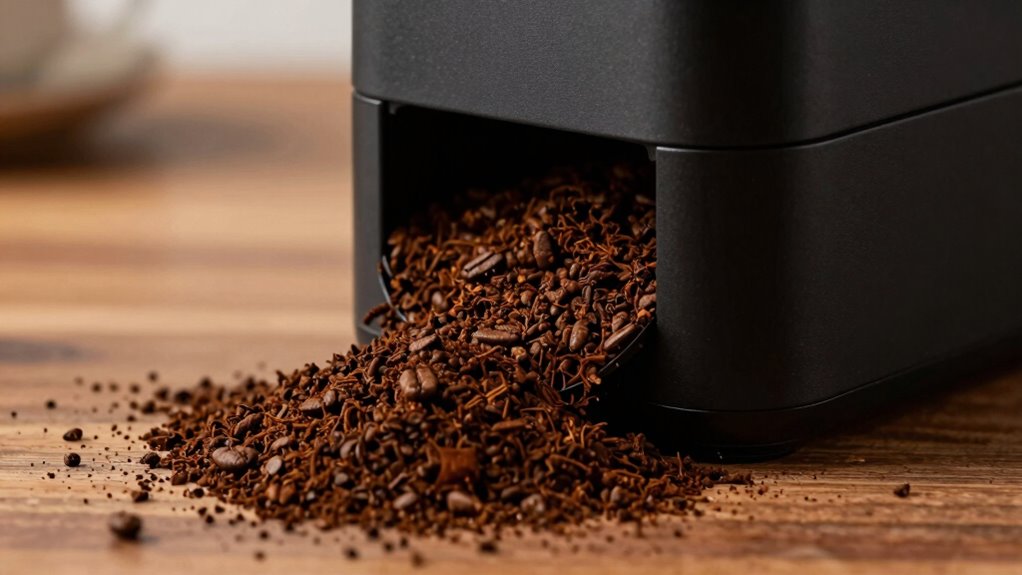

The biggest grinder habit that wastes coffee is using inconsistent grind sizes. When your grind isn’t uniform, it causes uneven extraction—leading to over- or under-brewed coffee, which often means you add more beans to fix the flavor. Rushing or adjusting the grinder without testing can make this worse. If you stick to consistent grind settings and proper technique, you’ll see less waste and better flavor. Keep going to discover more tips to improve your coffee habits.

Get kitchen gear delivered free with Prime
- Fast, free delivery on millions of items
- Prime Video, Amazon Music and more included
- Member-only deals all year
Key Takeaways
- Rushing the grind without proper calibration causes inconsistent particle sizes, leading to wasted coffee due to improper extraction.
- Default or hurried adjustments to grind settings often result in uneven grounds, increasing coffee waste.
- Ignoring the importance of consistent grinding technique leads to over- or under-extraction and unnecessary bean use.
- Inconsistent grind size from low-quality or improperly used burr grinders wastes coffee by compromising flavor.
- Skipping careful dial-in when changing beans or brewing methods causes overuse of coffee to compensate for poor extraction.
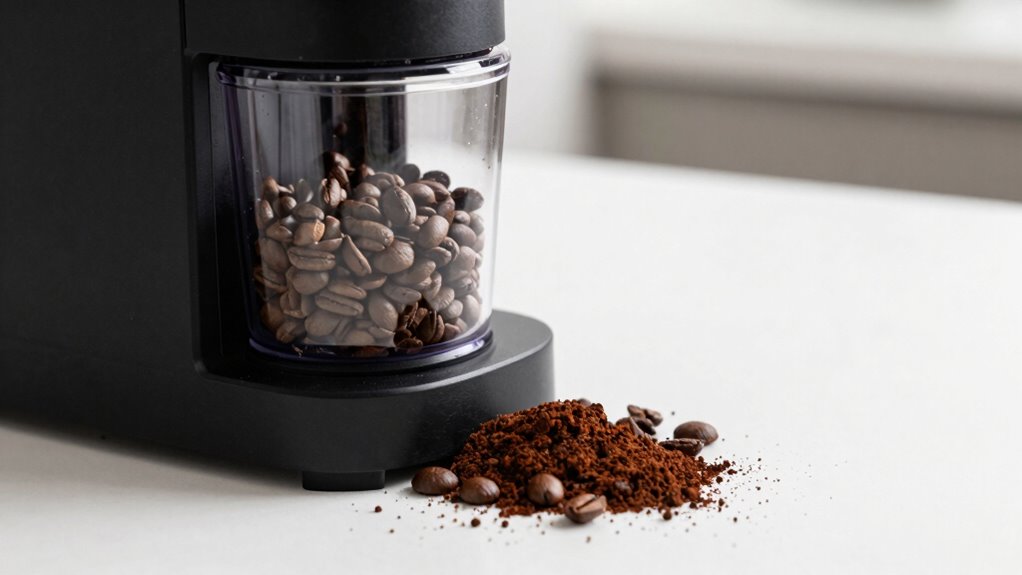
If you’re grinding your coffee beans without paying attention, you might be wasting more coffee than you realize. The key issue isn’t just the amount of coffee you toss into your grinder but how you grind it. A common mistake is neglecting grinding consistency, which can drastically affect the flavor of your brew and lead to wasting coffee. When your grind size isn’t uniform, some particles extract too quickly, resulting in over-extraction and bitter tastes, while others under-extract, leaving your coffee weak and bland. This inconsistency forces you to use more beans to compensate for a poor grind, ultimately wasting coffee that could have been used more efficiently.
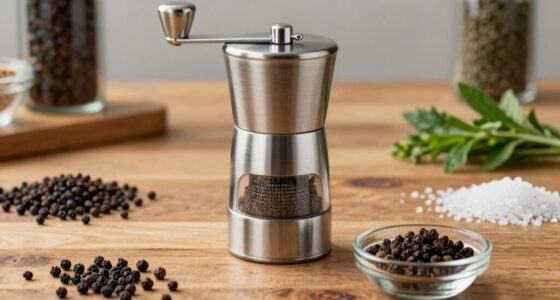
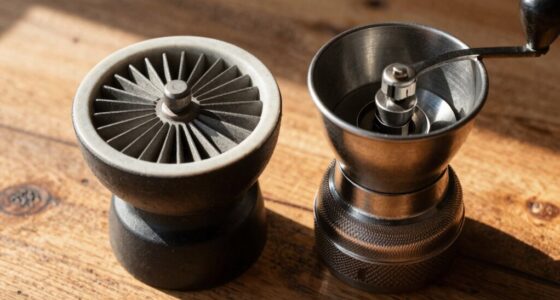
One of the biggest influences on grinding consistency is the type of grinder you use—burr versus blade. Blade grinders spin rapidly, chopping beans into uneven pieces. This randomness results in inconsistent grind sizes, making it difficult to achieve the precise extraction needed for a balanced cup. Because of this, you might find yourself grinding more coffee than necessary, hoping to improve flavor, but ending up wasting beans in the process. Burr grinders, on the other hand, crush beans between two burrs, producing a uniform grind size. This consistency ensures that your coffee grounds extract evenly, leading to better flavor and less waste. When you invest in a burr grinder and use it correctly, you’re less likely to overuse beans trying to fix the flavor or compensate for uneven grinding. Additionally, understanding the importance of grind consistency can help you make better brewing decisions and reduce waste. Recognizing the impact of grind uniformity on extraction can significantly enhance your coffee experience. A proper grind not only improves flavor but also minimizes the amount of coffee wasted throughout the process.
Burr grinders produce uniform grounds, ensuring even extraction and reducing coffee waste.
Another habit that contributes to wasting coffee is rushing the grind process. If you’re impatient and don’t pay attention to the grind size, you might set your grinder to a default setting or randomly adjust it without testing. This haphazard approach results in inconsistent grind sizes that can cause over- or under-extraction. Instead, you should take the time to dial in your grind setting carefully, especially if you switch beans or brewing methods. Doing so ensures you get the right grind consistency for your brewing process, reducing waste and improving flavor. Additionally, understanding how grind size impacts extraction can help you fine-tune your process for optimal results.
Being mindful of your grinding habits and proper equipment can save you a significant amount of coffee over time. Focus on achieving a consistent grind, preferably with a burr grinder, and avoid rushing through the process. By paying attention to grind consistency and choosing the right equipment, you’ll make the most of your coffee beans, brewing better cups without unnecessary waste. Small adjustments make a big difference, and over time, you’ll notice that you’re not only saving money but also enjoying richer, more balanced coffee.
Products Worth Considering

Ninja CM371 Hot & Iced XL Coffee Maker with Rapid Cold Brew

De’Longhi Rivelia Fully Automatic Espresso Machine with Grinder and Milk Frother, Beige

Cuisinart Chef’s Classic 17-Piece Hard-Anodized Nonstick Cookware Set
As an affiliate, we earn on qualifying purchases.
Frequently Asked Questions
How Can I Tell if My Grinder Is Wasting Coffee?
You can tell if your grinder wastes coffee by noticing inconsistent grind sizes or excessive noise, which may indicate inefficiency. If your coffee tastes stale or dull, it could be due to using old coffee beans or poor grinding. Pay attention to noise levels—loud or irregular sounds might mean your grinder isn’t operating properly. Regularly cleaning your grinder and using fresh coffee beans helps prevent waste and guarantees peak flavor.
Does Grinder Type Affect Coffee Waste?
You might not realize it, but your grinder type directly impacts your coffee flavor and waste. Burr grinders typically produce consistent grounds, reducing waste and preserving flavor, while blade grinders can create uneven grounds, leading to more coffee lost in the process. The grinding noise can also hint at inefficiencies. If you hear irregular sounds, you could be wasting more coffee than you think, risking flavor and money.
What’s the Best Way to Measure Coffee Waste?
To measure coffee waste accurately, use a small scale to weigh your coffee before and after grinding, noting the difference. This method helps you track how much gets discarded during grinding. Pay attention to coffee freshness, as stale beans can lead to more waste. Also, monitor grinder noise, which can indicate inconsistent grinding that causes excess coffee loss. Consistent measurement minimizes waste and guarantees ideal flavor.
Can Grinder Maintenance Reduce Coffee Waste?
Yes, grinder maintenance can reduce coffee waste markedly. When you regularly clean your grinder and guarantee proper calibration, you maintain ideal coffee freshness and grind consistency. This prevents over- or under-extraction, which leads to wasted coffee and poor flavor. By keeping your grinder in top shape, you maximize each batch’s freshness, cut down on waste, and improve your overall brewing experience.
Is Grinding Size Linked to Coffee Wastage?
You might waste up to 30% of your coffee if your grinding size isn’t consistent. Grinding size directly impacts coffee flavor, as uneven grounds lead to over-extraction or under-extraction. When your grind isn’t precise, it causes inconsistent brewing, wasting coffee and ruining flavor. Focus on maintaining a consistent grinding size to maximize flavor and minimize waste, turning every scoop into a delicious cup instead of throwaway grounds.
Conclusion
If you’re not rinsing your grinder regularly, you could be wasting up to 30% of your coffee each month. That’s nearly a third of your beans going to waste just because of one simple habit. Cutting down on leftover grounds and maintaining your grinder can save you money and guarantee every cup tastes fresh. Don’t let this small habit cost you big in flavor and finances. Make cleaning part of your routine—you’ll taste the difference!