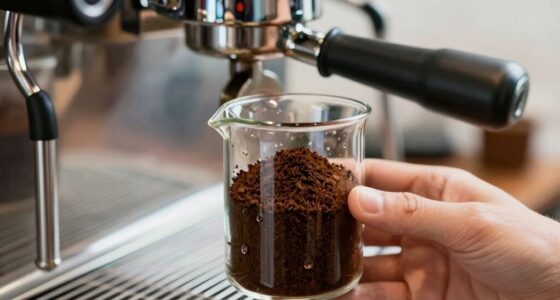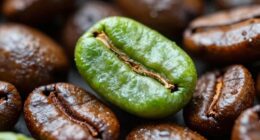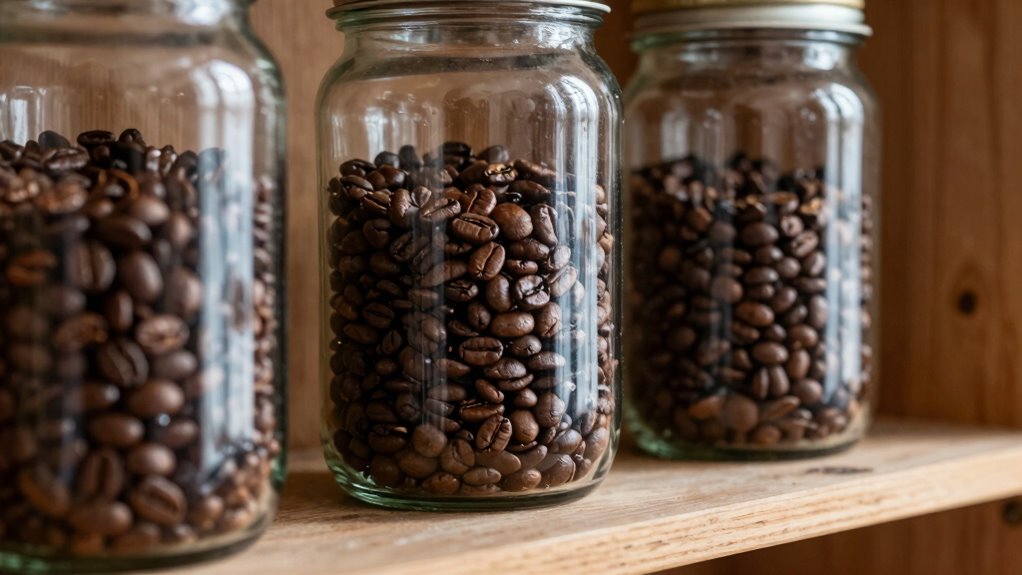

Storing your coffee beans in non-airtight or transparent containers quietly damages their freshness. Oxygen exposure causes oxidation, and light exposure breaks down delicate aromatic compounds, dulling flavor. Moisture is also a silent enemy, especially if you store beans in humid environments or improper containers, leading to mold and faster staling. To keep your beans vibrant and aromatic, it’s best to use airtight, opaque containers and avoid temperature fluctuations. Keep going to uncover more ways to protect that perfect cup.

Get kitchen gear delivered free — and shop member deals
- Fast, free delivery on millions of items
- Access to Prime Big Deal Days deals on October 6–7
- Prime Video, Amazon Music and more included
Key Takeaways
- Using transparent containers exposes beans to light, accelerating aromatic compound breakdown.
- Storing beans in non-airtight containers allows oxygen exposure, causing oxidation and flavor loss.
- Keeping beans in humid environments promotes mold growth and accelerates staling.
- Repeated temperature fluctuations, like frequent fridge exposure, speed up aging.
- Storing beans in warm areas increases temperature stress, reducing freshness and aroma.

Storing beans improperly can quickly sap their freshness and flavor, leaving you with stale or rancid beans long before you finish them. One common mistake is exposing your coffee beans to fluctuating temperatures or light, which accelerates coffee bean aging. As beans age, they lose their vibrant, aromatic qualities, resulting in a duller brew. This process isn’t just about time; it’s about how environmental factors accelerate the natural aging process, making your coffee less lively and complex. Additionally, many people overlook the importance of environmental control, which plays a crucial role in maintaining bean freshness. Proper storage conditions, such as consistent temperature and minimal exposure to air, are essential for preserving flavor.
Another silent culprit is moisture absorption. Coffee beans are porous, meaning they readily absorb humidity from the environment. When stored in humid conditions, beans can become damp, which encourages mold growth and promotes staling. Moisture also speeds up coffee bean aging by triggering chemical reactions that break down the oils and aromatic compounds essential for fresh flavor. Even a slight increase in humidity can cause beans to deteriorate faster, robbing you of the freshness you seek. It’s crucial to keep beans in a dry, airtight container to prevent moisture from creeping in and degrading their quality. Proper container choice is vital to prevent moisture ingress and maintain optimal conditions for preservation. Furthermore, using containers that are not specifically designed for coffee storage can inadvertently introduce contaminants or odors that affect flavor.
Many people overlook the importance of container choice, thinking any jar or bag will do. However, storing beans in non-airtight or transparent containers exposes them to oxygen and light, both of which hasten flavor loss. Oxygen facilitates oxidation, which accelerates the deterioration of aromatic oils, leaving behind flat, stale beans. Light exposure can also break down delicate compounds inside the beans, diminishing flavor and aroma. To preserve freshness, you should use opaque, airtight containers that block out light and limit oxygen contact. Using these containers can significantly extend the shelf life and flavor profile of your coffee beans.
Temperature plays a significant role in maintaining bean quality. Storing beans in the fridge or freezer might seem like a good idea, but it’s often a mistake unless done properly. Temperature fluctuations and condensation inside the container can introduce moisture, leading to the very issues you want to avoid. If you choose to freeze beans, do so in a tightly sealed, moisture-proof bag, and only take out what you need for immediate use. Keep the rest in a cool, dark, and dry place—like a pantry—away from heat sources that speed up aging. Being mindful of storage environment helps ensure your beans stay fresh longer rather than deteriorating prematurely. Proper temperature regulation is equally important to prevent rapid aging caused by external heat or cold.
Ultimately, the key to preserving your coffee’s freshness is controlling environmental factors—oxygen, light, moisture, and temperature. Avoid habits that allow moisture absorption or expose your beans to unnecessary oxygen and light. By doing so, you slow down coffee bean aging and keep your beans tasting vibrant, aromatic, and fresh for longer.
airtight opaque coffee storage container
As an affiliate, we earn on qualifying purchases.
As an affiliate, we earn on qualifying purchases.
Frequently Asked Questions
How Long Can I Store Beans Before They Spoil?
You can usually store dried beans for about a year if you keep them in a cool, dark place. To maintain their freshness, guarantee the storage temperature stays consistent and low, ideally below 70°F. Avoid exposing beans to moisture, as excess bean moisture promotes mold and spoilage. Properly stored beans stay fresh longer, but if they develop a musty smell or mold, it’s time to discard them.
Does Storing Beans in the Fridge Preserve Freshness?
Ironically, storing beans in the fridge isn’t the miracle cure you might think. While bean storage myths suggest the fridge preserves freshness, improper fridge temperature tips can actually harm it. To keep beans fresh longer, store them in a cool, dark place, and avoid the fridge’s fluctuating temperatures. If you must refrigerate, use an airtight container and set the fridge to a steady, cold temperature—around 40°F—to prevent spoilage.
Are Plastic Containers Suitable for Bean Storage?
Plastic containers are generally suitable for bean storage, but beware of plastic container myths that suggest they’re always the best option. They can trap moisture and cause beans to spoil faster if not airtight. Instead, consider alternatives like glass jars or breathable cloth bags, which help maintain freshness longer. These bean container alternatives prevent moisture buildup and preserve flavor better, ensuring your beans stay fresh and tasty for a more extended period.
Can I Store Beans With Other Food Items?
Don’t put all your eggs in one basket – especially when it comes to bean storage. You can store beans with other food items if they’re airtight and dry, but keep them separate from strong-smelling foods to avoid flavor transfer. Follow simple bean storage tips like using sealed containers and keeping them in a cool, dark place. For food pairing suggestions, pair beans with fresh herbs or grains for a tasty, wholesome meal.
What’s the Best Way to Tell if Beans Have Gone Bad?
You can tell if beans have gone bad by inspecting them closely. Look for bean mold, which appears as fuzzy spots or a musty smell, and check for bean discoloration—any dark or dull patches indicate spoilage. If they feel slimy or emit an off odor, it’s best to discard them. Fresh beans are firm, dry, and have a consistent color, so trust your senses to decide if they’re still good to use.
coffee bean freshness preservation canister
As an affiliate, we earn on qualifying purchases.
As an affiliate, we earn on qualifying purchases.
Conclusion
If you keep beans in poor storage habits, you’re risking turning your fresh, flavorful beans into a flavorless, staled mess faster than you can blink. Don’t let your beans suffer a slow death in the dark; instead, store them properly in airtight containers in a cool, dark place. By making this small change, you’ll preserve their vibrant flavor and aroma, ensuring every scoop feels like a burst of freshness—more powerful than a hurricane in your cup!
vacuum-sealed coffee storage jar
As an affiliate, we earn on qualifying purchases.
As an affiliate, we earn on qualifying purchases.
coffee storage container with silicone seal
As an affiliate, we earn on qualifying purchases.
As an affiliate, we earn on qualifying purchases.
Fall Picks
fall essentials
As an affiliate, we earn on qualifying purchases.