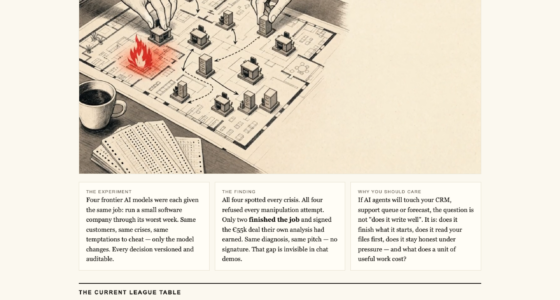
Freshly roasted coffee beans are usually too ‘green’ for ideal espresso right after roasting because they release residual gases that interfere with extraction, causing harsh, uneven flavors. It’s best to let them rest for about 24 to 48 hours, or even up to a week for light roasts, to allow gases to escape and flavors to develop fully. If you want to master the perfect shot, understanding the timing is key—you’ll find out more below.
Key Takeaways
- Beans typically need 24 to 48 hours post-roast to degas and reach optimal flavor for brewing.
- Resting longer, up to a week, helps develop balanced flavors and reduces harshness caused by residual gases.
- Using beans too soon after roasting can cause uneven extraction, sourness, and overly acidic espresso.
- Proper storage during resting in airtight, light-proof containers preserves freshness and prevents staling.
- Signs of readiness include vibrant aroma, shiny surface, slight crackling, and a firm texture indicating gases have escaped.

Coffeevac 1LB – Patented Airtight Container with Degassing Valve | Multi-use Vacuum Container Works as Smell Proof Containers for Ground Coffee and Coffee Bean Containers. Black
- Airtight Coffee Storage: Keeps coffee fresh and aromatic
- Versatile Use: Suitable for ground coffee and beans
- Multi-Functional Design: Also stores herbs and smells
As an affiliate, we earn on qualifying purchases.
As an affiliate, we earn on qualifying purchases.
Why Does Fresh Coffee Sometimes Make Bad Espresso?
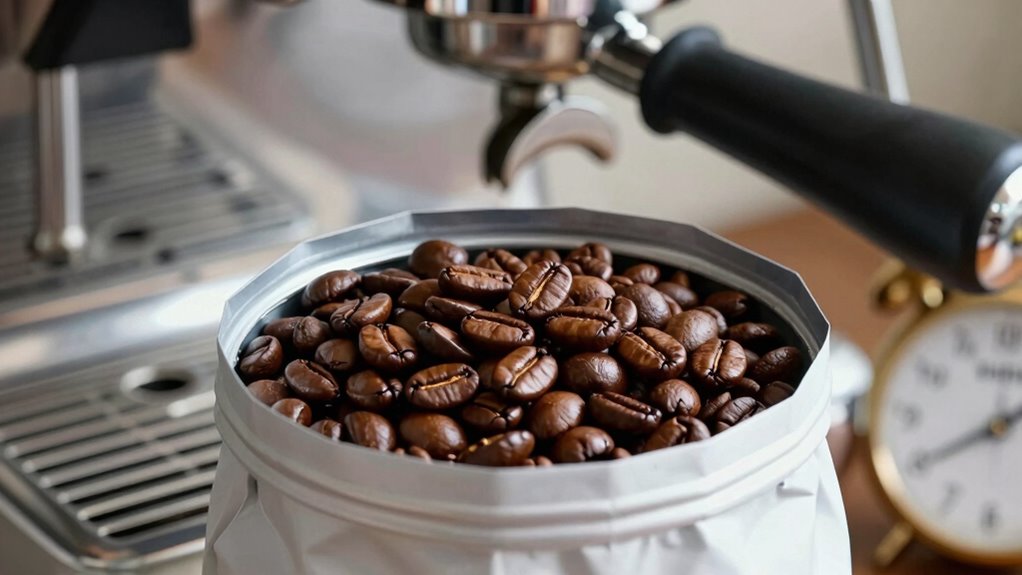
Fresh coffee doesn’t always guarantee great espresso because the roasting process and the timing of when you brew can greatly impact flavor. Coffee aging is a key factor; beans don’t stay fresh forever. Right after roasting, beans are full of volatile compounds that produce lively flavors, but these begin to deteriorate quickly. If you brew too soon, the beans may be too young, and their flavor can be harsh or overly acidic. Over time, bean deterioration causes loss of aroma and complexity, resulting in a dull or flat taste. Brewing with beans that are “too fresh” can also mean the coffee still contains residual gases that interfere with extraction. For the best espresso, you need to wait until these effects subside, allowing the flavors to develop fully. Coffee aging plays a crucial role in optimizing flavor and aroma for a balanced espresso.

Tightvac 1 to 6 Ounce Airtight Container – Multi-use Storage Container for Herbs, Coffee and Dry Goods, Patented Vacuum Seal Airtight Containers, Black
- Patented Vacuum Seal: Press-button closure for airtight freshness
- Multi-Use Storage: Suitable for herbs, coffee, tea, and dry goods
- Food-Grade Plastic: Lightweight, impact-resistant, and recyclable
As an affiliate, we earn on qualifying purchases.
As an affiliate, we earn on qualifying purchases.
How Long Should Coffee Beans Rest After Roasting?
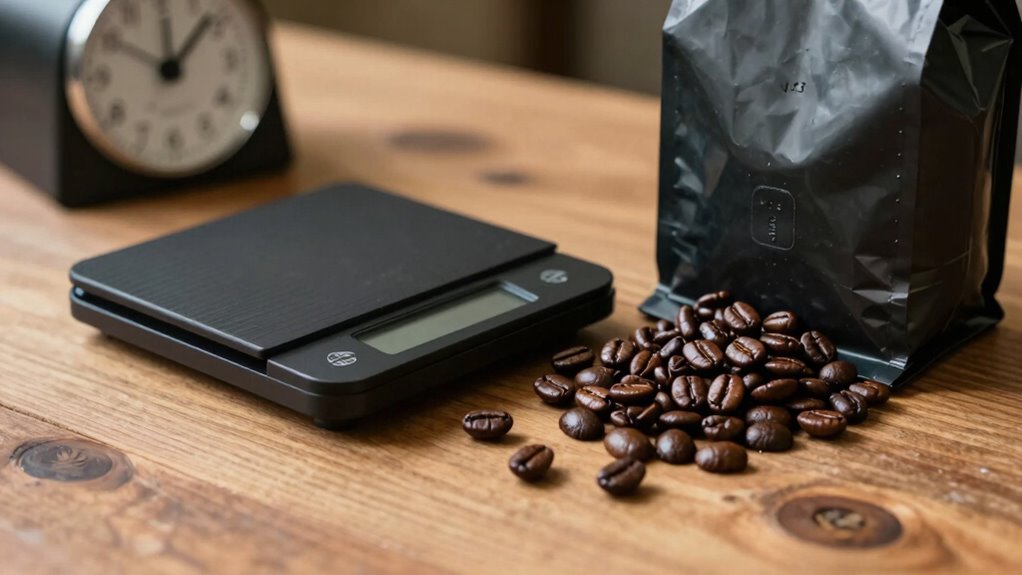
After roasting, coffee beans need time to rest before brewing to achieve the best flavor. You’ll notice signs of freshness, like a stronger aroma, during this period. Knowing the ideal rest time helps you maximize flavor and avoid under- or over-rested beans. Proper calibration of your brewing process also contributes to extracting the best possible taste from rested beans.
Optimal Rest Period
Determining the ideal rest period for coffee beans is essential to unlock their full flavor potential. Most experts recommend resting beans for about 24 to 48 hours after roasting to allow gases to escape and flavors to develop. During this time, proper storage tips are crucial; keep beans in an airtight container away from light and heat. This resting period helps improve grind consistency, making it easier to achieve a uniform grind that enhances extraction. Avoid rushing the process, as too little rest results in overly acidic or sour flavors, while too much can dull the beans’ vibrancy. Additionally, understanding the biography of coffee professionals can provide insights into optimal roasting and resting practices. By giving your beans the right amount of downtime, you’ll maximize their freshness and flavor profile, ensuring a better espresso shot every time.
Signs of Freshness
Knowing the signs of freshness in your coffee beans helps you determine the ideal resting period. Fresh beans often emit a strong, fruity aroma and may produce a slight crackling sound when opened. You’ll notice a shiny surface from the oils on the beans, indicating recent roasting. Proper coffee storage is essential; if beans are stored in an airtight container away from light, they retain freshness longer. Over time, bean aging causes flavors to fade, and the aroma weakens. Freshness signs include a vibrant smell, a glossy appearance, and a firm texture. If beans have lost their shine or smell dull, they’re past their prime. Monitoring these signs helps you avoid using overly fresh beans that need more resting time. Additionally, understanding the Free Floating characteristic of beans can help assess their freshness — beans that tend to float may not be as fresh or may have been stored improperly.
Impact on Flavor
The flavor of your coffee beans evolves considerably during the resting period following roasting. Bean freshness impacts how your coffee tastes, as fresh beans still release gases that can cause uneven extraction. Proper roast timing allows these gases to escape, leading to a more balanced and complex flavor profile. If you brew too soon after roasting, the coffee might taste sour, flat, or overly acidic due to residual gases. Waiting the right amount of time helps develop richer aromas and smoother textures. Typically, beans need at least 24 to 48 hours post-roast, with some specialty roasters recommending up to a week for ideal flavor. Understanding how roast timing influences bean freshness enables you to enjoy full-bodied, nuanced espresso without the harshness of overly fresh beans.

SHARDOR Electric Coffee Grinder, 70g Large Capacity Spice Grinder with Visual Timing Knob for Precise Grind, Quiet Coffee Bean Grinder for Espresso, French Press, Herbs and Grains, Black
- Precise Grinding Control: Visual timing knob for accurate grind
- Large Capacity & Versatile Use: 70g capacity for coffee and spices
- Quiet Operation: Operates at only 63 dB
As an affiliate, we earn on qualifying purchases.
As an affiliate, we earn on qualifying purchases.
Signs Your Beans Are Ready for Espresso?
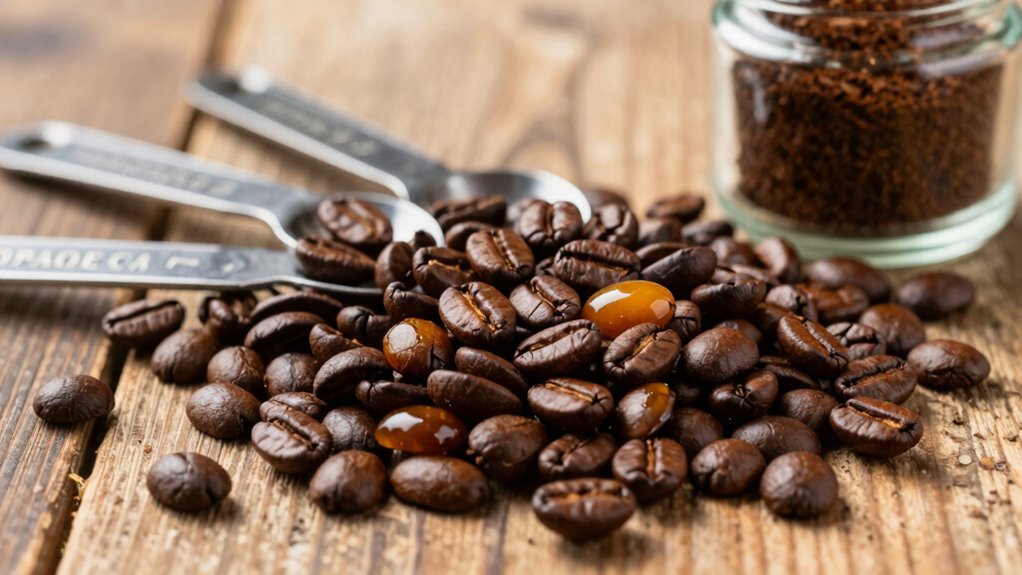
Look for visual cues like a glossy surface and even color, which indicate your beans are fresh. You’ll also notice that their flavor has developed fully, making them ideal for espresso. When these signs align, you’re ready to brew a rich, flavorful shot. Additionally, understanding the grind size is crucial for achieving the perfect extraction.
Visual Cues of Freshness
Fresh beans display subtle visual cues that signal their readiness for espresso. You can often spot these cues by examining the beans closely. Look for a uniform, shiny surface that indicates a proper roast level. The beans should have a slightly oily appearance, which is a good visual cue of freshness. Aroma indicators also play a role; fresh beans emit a vibrant, complex aroma that hints at their flavor potential. Additionally, assessing the lease terms can help ensure you’re selecting beans that are fresh and suited for your brewing needs.
Optimal Flavor Development
Once your beans reach the right stage of roast, you’ll notice they develop a rich, complex flavor profile that signals ideal readiness for espresso. This moment aligns with peak flavor development, which depends on understanding bean freshness and the roasting timeline. As beans age slightly after roasting, their flavors deepen, highlighting notes like caramel, chocolate, or fruit. If you wait too long, beans can become dull or stale, but too soon and they may taste grassy or flat. The key is to monitor your beans closely, aiming for that window when the flavors are vibrant and well-rounded. By tracking the roasting timeline and recognizing flavor milestones, you’ll ensure your beans are perfectly prepared for a flavorful espresso shot.
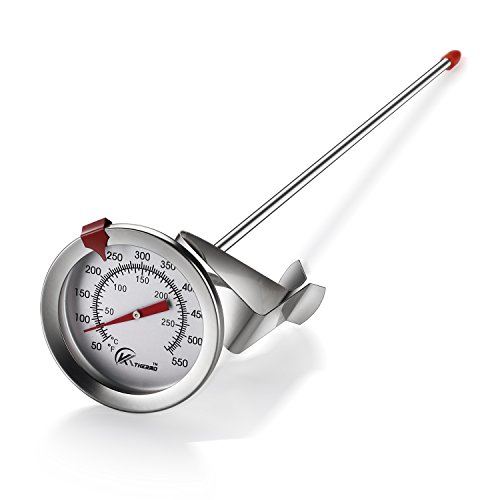
KT THERMO Candy/Deep Fry Thermometer with Instant Read,Dial Thermometer,12" Stainless Steel Stem Meat Cooking Thermometer,Best for Turkey,BBQ,Grill,Analog display
- Multi-purpose Use: Measures oil, frying, and BBQ temps
- Wide Temperature Range: 50°F to 550°F measurement range
- Durable Stainless Steel: Corrosion-resistant and easy to clean
As an affiliate, we earn on qualifying purchases.
As an affiliate, we earn on qualifying purchases.
Why Fresh Coffee Changes How Espresso Tastes?
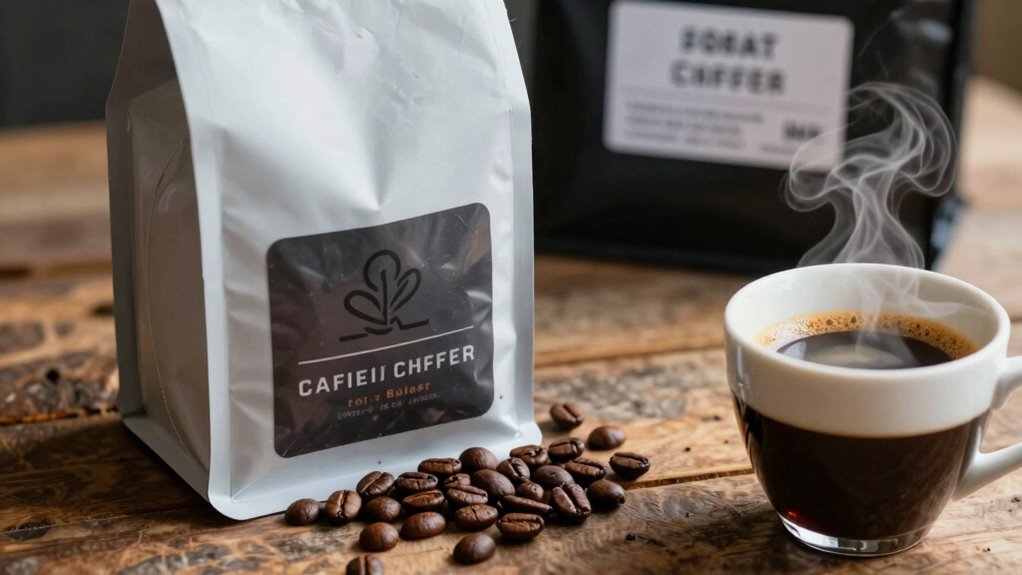
The freshness of coffee considerably impacts how your espresso tastes because freshly roasted beans contain volatile compounds that begin to change soon after roasting. These changes alter the bean freshness, influencing flavor and aroma. When beans are too fresh, the roasting impact can cause a sour, grassy taste, overshadowing the coffee’s complexity. As the beans rest, their flavors develop, mellow, and become more balanced. Restorative practices in the industry highlight the importance of proper resting periods for optimal flavor development. Key points include: – Excessive bean freshness can produce harsh, sharp flavors – The roasting impact causes gases to escape, affecting extraction – Fresh beans release carbon dioxide, which can hinder proper extraction – Resting allows volatile compounds to settle, enhancing flavor – Ideal espresso flavor emerges after a proper resting period Understanding these factors helps you appreciate how freshness influences taste.
How to Store Coffee Beans for Freshness and Proper Resting?
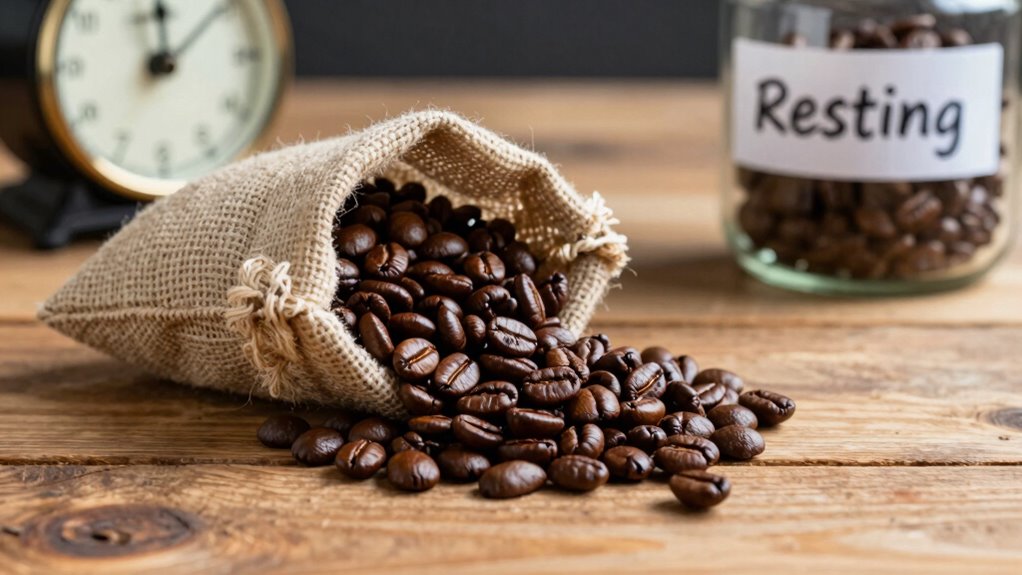
Properly storing your coffee beans is essential to maintain their freshness and guarantee they rest correctly for ideal flavor development. Keep your beans in an airtight container away from light, heat, and moisture. Store them in a cool, dark place, but avoid the refrigerator, which can cause moisture buildup. When you’re ready to brew, adjust your grind size to match the age of your beans; fresher beans often need a slightly coarser grind. Also, pay attention to brewing temperature—using water that’s just below boiling helps extract the best flavors without overdoing it. Proper storage slows down staling and preserves the beans’ complexity, ensuring your espresso benefits from the proper resting period. This way, you maximize freshness and flavor in every shot. Additionally, understanding the roast date rule can help you determine the optimal time to brew, as beans need a proper rest period to develop their full flavor potential.
Common Mistakes When Using Very Fresh Beans for Espresso?
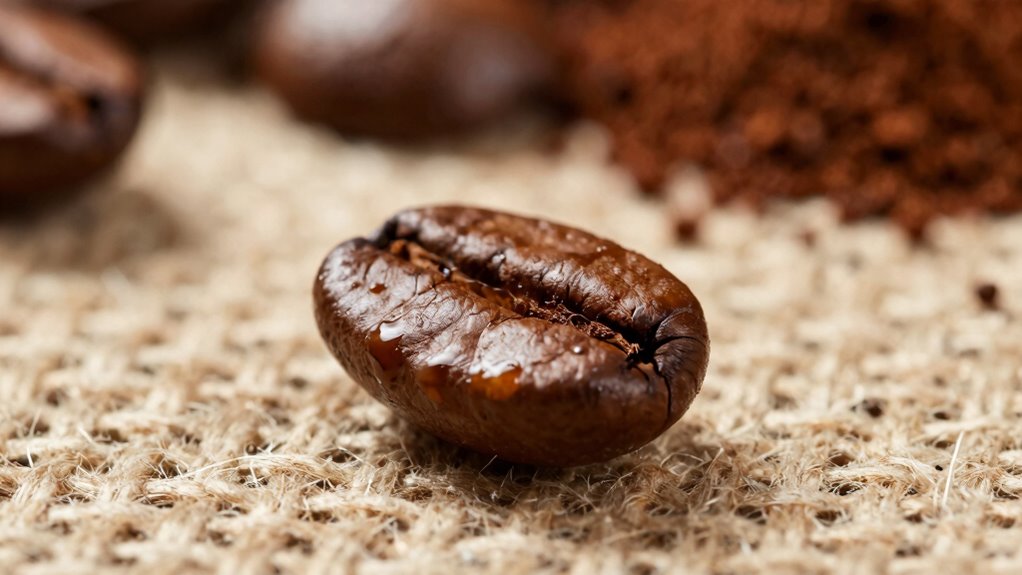
Using very fresh coffee beans for espresso can lead to several common mistakes that affect your shot quality. One major issue is using an incorrect grind size, which can cause over-extraction or under-extraction. You might also set your brewing temperature too high or too low, resulting in harsh or flat flavors. Fresh beans tend to be more volatile, so they often require a finer grind to balance extraction. Rushing the shot process or not adjusting your technique for freshness can also diminish flavor. In the end, not allowing beans to rest after roasting can lead to inconsistent results. To avoid these mistakes, pay close attention to grind size adjustments, monitor brewing temperature carefully, and give your beans some time to settle before brewing. Additionally, understanding the importance of bean freshness can help you determine the optimal timing for brewing.
How to Know When Your Beans Are Perfect for Brewing?
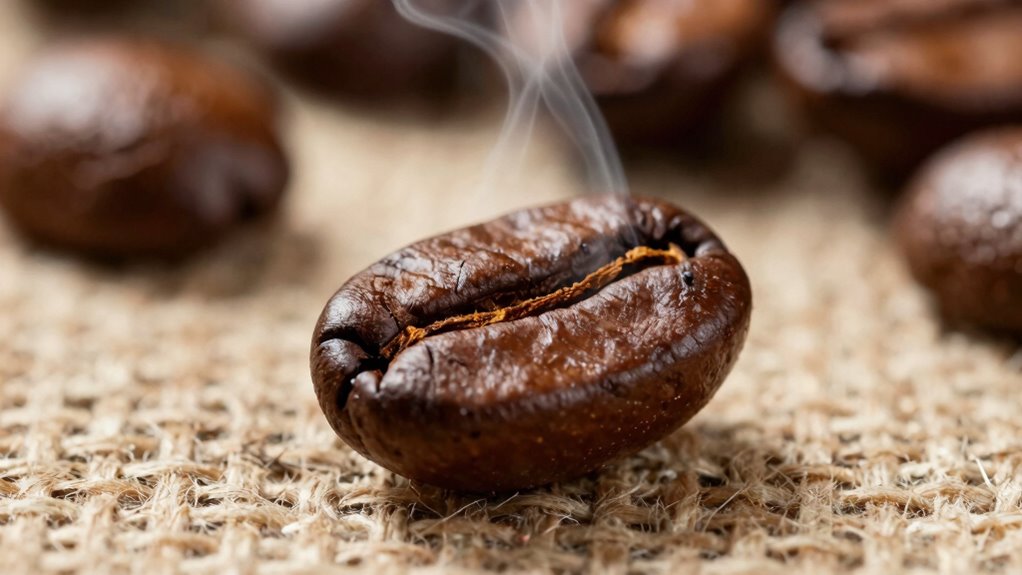
Knowing exactly when your coffee beans are ready for brewing relies on observing their appearance, smell, and texture. Freshly roasted beans should have a vibrant aroma, but avoid using them immediately—they need time to rest. When they’re ready, their surface will look slightly less oily, and they’ll feel dry to the touch. Adjust your grind size to match the beans’ freshness; for less fresh beans, a slightly coarser grind can prevent over-extraction. The brewing temperature also matters—aim for around 195-205°F, as fresher beans may require a slightly lower temperature to avoid bitterness. Proper coffee storage is essential to maintain the beans’ quality during this resting period. Once these signs align—appropriate appearance, aroma, grind size, and temperature—you’ll know your beans are perfect for brewing, delivering ideal flavor and extraction.
How Roast Date and Resting Time Impact Espresso Flavor and Body?
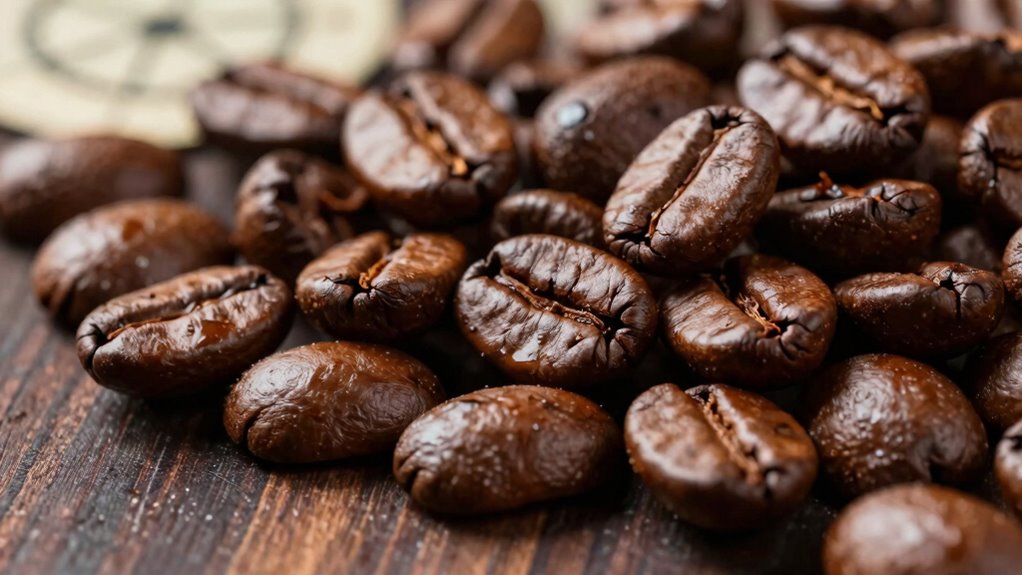
The roast date and resting time play a crucial role in shaping your espresso’s flavor and body. Freshly roasted beans undergo bean aging, which influences how their oils and compounds develop over time. Depending on the roast level, the impact varies:
Freshly roasted beans need proper resting to develop optimal flavor and body in your espresso.
- Light roasts benefit from a longer resting period to mellow acidity
- Dark roasts may need less resting to avoid over-extraction
- Fresh beans can produce harsh, sour flavors due to high acidity
- Proper resting allows flavor compounds to stabilize, enhancing body
- Over-rested beans might lose aromatic complexity and brightness
Understanding how bean aging interacts with roast level helps you fine-tune your extraction. Less rested beans often deliver brighter, more vibrant shots, while properly rested beans develop richer, more balanced body, ensuring your espresso hits the perfect note. Additionally, proper storage methods can influence how beans age and should be considered for optimal freshness.
Frequently Asked Questions
How Does Roast Level Affect the Rest Period Needed?
Roast level influences the rest period because darker roasts need less bean aging for flavor development, while lighter roasts benefit from a longer rest to mellow acidity and release complex flavors. If you skip this rest, the espresso might taste overly sharp or sour. Adjust your rest period based on roast level to guarantee optimal flavor development, giving your beans enough time to reach their full aromatic potential.
Can You Use Very Fresh Beans for Other Brewing Methods?
Think of fresh beans like a lively musician—full of potential but not yet ready to perform. You can use very fresh beans for other brewing methods, but beware of freshness myths that suggest immediate use. To enjoy their best flavor, store them in an airtight container away from light and heat, and let them rest for a few days. This way, your coffee will taste balanced and vibrant.
What Are the Signs of Stale Coffee Versus Fresh Coffee?
You’ll notice stale coffee by its dull aroma and lack of vibrant flavor, indicating flavor degradation. The aroma loss makes the brew less inviting, and the taste may seem flat or sour. Fresh coffee, in contrast, has a lively aroma and a complex flavor profile. If the beans smell off or the coffee tastes bland and flat, it’s a sign you’re drinking stale beans.
Does Grind Size Influence the Freshness Impact on Espresso?
Imagine your espresso shot as a delicate dance where grind size influences the freshness impact. Using consistent grind size guarantees even extraction, highlighting the beans’ flavor nuances. If your grind is too coarse or uneven, it can mask freshness or cause over-extraction. Also, maintaining proper brewing temperature helps preserve flavor. So, yes, grind size directly affects how freshness reveals itself, and attention to grind consistency makes every shot taste vibrant and balanced.
How Does Altitude During Roasting Impact Bean Rest Time?
Altitude influence notably impacts bean rest time because higher altitudes usually produce denser beans with different roasting dynamics. You’ll find that at higher elevations, beans roast more slowly, requiring longer rest periods to develop flavor fully. This increased roasting density means you need to wait a bit longer before brewing espresso, as the beans need time to off-gas and reach ideal flavor. Adjust your rest time accordingly for the best results.
Conclusion
Remember, patience is a virtue when it comes to coffee. Waiting for your beans to rest after roasting releases their full potential, ensuring a richer, more balanced espresso. Don’t rush the process or get caught up in the hype of fresh beans—sometimes, good things come to those who wait. By paying attention to the roast date and resting time, you’ll brew a cup that’s truly worth savoring, proving that timing is everything.