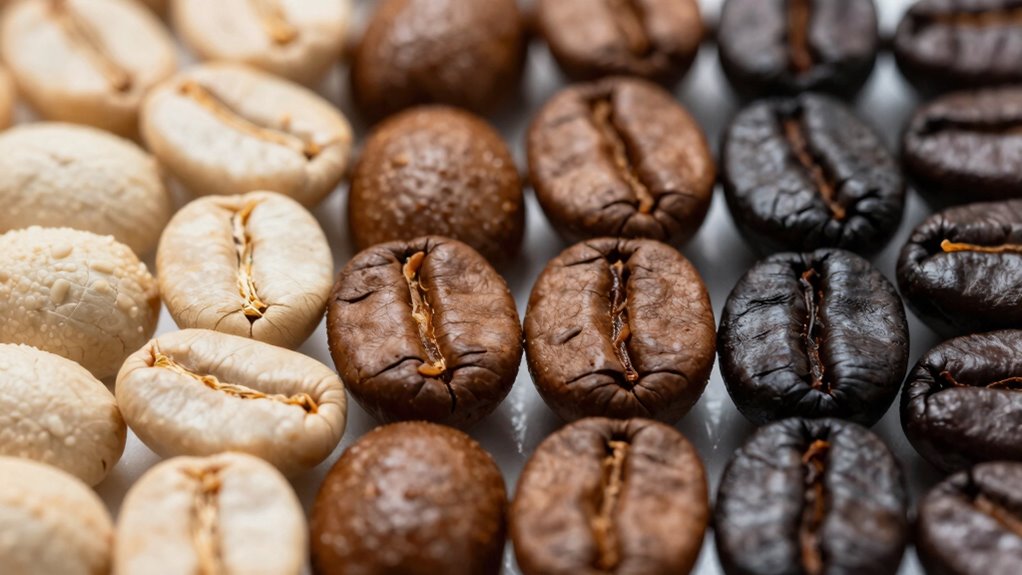

To identify roast levels without guessing, look for visual cues like matte surfaces and no oil for light roasts, while darker, oily, and glossy beans indicate a darker roast. Smell the beans for floral and fruity notes in light roasts, and smoky, charred aromas in dark roasts. Listen to the cracks—frequency and intensity increase near the end of roasting. Tasting reveals acidity and brightness in lighter roasts, with darker roasts offering bolder, smoky flavors. More details await you.

Get kitchen gear delivered free — and shop member deals
- Fast, free delivery on millions of items
- Access to Prime Big Deal Days deals on October 6–7
- Prime Video, Amazon Music and more included
Key Takeaways
- Observe the surface appearance: matte and smooth for light, slightly oily for medium, glossy and shiny for dark roasts.
- Smell the aroma: floral and fruity for light, caramel and nutty for medium, smoky or bitter for dark roasts.
- Check surface oil presence: minimal or no oil for light, moderate for medium, prominent sheen for dark roasts.
- Listen for cracking sounds: early, gentle cracks for light, intensified crackling for medium, loud pops nearing end of first crack for dark.
- Assess texture and flavor cues: bright acidity and dry feel for light, balanced and fuller body for medium, oily and smoky for dark roasts.
As an affiliate, we earn on qualifying purchases.
How to Recognize Roast Levels by Sight and Visual Cues
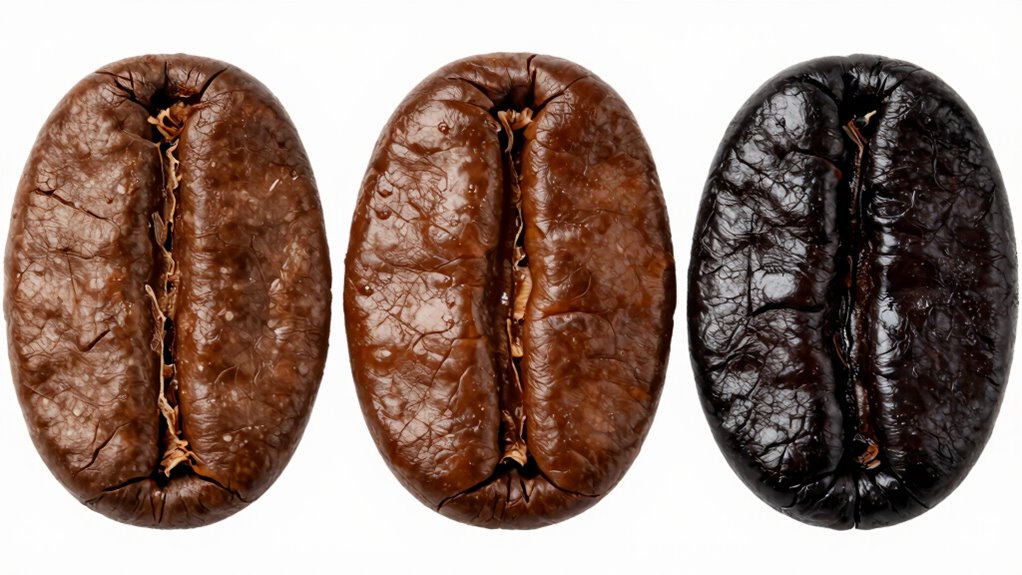
Recognizing roast levels by sight and visual cues is an essential skill for coffee enthusiasts and baristas alike. The bean surface reveals a lot about the roast, with light roasts maintaining a smooth, matte appearance and no oil on the surface. As the roast darkens, the surface begins to show slight color variations, with medium roasts displaying a richer hue and some sheen. Dark roasts often have a shiny, oily surface due to the oils emerging from within the bean during roasting. These oil deposits cause noticeable color differences and a slight glossiness. By paying attention to these visual cues—such as surface texture and color variation—you can accurately identify the roast level without needing to taste or smell the coffee.
As an affiliate, we earn on qualifying purchases.
What Aroma Tells You About Roast Darkness
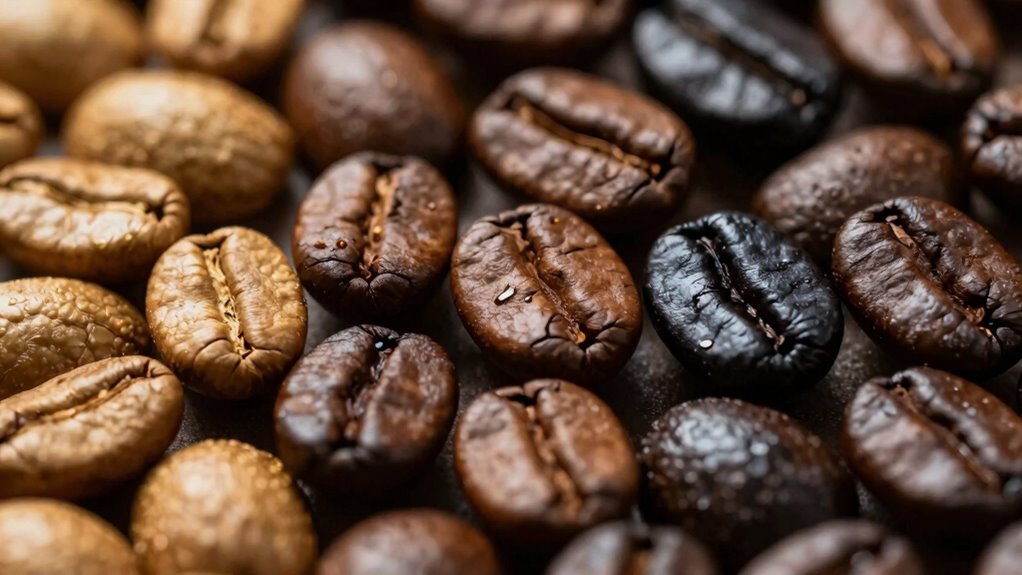
Have you ever noticed how the aroma of coffee changes with roast darkness? Aroma indicators reveal a lot about the roast level through scent evolution. Light roasts often emit bright, floral, or fruity notes, signaling a gentle roast that preserves origin character. As you move to medium roasts, the aroma develops deeper caramel, toasted, and nutty qualities, indicating a balanced roast. Dark roasts, however, release smoky, charred, or even bitter scents, showing they’ve undergone a longer roast. The scent evolution guides you in identifying roast darkness without guessing. Pay attention to these aroma cues—subtle changes in scent can tell you whether the coffee is light, medium, or dark roast, helping you select beans that match your flavor preferences. Color temperature adjustments also influence how aromas are perceived, making it easier to distinguish between roast levels. Additionally, understanding aroma profiles can enhance your sensory evaluation and improve your coffee selection process. Recognizing aroma development over the course of roasting can further refine your ability to judge roast levels accurately. Being aware of market trends can also help you stay updated on popular roast styles and preferences. Moreover, developing a sensory vocabulary can empower you to describe and compare different roasts more precisely.
As an affiliate, we earn on qualifying purchases.
Spotting Oil and Surface Shine on Coffee Beans
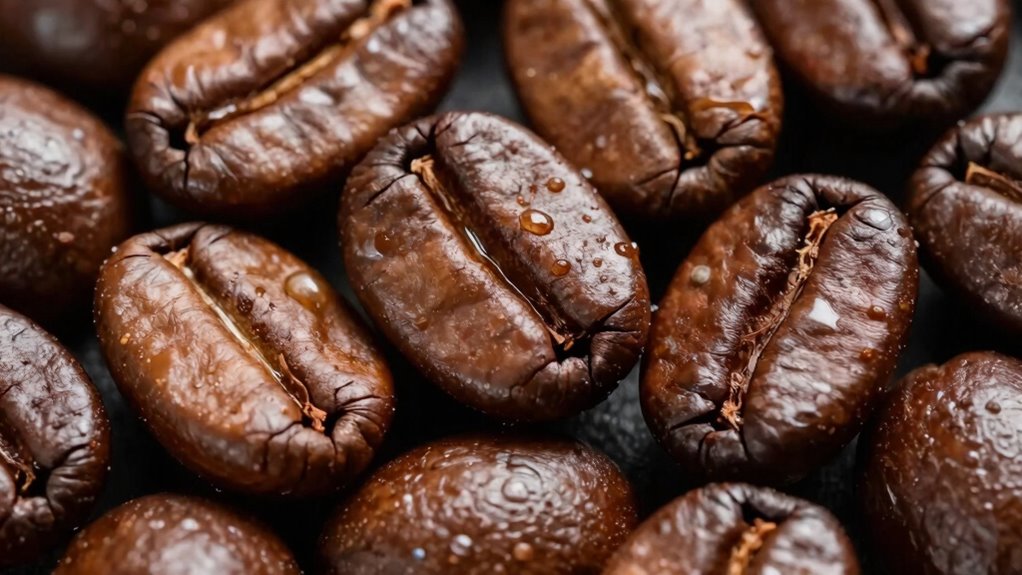
As you examine coffee beans, noticing a sheen of oil on their surface can reveal important clues about their roast level. A shiny surface sheen often indicates a darker roast, as oils have begun to emerge from the beans’ interior. This oiliness develops with increased roasting, making the surface appear slick or glossy. Light roasts typically lack this surface shine, appearing matte with little or no oil visible. Medium roasts might show some oiliness but not as prominently as dark roasts. The presence of surface oil signals a more advanced roast, where heat has broken down cell walls and released oils. By observing the oiliness and surface sheen, you can accurately gauge whether the beans are light, medium, or dark roasted without guesswork. Additionally, understanding the Free Floating principle helps explain how oils can move within the beans during roasting, influencing their final appearance and flavor profile. The surface sheen is also affected by the bean’s surface structure and moisture content, which vary with roast level and processing methods. Recognizing the oil emergence process can further enhance your ability to identify roast levels visually, especially when combined with knowledge of how surface oil migrates during roasting.
As an affiliate, we earn on qualifying purchases.
Listening for Popping and Crackling Sounds During Roasting

Listening carefully to the sounds during roasting can provide valuable insights into the beans’ progress. Popping sounds and crackling noises are key indicators of stages in the roast. As the beans heat, you’ll notice a series of pops as moisture escapes and gases expand. These popping sounds often increase in frequency just before the first crack, signaling that the beans are reaching light roast levels. Crackling noises become more intense as the roast progresses into medium and dark stages. Pay attention to the rhythm and intensity of these sounds; a steady, rapid crackle suggests a developing roast, while loud, sharp pops may indicate nearing the end of the first crack. Tuning in to these auditory cues helps you better control the roast without relying solely on visual signals. Additionally, understanding the different roast levels can help you fine-tune your roasting process for the perfect cup. Recognizing these auditory cues can also assist in achieving consistent results across different roasting sessions.
How Tasting and Texture Reveal Roast Level

Tasting and texture are essential clues for identifying roast levels because they directly reflect the beans’ chemical and physical changes during roasting. As you taste, you’ll notice lighter roasts often have brighter acidity and more nuanced flavors, while darker roasts tend to be bolder with a smoky or bitter edge. Texture also reveals roast depth; light roasts feel more delicate, whereas dark roasts can be oilier and heavier on the palate. Caffeine content slightly decreases with darker roasting, so lighter roasts may offer a slight caffeine boost, impacting your brewing experience. The brewing impact is also notable—light roasts preserve more of the bean’s original character, while dark roasts produce a more robust, intense cup. Paying attention to these sensory details helps you accurately identify roast levels without guessing. Recognizing the chemical transformations that occur during roasting can further refine your ability to distinguish between levels by understanding how flavors and textures develop through heat.
Confidently Identifying Roast Darkness Using Your Senses
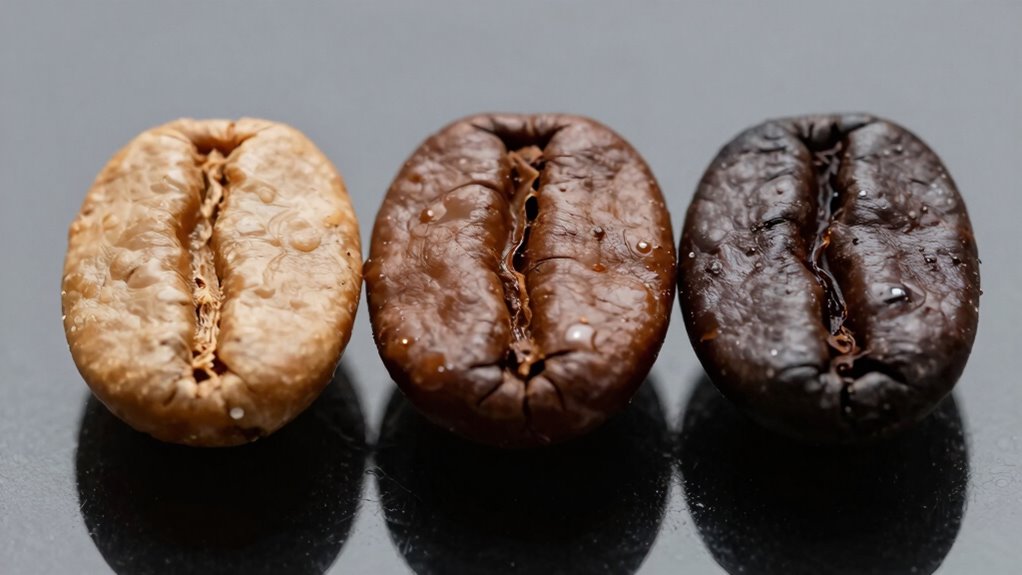
To confidently identify roast darkness using your senses, focus on the visual cues first. Observe the color and surface sheen, which provide clues about the roast level. Use sensory evaluation to detect subtle differences in aroma and texture. For example, lighter roasts have a dry surface and brighter aroma, while darker roasts show oil sheen and a more robust scent. The flavor profiles also shift from fruity and acidic in light roasts to smoky and bitter in dark roasts. Here’s a quick reference:
| Roast Level | Visual Cues | Flavor Profile |
|---|---|---|
| Light | Matte surface, light brown | Fruity, floral, acidic |
| Medium | Slight oil sheen, medium brown | Balanced, caramel, nutty |
| Dark | Oil sheen, dark brown to black | Bitter, smoky, roasted |
Use these cues to sharpen your sensory evaluation skills confidently.
Frequently Asked Questions
How Does Roast Level Affect Coffee Acidity and Bitterness?
You’ll notice that roast level considerably impacts coffee’s acidity and bitterness. Light roasts tend to have a lively, acidic balance, making them bright and flavorful. Medium roasts offer a smoother, more balanced taste with moderate acidity and reduced bitterness. Dark roasts develop a richer, smoky flavor, often reducing acidity but increasing bitterness. So, your preferred roast level shapes the overall bitterness profile and how lively or smooth your coffee tastes.
Can Roast Levels Vary Between Different Coffee Bean Varieties?
Yes, roast levels can vary between different bean varieties because each bean responds differently to roasting techniques. For example, some beans may reach a dark roast faster, losing certain flavors, while others retain more acidity. You should adjust your roasting techniques based on the specific bean variety to achieve the desired flavor profile. This variation guarantees you get the best possible taste from each unique bean.
What Are Common Mistakes When Visually Identifying Roast Levels?
A stitch in time saves nine, and in coffee, the same applies to visual misjudgments. When identifying roast levels, avoid common mistakes like relying solely on color, which lighting influences can distort. Poor lighting can make light roasts appear darker or dark roasts seem lighter. To improve accuracy, observe surface details, sheen, and aroma alongside color, and guarantee consistent lighting conditions. Don’t guess—use multiple cues for a true assessment.
How Does Storage Impact the Freshness of Different Roast Levels?
Proper coffee storage considerably impacts freshness preservation across all roast levels. Keep your beans in an airtight container away from light, heat, and moisture to prevent staling. Dark roasts may lose flavor faster if exposed to oxygen, while light roasts can stay fresh longer with perfect storage. Avoid refrigeration, as moisture can damage beans, and always use your coffee within a few weeks of roasting for ideal flavor.
Are There Specific Brewing Methods Best Suited for Each Roast Level?
You should choose brew methods based on each roast’s flavor profile and ideal pairing. Light roasts shine with pour-over or AeroPress, highlighting their bright, acidic notes. Medium roasts work well with drip or French press, balancing flavor and body. Dark roasts excel with espresso or stovetop moka pot, emphasizing their bold, smoky characteristics. Matching brew methods to roast levels enhances your coffee experience and reveals each roast’s full potential.
Conclusion
Now that you know the subtle signs, you can confidently classify your coffee’s roast level. By observing, smelling, listening, and tasting, you’ll transform from a novice to a knowledgeable connoisseur. Embrace the excitement of exploration and elevate every cup with certainty. With your senses sharp and your skills solid, savor each sip and celebrate your newfound finesse. Roast recognition becomes a rewarding ritual—your journey to perfect coffee starts right here!
Fall Picks
fall essentials
As an affiliate, we earn on qualifying purchases.