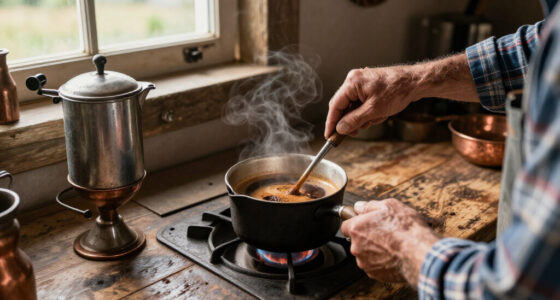

The brew method you choose greatly impacts how you judge coffee beans, mainly through temperature control. Pour-over methods like V60 or Chemex allow you to precisely manage water temperature, giving you a clearer sense of the beans’ true flavors. French press and AeroPress also help maintain stable temperatures during brewing. By mastering these techniques, you can better distinguish subtle differences in beans. Keep exploring, and you’ll discover how these methods reveal the beans’ full potential.
Key Takeaways
- Precise water temperature control during brewing reveals the beans’ true flavor profile.
- Using pour-over methods like V60 or Chemex allows for accurate temperature management.
- Consistent temperature prevents flavor skewing caused by over- or under-extraction.
- Equipment with stable temperature regulation enhances reliable bean evaluation.
- Proper technique in temperature control aids in developing a more nuanced palate.
Have you ever wondered how the way you brew your coffee can reveal the quality of the beans? The answer lies in understanding how specific methods influence the traits you’re trying to judge — particularly flavor consistency and brewing temperature. These elements are essential because they directly impact your ability to assess the beans fairly and accurately. When you’re trying to evaluate quality, you want a method that minimizes variables and produces a reliable profile of the beans’ true character.
One of the most important factors you need to control is brewing temperature. If your brewing temperature fluctuates or is too high or low, it can skew your perception of the beans’ flavor. Too hot, and you might extract bitter compounds, masking sweetness and nuance. Too cold, and the extraction might be incomplete, leaving you with a flat, underdeveloped taste. By maintaining a consistent brewing temperature, you create a stable environment that highlights the beans’ inherent qualities. This consistency allows you to compare different beans or roast levels more accurately, as you’re not introducing a variable that can distort your judgment.
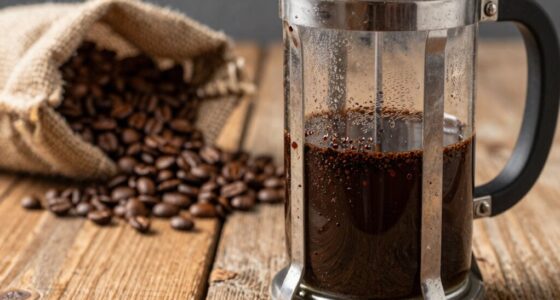
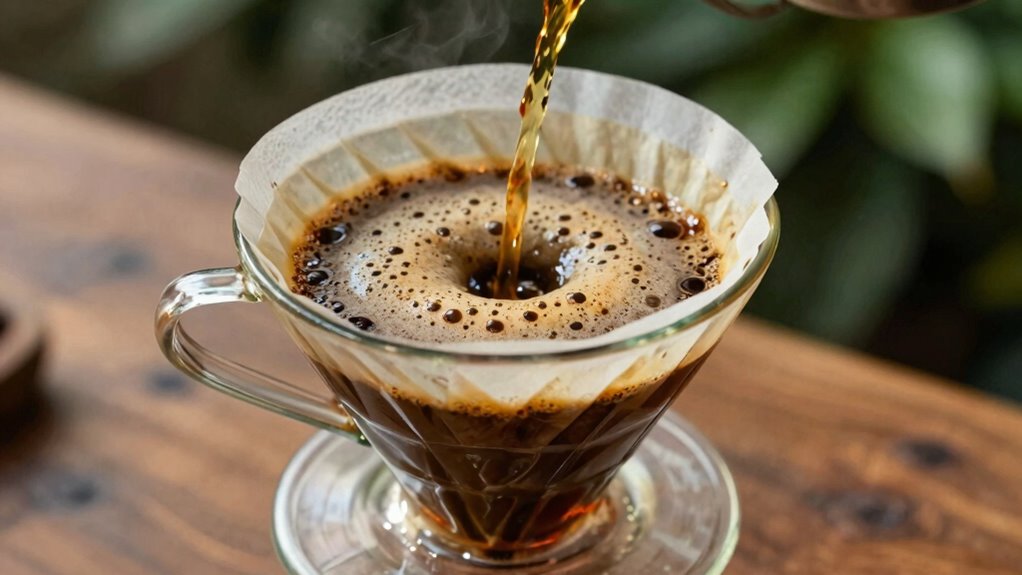
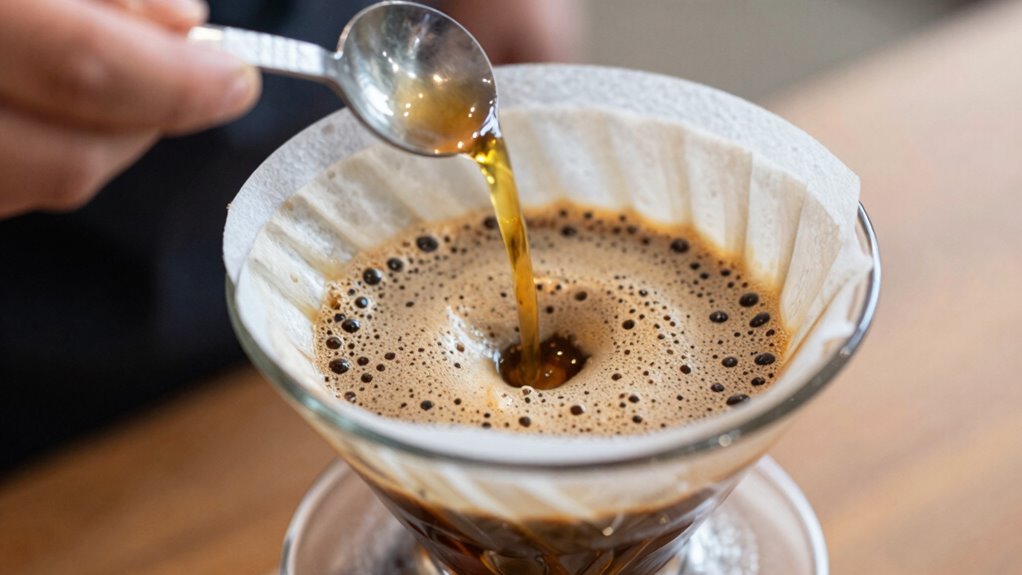
The brew method you choose should facilitate this temperature control. For example, pour-over methods like V60 or Chemex give you the ability to precisely manage water temperature and pouring technique, which helps in achieving uniform extraction. Similarly, immersion methods like French press or AeroPress can help maintain a consistent brewing temperature over the duration of the brew. These methods also tend to produce a more stable environment, reducing temperature fluctuations that could impact flavor consistency. Additionally, selecting a method with better temperature control can further improve your ability to evaluate beans accurately. Using temperature stability as a key criterion when selecting brewing equipment can greatly enhance your tasting precision. Incorporating brewing technique considerations can also ensure more consistent results, ultimately leading to better bean evaluations. Understanding the importance of temperature regulation can help you choose the right tools and methods for a more reliable tasting experience. Moreover, mastering the brew process can help you develop a more refined palate by consistently highlighting the beans’ true characteristics.
As an affiliate, we earn on qualifying purchases.
Frequently Asked Questions
How Does the Brew Method Affect the Bean’s Flavor Profile?
The brew method directly impacts the bean’s flavor profile by affecting flavor extraction and aromatic retention. For example, a French press retains more oils and aromas, creating a fuller, richer taste, while drip brewing produces a cleaner, sharper flavor. Your choice of method influences how much of the bean’s natural oils and aromas make it into your cup, shaping the overall sensory experience and making each brew uniquely satisfying.
What Equipment Is Essential for This Brewing Technique?
To master this brewing technique, you need a precise grinder and a calibrated scale for accurate measurements. For example, imagine brewing a pour-over where consistent equipment calibration ensures ideal flavor extraction. You’ll also want a quality kettle with a gooseneck spout for controlled pouring. These tools help you control variables, leading to better flavor extraction and a more nuanced taste profile, transforming your coffee experience.
Can This Method Be Used for All Types of Coffee Beans?
Yes, you can use this method for all types of coffee beans. It helps maintain flavor consistency by highlighting each bean’s unique qualities, as long as you prioritize bean freshness. Fresh beans deliver better flavor, and this technique allows you to judge them more accurately. Just remember, adapting your grind size and brew time based on the bean type ensures ideal results, regardless of the coffee you choose.
How Does Brewing Time Influence Bean Judgment?
Imagine your coffee as a symphony, where brewing time conducts the harmony of flavors. Longer extraction reveals deeper notes, while shorter keeps it bright. You notice that brewing time influences bean judgment by affecting flavor extraction; too long, and bitterness dominates. Grind consistency speeds or slows this process, like tuning instruments. Mastering this balance helps you judge beans more accurately, revealing their true potential with every brew.
Are There Any Common Mistakes to Avoid With This Method?
To avoid common mistakes, make sure you store your coffee properly to preserve freshness, as stale beans can skew your judgment. Also, don’t forget to adjust your grind size based on your brewing method; too fine or too coarse can lead to poor extraction. Keep these tips in mind, and you’ll improve your ability to judge beans accurately, making each cup better than the last.
temperature control coffee maker
As an affiliate, we earn on qualifying purchases.
As an affiliate, we earn on qualifying purchases.
Conclusion
Now that you understand how different brew methods highlight various bean qualities, you’ll see your favorite coffees in a new light. Did you know that specialty coffee beans can taste up to 40% different depending on the brewing technique? By experimenting with methods like pour-over or French press, you’re not just making coffee—you’re uncovering hidden nuances and truly appreciating each bean’s unique personality. So, go ahead, try different methods and elevate your coffee experience.
French press with temperature regulation
As an affiliate, we earn on qualifying purchases.
As an affiliate, we earn on qualifying purchases.
As an affiliate, we earn on qualifying purchases.