Your pour-over grind size causes more trouble than expected because small adjustments can greatly impact extraction, flavor, and consistency. Finer grounds risk over-extraction and bitterness, while coarser ones can lead to weak, underwhelming brews. Factors like temperature and coffee freshness also play a role, making it tricky to find the perfect balance. If you want to master the nuances and avoid common pitfalls, there’s a lot more to explore that can help you brew better coffee.

Get kitchen gear delivered free with Prime
- Fast, free delivery on millions of items
- Prime Video, Amazon Music and more included
- Member-only deals all year
Key Takeaways
- Slight variations in grind size significantly alter extraction rate, leading to unpredictable flavor outcomes.
- Inconsistent grind size causes uneven water flow, resulting in over- or under-extraction.
- Small adjustments in grind size interact complexly with temperature and coffee freshness, complicating dialing-in.
- Achieving uniform grind size is challenging but crucial for consistent, balanced pour-over results.
- Overlooking the interplay between grind size, temperature, and coffee freshness leads to brewing difficulties.
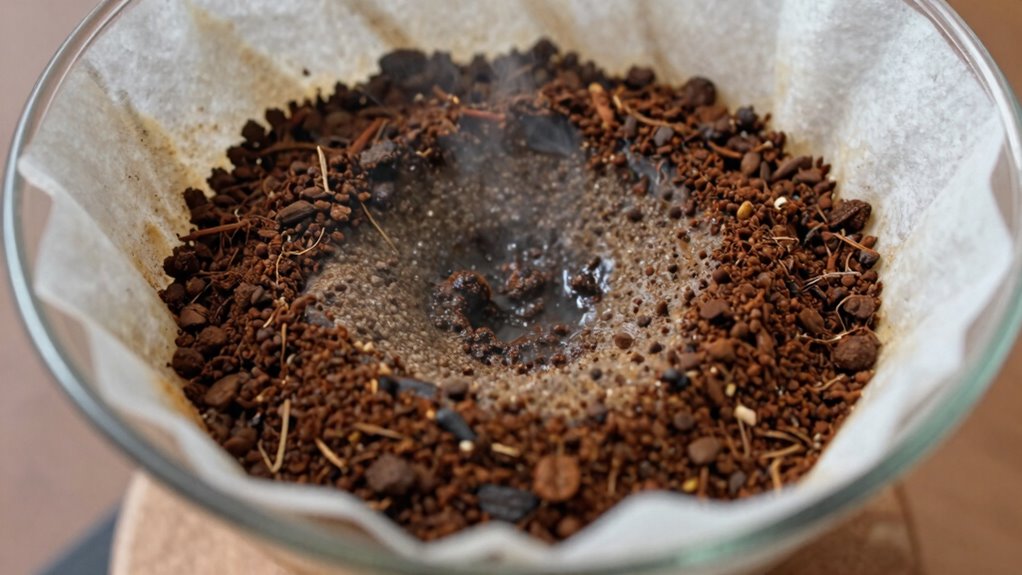
If your pour-over coffee isn’t turning out as expected, the grind size might be the culprit. The right grind size is essential because it directly influences how water interacts with your coffee grounds. Too fine, and the water struggles to flow through, leading to over-extraction and bitter flavors; too coarse, and it passes too quickly, resulting in a weak, under-extracted brew. But it’s not just about the grind itself—factors like brewing temperature and coffee freshness also play a role, making grind size adjustments even trickier.
When you’re adjusting your grind size, keep in mind that brewing temperature impacts extraction. If your water’s too hot, fine grinds can become over-extracted quickly, creating bitterness, whereas cooler water might not extract enough flavor, especially if your grind is too coarse. Achieving the right balance means you need to evaluate both grind size and temperature simultaneously. The best brewing temperature typically hovers around 195°F to 205°F, but small deviations can throw off your extraction, especially if your grind size isn’t dialed in. Additionally, understanding the interplay between grind size and extraction is crucial for dialing in the perfect brew. It’s also important to consider coffee grind uniformity, as inconsistent grind sizes can lead to uneven extraction and unpredictable flavors. Moreover, consistent grind size helps in maintaining a predictable and controllable brewing process, reducing the trial-and-error aspect of pour-over. Adjusting grind size without considering brew time can lead to unpredictable results, so monitoring extraction time is also beneficial.
Coffee freshness adds another layer of complexity. Freshly ground coffee tends to be more volatile, with more aromatic compounds and oils that can influence extraction. If your beans are very fresh, you might need to adjust your grind slightly coarser to prevent over-extraction, since those oils are more soluble. Conversely, stale coffee might require a finer grind to maximize extraction, but beware—using stale beans can also diminish overall flavor quality, regardless of grind size.
Getting the grind just right requires attention to these interconnected factors. When you change your grind size, you should also assess tweaking your brewing temperature and be mindful of your coffee’s freshness. If your brew tastes flat or overly bitter, experiment with slightly coarser or finer grounds while adjusting your water temperature accordingly. Remember, even small changes make a difference because the interaction between grind size, temperature, and coffee freshness is delicate. Understanding grind size and its relationship to extraction is fundamental in achieving the perfect pour-over.
Ultimately, mastering pour-over involves a bit of trial and error, but the key is understanding how these elements work together. Don’t rely solely on a set grind size; instead, pay close attention to how your adjustments affect taste and extraction. Fine-tuning your process based on brewing temperature and coffee freshness will help you avoid many common pitfalls caused by inconsistent grind size, leading to a more balanced and satisfying cup every time.
As an affiliate, we earn on qualifying purchases.
Frequently Asked Questions
How Does Grind Size Affect Brew Time?
Your grind size directly impacts brew time; a finer grind increases resistance, making the water take longer to pass through, while coarser grounds speed up brewing. Coffee bean texture influences this, as too fine can clog your filter, and too coarse can lead to under-extraction. Adjusting brewing temperature also helps, but ultimately, finding the right grind size guarantees your brew time is ideal for balanced flavor.
Can Inconsistent Grind Size Impact Flavor?
Inconsistent grind size definitely impacts flavor, causing uneven extraction that muddles your coffee’s taste. You might notice fluctuations in flavor consistency, making each cup unpredictable. Additionally, it can dull the coffee aroma, preventing you from experiencing the full range of fragrant notes. To keep your brew flavorful and aromatic, aim for a uniform grind size, which guarantees even extraction and a richer, more balanced cup every time.
What Tools Help Achieve Uniform Grind Size?
Did you know that 60% of coffee enthusiasts prefer burr grinders for consistent results? To achieve uniform grind size, you should use a burr grinder, which crushes beans evenly. Blade grinders, on the other hand, create inconsistent particles. Investing in a good burr grinder helps you control grind size precisely, ensuring your pour-over brews taste perfect every time and making troubleshooting much easier.
Does Grind Size Influence Extraction Levels?
Yes, grind size profoundly influences extraction levels. A finer grind increases extraction by exposing more surface area, which can intensify flavors, especially with beans from different origins. Conversely, a coarser grind reduces extraction, making the brew weaker. Brewing temperature also plays a role; higher temperatures speed up extraction. So, adjusting grind size based on your coffee bean origin and maintaining proper brewing temperature helps you achieve balanced, flavorful coffee.
How Often Should I Adjust Grind Size?
You should adjust your grind size whenever your brew method’s results don’t match your expectations. Think of it as fine-tuning a musical instrument—small tweaks can make a big difference. Regularly check your grind consistency, especially if you notice under-extraction or over-extraction. Every few brews, experiment with slight changes to find the perfect balance. This keeps your pour-over consistently delicious and helps you master your preferred flavor profile.
coffee brewing temperature thermometer
As an affiliate, we earn on qualifying purchases.
As an affiliate, we earn on qualifying purchases.
Conclusion
Don’t let grind size frustrations hold you back from brewing a perfect cup. Sure, it’s tempting to think small adjustments don’t matter, but even tiny changes can dramatically improve your brew’s flavor. If you’re worried it’s too complicated, remember—practice makes perfect, and understanding grind size is just one step. Embrace the process, experiment a little, and soon you’ll be enjoying a tailored, delicious pour-over every time.
As an affiliate, we earn on qualifying purchases.
coffee freshness storage container
As an affiliate, we earn on qualifying purchases.
As an affiliate, we earn on qualifying purchases.
Fall Picks
fall essentials
As an affiliate, we earn on qualifying purchases.