

To dial in espresso for milk drinks without losing flavor, focus on using fresh, high-quality beans and adjusting your grind size to achieve proper extraction—finer for richer flavor or coarser if over-extracting. Keep your brew time and dose balanced, and guarantee your machine is calibrated for ideal temperature and pressure. Proper milk steaming creates smooth microfoam that enhances taste. Continue exploring these techniques to perfect your espresso and make flavorful milk-based drinks every time.
Key Takeaways
- Use freshly ground coffee with a consistent grind size, typically slightly finer for milk drinks, to optimize extraction without over-extracting.
- Adjust brew time to achieve a balanced shot, usually around 25-30 seconds, ensuring rich flavor without bitterness.
- Calibrate machine settings regularly, including water temperature (around 195-205°F) and pressure, for optimal extraction and flavor clarity.
- Taste test espresso shots to fine-tune grind size, dose, and timing, ensuring a flavorful shot that complements milk without loss of character.
- Maintain proper milk temperature (140-150°F) and texture to preserve the drink’s flavor profile and enhance overall balance.
Why Does My Milk Coffee Sometimes Lack Flavor?
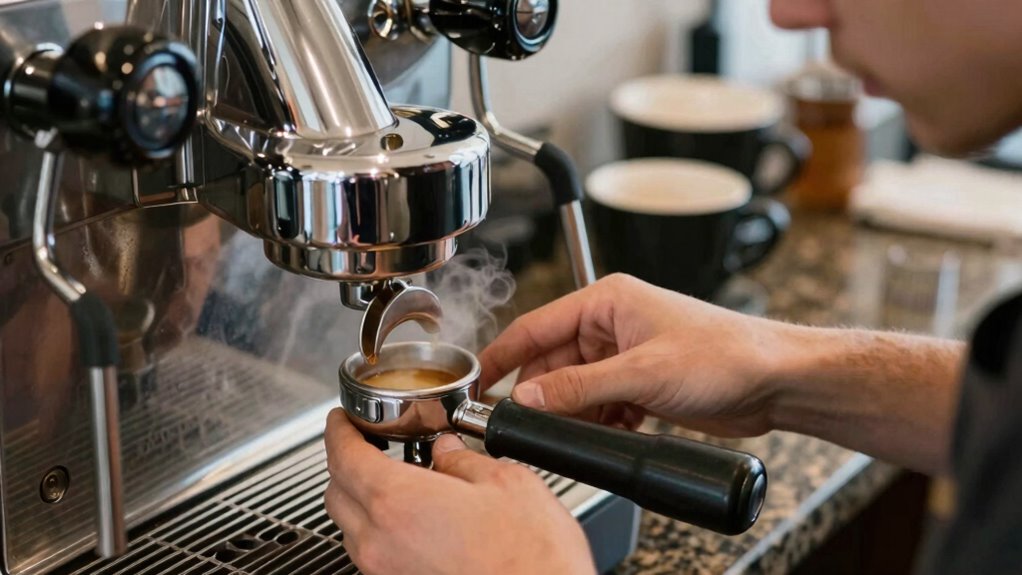
If your milk coffee sometimes lacks flavor, several factors could be at play. One common culprit is your coffee bean selection. If you’re using stale or low-quality beans, the overall taste suffers, making your milk coffee bland. Fresh, high-quality beans with proper roasting bring out richer, more complex flavors. Additionally, your milk frothing techniques matter. Overly foamy or thin milk can dilute the coffee’s flavor or mask its nuances. Aim for a smooth, velvety microfoam that complements the espresso without overpowering it. Proper milk frothing enhances both texture and taste, ensuring each sip delivers full flavor. Paying attention to bean freshness and quality can make a significant difference in flavor clarity and complexity. Ensuring your brewing temperature is correct is also crucial, as it helps extract the best flavors from your beans without scalding the coffee. Consistently maintaining the temperature control of your brewing process is essential to optimize flavor extraction. By choosing the right beans and mastering your frothing technique, you’ll notably improve the flavor of your milk coffee and enjoy a more satisfying drink.
How Do Grind Size, Dose, and Brew Time Affect Espresso Strength?

The strength of your espresso hinges on three key variables: grind size, dose, and brew time. These factors directly influence espresso extraction, which determines how well flavor compounds are pulled from the coffee grounds. A finer grind increases surface area, enhancing extraction but risking over-extraction if too fine, leading to bitter flavors. A larger dose boosts strength by increasing coffee solubles, but too much can cause clogging and uneven extraction. Brew time controls how long water interacts with the coffee; too short, and you miss flavor compounds, resulting in weak espresso. Too long, and over-extraction occurs, pulling out undesirable bitter compounds. Adjusting these variables carefully helps you fine-tune espresso strength, balancing flavor extraction for a rich, well-rounded shot. Understanding extraction is essential to mastering espresso brewing. Additionally, consistent technique ensures that each shot is reproducible and optimized for flavor. Paying attention to pressure and temperature also plays a crucial role in achieving optimal extraction and flavor profile, as temperature stability impacts extraction consistency.
How to Adjust Your Machine Settings for Consistent Results?

Achieving consistent espresso shots requires regularly adjusting your machine settings to match your desired flavor profile. Proper machine calibration ensures reliable results, while controlling water temperature influences extraction quality. To fine-tune your machine, focus on these key adjustments:
- Calibrate your machine regularly to keep grind, dose, and timing in sync. Calibration procedures help maintain optimal performance.
- Adjust water temperature to optimize extraction—too hot or cold alters flavor.
- Set the brew pressure for a steady flow without over-extraction.
- Maintain clean filters and ports to prevent blockages.
- Monitor shot timing to ensure consistency across pulls. Regularly machine calibration can make this process easier and more effective.
Visualize your espresso flowing smoothly, with a rich crema and balanced flavor. These adjustments help you dial in your machine, ensuring every shot tastes just right without losing the nuances of your coffee. Paying attention to brew consistency is essential for achieving the best flavor in milk drinks.
How to Test and Refine Your Espresso Shots for Better Milk Drinks?
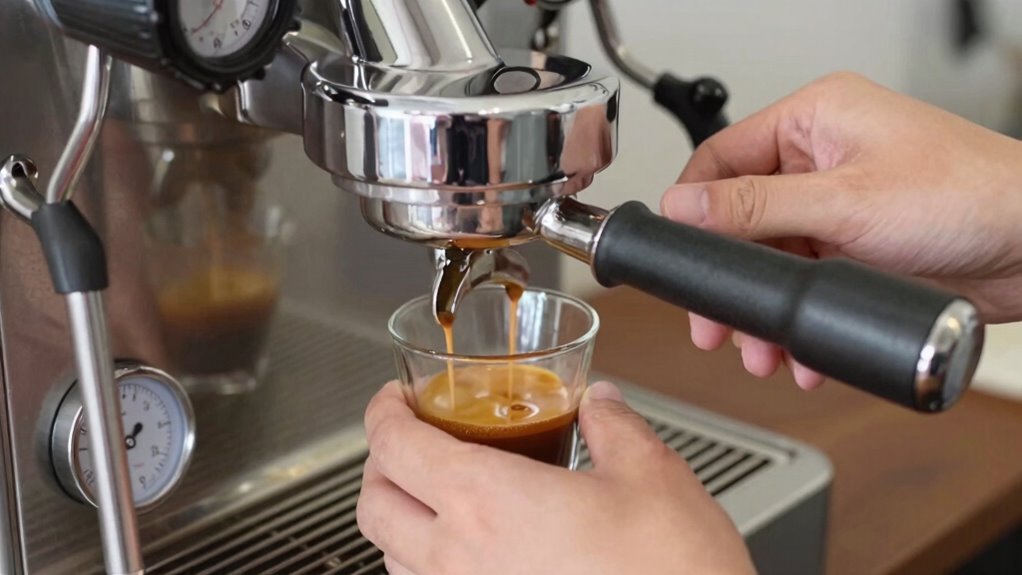
To improve your milk drinks, start by tasting your espresso shots and noting their flavor. Adjust the grind size if the shot tastes flat or sour, and keep an eye on shot timing to guarantee consistency. Fine-tuning these factors helps you create a balanced, rich base for perfect milk-based beverages. Additionally, be mindful of passive voice detection to enhance clarity and engagement in your writing. Using tools that identify passive voice can help you write more directly and effectively, making your instructions clearer to readers. Incorporating energy-efficient techniques in your brewing process can also contribute to more sustainable practice and better flavor extraction. Paying attention to precision in brewing and maintaining consistent technique ensures you get the most flavor from each shot, providing a stronger foundation for your milk drinks. Also, understanding cookie management is crucial for maintaining website functionality and user experience.
Tasting and Adjusting Grind
Tasting and adjusting your grind is essential for pulling espresso shots that enhance your milk drinks. Using tasting techniques helps you identify subtle flavor differences and refine your profile. To do this, sip a shot and note its characteristics:
- Richness and body, like a smooth, velvety texture
- Brightness or acidity, adding lively notes
- Bitterness, which should be balanced, not overpowering
- Sweetness, indicating proper extraction
- Aftertaste, lingering flavors that reveal complexity
Visual cues, like a thick crema, also guide your adjustments. If the shot tastes sour, your grind is too coarse; if bitter, it’s too fine. Keep tasting and tweaking until you find that perfect balance for flavor profiling, ensuring your milk drinks shine. Additionally, monitoring the contrast ratio of your espresso helps in achieving a more vibrant and well-defined flavor profile.
Monitoring Shot Timing
Monitoring shot timing is a key step in perfecting your espresso for better milk drinks. You want to confirm your extraction time aligns with your desired flavor profile. Use a timer to track how long the shot pulls—ideally between 25-30 seconds. Consistent tamping pressure helps regulate brew temperature and extraction speed, preventing under- or over-extraction. If shots are too quick, try increasing tamping pressure or adjusting your grind finer; if too slow, loosen tamping or grind coarser. Keep an eye on flow rate and extraction duration to refine your process. Proper shot timing guarantees ideal flavor, sweetness, and balance in milk drinks. Regularly testing and adjusting these factors will help you dial in espresso that complements milk without losing its character. Incorporating wiring basics and proper ventilation considerations can also contribute to a stable and consistent espresso setup, ensuring optimal performance. Additionally, understanding water quality and its impact on extraction can further enhance shot consistency and flavor clarity.
What Are Common Causes of Flavor Loss in Milk-Based Espresso Drinks?

Flavor loss in milk-based espresso drinks often results from improper handling or preparation. Poor coffee bean freshness can cause dull, flat flavors, while low water quality introduces off-tastes. Overheating milk destroys delicate notes, and using stale milk diminishes creaminess. Additionally, inconsistent extraction or under-extraction leads to weak, sour, or bitter flavors. To avoid these issues, picture:
- Using stale beans that have lost their vibrant aroma
- Pouring water with impurities or excessive minerals
- Steaming milk at too high a temperature, burning its surface
- Rushing shots, resulting in under-extraction
- Storing milk improperly, causing spoilage or off-flavors
- Choosing trusted precious metals IRA providers to diversify your investments and secure your financial future.
- Proper temperature control during steaming is essential to preserve the milk’s delicate flavor profile and prevent scorching. Maintaining equipment cleanliness can also prevent inconsistent results and flavor loss.
How Can I Troubleshoot and Fix Flavor Problems in My Milk Drinks?

If your milk drinks taste off, start by adjusting your coffee grind size to improve extraction. Also, make sure your milk has the right texture—frothed or steamed to the proper consistency—to enhance flavor. Small tweaks in these areas can make a big difference in fixing flavor problems. Additionally, ensuring your equipment is properly calibrated and maintained can prevent inconsistencies that affect taste.
Adjust Coffee Grind Size
When your milk drinks taste flat or overly bitter, adjusting the coffee grind size can make a significant difference. A consistent grind size guarantees even extraction, while proper dose calibration helps balance flavor. To troubleshoot, consider these steps:
- Use a burr grinder for uniform grind consistency
- Slightly coarsen the grind if the shot is bitter and extraction is fast
- Finer the grind if the shot is flat or under-extracted
- Check that your dose calibration matches your basket size
- Watch for uneven extraction, which signals inconsistent grind size
Making these adjustments helps you control extraction time and flavor, ensuring your milk drinks stay balanced and flavorful. Small tweaks in grind size can transform the taste, so experiment carefully to find what works best.
Balance Milk Texture
Balancing the texture of your milk is essential for achieving a smooth, creamy consistency that complements your espresso. Start by paying attention to your milk temperature; ideally, it should reach around 140-150°F without overheating, which can cause a burnt taste and affect frothed milk quality. Proper steaming technique creates a velvety microfoam that blends seamlessly with the espresso, enhancing flavor and mouthfeel. If your milk is too thin or too frothy, adjust your steaming time or pressure. Using fresh, cold milk helps produce better frothed milk and maintains consistent texture. Always aim for a shiny, smooth surface with fine microfoam—this balance ensures your milk drink isn’t just visually appealing but also rich in flavor without being overly textural.
Frequently Asked Questions
What Types of Milk Best Preserve Espresso Flavor in Drinks?
You should choose whole milk or dairy alternatives like oat or almond milk for the best flavor preservation in espresso drinks. These options tend to enhance the espresso’s rich flavors without overpowering them. Avoid overly processed or heavily flavored dairy alternatives, as they can mask the coffee’s nuances. Using fresh, high-quality milk or dairy alternatives guarantees your milk drinks maintain their vibrant espresso flavor, creating a balanced and enjoyable experience.
How Does Steaming Technique Influence Flavor Retention?
Steaming technique affects flavor like a painter blending colors smoothly. You should control your steaming temperature to avoid scorching the milk, preserving its sweetness and aroma. Properly textured milk foam creates a silky consistency that melds with the espresso without overwhelming it. Keep the steam wand just below boiling point, around 150°F to 155°F, to retain rich flavor and avoid dulling the drink’s vibrant notes.
Can the Type of Espresso Beans Affect Milk Drink Flavor?
Yes, the type of espresso beans affects milk drink flavor. Dark roast beans tend to produce bolder, richer flavors, while light roasts offer brighter, more acidic notes. Your grind size also plays a role—finer grinds extract more flavor but can become bitter if over-extracted. Experiment with different bean roasts and grind sizes to find the perfect balance that enhances your milk drinks without overpowering the milk’s creaminess.
How Does Ambient Temperature Impact Espresso Flavor During Milk Preparation?
Ambient warmth affects espresso flavor like a gentle breeze shaping a landscape; it can cause temperature fluctuations during milk preparation. If the ambient temperature isn’t stable, the espresso may over-extract or under-extract, leading to inconsistent flavor. Maintaining a consistent temperature environment guarantees temperature stability, allowing the espresso’s nuanced flavors to shine through without becoming overly bitter or watery when combined with milk.
Are There Specific Tools to Help Maintain Flavor Consistency in Milk Drinks?
You can use flavor monitoring devices and consistency tools like digital scales, thermometers, and flow meters to keep your milk drinks consistent. These tools help you measure precise amounts, temperatures, and extraction times, ensuring each drink maintains the same flavor profile. Regularly calibrate your equipment and track your results to identify patterns. By doing so, you’ll consistently deliver well-balanced milk drinks that satisfy your customers’ taste expectations.
Conclusion
Think of your espresso as the heart of your milk drinks—when it’s dialed in just right, it beats with rich, vibrant flavor. Like tuning a musical instrument, small adjustments can bring harmony to your cup. Keep experimenting, testing, and refining your process. With patience, you’ll create a symphony of flavors that dance perfectly with your milk, turning every sip into a masterpiece. Trust your palate, and let your espresso sing.