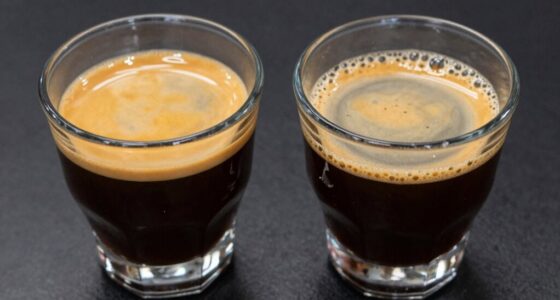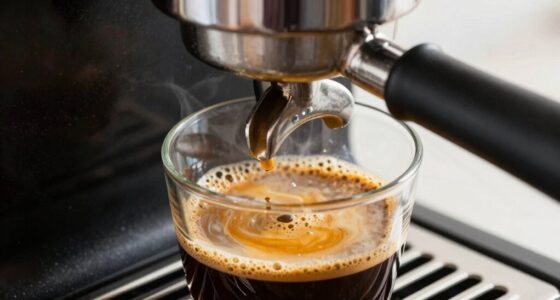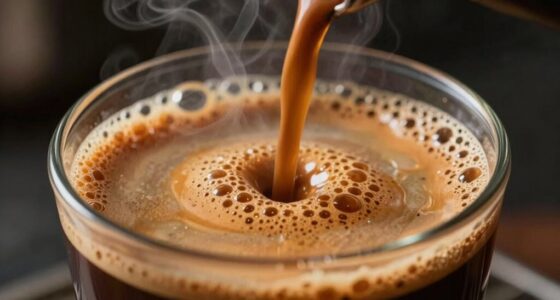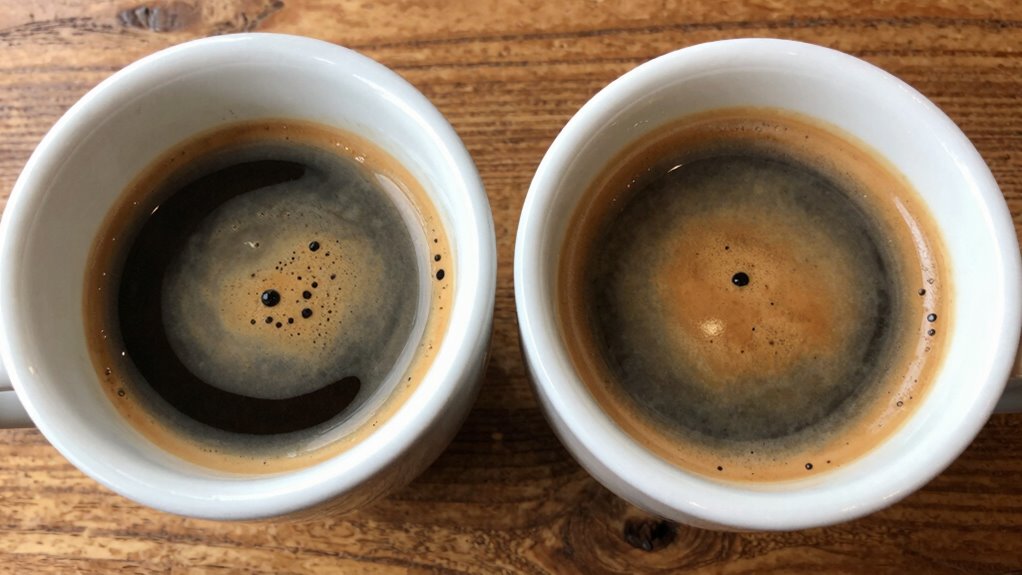

To diagnose sour versus bitter espresso quickly, look at the crema: pale or uneven crema indicates sourness, while dark, thick crema suggests bitterness. Feel the texture—sour shots are wispy and less stable, whereas bitter ones are velvety and dense. Aromas also reveal clues: fruity or bright notes mean under-extraction, while burnt or dull smells point to over-extraction. If you want effective tips to get it just right, keep going.

Get kitchen gear delivered free — and shop member deals
- Fast, free delivery on millions of items
- Access to Prime Big Deal Days deals on October 6–7
- Prime Video, Amazon Music and more included
Key Takeaways
- Pale, thin crema and frothy surface indicate sourness; dark, dense crema suggests bitterness.
- Sour espresso results from under-extraction, often caused by stale beans or too-coarse grind.
- Bitter espresso stems from over-extraction, typically due to fine grind or prolonged brew time.
- Adjust grind size (finer for sour, coarser for bitter) and water temperature to quickly balance flavors.
- Use aroma cues: fruity/sour smells for under-extraction; burnt or flat odors for over-extraction.
How to Recognize Sour and Bitter Espresso by Sight and Feel
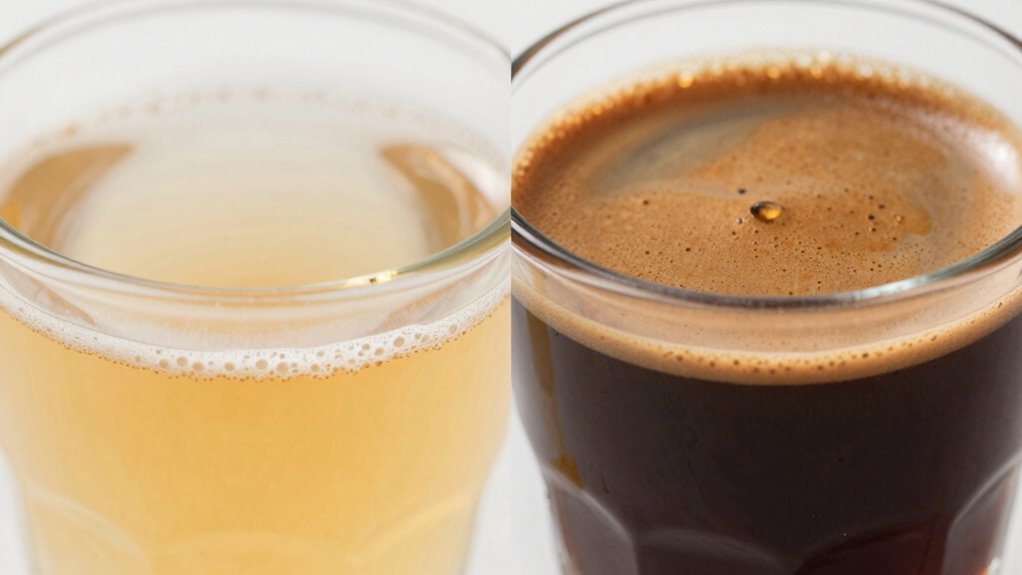
To identify whether your espresso is sour or bitter, start by examining its appearance and texture. Look for color indicators: a pale or uneven crema often signals sourness, while a dark, thick crema suggests bitterness. The crema texture offers more clues—sour espresso tends to have a thin, wispy crema that’s less stable, whereas bitter shots usually boast a rich, velvety crema that holds its form longer. Check the surface for bubbles or a frothy layer, which can indicate over-extraction and sourness. Conversely, a smooth, glossy crema points to proper extraction but may lean toward bitterness if it’s overly dense. Paying attention to these visual and tactile cues helps you quickly assess the shot’s flavor profile before tasting. Additionally, understanding quality assurance principles can help in maintaining consistent extraction processes, leading to more predictable espresso results.
What Sour and Bitter Flavors Say About Your Extraction Process

Sour flavors in your espresso often indicate under-extraction, meaning water hasn’t been in contact with the coffee grounds long enough to extract the full range of flavors. This can be caused by using stale coffee beans or improper grinder calibration, both of which hinder proper extraction. Bitter flavors, on the other hand, usually suggest over-extraction, where too much solubles are pulled out, often due to overly fine grind settings or prolonged brewing. To help diagnose your shot, consider this guide:
| Flavor | Cause | Solution |
|---|---|---|
| Sour | Under-extraction, stale beans | Calibrate grinder, use fresh coffee |
| Bitter | Over-extraction, fine grind | Adjust grind, shorten brew time |
| Balanced | Proper extraction | Maintain current process |
| Too weak | Insufficient extraction | Extend extraction time |
| Overly strong | Over-extraction | Coarser grind, shorter brew |
Additionally, consistent brewing methods can help improve the overall quality of your espresso.
Quick Fixes for Sour Espresso Shots
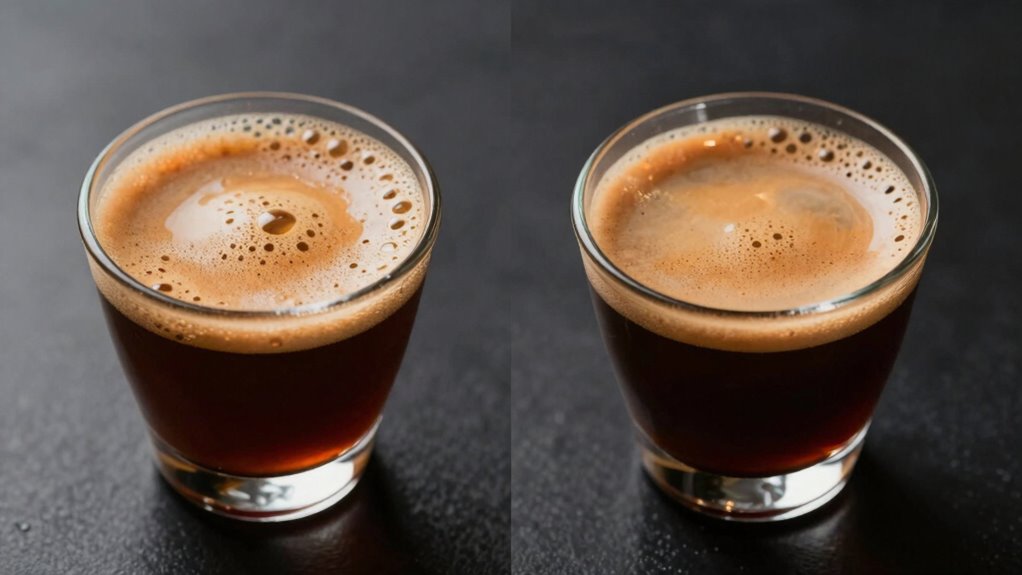
When your espresso tastes overly sour, it’s a clear sign that the extraction process needs a quick adjustment. To fix this, focus on optimizing your grind size and water temperature. A finer grind increases extraction time, helping to develop richer flavors and reduce sourness. Additionally, raise the water temperature slightly, as hotter water extracts more balanced flavors from the coffee. Here are some quick fixes:
- Adjust the grind size to be finer for a longer extraction.
- Increase water temperature slightly to enhance extraction without overdoing it.
- Ensure your machine is properly heated before brewing to maintain consistent temperature.
Making these small tweaks can help balance the acidity, resulting in a more rounded espresso shot. Remember, precision in grind size and water temperature is key to avoiding sour flavors.
Smart home gym equipment and other connected devices can also provide feedback to help fine-tune your brewing process for the perfect shot.
Why Your Espresso Is Bitter and How to Adjust

If your espresso tastes bitter, the issue often lies in over-extraction, where too much soluble material is pulled from the coffee grounds. One common cause is using old or stale coffee beans, which can develop bitterness. To fix this, start by checking the freshness of your coffee beans and switch to fresher ones if needed. Next, adjust your grind size—making it slightly coarser can reduce extraction time, preventing bitterness. A finer grind extracts more solubles, so if your shot is too bitter, try increasing the grind size gradually. Also, ensure your brewing time isn’t too long. Properly managing grind size and using fresh beans are key to dialing back bitterness and achieving a smoother, more balanced espresso. Additionally, understanding the extraction process can help you fine-tune your technique for better results.
Using Taste and Aroma Cues to Perfect Your Espresso Balance
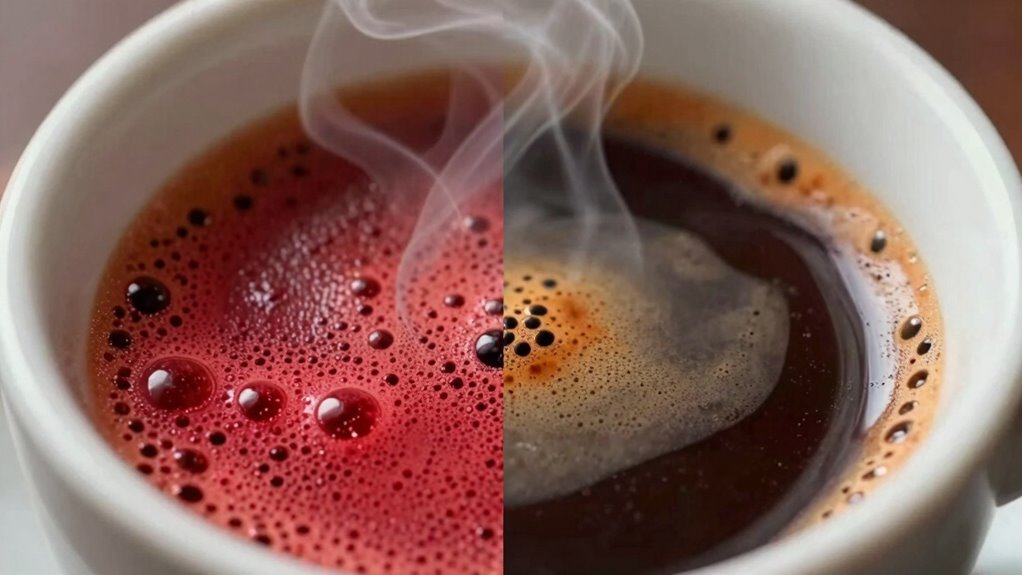
Mastering the art of tasting your espresso is the key to achieving a well-balanced cup. By paying close attention to taste and aroma cues, you can identify what needs adjustment. For instance, a bright, fruity aroma often hints at the coffee bean origins, while a dull or burnt smell suggests brewing equipment maintenance issues. When you sip, note if the espresso is too sour, bitter, or flat—these clues guide your tweaks. To improve balance, consider adjusting grind size, extraction time, or dosage. Focus on:
- Recognizing subtle aroma differences linked to coffee origins
- Noticing how aroma shifts reveal brewing flaws
- Using taste cues to fine-tune your settings and brewing routine
- Understanding how European cloud innovations support sustainable and precise coffee roasting techniques.
Frequently Asked Questions
Can the Age of Coffee Beans Affect Espresso Sourness or Bitterness?
Yes, the age of coffee beans affects espresso sourness or bitterness. When beans aren’t fresh, their flavor profile changes, often leading to increased sourness or dullness. Proper storage conditions help maintain coffee freshness, preserving the beans’ original taste. As beans age, they can develop undesirable flavors, making your espresso taste more bitter or flat. To avoid this, use fresh beans stored in airtight containers in a cool, dark place.
How Does Grind Size Influence Espresso Flavor Profiles?
Think of grind size as the paintbrush for your espresso’s flavor canvas. When you use a consistent grind size, your extraction flows smoothly, revealing nuanced flavors. Fine particle size amps up extraction, creating a bold, intense profile, while coarser grinds bring out brighter, more delicate notes. Keep your grind consistency tight, and you’ll master the art of balancing sour and bitter notes, turning each shot into a flavorful masterpiece.
What Role Does Water Temperature Play in Extracting Sour or Bitter Notes?
You influence whether your espresso tastes sour or bitter through water temperature control, which affects extraction. Higher water temps can extract bitter compounds, while lower temps preserve sour notes by avoiding over-extraction. Pay attention to water chemistry, as minerals impact flavor. By maintaining precise temperature control and monitoring water chemistry, you can fine-tune your extraction process to achieve your desired flavor profile, avoiding unpleasant sourness or bitterness.
Are Certain Coffee Origins More Prone to Sourness or Bitterness?
Ever notice how some coffees taste brighter or more bitter? You’ll find that certain coffee varietals and processing methods make some origins more prone to sourness or bitterness. For example, African coffees often have vibrant, sour notes, while Indonesian beans tend to be more bitter. You’re more likely to encounter these traits depending on where the beans come from and how they’re processed, influencing your espresso’s flavor profile.
How Do Roast Levels Impact the Likelihood of Espresso Tasting Sour or Bitter?
You’ll find that darker roast levels tend to produce a more bitter espresso, thanks to the longer roasting process that develops complex flavors and reduces acidity. Lighter roasts often retain more of the coffee’s natural acidity, making them more prone to sourness. So, if you prefer a smoother, less sour taste, opt for a darker roast. The roast darkness directly influences flavor complexity and whether your espresso leans towards sour or bitter.
Conclusion
Think that sour or bitter espresso is just a matter of taste? Actually, it reveals much about your brewing process. For instance, some believe bitter notes come from over-extraction, but recent studies suggest that certain beans naturally develop bitterness when roasted darker. By paying attention to sight, feel, and aroma cues, you can fine-tune your shots effectively. So next time your espresso’s off, remember—trust your senses, but also explore the science behind it!
Fall Picks
fall essentials
As an affiliate, we earn on qualifying purchases.