For most offices seeking an under-sink water filter system for coffee, I’d start with the Waterdrop 10UA: its straightforward filtration and one-year service interval suit regular break-room use. The ICEPURE stands out for offices that want a longer stated capacity between filter changes, while the iSpring RCC7AK-BN is the more specialized choice for buyers seeking reverse osmosis with remineralization. The main tradeoffs are filtration approach, installation and upkeep, and how much water the office uses each day. A simpler filter may be easier to maintain, while RO adds stages and a dedicated faucet. Read on for the full comparison and help matching a system to your water, coffee routine, and maintenance capacity.

Get kitchen gear delivered free with Prime
- Fast, free delivery on millions of items
- Prime Video, Amazon Music and more included
- Member-only deals all year
Complete the kit


Key Takeaways
- The Waterdrop 10UA is the practical starting point for an office that wants a straightforward under-sink setup and a stated one-year filter interval.
- ICEPURE and Waterdrop 15UA emphasize longer service capacity, which may reduce change frequency, but actual replacement timing depends on the source water and office demand.
- The WD-TSA-UF and Waterdrop TSU use ultrafiltration, a different approach from the simpler carbon-focused options; compare their installation and maintenance requirements rather than choosing by micron figure alone.
- The iSpring RCC7-BN and RCC7AK-BN are reverse-osmosis picks for buyers seeking a more involved multi-stage system, with the AK model adding pH remineralization.
- Office fit matters as much as filtration claims: cabinet space, faucet access, water use, and who will handle filter changes separate the best match from the most elaborate system.
| Waterdrop UL12A Under Sink Water Filter, Upgraded for 10UA, Time Reminder |  | Best for Renters and Low-Disruption Installs | Filter life: 12 months | Capacity: 11,000 gallons | Flow rate: 5.026 L/min | VIEW ON AMAZON | See Our Full Breakdown |
| Waterdrop 10UA Under Sink Water Filter System, NSF/ANSI 42 Certified, 1 Year | 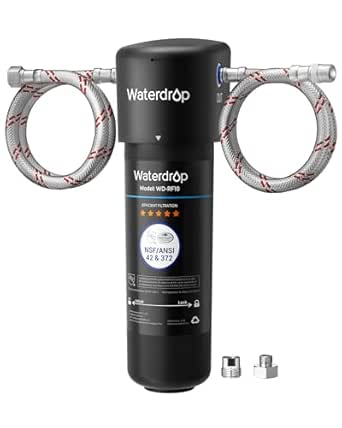 | Best Value for a Straightforward Office Setup | Filter life: 12 months | Flow rate: 0.75–1.33 GPM | Maximum supported TDS: 700 PPM | VIEW ON AMAZON | See Our Full Breakdown |
| Waterdrop WD-TSA-UF 0.01 μm Ultra Filtration Under Sink Water Filter System |  | Best for Fine Particle Filtration Without TDS Reduction | Filtration accuracy: 0.01 μm | Filtration stages: 9 | Flow rate: 1.5 GPM | VIEW ON AMAZON | See Our Full Breakdown |
| ICEPURE Under Sink Water Filter System, 3 Years or 22,000 Gallons, NSF/ANSI 42 Certified, Removes Heavy Metals and Chlorine, Easy Installation, USA Tech |  | Best for High-Use Offices with Fewer Filter Changes | Capacity: 22,000 gallons | Filter life: Up to 3 years | Flow rate: 2.5 GPM | VIEW ON AMAZON | See Our Full Breakdown |
| Waterdrop 15UA Under Sink Water Filter System, 19,000 Gallons, 2 Years |  | Best for Offices Seeking a Long Replacement Interval in a Compact Body | Capacity: 19,000 gallons | Filter life: 2 years | Maximum flow rate: 0.75 GPM | VIEW ON AMAZON | See Our Full Breakdown |
| Waterdrop TSU 0.01 Micron Ultra Filtration Under Sink Water Filter System | 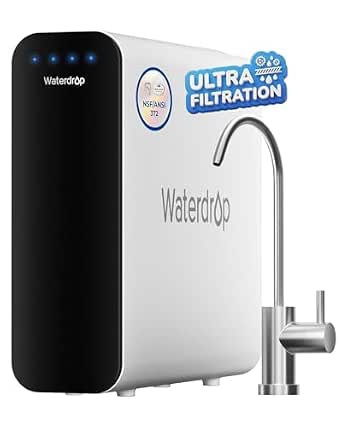 | Best Compact Ultra-Filtration Pick | Filtration method: Ultra filtration, activated carbon, and carbon block | Flow rate: 1.05 GPM | Filter lifespan: 24 months | VIEW ON AMAZON | See Our Full Breakdown |
| iSpring RCC7-BN 5-Stage Under-Sink Reverse Osmosis Water Filtration System with Brushed Nickel Faucet – 75 GPD |  | Best for Broad Contaminant Reduction | Filtration method: Five-stage reverse osmosis, activated carbon, and carbon block | Flow rate: 3.4 liters per minute | Maximum supported TDS: 750 ppm | VIEW ON AMAZON | See Our Full Breakdown |
| iSpring RCC7AK-BN NSF Certified 75 GPD Alkaline 6-Stage Reverse Osmosis System with pH+ Remineralization |  | Best RO Pick for Mineral-Enhanced Coffee Water | Model: RCC7AK-BN | Filtration method: Reverse osmosis, alkaline, activated carbon, and carbon block | Maximum flow: 284 liters per day | VIEW ON AMAZON | See Our Full Breakdown |
| Waterdrop TSA 8 Layer Under Sink Water Filter System, NSF/ANSI 42 Certified |  | Best Fast-Filling Pick for Mineral-Retaining Water | Filtration process: Eight-stage filtration | Maximum flow rate: 1.5 GPM | Filter lifespan: 6–18 months, depending on filter | VIEW ON AMAZON | See Our Full Breakdown |
| under sink water filter system for coffee for office | Dimensions | Flow rate |
|---|---|---|
| Waterdrop UL12A Under Sink Wat | 3.9 × 3.6 × 12.3 inches | 5.026 L/min |
| Waterdrop 10UA Under Sink Wate | 3.9 × 3.6 × 12.3 inches | 0.75–1.33 GPM |
| Waterdrop WD-TSA-UF 0.01 μm Ul | — | 1.5 GPM |
| ICEPURE Under Sink Water Filte | 6.81 × 5.39 × 15.55 inches | 2.5 GPM |
| Waterdrop 15UA Under Sink Wate | 3.9 × 3.6 × 16.7 inches | — |
| Waterdrop TSU 0.01 Micron Ultr | 14.81 × 4.68 × 13.97 inches | 1.05 GPM |
| iSpring RCC7-BN 5-Stage Under- | 23.62 × 15.75 × 11.81 inches | 3.4 liters per minute |
| iSpring RCC7AK-BN NSF Certifie | 15.5 × 16 × 18 inches | — |
| Waterdrop TSA 8 Layer Under Si | — | — |
More Details on Our Top Picks
Waterdrop UL12A Under Sink Water Filter, Upgraded for 10UA, Time Reminder
The Waterdrop UL12A suits offices that want a quick-tasting-water setup without drilling into cabinetry. Its suction-cup base and no-drill installation offer more flexibility than the twist-and-lock Waterdrop 10UA, though buyers should check that their plumbing and mounting space match the included arrangement. A 11,000-gallon capacity and filter-life reminder can make upkeep easier in a shared kitchen, while the stated flow rate is generous for filling coffee makers and carafes. It reduces chlorine, lead, PFAS, and heavy metals but does not reduce TDS or minerals, so it is not the pick for anyone seeking purified or mineral-adjusted water. It also connects to cold water only and needs periodic filter replacement.
Pros:- No-drill installation with a suction-cup base
- Reduces chlorine, lead, PFAS, and heavy metals while retaining minerals
- 11,000-gallon capacity and a stated 12-month filter life
- Built-in filter-life reminder helps shared kitchens track replacement
Cons:- Does not reduce TDS or remove minerals
- Designed for cold-water connections only
- Filter replacement is still required, and office usage can affect the service interval
Best for: Small offices or renters who want a no-drill under-sink filter for coffee water and prefer a built-in maintenance reminder.
Not ideal for: Offices seeking TDS reduction, hot-water filtration, or a system specifically suited to well water.
- Filter life:12 months
- Capacity:11,000 gallons
- Flow rate:5.026 L/min
- Dimensions:3.9 × 3.6 × 12.3 inches
- Supported water TDS:Up to 700 PPM
- Temperature range:35°F to 100°F
- Installation:No drill; freestanding with suction-cup base
- Certifications:NSF/ANSI 42 and 372; IAPMO certified
Our verdict“Choose the UL12A for a renter-friendly office coffee station where no-drill setup and maintenance reminders matter more than TDS reduction.”
Waterdrop 10UA Under Sink Water Filter System, NSF/ANSI 42 Certified, 1 Year
The Waterdrop 10UA is a practical choice for an office that needs better-tasting water for coffee without extra filtration stages or a bulky system. Its twist-and-lock fittings make filter changes straightforward, and its stated flow range supports regular coffee-pot and carafe refills. Compared with the UL12A, it trades the no-drill mounting approach and built-in reminder for a more conventional under-sink connection; compared with the 9-stage WD-TSA-UF, it keeps the setup simpler. The tradeoff is a one-year filter interval and a cold municipal-water restriction. It is not intended for well water, hot water, or reducing TDS, so I would shortlist it for offices with treated tap water that mainly want chlorine and taste improvement.
Pros:- Twist-and-lock fittings simplify installation and filter changes
- Coconut-shell activated carbon targets chlorine and taste-related concerns
- Stated flow rate of 0.75–1.33 GPM supports routine kitchen use
- Compact 12.3-inch-tall design fits many under-sink spaces
Cons:- Limited to cold municipal tap water, not well or hot water
- Requires annual filter replacement
- Does not reduce TDS
Best for: Small offices using municipal cold tap water that want a simple, twist-and-lock filter for coffee and drinking water.
Not ideal for: Workplaces on well water, those needing TDS reduction, or offices that want a longer stated service life than one year.
- Filter life:12 months
- Flow rate:0.75–1.33 GPM
- Maximum supported TDS:700 PPM
- Dimensions:3.9 × 3.6 × 12.3 inches
- Connection sizes:3/8 inch and 1/2 inch
- Maximum water pressure:60 psi
- Maximum temperature:100°F
- Filter material:Coconut-shell activated carbon
Our verdict“Pick the 10UA for a straightforward municipal-water coffee station if simple fittings matter more than a reminder or extended replacement interval.”
Waterdrop WD-TSA-UF 0.01 μm Ultra Filtration Under Sink Water Filter System
The Waterdrop WD-TSA-UF stands apart from the carbon-focused 10UA and UL12A with its stated 0.01 μm ultrafiltration and nine-stage process. For an office coffee area, that distinction is most relevant to buyers who want filtration aimed at sediment and particles as well as chlorine, taste, and odor, while leaving beneficial minerals in the water. Its stated 1.5 GPM flow rate can suit shared use, and twist-and-lock installation keeps routine replacement accessible. That added filtration approach does not make it a TDS-reduction system: the product retains minerals and does not remove TDS. It is also limited to municipal cold water, with well-water use requiring pre-filtration. Compared with the longer-capacity ICEPURE, this pick prioritizes ultrafiltration rather than a three-year service interval.
Pros:- 0.01 μm stated filtration accuracy with a 9-stage process
- Targets chlorine, taste, odor, heavy metals, sediment, and particles
- Retains beneficial minerals rather than reducing TDS
- Twist-and-lock installation and up to 12-month filter life
Cons:- Not suitable for hot water or well water without pre-filtration
- Does not reduce TDS
- Replacement timing can range from 6 to 12 months depending on water quality
Best for: Office managers on municipal cold water who want ultrafiltration for particles and sediment while retaining minerals for coffee.
Not ideal for: Offices using untreated well water or seeking TDS reduction, hot-water filtration, or the longest stated filter interval.
- Filtration accuracy:0.01 μm
- Filtration stages:9
- Flow rate:1.5 GPM
- Filter lifespan:Up to 12 months
- Maximum temperature:100°F
- Supported water:Municipal cold water
- Installation:Under sink, twist-and-lock
- Power source:Mechanical
Our verdict“Choose the WD-TSA-UF when particle-focused ultrafiltration matters more than TDS reduction or a multi-year filter interval.”
ICEPURE Under Sink Water Filter System, 3 Years or 22,000 Gallons, NSF/ANSI 42 Certified, Removes Heavy Metals and Chlorine, Easy Installation, USA Tech
The ICEPURE Under Sink Water Filter is the strongest fit here for a busy office that wants to reduce how often filters need changing. Its stated 22,000-gallon capacity and three-year service life exceed the 10UA’s one-year interval and the 15UA’s two-year interval, a meaningful difference when several people use the coffee station daily. The 2.5 GPM flow rate also supports frequent refills without making the system’s main selling point a multi-stage filtration claim. It is a direct-connect, cold-line design with NSF/ANSI 42 and 372 listed certifications, but its larger 15.55-inch height and connection requirements call for a cabinet and plumbing check. It reduces chlorine, heavy metals, and lead; unlike the WD-TSA-UF, it does not offer a stated 0.01 μm ultrafiltration specification.
Pros:- Stated capacity of 22,000 gallons and filter life of up to three years
- 2.5 GPM flow rate suits frequent coffee-station use
- Reduces chlorine, heavy metals, and lead
- BPA-free, food-grade materials and NSF/ANSI 42 and 372 certifications
Cons:- 15.55-inch height may not fit crowded cabinets
- Connection compatibility may require an adapter
- Cold-water lines only; no stated TDS-reduction capability
Best for: Busy offices with standard cold-water lines that want high stated capacity and fewer scheduled filter changes.
Not ideal for: Small under-sink cabinets, nonstandard faucet connections, or buyers prioritizing ultrafiltration or TDS reduction.
- Capacity:22,000 gallons
- Filter life:Up to 3 years
- Flow rate:2.5 GPM
- Dimensions:6.81 × 5.39 × 15.55 inches
- Weight:4 pounds
- Connection type:1/2-inch or 3/8-inch female NPT
- Installation:Under sink, direct connect
- Certifications:NSF/ANSI 42 and 372
Our verdict“Choose ICEPURE for a high-use office with compatible plumbing and cabinet space where longer intervals between filter changes are the priority.”
Waterdrop 15UA Under Sink Water Filter System, 19,000 Gallons, 2 Years
The Waterdrop 15UA balances capacity and footprint for offices that want less frequent filter changes but cannot accommodate ICEPURE’s taller housing. Its 19,000-gallon capacity and two-year stated life outlast the 10UA’s one-year interval, while its 16.7-inch height still needs a cabinet measurement before purchase. Push-to-connect fittings support a DIY install, and the filter targets chlorine, lead, PFAS, and heavy metals. For coffee service, its 0.75 GPM maximum flow is more modest than ICEPURE’s 2.5 GPM, so it is a better match for steady, moderate use than repeated rush-hour filling. Like the 10UA and UL12A, it is limited to cold municipal tap water and does not claim TDS reduction.
Pros:- 19,000-gallon capacity and stated two-year filter life
- Push-to-connect fittings support DIY installation
- Targets chlorine, lead, PFAS, and heavy metals
- Narrow 3.9 × 3.6-inch footprint
Cons:- Maximum flow rate of 0.75 GPM is below ICEPURE’s stated 2.5 GPM
- 16.7-inch height may be difficult to fit under some sinks
- Designed for cold municipal water and does not reduce TDS
Best for: Small or midsize offices wanting a two-year filter interval and a narrower housing, with moderate coffee-station demand.
Not ideal for: High-volume kitchens that need faster stated flow, offices with limited vertical cabinet clearance, or sites using well or hot water.
- Capacity:19,000 gallons
- Filter life:2 years
- Maximum flow rate:0.75 GPM
- Dimensions:3.9 × 3.6 × 16.7 inches
- Supported water TDS:Up to 700 PPM
- Temperature range:35°F to 100°F
- Installation:Under sink, push-to-connect fittings
- Certifications:NSF/ANSI 42 and 372
Our verdict“Choose the 15UA for moderate-use offices that want a longer filter interval than the 10UA in a narrow housing, provided the cabinet has enough height.”
Waterdrop TSU 0.01 Micron Ultra Filtration Under Sink Water Filter System
For an office that wants better-tasting coffee without making reverse osmosis the default, the Waterdrop TSU is a compact middle ground. Its three-stage ultra-filtration and carbon treatment target chlorine, odors, PFAS, and heavy metals while retaining minerals, which may suit teams that prefer coffee water without RO remineralization. The listed 1.05 GPM flow rate is a practical fit for filling a kettle or coffee maker, though it is below the Waterdrop TSA’s 1.5 GPM maximum. Its stated 24-month filter life can also mean less scheduled maintenance than the iSpring RCC7AK-BN, whose listed filter cycle is six months. The tradeoff is installation: this system requires countertop drilling for its faucet, and it is intended for municipal tap water—not hot water or well water. Its NSF/ANSI 372 certification is for material content, not a broad contaminant-removal claim.
Pros:- Compact dimensions can leave more under-sink room for office supplies or plumbing access.
- Three-stage ultra-filtration and carbon media target taste and odor concerns relevant to coffee.
- Listed 24-month filter lifespan reduces the frequency of planned filter changes.
- 1.05 GPM flow rate supports routine filling of kettles and coffee makers.
Cons:- Faucet installation requires drilling through the countertop.
- Limited to municipal tap water with TDS below 700 PPM and is not suited to hot or well water.
- NSF/ANSI 372 listed here addresses material content rather than certifying the full filtration performance.
Best for: Small office kitchens using municipal tap water where cabinet space and less frequent filter changes matter more than reverse-osmosis treatment.
Not ideal for: Offices that cannot drill a faucet hole, use well water, need hot-water filtration, or specifically want an RO system to reduce dissolved solids.
- Filtration method:Ultra filtration, activated carbon, and carbon block
- Flow rate:1.05 GPM
- Filter lifespan:24 months
- Capacity:2,200 gallons
- Maximum supported TDS:700 PPM
- Maximum water temperature:100°F
- Dimensions:14.81 × 4.68 × 13.97 inches
- Installation and certification:Under-sink; requires drilling; supports 1/2-inch and 3/8-inch pipes; NSF/ANSI 372
Our verdict“Choose the TSU for a space-conscious office on municipal water that wants chlorine-focused taste improvement and fewer filter changes without moving to reverse osmosis.”
iSpring RCC7-BN 5-Stage Under-Sink Reverse Osmosis Water Filtration System with Brushed Nickel Faucet – 75 GPD
When the office priority is broad contaminant reduction rather than the smallest footprint, the iSpring RCC7-BN is the strongest fit in this group. Its five-stage reverse-osmosis process is described as removing up to 99% of more than 1,000 contaminants, including fluoride, lead, and arsenic; that is a wider treatment approach than the Waterdrop TSU’s ultra-filtration system. For coffee, the appeal is water that has been treated beyond chlorine and odor concerns, though RO water may taste different from mineral-retaining options such as the Waterdrop TSA. The NSF/ANSI 58 certification and included brushed-nickel faucet add confidence and a coordinated fixture, while no power connection is needed. The cost in space is real: at 23.62 × 15.75 × 11.81 inches and 27.5 pounds, it is much less cabinet-friendly than the TSU. Filter changes also remain part of ownership.
Pros:- Five-stage reverse osmosis is specified to remove up to 99% of more than 1,000 contaminants.
- NSF/ANSI 58 certification provides a distinct performance credential compared with the Waterdrop TSU’s listed NSF/ANSI 372 material certification.
- Brushed-nickel faucet is included and top-mounted for installation.
- Runs without an external power source.
Cons:- Large, heavy assembly may be difficult to fit in a crowded office sink cabinet.
- Requires periodic filter replacement to maintain performance.
- RO treatment is a more involved choice than the mineral-retaining Waterdrop TSA for offices mainly seeking improved coffee taste.
Best for: Offices that want certified reverse-osmosis treatment for a broad range of contaminants and have a roomy sink cabinet for a dedicated system.
Not ideal for: Small office kitchens with crowded cabinets, teams seeking a simple chlorine-and-odor filter, or buyers who want to avoid regular filter replacement.
- Filtration method:Five-stage reverse osmosis, activated carbon, and carbon block
- Flow rate:3.4 liters per minute
- Maximum supported TDS:750 ppm
- Temperature range:40°F–100°F
- Dimensions:23.62 × 15.75 × 11.81 inches
- Weight:27.5 pounds
- Certification and power:NSF/ANSI 58; no power needed
- Warranty:1-year limited manufacturer warranty
Our verdict“Pick the RCC7-BN if broad, certified RO treatment matters more to your office than cabinet space or simpler maintenance.”
iSpring RCC7AK-BN NSF Certified 75 GPD Alkaline 6-Stage Reverse Osmosis System with pH+ Remineralization
The iSpring RCC7AK-BN makes the most sense for an office that wants reverse-osmosis treatment but prefers a mineral-enhanced finish for coffee water. Its six-stage process adds pH+ remineralization after RO, a point of difference from the five-stage iSpring RCC7-BN, which focuses on RO filtration without the listed alkaline stage. That extra treatment gives buyers a way to choose a different taste profile, but it does not make this a low-maintenance option: the stated filter life cycle is six months, much shorter than the Waterdrop TSU’s listed 24-month lifespan. Its top-mounted installation and transparent housing can make setup and visual filter checks more approachable, although the system still occupies substantial cabinet space at 15.5 × 16 × 18 inches. NSF/ANSI 58 certification is listed, and the unit needs no power.
Pros:- Six-stage RO system adds a mineral and pH adjustment stage absent from the RCC7-BN.
- NSF/ANSI 58 certification is listed for the system.
- Top-mounted installation can simplify access during setup.
- Transparent filter housing makes visual inspection easier.
Cons:- Listed six-month filter life means more frequent replacement planning than the Waterdrop TSU.
- Its 18-inch height and 16-inch width may not fit a crowded cabinet.
- The added remineralization stage may not suit offices that prefer the taste of untreated RO output.
Best for: Office coffee stations that want reverse-osmosis filtration followed by mineral and pH adjustment, with staff available to manage routine filter changes.
Not ideal for: Offices with limited cabinet clearance, teams seeking the longest stated filter interval, or buyers who do not want remineralization after RO.
- Model:RCC7AK-BN
- Filtration method:Reverse osmosis, alkaline, activated carbon, and carbon block
- Maximum flow:284 liters per day
- Filter life cycle:6 months
- Maximum supported TDS:750 ppm
- Operating pressure:70 psi
- Dimensions:15.5 × 16 × 18 inches
- Certification and power:NSF/ANSI 58; no power needed
Our verdict“Choose the RCC7AK-BN when your office wants RO treatment with mineral-enhanced water and can accommodate frequent maintenance and a larger cabinet footprint.”
Waterdrop TSA 8 Layer Under Sink Water Filter System, NSF/ANSI 42 Certified
For a busy office coffee station where several people may fill kettles or brewers in quick succession, the Waterdrop TSA stands out for its listed maximum flow of 1.5 GPM, higher than the TSU’s 1.05 GPM. Its eight-stage process is described as reducing chlorine, fluoride, rust, and PFAS/PFOA/PFOS while retaining beneficial minerals, so it takes a different path from the iSpring RCC7-BN and RCC7AK-BN reverse-osmosis systems. That mineral retention may appeal to teams that want filtered municipal water without an RO system, but the listed NSF/ANSI 42 certification should not be read as certification for every contaminant claim. Filter life varies from six to 18 months, making maintenance less predictable than the TSU’s stated 24-month interval. It is also not intended for hot or well water without pre-filtration, and the flow may slow after filtration.
Pros:- Listed maximum flow of 1.5 GPM is faster than the Waterdrop TSU’s 1.05 GPM.
- Eight-stage filtration targets several common municipal-water concerns while retaining beneficial minerals.
- DIY installation and filter replacement are described as quick and simple.
- NSF/ANSI 42 certification is listed.
Cons:- Filter lifespan varies from 6 to 18 months depending on the filter and use.
- Not suitable for hot water or well water without pre-filtration.
- The listed certification is NSF/ANSI 42, so it does not establish certification for every contaminant-reduction claim.
Best for: Office kitchens on municipal water that need quick fills, want to retain minerals, and prefer a non-RO system for everyday coffee preparation.
Not ideal for: Offices needing reverse-osmosis treatment, using hot or untreated well water, or wanting a fixed, longer filter-replacement interval.
- Filtration process:Eight-stage filtration
- Maximum flow rate:1.5 GPM
- Filter lifespan:6–18 months, depending on filter
- Certification:NSF/ANSI 42
- Filter materials:Coconut shell activated carbon and durable plastic
- Connection size:1/2-inch or 3/8-inch female NPT
- Maximum pressure:400 psi burst pressure
- Installation time:Less than 3 minutes
Our verdict“Choose the TSA for a busy municipal-water coffee station that values faster filling and mineral retention over RO treatment and a fixed, long filter interval.”

How We Picked
I compared the nine systems through the needs of an office coffee station: stated filtration approach and certifications, expected filter service intervals or capacity, installation demands, and how well the setup appears suited to repeated daily draws. I gave weight to practical ownership details because a system that is hard to service can become a poor fit in a shared workplace, even if its filtration format looks appealing on paper.
The ranking favors useful balance over the longest feature list. The Waterdrop 10UA leads as a straightforward everyday candidate; ICEPURE and the 15UA make a stronger case when reducing filter-change frequency matters. Ultrafiltration models serve buyers looking for that specific filtration format, while the two iSpring RO systems rank for needs that justify extra stages, a dedicated faucet, and more involved upkeep. Product claims do not establish performance for every water supply, so I’d check the manufacturer’s current documentation and local water report before choosing.
Factors to Consider When Choosing Under Sink Water Filter System For Coffee For Office
Choosing a filter for office coffee involves more than selecting the smallest micron number or the largest stated capacity. I’d match the system to the incoming water, the number of drinks made each day, and the person responsible for installation and replacements.
Start With the Water and the Coffee Problem
Identify what you want to change before buying: chlorine taste, sediment, mineral balance, or a contaminant flagged in a water report. A filter’s broad marketing language does not prove it reduces every substance of concern, so match any claim to the model’s current performance documentation. If coffee tastes inconsistent, the cause may also be grinder settings, freshness, or brewing temperature rather than the water alone. Offices on municipal water and offices on a private well can face different issues, making one universal pick unrealistic. Use a recent water report or appropriate lab test to narrow the options. This step can prevent paying for a more complex system that does not address the actual problem.
Match Filter Capacity to Office Demand
Capacity figures and replacement intervals are useful planning estimates, not guarantees that every office will get the same service life. Higher daily use, incoming water conditions, and changes in taste or flow can affect replacement needs. Estimate how much water the break room uses for coffee, tea, and drinking, then compare that demand with the maker’s guidance. A longer stated interval can reduce maintenance interruptions, but it should not be treated as permission to ignore replacement instructions. Assign filter changes to a facilities owner or set a shared reminder. In a busy office, accountability can matter more than a small difference in advertised capacity.
Decide Whether Reverse Osmosis Fits the Workspace
Reverse osmosis can suit buyers seeking a multi-stage approach, but it typically asks more of the installation and service plan than a simpler under-sink filter. Check whether the system needs a separate faucet, a storage tank, drain access, or enough cabinet space for its components. Those details can be awkward in a compact kitchenette or a leased office where plumbing changes need approval. Ask how the system handles wastewater and whether its operating requirements fit the site. A remineralization stage may appeal to buyers who want that feature, but it is not automatically necessary for every coffee station. Choose RO because its capabilities address a defined need, not simply because it has more stages.
Check Coffee Flavor and Mineral Preferences
Filtered water can change how coffee tastes, but the preferred mineral profile varies with beans, brewing method, and individual preference. Removing an unwanted taste is not the same as creating a water profile tailored for extraction. If coffee quality is the priority, compare the filter’s stated effects on minerals and alkalinity with the brewing equipment maker’s water guidance. Avoid assuming that the most heavily filtered water will make the best cup. A small, controlled taste comparison using the office’s usual beans can help identify whether a change improves the result. This is especially useful before committing to a system designed around a particular water profile.
Plan Installation, Access, and Service Ownership
Measure the cabinet and inspect the plumbing before ordering; under-sink space often has to serve cleaning supplies, bins, and other equipment too. Confirm the included connection method, faucet needs, and whether installation requires tools or a plumber. In a shared office, a cartridge that is easy to reach is more likely to be replaced on schedule. A hard-to-access unit can turn routine maintenance into a facilities ticket, even when the filter itself is straightforward. Also decide who records installation dates and keeps replacement parts on hand. These practical checks can rule out a technically suitable model that would be a nuisance in the actual break room.
Compare Certification and Claim Scope
Certification details should be read at the model and claim level: a standard number on a product listing does not automatically cover every reduction claim or every configuration. Check the manufacturer’s documentation for the exact model, the substances tested, and any operating conditions tied to the claim. Do not use a broad phrase such as “heavy metal reduction” as a substitute for checking which substances were evaluated. If local water testing identifies a particular concern, look for documentation that addresses it directly. Also confirm that replacement cartridges are available for the exact system you choose. Clear evidence and a dependable service path are better buying signals than an impressive-sounding feature list.
Frequently Asked Questions
Is reverse osmosis necessary for an office coffee station?
Not automatically. The two iSpring models are the lineup’s reverse-osmosis options, but their added stages and installation requirements make the most sense when their filtration approach matches a specific water concern or office preference. For routine taste improvement, a simpler system may be easier to install and maintain. Check your water report and the model’s documentation before deciding that RO is needed. If you choose RO, account for cabinet space, faucet placement, and ongoing service as part of the decision.
How can I tell whether a filter’s stated capacity will work for our office?
Estimate daily use across coffee, tea, and drinking water, then compare that figure with the manufacturer’s stated capacity and replacement instructions. Treat the published capacity as a reference rather than a promise, since source water and usage conditions vary. A high-use office may reach the replacement point sooner than a small team using the same system. Keep track of installation date and watch for changes in flow or taste, following the maker’s instructions. If filter changes are likely to be missed, prioritize a clear maintenance owner over capacity alone.
Should I choose ultrafiltration or a simpler carbon-focused system for coffee?
That depends on what you want the system to address and what the specific model documents. The WD-TSA-UF and Waterdrop TSU offer ultrafiltration, while options such as the 10UA are positioned as simpler under-sink filtration systems. A micron rating by itself does not describe every performance claim, taste effect, or maintenance requirement. Compare the exact tested claims with your water report, and check how each system connects and how its filters are replaced. If your main goal is reducing an unwanted taste, a more involved filtration format may not be needed.
Can I install one of these systems in a rented or shared office?
Possibly, but get permission before making plumbing changes, drilling for a faucet, or connecting to a drain. Under-sink layouts vary, and reverse-osmosis systems may need more components and connections than simpler models. Measure the available cabinet space and check whether the selected model can use the existing faucet arrangement. For a shared workplace, agree on who will handle installation, replacement filters, and maintenance records. If modifications are restricted, confirm the installation requirements before buying rather than relying on a general claim of easy setup.
Does the alkaline iSpring model guarantee better-tasting coffee than the standard RO model?
No. The RCC7AK-BN adds pH remineralization to its reverse-osmosis setup, but that feature does not guarantee a flavor improvement for every bean, brewer, or drinker. The RCC7-BN is the more direct comparison if you want an RO system without that added stage. Coffee results depend on the incoming water, the filtered water profile, and the brewing recipe. Check both models’ current specifications and follow the brewer’s water guidance. If taste is the deciding factor, compare water and coffee from the available options before choosing a system with extra stages.
Conclusion
For most offices, I’d choose the Waterdrop 10UA as the best overall starting point because it keeps the setup relatively straightforward while offering a stated one-year service interval. The best value in practical ownership terms is ICEPURE for teams that prioritize its stated long capacity and want fewer planned filter changes; verify its claims and fit against your water and usage. For a more involved setup, the iSpring RCC7AK-BN is my premium pick when reverse osmosis and pH remineralization match a defined preference. The 10UA is also the easiest starting point for beginners who want to avoid choosing a multi-stage RO system before they know they need one. Choose the WD-TSA-UF or Waterdrop TSU if ultrafiltration is a specific requirement, and compare their exact specifications and installation needs. If you want RO without the alkaline stage, look at the iSpring RCC7-BN; if longer stated filter capacity is the priority, compare ICEPURE with the Waterdrop 15UA. Before ordering any of them, match documented claims to your water report and confirm cabinet, faucet, and maintenance fit.
Fall Picks
fall essentials
As an affiliate, we earn on qualifying purchases.