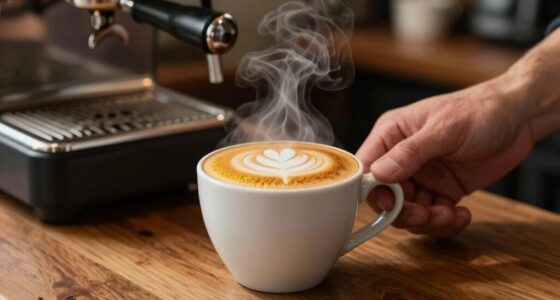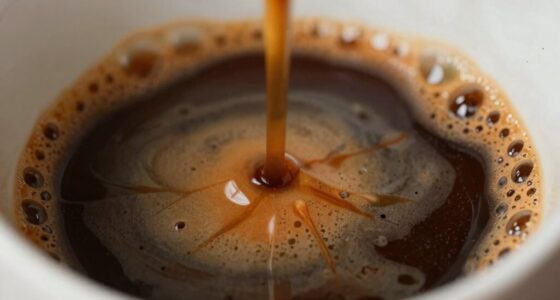
Flow rate reveals how quickly water passes through your coffee grounds, offering real-time feedback on extraction quality. Unlike shot time, it shows whether your shot is over- or under-extracted, helping you make precise adjustments. A steady flow rate guarantees even extraction, impacting flavor and body. Relying solely on shot time can be misleading, so understanding flow rate helps you pull better espresso consistently. Keep exploring to discover how mastering flow rate can improve your brewing skills.

Get kitchen gear delivered free with Prime
- Fast, free delivery on millions of items
- Prime Video, Amazon Music and more included
- Member-only deals all year
Key Takeaways
- Flow rate reveals the extraction quality and flavor balance beyond just how long the shot takes.
- Shot time alone can be misleading, as similar times may have vastly different flow behaviors.
- Monitoring flow rate helps identify issues like over- or under-extraction for better flavor control.
- Adjusting grind size and temperature based on flow rate optimizes shot consistency and quality.
- Flow rate provides real-time feedback for precise brewing adjustments, unlike shot time which is less specific.
Understanding flow rate and shot time is essential for crafting the perfect espresso. These two factors are interconnected, but focusing solely on shot time can lead you astray. Instead, paying attention to flow rate reveals much more about your espresso’s quality and consistency. When you pull a shot, the flow rate tells you how quickly the water passes through the coffee grounds, and that’s directly influenced by your grind size and water temperature. If your grind is too fine, the flow rate slows, making the shot take longer. Conversely, a coarser grind speeds things up. Water temperature also impacts flow rate—hotter water tends to flow more freely, increasing the rate, while cooler water can slow things down.
Flow rate indicates how quickly water passes through coffee, shaped by grind size and water temperature.
If you only look at shot time, you might think a longer shot is better, but that’s not always true. The real insight comes from understanding how the flow rate behaves during extraction. A slow flow rate might suggest your grind is too fine or your water temperature too low, leading to over-extraction and bitter flavors. On the other hand, a fast flow rate might mean your grind is too coarse or your water is too hot, resulting in under-extraction and weak, sour notes. By observing flow rate, you gain the ability to adjust your variables precisely. For example, if your shot is taking too long, you can try coarsening the grind or slightly lowering the water temperature. If it’s flowing too quickly, you can grind finer or increase the water temperature.
Monitoring flow rate can also help you understand the pressure dynamics within your machine, ensuring optimal extraction conditions. Additionally, paying attention to brew ratio and how it correlates with flow rate can further improve your consistency and flavor balance. Flow rate also affects the balance and texture of your espresso. A steady, controlled flow ensures even extraction, giving you that rich body and complex flavor profile you’re aiming for. When you monitor flow rate, you’re not just chasing a set shot time; you’re tuning your process in real-time to optimize flavor. This approach helps you avoid common pitfalls like over- or under-extraction, which often occur when you rely solely on shot time as your metric. Additionally, understanding flow rate can help you troubleshoot issues with your espresso machine’s pressure or water flow, leading to more consistent results over time. Recognizing how flow rate interacts with other extraction variables allows for a more comprehensive approach to espresso brewing.
Furthermore, mastering flow rate can lead to a better understanding of the machine’s performance and help extend its lifespan by preventing unnecessary strain on components. Ultimately, understanding flow rate offers a more nuanced view of your espresso’s quality. It guides you to make smarter adjustments to grind size and water temperature, ensuring each shot is balanced, flavorful, and consistent. So, next time you pull a shot, pay close attention to the flow rate rather than just the clock. That way, you’re not just making espresso—you’re crafting an experience.
As an affiliate, we earn on qualifying purchases.
Frequently Asked Questions
How Does Grind Size Affect Flow Rate?
Grind size directly impacts flow rate because smaller, more uniform particles create a tightly packed bed, slowing water flow. Conversely, larger or uneven particles increase flow rate by allowing water to pass through more easily. When you adjust grind size, you’re affecting grind uniformity and particle size, which in turn controls the flow rate. A consistent grind guarantees ideal flow, leading to better extraction and flavor in your espresso.
Can Flow Rate Improve Espresso Consistency?
Flow rate acts like a secret code for espresso consistency, helping you uncover perfect flavor extraction every time. By monitoring and adjusting your flow rate, you can fine-tune your barista techniques, ensuring each shot remains steady and balanced. This consistency means your espresso will consistently taste great, showcasing the full potential of your beans. Mastering flow rate transforms your brewing from guesswork into a precise art, elevating your espresso game.
What Equipment Options Influence Flow Rate?
Your brewing methods and equipment calibration greatly influence flow rate. For instance, espresso machines with adjustable flow control or pressure profiling allow you to fine-tune flow rate precisely. Regular calibration ensures consistent water pressure and flow, preventing variability. Additionally, grinder adjustments and filter basket choices also impact flow rate. By focusing on these equipment options, you can optimize your shot quality and achieve more consistent extraction results.
Is Flow Rate More Important Than Temperature Control?
Flow rate is more important than temperature control because it directly impacts flavor extraction and brewing precision. When you adjust the flow rate, you control how quickly water interacts with coffee grounds, affecting taste nuances. While temperature stability matters, a proper flow rate ensures consistent extraction, leading to better flavor and balance. So, focusing on flow rate helps you fine-tune your espresso for ideal results, making it essential for quality brewing.
How Do I Measure Flow Rate Accurately at Home?
To measure flow rate accurately at home, start by ensuring your grinder is properly calibrated for consistent grind size, which affects extraction. Use a timer and a measuring jug or scale to track how much coffee flows over a set period, like 30 seconds. Fresh coffee beans also influence flow rate, so always use fresh beans for consistent results. Consistently measuring and adjusting helps you dial in the perfect shot.
coffee shot timer with flow rate
As an affiliate, we earn on qualifying purchases.
As an affiliate, we earn on qualifying purchases.
Conclusion
Remember, focusing solely on shot time is like counting chickens before they hatch. The real story lies in flow rate—it’s the secret to a perfect espresso. By paying attention to how quickly your coffee extracts, you’ll gain a clearer picture of your brew’s quality. Don’t put all your eggs in one basket; instead, trust the flow rate to guide you to that rich, balanced shot every time. It’s worth its weight in gold!
As an affiliate, we earn on qualifying purchases.
coffee grind size adjustment tools
As an affiliate, we earn on qualifying purchases.
As an affiliate, we earn on qualifying purchases.
Halloween Picks
halloween
As an affiliate, we earn on qualifying purchases.