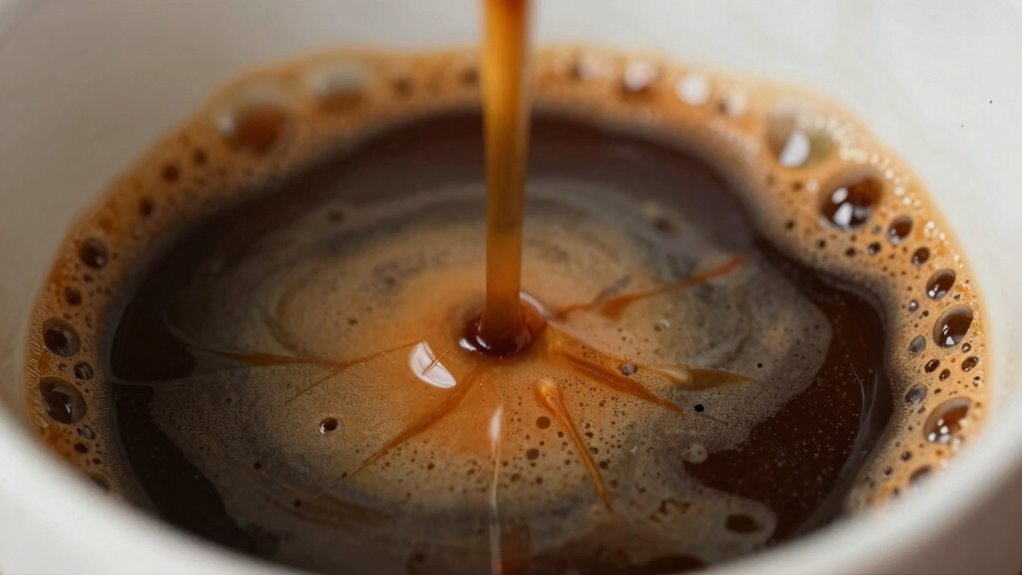

Even if your espresso tastes decent, the hidden culprit is often extraction errors caused by stale beans or temperature inconsistency. These issues can mask flaws, making your shot seem good enough while preventing it from reaching barista-quality richness. Stale beans lead to dull, flat flavors, and temperature swings cause uneven extraction, affecting balance. If you want to reveal truly vibrant, complex espresso, understanding and fixing these underlying factors is essential. Keep exploring for insights that can elevate your brew.

Get kitchen gear delivered free with Prime
- Fast, free delivery on millions of items
- Prime Video, Amazon Music and more included
- Member-only deals all year
Key Takeaways
- Stale beans cause under-extraction of delicate flavors and over-extraction of bitterness, hiding behind a seemingly good shot.
- Temperature fluctuations during brewing lead to uneven extraction, making espresso appear acceptable but lacking true balance.
- Extraction errors from poor bean freshness and temperature stability often mask subtle flavor flaws in “good enough” espresso.
- Proper freshness and temperature control are fundamental; neglecting them results in a compromised, less vibrant espresso.
- Technique adjustments alone cannot fix fundamental flaws caused by stale beans or inconsistent brewing temperature.
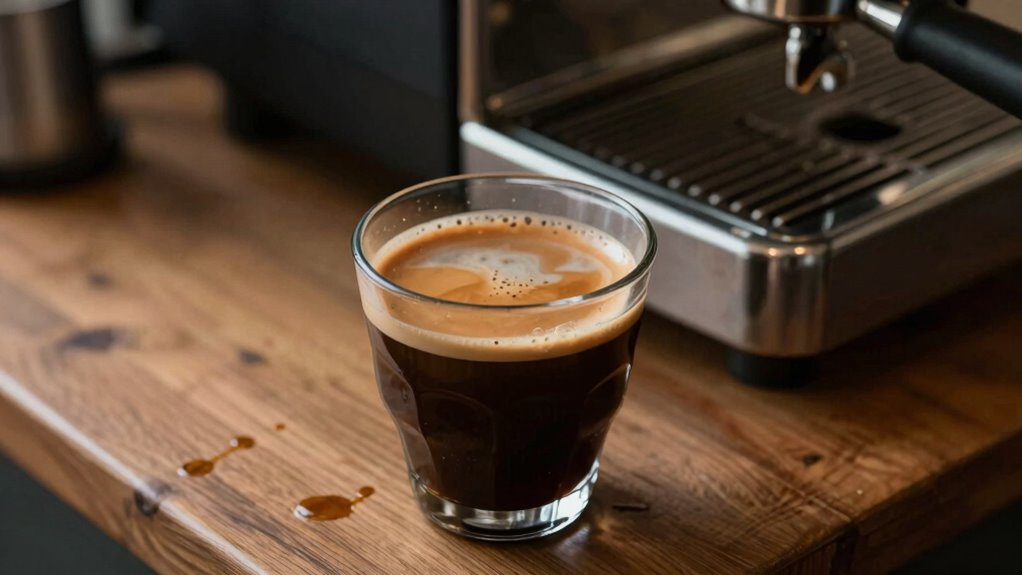
Many coffee enthusiasts believe that a good enough espresso is simply a matter of hitting the right timing or using decent beans, but often, the real culprit lies beneath the surface: extraction errors. These issues can mask what seems like a perfect shot, making it taste better than it truly is. One of the most overlooked factors is coffee bean freshness. If your beans aren’t fresh, they won’t release the full range of flavors during extraction, resulting in a dull, flat taste. Old beans tend to over-extract certain bitter compounds while under-extracting the more delicate and fruity notes. This imbalance happens because stale beans have less volatile oils and aromas, which are critical for a vibrant espresso. So, no matter how carefully you grind or tamp, if your beans aren’t fresh, your shot will suffer. Additionally, coffee bean freshness is crucial because it directly impacts the aroma and overall flavor profile of your espresso, making it a fundamental aspect of quality brewing. Proper storage techniques can help preserve freshness, ensuring a better extraction process in every cup. Another key element that often causes extraction errors is brewing temperature consistency. When your espresso machine doesn’t maintain a stable temperature throughout the extraction process, it can lead to uneven extraction. If the temperature is too low, the water won’t extract enough flavor compounds, resulting in a weak or sour shot. Conversely, if the temperature spikes or fluctuates, you might over-extract certain bitter elements, creating an unbalanced taste. Consistent brewing temperature ensures that the coffee grounds are evenly extracted, bringing out the full spectrum of flavors without bitterness or sourness. It acts as the foundation for a well-rounded espresso, but many baristas overlook how critical temperature stability really is. Paying attention to temperature stability can make a significant difference in achieving a balanced shot. Moreover, understanding how extraction technique influences flavor can help you fine-tune your process and avoid common errors. When you focus on these issues—keeping your coffee beans fresh and maintaining brewing temperature consistency—you’re addressing two of the main extraction errors that hide behind a seemingly good enough espresso. It’s tempting to think the secret lies solely in timing or bean quality, but the extraction process itself is where most of the magic happens. If either coffee bean freshness or temperature consistency is off, even the best beans and perfect timing can’t compensate. Many don’t realize that small adjustments in grinding, tamping, or machine calibration won’t correct fundamental flaws caused by stale beans or temperature swings. Instead, they mask problems that need fixing at the source. Paying close attention to these details, including proper extraction techniques, will help you achieve a more vibrant, balanced, and true-to-potential espresso.
As an affiliate, we earn on qualifying purchases.
Frequently Asked Questions
How Does Grind Size Affect Extraction Accuracy?
Grind size directly impacts extraction accuracy by affecting grind uniformity and dose consistency. When your grind is too coarse, water flows too quickly, leading to under-extraction and weak flavors. Conversely, a too-fine grind slows water flow, risking over-extraction and bitterness. Maintaining consistent grind size guarantees uniform extraction. Focus on dose consistency and adjust grind size gradually to find the perfect balance for ideal espresso flavor.
What Equipment Issues Can Cause Extraction Errors?
You might be unknowingly battling a brewing monster, caused by equipment issues. If your machine isn’t properly calibrated, it can throw off water temperature and pressure, ruining extraction. Faulty grinders or clogged filters also contribute. Make certain your coffee bean freshness stays high, and regularly calibrate your machine. Neglecting these can lead to under-extraction or over-extraction, making your espresso taste flat or bitter despite your efforts.
How Does Tamping Pressure Influence Extraction?
Tamping pressure directly impacts extraction by influencing tamping consistency and overall shot quality. Applying even pressure guarantees uniform tamping, which promotes balanced extraction. When pressure calibration is off, you risk over- or under-extracting your espresso. Consistently calibrated pressure helps maintain ideal tamping force, leading to better flavor and crema. So, focus on maintaining consistent tamping pressure and regular calibration to enhance your espresso’s extraction and overall quality.
Can Water Quality Impact Espresso Extraction?
Yes, water quality impacts espresso extraction considerably. Water mineralization affects flavor and extraction efficiency, so using water with balanced mineral content guarantees clarity and richness. Contamination risks, like bacteria or impurities, can hinder extraction and spoil the taste. Always use clean, filtered water to avoid these issues, helping you achieve a more consistent, high-quality espresso. Proper water quality makes a noticeable difference in your final shot.
What Are Signs of Under-Extraction Versus Over-Extraction?
When your espresso’s flavor imbalance and crema consistency seem off, you’re likely facing under- or over-extraction. Under-extraction results in sour, thin coffee with weak crema, like a movie with missing scenes. Over-extraction, on the other hand, produces bitter, harsh flavors and overly dark crema. To fix it, adjust grind size and extraction time. Recognizing these signs helps you dial in your shot for perfect balance and rich crema.
temperature stable espresso machine
As an affiliate, we earn on qualifying purchases.
As an affiliate, we earn on qualifying purchases.
Conclusion
So, next time you enjoy that seemingly perfect shot of espresso, remember there might be an extraction error lurking beneath, like a hidden shadow. Just like a diamond hides its flaws, good enough espresso can mask deeper issues. Pay attention to those subtle signs, and you’ll craft a brew that truly shines. After all, understanding these hidden errors is like polishing a gem—you bring out its true brilliance. Cheers to uncovering the secrets behind every perfect sip!
As an affiliate, we earn on qualifying purchases.
As an affiliate, we earn on qualifying purchases.
Fall Picks
fall essentials
As an affiliate, we earn on qualifying purchases.