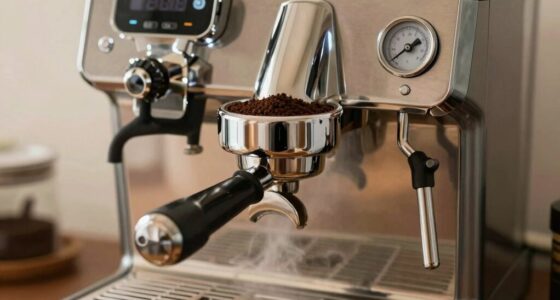
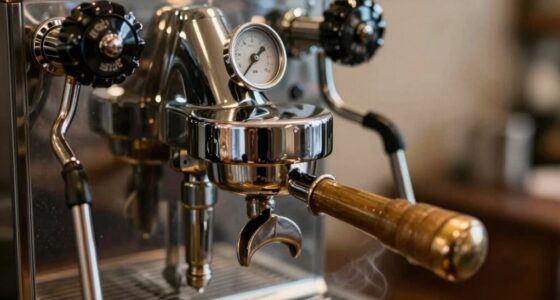
Adjusting your espresso machine’s pressure during extraction lets you control flavor, body, and aroma without needing an engineering background. You can start with gentle pressure to highlight fruity notes and gradually increase for richer, thicker shots. Many machines let you program or manually change pressure settings, making experimentation easy. If you’re curious about customizing your brew and enhancing taste, exploring pressure profiles can be surprisingly simple—keep going to discover more tricks.

Get kitchen gear delivered free — and shop member deals
- Fast, free delivery on millions of items
- Access to Prime Big Deal Days deals on October 6–7
- Prime Video, Amazon Music and more included
Key Takeaways
- Adjusting brew pressure can change espresso flavor, making it sweeter, richer, or more balanced without needing technical knowledge.
- Many machines allow programmable pressure settings, so you can experiment without engineering skills.
- Starting with lower pressure for pre-wetting and gradually increasing helps control extraction and flavor.
- Different pressure profiles suit various coffee beans, revealing unique aromas and taste layers.
- Simple trial and error with pressure adjustments can improve your espresso without complex technical understanding.

Have you ever wondered how adjusting brew pressure profiles can influence the flavor of your espresso? It’s a powerful tool that can transform a good shot into an exceptional one. By understanding and manipulating pressure during extraction, you can control how water interacts with coffee grounds, affecting everything from sweetness to body. This is where pressure profiling techniques come into play—methods that allow you to modify pressure at different stages of the extraction process, giving you more control over the final flavor.
Pressure profiling isn’t just for high-end machines or professional baristas; it’s accessible to enthusiasts who want to deepen their espresso experience. Instead of sticking to a constant pressure throughout the shot, you can start with a lower pressure to gently pre-wet the coffee, release nuanced flavors. Then, gradually increase the pressure to push through the coffee bed more forcefully, extracting richer oils and compounds. Alternatively, some prefer a high initial pressure to quickly saturate the grounds, followed by a reduction to preserve delicate aromatics. These variations in pressure profiles influence how evenly the coffee extracts, which ultimately impacts the taste and mouthfeel of your espresso.
Understanding espresso extraction is key to mastering pressure profiling techniques. Every coffee bean has a unique composition, and how you apply pressure can emphasize or suppress certain flavors. For example, a softer pressure profile might highlight bright, fruity notes, while a more aggressive one can emphasize body and richness. Experimenting with different pressure curves helps you find the sweet spot that complements your coffee’s characteristics. It’s about more than just brewing; it’s about tailoring each shot to your palate and the beans you’re using.
Using pressure profiling techniques doesn’t require complex equipment—many espresso machines now feature programmable pressure settings, making it easier to practice and refine your approach. Consistent adjustments allow you to compare how different profiles affect flavor, helping you develop a more intuitive understanding of extraction and its impact on taste. Over time, you’ll notice how subtle changes in pressure can bring out hidden layers of aroma and taste, elevating your espresso from routine to extraordinary.
In essence, mastering brew pressure profiles is about harnessing control over the extraction process. By experimenting with pressure profiling techniques, you gain the ability to shape your espresso’s flavor profile precisely. It’s a rewarding journey that invites curiosity and careful observation, transforming a simple brew into a complex, well-balanced cup that reflects your personal taste.
programmable espresso machine with pressure profiling
As an affiliate, we earn on qualifying purchases.
As an affiliate, we earn on qualifying purchases.
Frequently Asked Questions
How Do Different Coffee Beans React to Pressure Changes?
Different coffee beans react uniquely to pressure changes based on their roast levels and grind size. Lighter roasts often need higher pressure to extract bright flavors, while darker roasts respond better to lower pressure for richer, bolder tastes. Adjust your grind size accordingly—finer for lighter roasts and coarser for darker ones—to optimize extraction. By tweaking pressure, you release the best flavors from each bean type.
Can I Customize My Espresso Machine’s Pressure Profile?
You can absolutely customize your espresso machine’s pressure profile. Did you know that baristas who use pressure profiling report up to 20% better extraction? With machine customization, you can tweak pressure settings during different brewing stages to enhance flavor. Many modern espresso machines allow for pressure profiling, giving you control over each shot’s profile. Experimenting with these settings helps you craft the perfect espresso tailored to your taste.
What Are Common Signs of Incorrect Pressure Settings?
If your espresso extraction tastes off, you might notice signs of incorrect pressure settings. Check your pressure gauge calibration to verify accurate readings, and look for inconsistent pressure buildup. Over-pressurized machines can trigger pressure relief valves, causing interruptions. Conversely, low pressure results in weak flavors. Regularly monitor these components to maintain ideal pressure, guaranteeing consistent shots and preventing damage to your machine.
How Does Pressure Affect Espresso Flavor Extraction?
Pressure directly impacts espresso flavor extraction by influencing pressure stability during brewing. When you maintain consistent pressure, you guarantee even extraction, which brings out the full flavor profile. Variations in pressure can lead to over- or under-extraction, causing bitter or sour tastes. To achieve flavor consistency, monitor and control your pressure carefully, so your espresso develops balanced, rich flavors every time.
Are There Budget-Friendly Tools to Monitor Brew Pressure?
Yes, you can find budget tools like pressure gauges that are affordable and easy to use. These gauges attach directly to your espresso machine or portafilter, giving you real-time pressure readings. While they may not have all the advanced features of high-end models, they’re perfect for beginners or those on a budget. Using pressure gauges helps you monitor and adjust your brew pressure for better flavor extraction without breaking the bank.
manual espresso machine pressure control
As an affiliate, we earn on qualifying purchases.
As an affiliate, we earn on qualifying purchases.
Conclusion
Understanding brew pressure profiles doesn’t require an engineering degree—you just need to know how to fine-tune your machine. Did you know that adjusting your pressure can improve extraction and flavor by up to 20%? By experimenting with different profiles, you’ll reveal richer, more balanced espresso shots tailored to your taste. So go ahead, get hands-on, and enjoy the improved coffee experience that’s just a tweak away!
As an affiliate, we earn on qualifying purchases.
best espresso machine for pressure experimentation
As an affiliate, we earn on qualifying purchases.
As an affiliate, we earn on qualifying purchases.
Fall Picks
fall essentials
As an affiliate, we earn on qualifying purchases.