Many beginners believe that thick, abundant crema equals high-quality espresso, but that’s a misconception. Crema forms from oils and gases released during extraction and doesn’t alone determine flavor or freshness. Factors like bean type, roast level, grind, and technique influence crema’s appearance and stability. If you understand what genuine crema looks like and what clues it reveals about your brew, you’ll appreciate espresso even more—continue discovering the true story behind crema.

Get kitchen gear delivered free with Prime
- Fast, free delivery on millions of items
- Prime Video, Amazon Music and more included
- Member-only deals all year
Key Takeaways
- Crema’s appearance alone doesn’t indicate espresso quality; flavor, aroma, and freshness are more important.
- Thick, abundant crema can be artificially created or over-extracted, not necessarily a sign of good espresso.
- Proper grind size, tamping, and water temperature are crucial for stable, rich crema, but don’t rely solely on its look.
- Fresh beans and specific roast levels influence crema color and texture, but they don’t guarantee overall espresso excellence.
- Genuine crema is smooth and velvety; fake or frothy crema is airy and can mislead beginners about quality.
As an affiliate, we earn on qualifying purchases.
What Is Crema and How Does It Form?
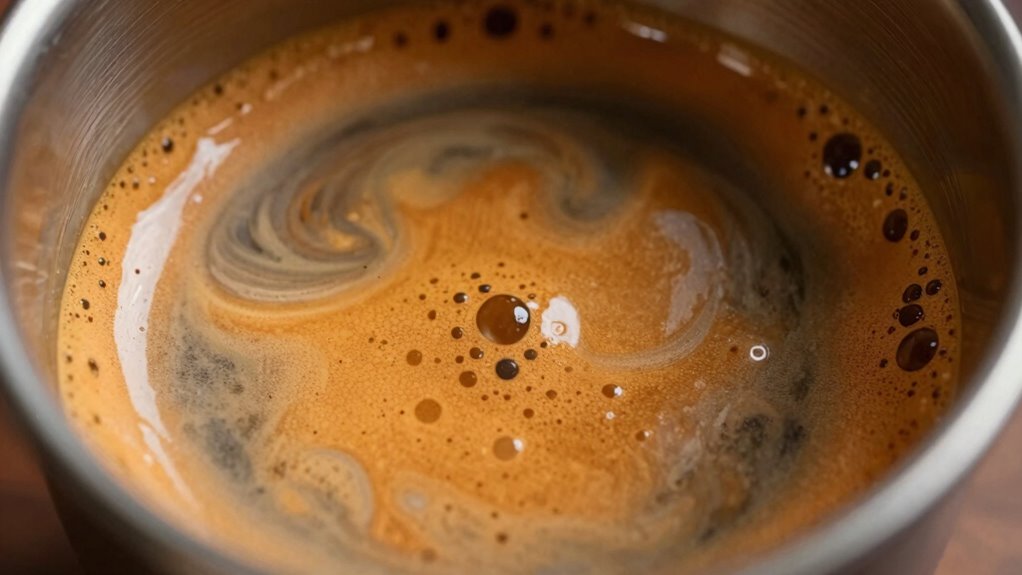
Have you ever wondered what creates that rich, golden layer on top of a freshly brewed espresso? It’s called crema, and it forms when hot water under pressure interacts with finely ground coffee. During brewing, the coffee’s natural oils and CO₂ trapped in the beans are released, creating tiny bubbles. When these bubbles rise to the surface, they combine with the coffee’s oils, forming a creamy, frothy layer. Proper milk frothing enhances the overall experience but doesn’t directly influence crema formation. Keep in mind, espresso bitterness plays a role—well-brewed espresso balances bitterness with a smooth, aromatic crema. The result is a luscious, aromatic layer that signals a well-made shot, revealing the skill behind the brew. Additionally, understanding coffee extraction can help improve the quality of your espresso and its crema.
As an affiliate, we earn on qualifying purchases.
Common Misconceptions: Mistaking Crema for Quality
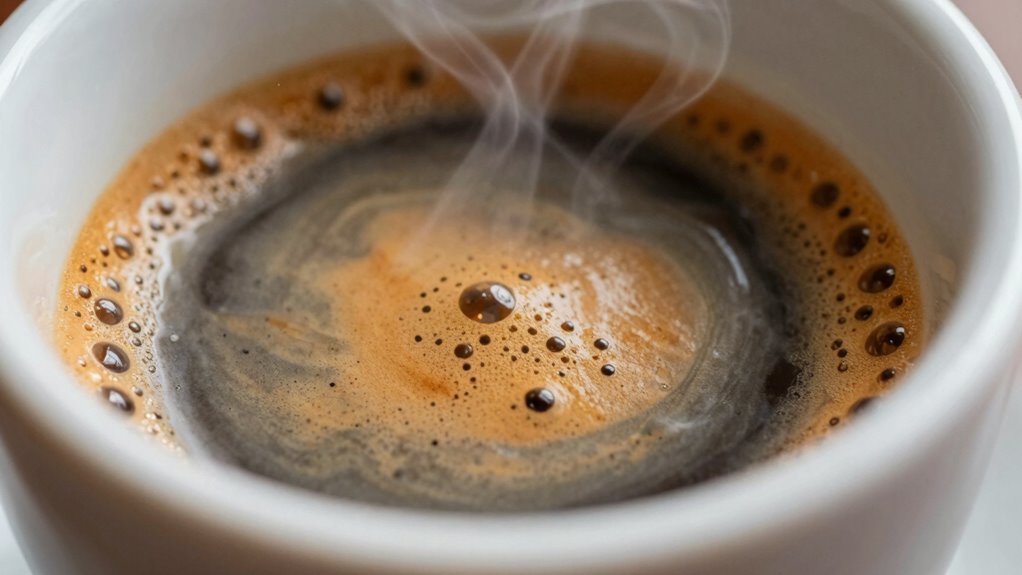
Many people assume that thick, abundant crema means their espresso is high quality, but that’s not always true. Crema can be rich due to factors that don’t reflect good taste or craftsmanship. Don’t rely solely on thickness to judge your coffee’s excellence. Understanding coffee quality involves more than just appearance; it requires knowledge of proper brewing techniques and bean selection.
Crema Isn’t Always Quality
It’s a common misconception that a thick, golden crema automatically signals a high-quality espresso. While crema contributes to beautiful espresso art, it doesn’t guarantee flavor or freshness. Crema can be artificially created or result from over-aggressive brewing, leading to poor crema stability. Sometimes, a thin or uneven crema still delivers a rich, balanced taste. Don’t judge quality solely on crema appearance; focus on aroma, body, and flavor. A well-made shot balances crema with other factors, not just thickness or color. Remember, crema is just one aspect of good espresso. Relying only on crema’s look can mislead you into bad choices. True quality comes from a combination of factors, not just the surface appearance. Additionally, understanding the role of freshness and grind size can significantly impact the quality of your espresso.
Overemphasis on Thickness
How often do you judge espresso quality solely by the thickness of its crema? It’s a common mistake. Thick crema doesn’t always mean better flavor or craftsmanship. Instead, focus on these aspects:
- Taste balance—rich, not bitter or sour.
- Consistency—smooth texture, not just foam.
- Milk frothing—creating silky milk for espresso art enhances presentation but doesn’t guarantee quality.
- Aroma—an inviting scent signals freshness and proper extraction.
- European cloud innovation is also essential for supporting sustainable and secure brewing technology that can improve overall coffee quality.
As an affiliate, we earn on qualifying purchases.
What Affects Crema’s Color and Texture?

The color and texture of crema are primarily influenced by factors like the coffee beans you use, the grind size, and the brewing process. The freshness and roast level of your beans impact crema’s richness and hue, while the grind size affects extraction and foam formation. Water quality matters too—clean, mineral-balanced water produces better crema. Milk frothing can alter texture slightly, especially if you add milk directly after brewing, affecting crema appearance. Here’s a breakdown of key factors:
| Factor | Effect on Crema |
|---|---|
| Coffee Beans | Freshness and roast influence color and richness |
| Grind Size | Proper grind promotes stable crema |
| Brewing Pressure | Higher pressure yields thicker crema |
| Water Quality | Mineral content affects extraction and foam |
| Milk Frothing | Changes texture, may dilute or alter crema |
Additionally, the temperature of the espresso shot can significantly influence crema stability and appearance.
As an affiliate, we earn on qualifying purchases.
Does More Crema Mean Better Espresso?

Having more crema doesn’t automatically mean your espresso is better; thickness and quality matter more. Sometimes, trying to get extra crema can lead to overextraction, which ruins the flavor. It’s important to focus on balance rather than just quantity.
Crema Thickness vs. Quality
Many people assume that a thicker layer of crema signals a better espresso, but that’s not always the case. Crema quality depends on more than just thickness. Here’s what to contemplate:
- Color and consistency: Rich, caramel hues and a smooth texture indicate good quality, not just volume.
- Aroma: Fresh, complex scents matter more than how tall the crema sits.
- Milk frothing: Properly frothed milk can enhance crema appearance without compromising quality.
- Espresso temperature: Maintaining the right temperature preserves crema’s integrity and flavor, regardless of thickness.
- Preparation process: The overall coffee extraction method influences crema quality more than thickness alone.
Focusing on these factors, rather than just crema thickness, ensures a better espresso experience. Remember, a balanced shot with proper milk frothing and ideal temperature produces crema that’s flavorful and visually appealing, no matter how thick it appears.
Overextracting for Crema
While it might seem intuitive that more crema equals a better espresso, overextracting can actually harm both flavor and quality. When you push for excessive crema, you might be increasing brew temperature or forcing water through the coffee too quickly, which leads to overextraction. This process extracts bitter compounds and dulls the espresso’s brightness. Water mineralization also plays a role; hard water can cause uneven extraction, making it tempting to extend extraction times in hopes of more crema. However, overdoing it results in a harsh, astringent taste. Instead, focus on maintaining a suitable brew temperature and using properly mineralized water. This balance ensures you develop a rich crema without sacrificing the espresso’s delicate flavors or risking overextraction.
How Bean Type and Roast Level Influence Crema
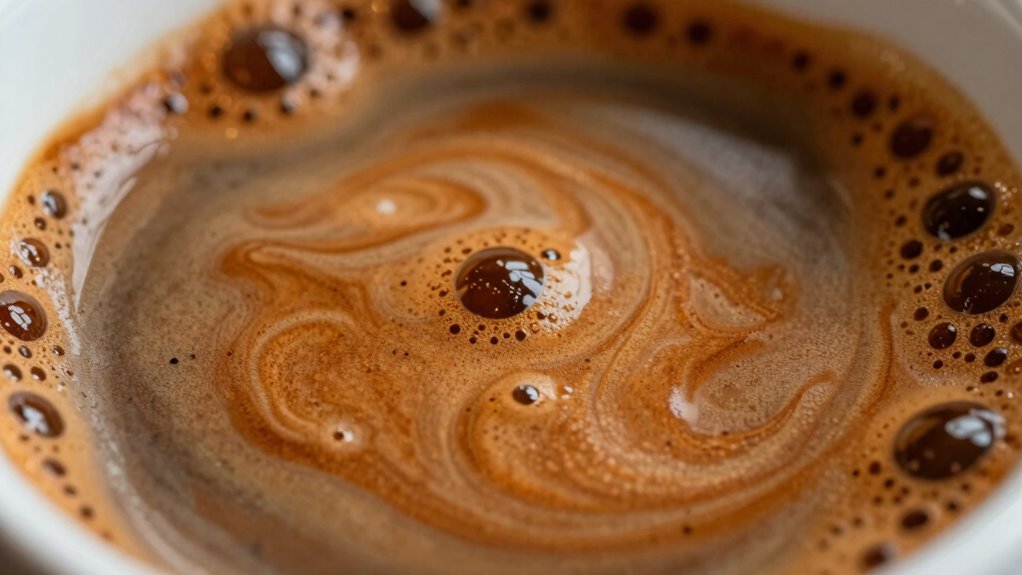
The type of coffee bean you choose and its roast level directly impact the quality and thickness of crema in your espresso. Your bean origin influences the oil and protein content, which help create a rich crema. The roast profile also plays a vital role, affecting how oils are released during extraction. Consider these factors:
- Bean origin: Beans from different regions have unique oil and acidity levels that influence crema formation.
- Roast profile: Lighter roasts preserve more oils and acids, often producing a more vibrant crema.
- Bean type: Arabica beans tend to produce a smoother, more delicate crema, while Robusta offers thicker, more persistent crema.
- Freshness: Fresh beans with a proper roast level guarantee ideal crema development.
Additionally, cookie management plays a role in optimizing your online experience when researching or purchasing beans online.
Choosing the right bean origin and roast profile helps you achieve a desirable crema texture and flavor.
How Grind Size and Tamping Impact Crema
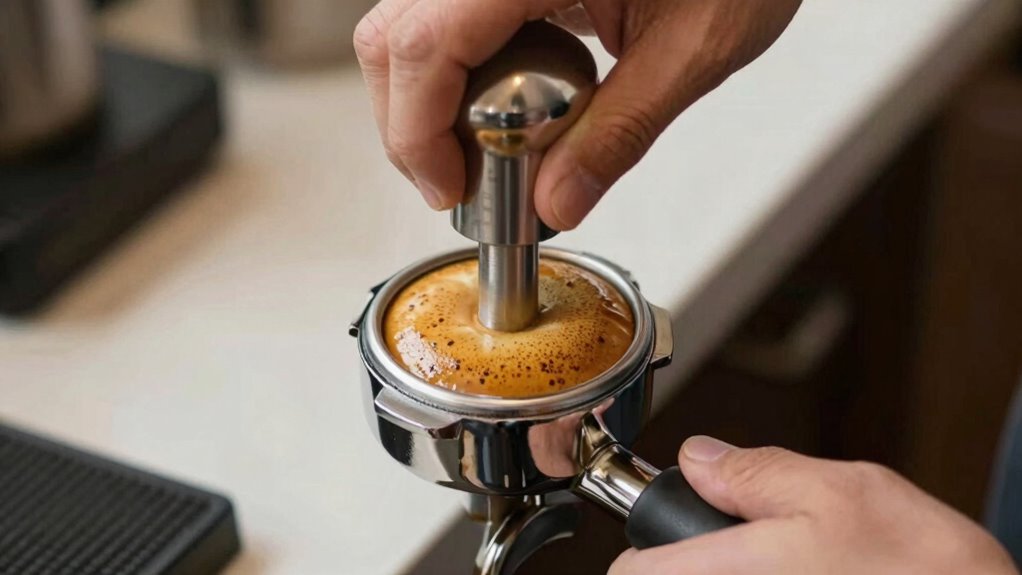
Achieving a rich, velvety crema depends heavily on how you grind and tamp your coffee. Consistent grind size ensures even extraction; if your grind is too fine or uneven, water struggles to pass through, resulting in thin crema. Conversely, a grind that’s too coarse prevents proper pressure buildup, reducing crema quality. Tamping pressure also plays a vital role—press too lightly, and the water flows too quickly, diminishing crema; press too hard, and you risk over-extraction or uneven results. The goal is to apply firm, even tamp pressure to create a uniform coffee bed. This balance allows ideal water flow and extraction, producing a thick, creamy crema. Adjusting your grind consistency and tamp pressure helps control the crema’s richness and stability, elevating your espresso game. Additionally, paying attention to water temperature can further influence crema development and overall extraction quality.
Myths About Crema : Debunked

Many common beliefs about crema aren’t backed by science, leading coffee enthusiasts to chase after myths instead of facts. One popular myth is that thicker crema means better espresso. In reality, a rich espresso aroma and proper brewing temperature are more important. Here are some myths debunked:
- More crema equals higher quality – Crema’s thickness varies with factors like roast level and extraction, not quality.
- Crema indicates freshness alone – Fresh beans help, but proper temperature and grind size matter more.
- Only dark roasts produce crema – Light roasts can also produce good crema if brewed correctly.
- Crema disappears quickly – Proper serving techniques and temperature control help preserve it longer.
- The mechanics of espresso extraction directly influence crema formation, emphasizing the importance of technique over appearance.
Focus on aroma and temperature, not just crema appearance, for a better espresso experience.
How to Recognize Genuine Crema vs. Fake or Over-Foamed

Recognizing genuine crema involves paying attention to its appearance and texture, as fake or over-foamed crema often looks unnatural or inconsistent. True crema is smooth, shiny, and has a rich, caramel color. It should sit atop the espresso with a velvety consistency, making it ideal for delicate espresso art. Over-foamed crema, on the other hand, appears frothy, uneven, and lacks luster. When evaluating crema, observe these characteristics:
| Aspect | Genuine Crema | Fake or Over-Foamed | Indicator |
|---|---|---|---|
| Appearance | Smooth, shiny, uniform | Frothy, bubbly, uneven | Authentic crema has a consistent surface |
| Texture | Velvety, dense | Light, airy, overly foamed | True crema feels creamy and substantial |
| Milk Frothing | Creates a stable, glossy layer | Produces unstable foam | Good milk frothing enhances crema’s quality |
| Espresso Art | Clear, crisp designs possible | Difficult or messy to make | Genuine crema supports clean espresso art |
Additionally, genuine crema’s stability over time can be a telltale sign of quality, as it tends to last longer without dissipating quickly.
What Crema Reveals About Your Espresso’s Freshness and Extraction
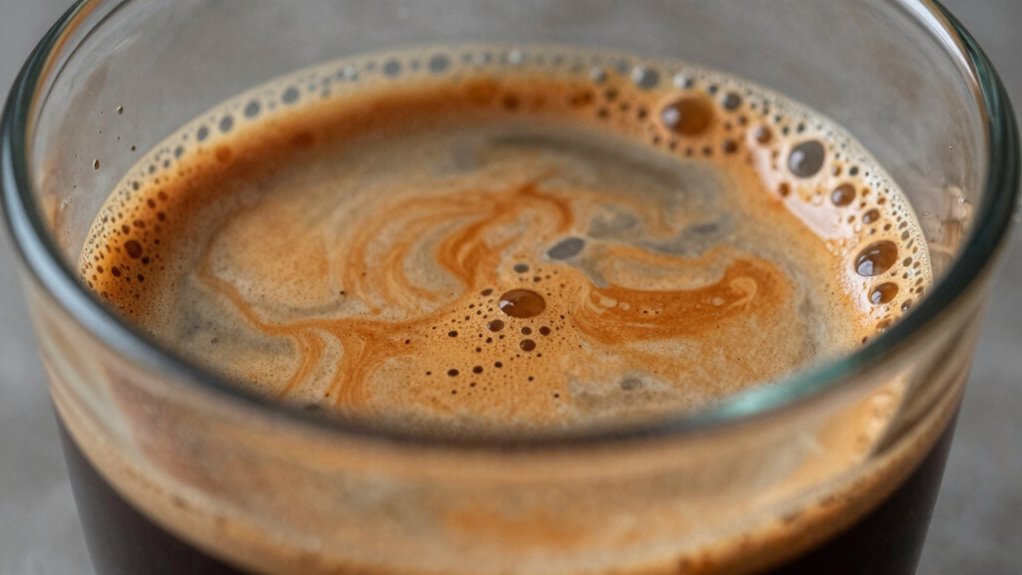
Genuine crema not only adds visual appeal but also provides valuable clues about your espresso’s freshness and extraction quality. When you observe the crema, consider these points:
- A vibrant, golden color suggests your coffee plant was healthy, and the beans are fresh.
- Thin or patchy crema may indicate under-extraction or stale beans.
- Thick, persistent crema often results from ideal brewing temperature and proper grind size.
- If your crema disappears quickly, it might mean your brewing temperature was off or the coffee isn’t fresh.
The coffee plant’s condition influences flavor and crema quality, while precise brewing temperature ensures proper extraction. Paying attention to these clues helps you gauge whether your espresso is at its peak, ensuring a better coffee experience every time.
Easy Tips to Get Better Crema on Your Espresso

Getting better crema on your espresso involves a few simple adjustments that can make a noticeable difference. First, verify your machine is properly calibrated; inconsistent pressure affects crema quality. Second, focus on milk frothing—use fresh, cold milk and froth it to the right texture, which enhances the visual appeal. Consistent tamping pressure and freshly ground coffee also boost crema. To clarify these tips, consider this table:
| Machine Calibration | Milk Frothing | Coffee Preparation |
|---|---|---|
| Ensures even pressure | Creates silky texture | Fresh beans matter |
| Prevents under/over-extraction | Enhances flavor | Proper grind size |
| Consistent temperature | Adds richness | Tamping technique |
Additionally, selecting the right pilot shirts for men aviator can improve your comfort during long brewing sessions.
Frequently Asked Questions
Can Artificial Additives Improve or Harm Crema Quality?
Artificial additives can harm crema quality by altering its natural flavor and texture. While they might offer flavor enhancement or preservative effects, they often compromise the crema’s richness and freshness. You should be cautious, as these additives can mask the true quality of your coffee and lead to a less authentic experience. For the best crema, stick with high-quality beans and avoid unnecessary artificial ingredients.
Is There a Perfect Crema Thickness for Every Espresso Shot?
Think of crema thickness as a dance partner’s lead—too thick, and it’s stiff; too thin, it’s sluggish. For your espresso shot, aim for a balanced crema, not too thick nor too thin, to showcase your roast level’s richness. Proper milk frothing helps enhance this delicate layer, emphasizing the flavor. Remember, perfection varies, but consistency in your technique makes your crema truly shine.
How Does Altitude Affect Crema Development in Beans?
Altitude influence markedly affects crema development because higher elevations speed up bean maturation, leading to beans with higher sugar content and better crema potential. When you brew coffee from beans grown at altitude, you’ll notice richer, more stable crema due to these enhanced natural sugars and oils. Lower altitudes produce beans with different maturation rates, often resulting in less crema. So, altitude directly impacts the quality and consistency of your espresso’s crema.
Does Crema Taste Different From the Espresso Underneath?
Imagine you’re at a coffee shop, and the barista’s crema tastes slightly sweeter than the espresso beneath. Typically, crema has a richer, more bitter flavor, while the espresso underneath is more robust. Milk frothing can mellow these differences, but fresh beans keep both tasting lively. So, yes, crema can taste different from the espresso beneath, with its own nuanced flavor, especially when you consider factors like bean freshness and how the crema’s formed.
Can Non-Coffee Ingredients Alter Crema Appearance?
Yes, non-coffee ingredients can alter crema appearance. When you incorporate milk frothing or add flavorings, it can affect how the crema forms and looks. Beans’ roasting level also plays a role; lighter roasts may produce a different crema than darker ones. So, if you experiment with ingredients or roasting, you might notice changes in crema’s color, thickness, or consistency, influencing your espresso’s overall appearance.
Conclusion
So, next time you marvel at that luscious crema, remember—it’s not a crystal ball for your coffee’s soul. Don’t fall for the hype or chase perfect-looking foam; real quality’s deeper than a velvety top layer. Embrace the quirks, learn the truths, and stop obsessing over Instagram-worthy art. After all, if crema’s your only concern, you might be missing out on the true magic brewing beneath. Cheers to honest espresso adventures!
Halloween Picks
halloween
As an affiliate, we earn on qualifying purchases.