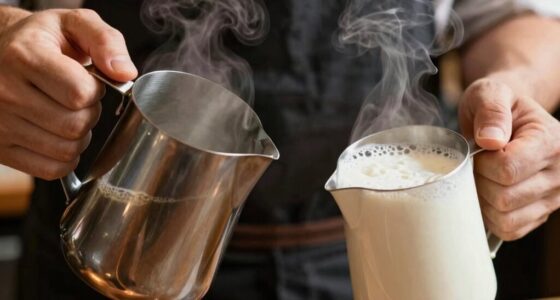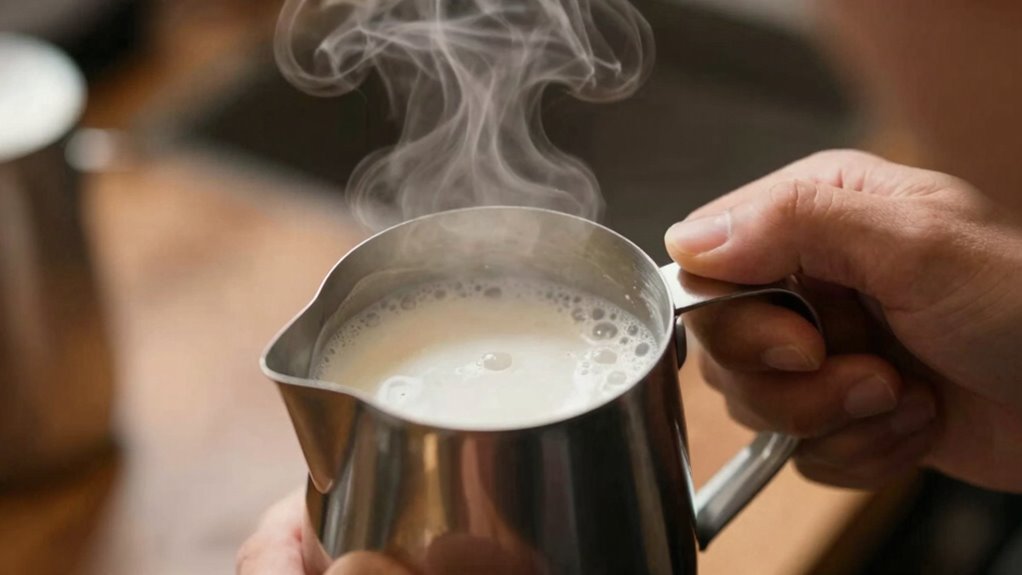

To steam small milk amounts without ruining texture, use a clean, small pitcher filled halfway or less for better control. Insert the steam wand just below the surface and start with gentle bursts to introduce air, then move in small circles to create microfoam. Keep the temperature around 140°F, using a thermometer or test by touch. Turn off steam once the milk is shiny and double in size. If you keep these tips in mind, you’ll master silky microfoam every time.
Listen free for 30 days with Audible
Thousands of audiobooks and originals — cancel anytime.
As an affiliate, we earn on qualifying purchases.
Key Takeaways
- Use a small, clean pitcher filled halfway or less for better control and visibility.
- Insert the steam wand just below the milk surface to introduce controlled air for microfoam.
- Monitor temperature closely with a thermometer or touch to prevent overheating small quantities.
- Move the wand in small circles and listen for gentle hissing to achieve a smooth, velvety texture.
- Remove the pitcher promptly, tap, and swirl to refine microfoam and maintain a silky consistency.
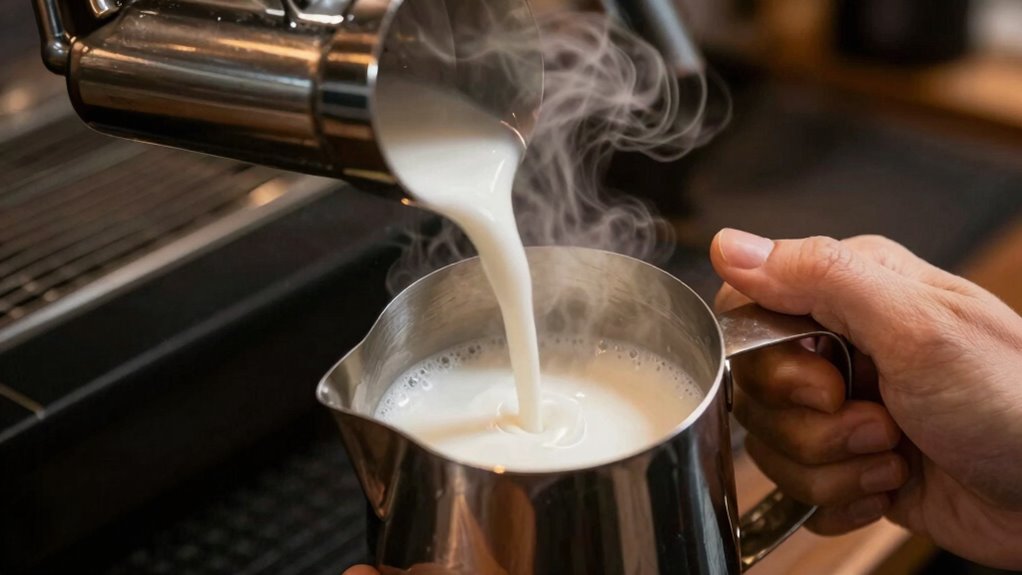
Steaming milk to achieve a smooth, velvety texture can be tricky, but with the right techniques, you can prevent ruining its consistency. When you’re working with smaller amounts of milk, it’s essential to be precise, especially with milk frothing and temperature control. Small quantities heat up quickly, so paying close attention to these factors makes all the difference.
First, make sure your milk frothing pitcher is clean and appropriately sized for the amount you’re steaming. Using a smaller pitcher helps you control the process better because you can see the milk’s movement and temperature more accurately. When you start, fill the pitcher only halfway or less—this prevents overflowing and allows room for the milk to expand as you froth.
Use a clean, small pitcher filled halfway or less for better control and to prevent overflow while frothing.
Temperature control is vital, especially with small amounts. Use a thermometer if possible, aiming for around 140°F (60°C). This is the ideal temperature for milk frothing, ensuring the milk gets hot enough to develop a rich texture without risking scalding, which ruins the flavor and texture. If you don’t have a thermometer, you can test by touch: the pitcher should be warm but not too hot to hold comfortably. Remember, milk heats quickly in small quantities, so monitor it constantly. Additionally, understanding the proper steaming technique can help ensure you don’t accidentally ruin the texture. Developing a good steaming technique involves understanding how to introduce air at the right time and temperature. Practicing the correct milk frothing method can also help you achieve consistent results. Also, keeping an eye on the milk temperature during steaming is crucial because small quantities are more sensitive to overheating.
When you insert the steam wand, position it just below the surface of the milk to introduce air for frothing. If you’re new to this, start with gentle bursts of steam to create microfoam. Keep the wand steady and move it in small circles, gradually increasing the speed as the milk begins to expand. In small quantities, over-frothing can happen fast, so stop once you see the milk has doubled in volume and the surface is shiny and smooth.
As you froth, focus on maintaining a steady steam and consistent temperature. Small amounts of milk can overheat quickly, so listen for a gentle hissing sound rather than a loud screech. Once the milk reaches the desired temperature, turn off the steam immediately to prevent overheating. Remove the pitcher and gently tap it on a surface to break any larger bubbles, then swirl the milk to keep it smooth and integrated. Proper technique for steaming milk is essential to achieving the perfect velvety finish without ruining the texture.
As an affiliate, we earn on qualifying purchases.
Frequently Asked Questions
Can I Steam Milk Using a Microwave Instead of a Steam Wand?
Yes, you can steam milk using a microwave instead of a steam wand. Just guarantee microwave safety by using a microwave-safe container, and heat the milk in short bursts, stirring in between to avoid uneven steaming. For alternative steaming methods, you can also shake the milk vigorously in a jar with a lid, then microwave briefly to create froth. These methods help preserve the milk’s texture without specialized equipment.
What Types of Milk Work Best for Small Quantities?
For small milk quantities, whole milk and 2% work best due to their balanced fat content, making milk frothing techniques easier without ruining the texture. Brands like Organic Valley, Horizon, or local favorites often produce high-quality options that froth well. When steaming, use a gentle, steady motion to create velvety microfoam. Avoid skim milk, as it tends to produce larger bubbles and less creamy texture in small amounts.
How Do I Prevent Milk From Overheating During Steaming?
To prevent overheating while steaming, you should master milk frothing techniques that avoid the temptation to rush. Keep an eye on the temperature, and don’t let the wand sit too long in the milk. Regular steam wand maintenance guarantees consistent heat transfer. Remember, overheating ruins the texture, so stop steaming as soon as you hit the ideal temperature, about 140°F, for perfect microfoam every time.
Is It Necessary to Use a Thermometer When Steaming Small Amounts?
Using a thermometer for small batch steaming is highly recommended because it guarantees thermometer accuracy, helping you avoid overheating or under-heating your milk. Since small amounts heat quickly, relying solely on your feel can be tricky. A thermometer provides precise temperature control, maintaining the ideal 140-150°F range. This way, you prevent ruining the texture and get consistent results every time, making your small batch steaming more reliable and enjoyable.
Can I Reuse Leftover Steamed Milk for Later Drinks?
Reusing reheated milk risks ruining its texture and flavor. When you store leftover steamed milk, guarantee it’s cooled quickly and stored in an airtight container in the fridge. Reheating milk can cause separation and a grainy texture, so it’s best to use fresh milk for each drink. Proper milk storage and careful reheating help preserve taste, but for the best experience, freshly steamed milk is always preferable.
As an affiliate, we earn on qualifying purchases.
Conclusion
Mastering the art of steaming small milk quantities is akin to tending a delicate garden—you must pay close attention and handle each step with care. By maintaining precise temperature, gentle aeration, and patience, you’ll preserve that luxurious texture you crave. Remember, even the tiniest cup, like a carefully curated collection, requires mindful nurturing. With practice, you’ll craft creamy, velvety milk that elevates every sip—turning everyday moments into a refined experience reminiscent of a timeless masterpiece.
As an affiliate, we earn on qualifying purchases.
milk steaming pitcher for small quantities
As an affiliate, we earn on qualifying purchases.
As an affiliate, we earn on qualifying purchases.
Flea & tick season Picks
flea and tick prevention
As an affiliate, we earn on qualifying purchases.