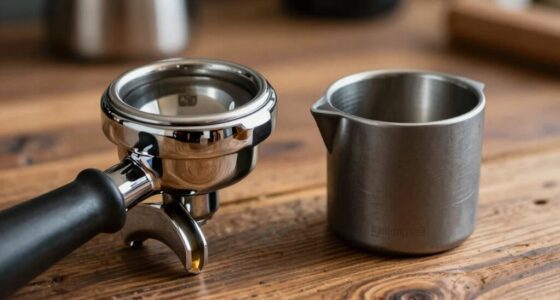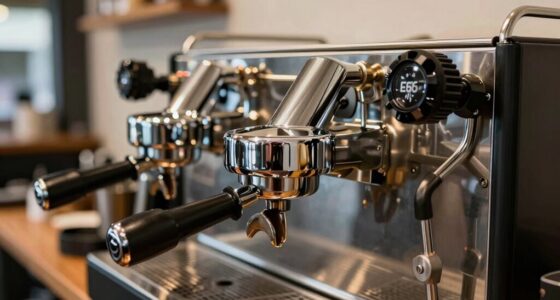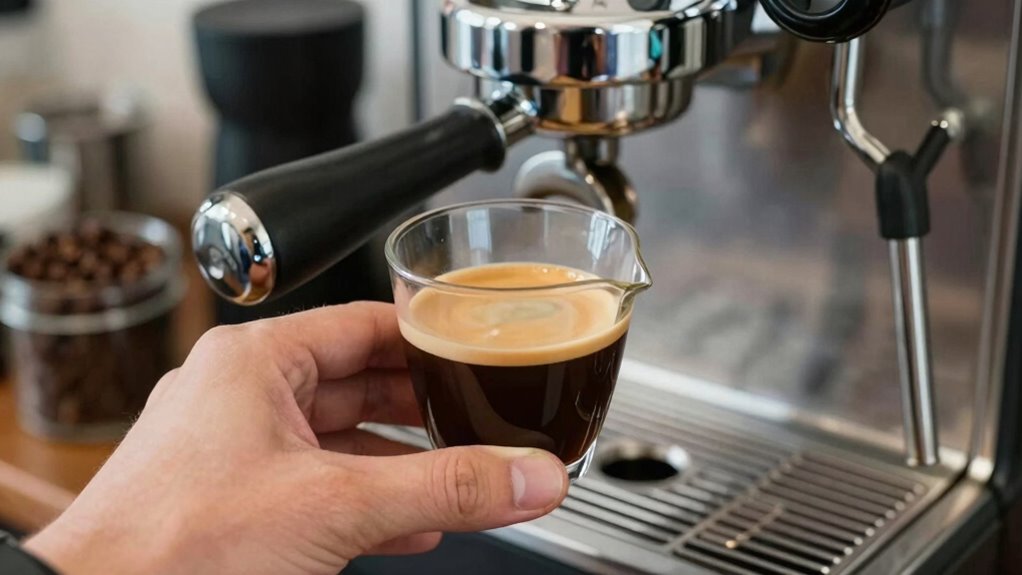
Stop guessing your espresso dose by understanding that it’s the amount of coffee you use each shot, usually around 18-20 grams for a double. Using too little results in weak, sour flavor, while too much can make it bitter. Precise measurement, proper grind size, and consistent tamping are key to great extraction. Keep experimenting and fine-tuning your dose for the perfect balance—you’ll find all the details to improve your shot ahead.
Key Takeaways
- Espresso dose is the amount of coffee used per shot, typically 18-20 grams, affecting flavor strength and extraction.
- Proper dosing ensures balanced extraction, preventing weak, sour, or bitter espresso.
- Use a scale for accuracy; small dose changes significantly impact taste and quality.
- Consistent tamping pressure and grind size are essential for predictable results.
- Adjusting the dose helps fine-tune flavor, aroma, and overall espresso quality.

Maestri House S2 Espresso Coffee Scale with Timer, USB-C Rechargeable 2kg/0.1g Precision Shot Scale, Digital Scale for Espresso Brewing(Black & Silver)
【Ultra Small, Yet Professional】The Espresso Scale is small enough to fit in your palm. It measures 4.13*4.13*0.78 inches…
As an affiliate, we earn on qualifying purchases.
As an affiliate, we earn on qualifying purchases.
What Is Espresso Dose and Why It Matters
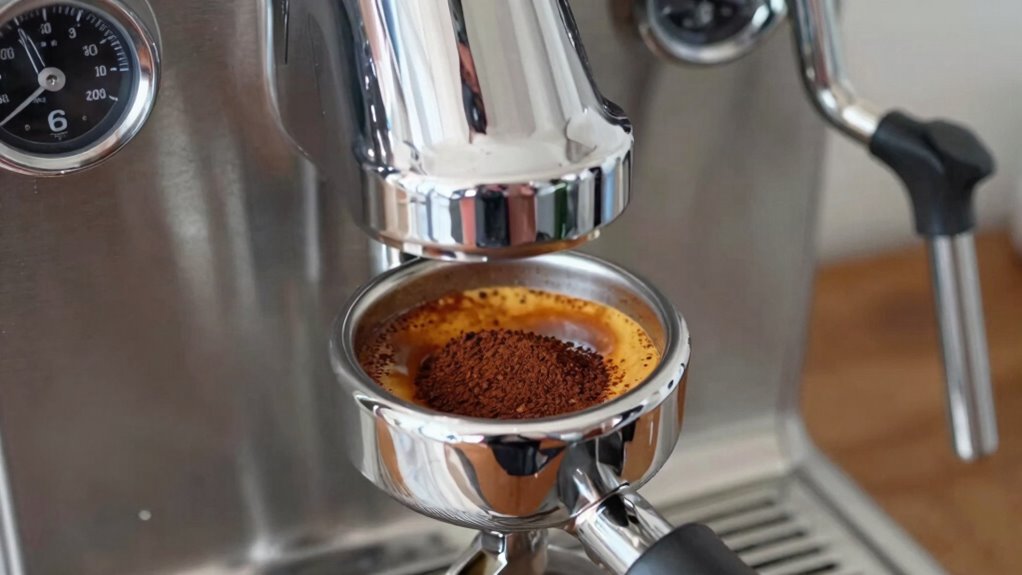
Understanding what an espresso dose is and why it matters is vital for brewing a great shot. Your espresso dose refers to the amount of coffee bean you use to make a single shot. This measurement directly impacts the brewing ratio, which is the proportion of coffee to water. A proper dose ensures balanced extraction, giving you rich flavor, aroma, and body. Too little coffee results in under-extraction, leading to weak, sour flavors. Too much can cause over-extraction, making the espresso bitter or harsh. By controlling your coffee bean amount, you influence the brewing ratio, which is key for consistency and quality. Knowing your dose helps you fine-tune your process, guaranteeing each shot meets your taste preferences and standards. Controlling your dose allows for better consistency in your espresso, ensuring each cup matches your desired profile.

51mm Espresso Tamper-Premium Barista Coffee Tamper Coffee Tamper Classic Series Stainless Steel Espresso Tamper Coffee Press Tool Tamper Espresso Handle, 90x51mm, Solid wood, Stainless steel
THE DIAMETER OF THIS TAMPER IS 51MM – please check that this will fit your filter basket before…
As an affiliate, we earn on qualifying purchases.
As an affiliate, we earn on qualifying purchases.
How Much Coffee Should You Use for a Perfect Espresso?
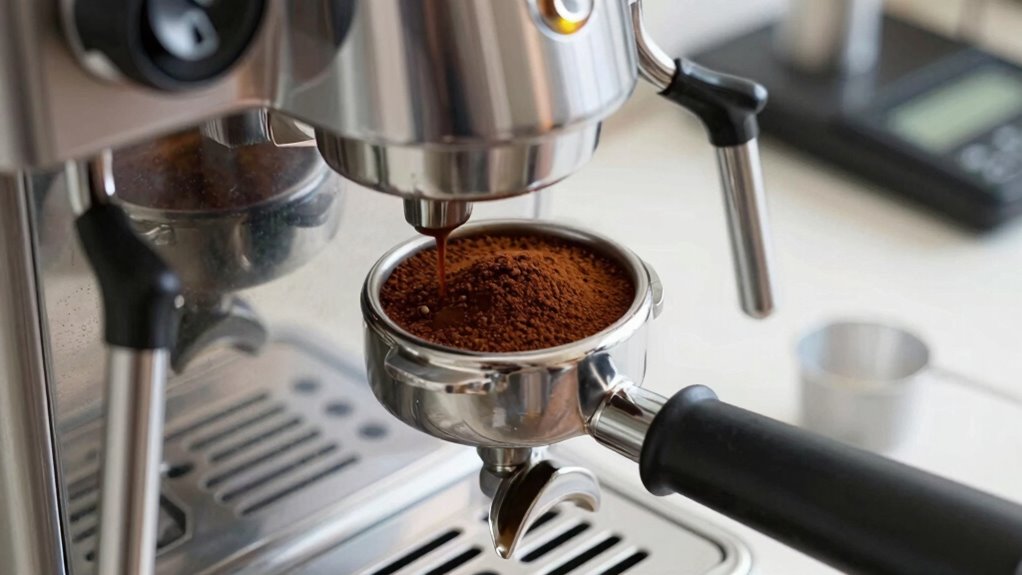
How much coffee you use is essential for brewing a perfect espresso, and the ideal amount depends on your machine and personal taste. Generally, a standard espresso shot requires about 18-20 grams of coffee, but this can vary based on coffee bean varieties. Light roasts and specialty beans might need slightly more or less to extract excellent flavor. Using too little coffee results in a weak shot, while too much can cause over-extraction and bitterness. Additionally, espresso shot timing plays a role; typically, a shot should take around 25-30 seconds. Adjusting your dose affects both flavor and extraction time. Experiment with different amounts to find the right balance that highlights your favorite coffee bean varieties and achieves your desired espresso shot timing. Understanding grind size is also crucial, as it influences extraction and overall taste.
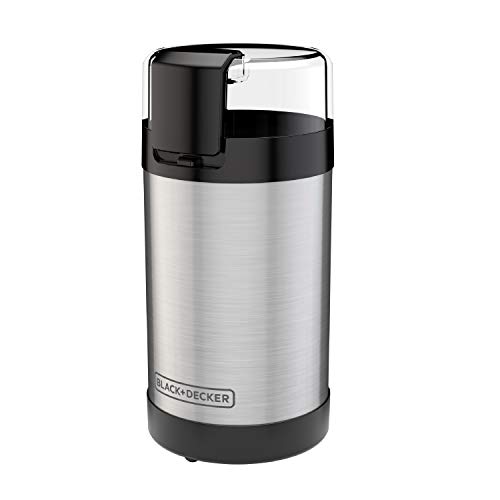
BLACK+DECKER One Touch Coffee Grinder, 2/3 Cup Coffee Bean Capacity, Spice Grinder, One Touch Push-Button Control -150 Watts -Stainless Steel Blades
STAINLESS STEEL BLADES AND BOWL – The sharp blades and durable grinding bowl are built to last, delivering…
As an affiliate, we earn on qualifying purchases.
As an affiliate, we earn on qualifying purchases.
Standard Espresso Dose Sizes and How They Vary

Standard espresso dose sizes typically range from 18 to 20 grams for a double shot, which is the most common serving. However, espresso shot sizes can vary based on brewing style and equipment. Some baristas prefer smaller doses for a more intense flavor, while others use larger doses for a balanced profile. Dosing variations affect the strength, extraction time, and crema quality. Here’s a quick visual guide:
| Dose Size (grams) | Typical Use |
|---|---|
| 14-16 | Single shot, lighter espresso |
| 17-19 | Standard double shot |
| 20-22 | Larger, more intense double shot |
| 23-25 | Commercial or specialty blends |
| 26+ | Rare, for specific taste profiles |
Adjusting espresso shot sizes lets you control flavor and strength, ensuring your perfect cup. Understanding dose size helps optimize extraction and flavor profile.

Qipecedm Espresso Cups Set of 2, 4 OZ Double Spouts Cups, Shot Glasses, Milk Cup with Handle, Clear Glass, Espresso Accessories for Machine, Small
【ESPRESSO MACHINE ACCESSORIES】The capacity of 4 oz allows you to fill 2 servings of espresso at one time….
As an affiliate, we earn on qualifying purchases.
As an affiliate, we earn on qualifying purchases.
How to Measure and Grind Coffee Accurately for Dosing
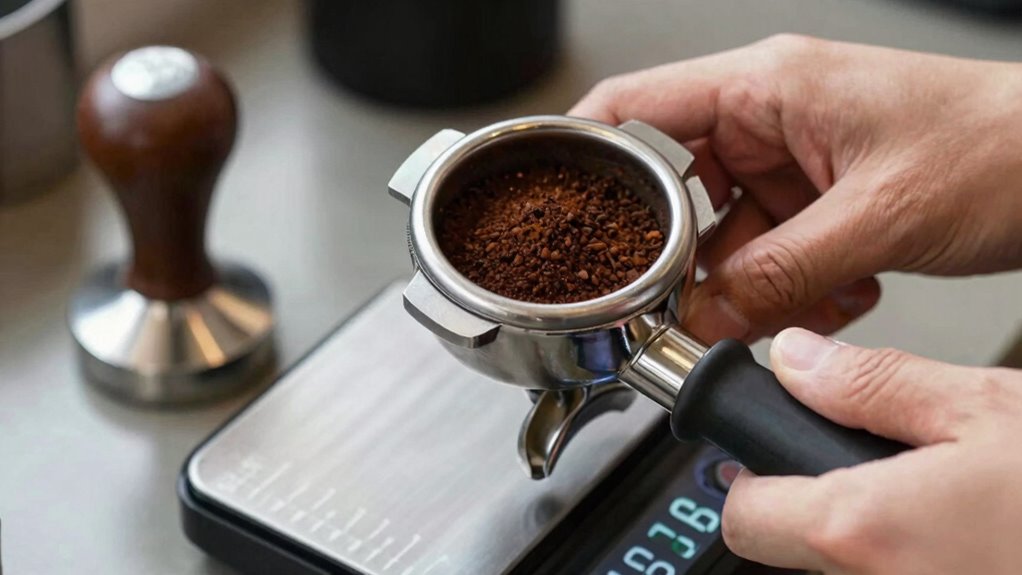
To get the perfect espresso shot, you need to focus on precise grind settings and accurate dose measurement. Small adjustments in grind size can markedly impact extraction, so it’s crucial to find the right balance. Using a scale and a consistent grinder helps guarantee your coffee is measured and ground accurately every time. Additionally, understanding how everyday kitchen tools work can help you troubleshoot issues and improve your espresso-making process.
Precise Grind Settings
Achieving the perfect espresso shot starts with setting your grinder to the right coarseness. Your grind size directly impacts extraction, so find a setting that produces a consistent, fine grind without over-pressing. Too fine, and water will struggle to pass through, leading to over-extraction; too coarse, and the shot will be weak. Once your grind size is dialed in, focus on tamp pressure. Applying even, consistent tamp pressure ensures uniform contact between the coffee and filter, promoting even extraction. Adjust your tamp pressure to avoid channeling or uneven flow. Remember, small changes in grind size or tamp pressure can greatly affect your dose. Regularly test and tweak these settings until you achieve a balanced, flavorful shot with the right flow rate. Understanding grind consistency can help you maintain steady results over time.
Accurate Dose Measurement
Have you ever wondered why your espresso shot lacks consistency? The key lies in accurate dose measurement. To get it right, you need to focus on grind consistency, ensuring your coffee particles are uniform. When grinding, aim for a consistent size, which helps control extraction and shot quality. Once ground, measure your coffee precisely—using a scale is ideal for accuracy. Tamping pressure also plays a crucial role; applying even, firm pressure ensures uniform extraction and prevents channeling. Don’t guess or eyeball your dose; instead, stick to a set weight each time. This combination of accurate measurement, grind consistency, and tamping pressure creates a solid foundation for a perfect espresso shot every time. Additionally, utilizing energy-efficient equipment can enhance your brewing process and ensure sustainability.
Common Dosing Mistakes and How to Avoid Them
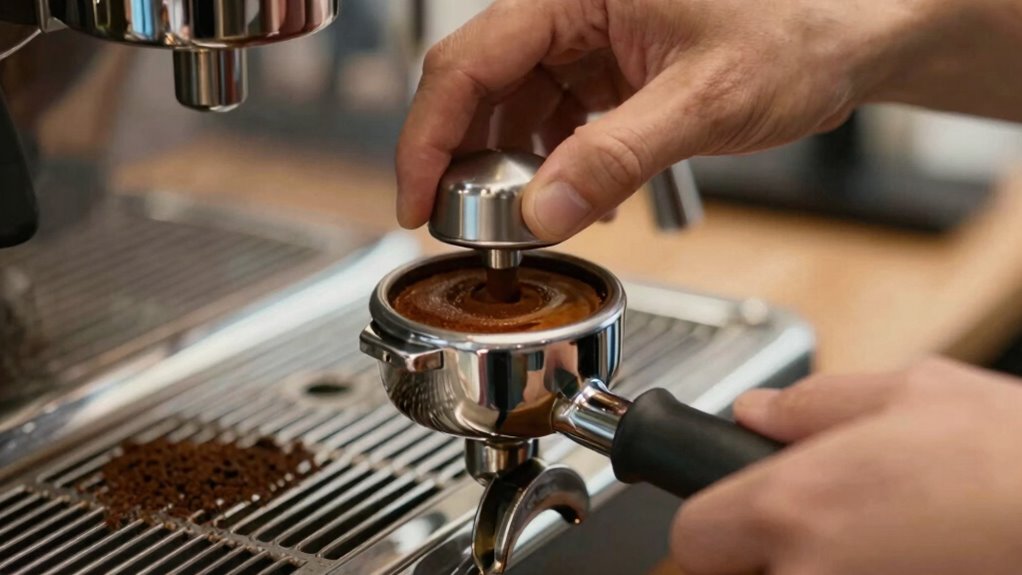
One common mistake in espresso dosing is using inconsistent amounts, which can lead to unpredictable results in flavor and extraction. When you don’t measure precisely, your shot quality varies, making it hard to achieve the desired taste. Additionally, neglecting proper espresso storage can affect grind consistency and dose accuracy. If coffee beans aren’t stored in airtight containers, they lose freshness, leading to uneven dosing and poor extraction. Proper storage habits help maintain grind consistency and ensure accurate dosing. Milk frothing also plays a role—overdosing or underdosing impacts how well the milk integrates with espresso, affecting texture and flavor. To avoid these mistakes, always weigh your doses and store beans properly. Consistent dosing, combined with good storage habits and mindful milk frothing, ensures better shot quality and more predictable results.
Tips to Adjust Your Dose for Better Flavor and Extraction
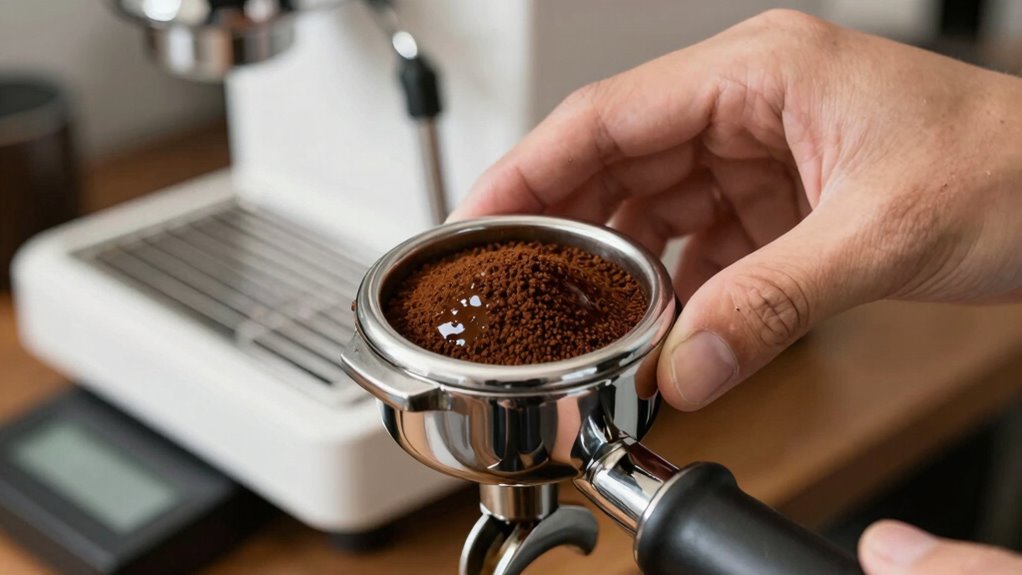
To improve your espresso’s flavor and extraction, start by adjusting your dose slightly and see how it affects the shot. Make sure to use consistent tamping pressure every time to maintain reliability. Regularly taste your espresso to identify what adjustments bring out the best flavor for your setup. Incorporating smart home gym equipment can help you track and optimize your brewing process for consistent results.
Adjust Dose Slightly
Ever wonder how a slight change in your coffee dose can transform your espresso? Small adjustments, like tweaking your dose by a gram or two, can have a big impact on flavor and extraction. Using precise coffee precision and proper dosing techniques helps you fine-tune your shot without overcomplicating the process. If your espresso tastes flat or sour, try increasing the dose slightly to increase the coffee bed’s density, which can improve extraction. Conversely, if it’s too bitter or over-extracted, reduce the dose a bit. Remember, subtle changes matter; don’t go overboard. Keep track of your adjustments to find the sweet spot for your beans and equipment. Additionally, understanding dosing techniques can help you achieve more consistent results. With practice, small dose tweaks become second nature, helping you craft consistently better espresso.
Use Consistent Tamping
Consistent tamping guarantees your espresso shot turns out just right, especially when you adjust your dose. Applying steady tamping pressure ensures even extraction and helps highlight the coffee’s true flavor. Too much pressure can over-compress the coffee, leading to a bitter shot, while too little results in under-extraction and sourness. Use consistent force each time you tamp to maintain uniformity. Remember, coffee freshness plays a crucial role—freshly roasted beans are more sensitive to tamping variations, so staying consistent helps you better control how those flavors develop. By practicing uniform tamping, you prevent uneven extraction caused by inconsistent pressure. This consistency allows you to better evaluate how your dose adjustments influence your espresso’s flavor profile, making it easier to dial in the perfect shot every time. Traditional practices in indigenous wellness emphasize the importance of consistency and respect for natural rhythms, which can be applied to perfecting your tamping technique.
Taste Test Regularly
How often should you taste your espresso to fine-tune its flavor? Regular tasting is key to dialing in the perfect shot. Each time you brew, evaluate the taste, aroma, and mouthfeel, especially if your coffee freshness varies or you’re adjusting your grinder calibration. Fresh coffee can change extraction times, so frequent testing helps you respond quickly. If your espresso tastes flat or sour, consider tweaking the dose or grind size. Keep notes on each shot to track what works best. Consistently tasting ensures you catch subtle flavor shifts and avoid over- or under-extraction. Incorporating quality assessment into your routine allows you to better understand how variables like coffee freshness and grind size influence flavor. Over time, this habit sharpens your ability to adjust your dose accurately, leading to consistently better flavor and ideal extraction.
Troubleshooting Dosing Problems: Quick Fixes for Better Espresso
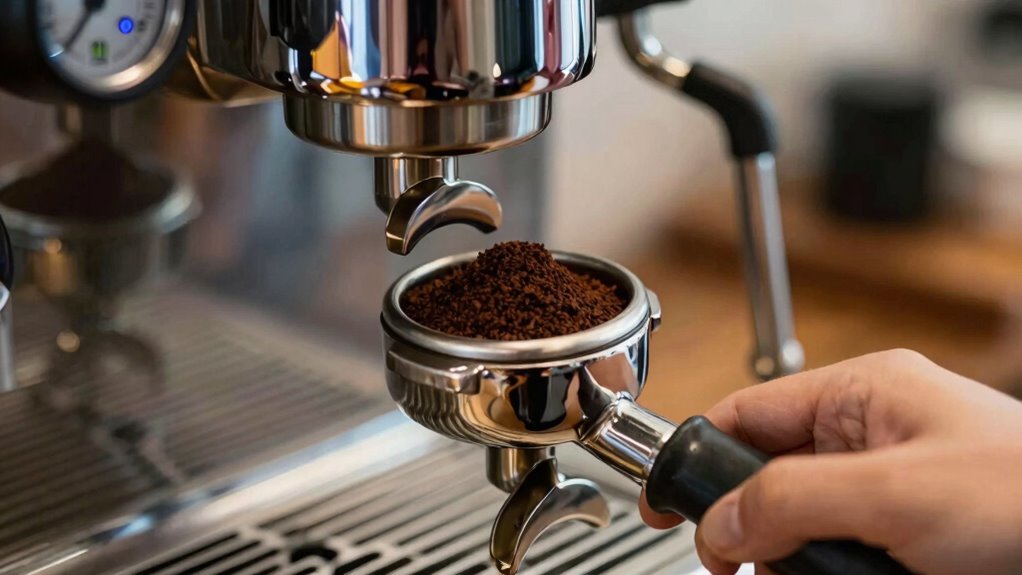
Dosing issues are a common culprit behind subpar espresso, but fixing them doesn’t have to be complicated. To improve your shot, check your grind size and ensure consistent tamping. If your espresso is too bitter or sour, consider adjusting your brew temperature or water quality. Here’s a quick reference:
| Problem | Fix |
|---|---|
| Over-extraction | Use fresher water and lower brew temperature |
| Under-extraction | Increase brew temperature or adjust grind for finer dose |
| Channeling | Distribute coffee evenly and ensure proper tamping |
Frequently Asked Questions
How Does Ambient Temperature Affect Espresso Dosing Accuracy?
Ambient temperature impacts your espresso dosing accuracy by affecting temperature stability and ambient humidity. When it’s too hot or cold, your equipment’s temperature can fluctuate, leading to inconsistent extraction and dose measurements. High humidity can cause beans to absorb moisture, making them harder to grind evenly. To maintain accuracy, keep your environment stable, control humidity levels, and regularly calibrate your equipment, ensuring each shot is consistently perfect.
Can Different Coffee Bean Types Change the Ideal Dose Size?
Different coffee bean types can definitely change the ideal dose size because their bean characteristics, like density and moisture content, vary. You also need to take into account grind consistency, as some beans require a finer or coarser grind to extract the right flavor. Adjusting your dose based on these factors helps guarantee you get a balanced shot, preventing under- or over-extraction and improving overall espresso quality.
What Tools Are Best for Precise Espresso Dosing at Home?
Perfect precision in espresso dosing begins with the right tools. You should use digital scales for pinpoint accuracy, ensuring each dose is just right. Dosing funnels help funnel the beans smoothly into your portafilter, preventing messes and maintaining consistency. Combining these tools allows you to control your coffee’s quantity with confidence. With digital scales and dosing funnels, you’ll consistently craft café-quality espresso at home, elevating every shot you pull.
How Often Should I Calibrate My Espresso Grinder for Consistent Dosing?
You should calibrate your espresso grinder every 1-2 weeks, especially if you notice inconsistent doses or changes in grind size. Regular grinder maintenance, including cleaning and inspecting burrs, helps maintain accuracy. Stick to a calibration schedule based on your usage and the type of beans you use. Consistent calibration ensures your espresso shots are balanced and flavorful, avoiding over- or under-extraction caused by uneven grind sizes or dosing errors.
Does the Age of Coffee Beans Influence the Optimal Dose?
Yes, the age of coffee beans influences the ideal dose. As beans age, they lose freshness, which affects grind consistency and extraction. You might need to adjust your dose slightly to compensate for these changes, ensuring your espresso remains rich and balanced. Fresh beans generally require a standard dose, but older beans may need a tweak to maintain flavor and extraction quality. Keep experimenting to find what works best for your beans’ age.
Conclusion
Now that you understand espresso dosing, don’t worry about getting it perfect every time. Think of it like baking—small adjustments make a big difference. If your shot’s too sour, try a slightly larger dose; if it’s bitter, cut back a bit. Keep experimenting and measuring. With patience, your espresso will consistently improve, giving you that rich, balanced flavor you’re after. Just remember, it’s all about finding the right dose for your taste.