
A shaky espresso machine can disrupt even water flow and temperature, leading to uneven extraction and inconsistent flavor. Excess vibrations cause the coffee grounds not to make proper contact with water, which affects crema and texture. Over time, this instability diminishes shot quality and repeatability. To improve your espresso, you need to stabilize your machine, tighten loose parts, and confirm it’s on a level surface. Keep going to discover simple solutions that can make a big difference.
Key Takeaways
- Excessive vibration causes uneven water contact, leading to inconsistent extraction and flavor in espresso shots.
- Shaking disrupts the precise pressure and temperature control essential for optimal espresso quality.
- Vibrations can alter crema formation, resulting in inconsistent texture and visual presentation.
- Unstable machines may produce fluctuating water levels, negatively impacting shot consistency.
- Persistent shaking indicates internal imbalances or loose parts, risking damage and further inconsistency over time.
How Do I Know If My Espresso Machine Is Shaking?

If your espresso machine starts to shake during operation, it’s a clear sign that something’s off. You’ll notice uneven movement or excessive vibrations that disrupt the brewing process. To determine if your machine is shaking, pay attention to machine stability—if it wobbles or feels unstable on your countertop, vibration detection is key. Often, shaking indicates loose parts, uneven placement, or internal imbalances. Check if the machine vibrates more than usual when brewing, especially during extraction. A stable machine should sit firmly without noticeable movement. If you detect persistent shaking, it’s time to inspect the machine’s base, ensure it’s on a level surface, and look for loose components. Recognizing these signs early helps prevent damage and maintains consistent espresso quality. Understanding the impact of vibration on machine performance can also guide you in troubleshooting and proper maintenance, including machine stability assessments and adjustments. Additionally, proper machine calibration can help reduce unnecessary vibrations and improve overall brewing consistency, especially when considering equipment alignment and secure fittings. Regularly checking your espresso machine’s internal components can further help identify sources of imbalance before they lead to more significant issues.
Why Does My Espresso Machine Shake and How Can I Fix It?
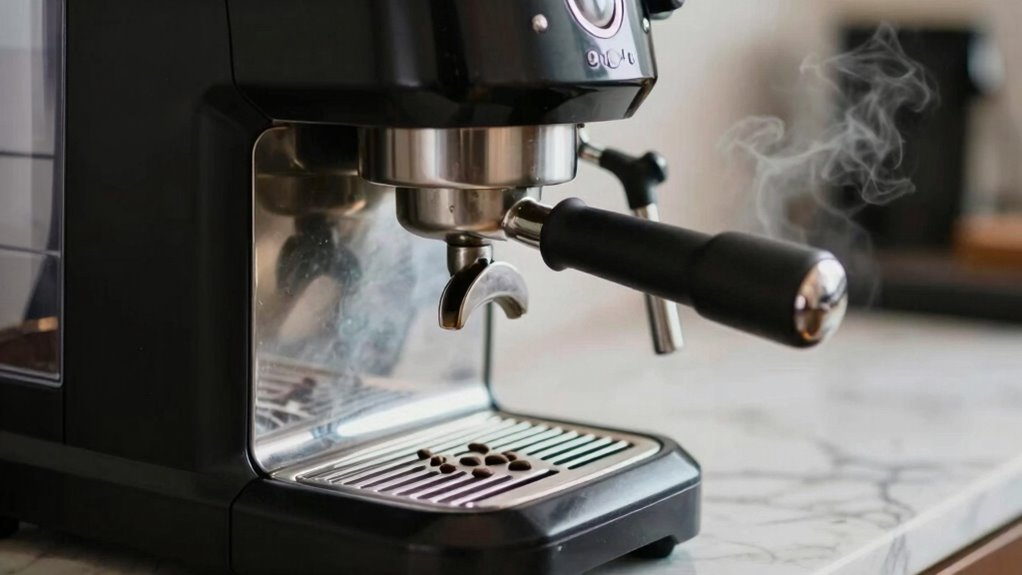
Your espresso machine may shake during operation due to several common reasons. Poor machine maintenance can cause loose components or buildup that increases vibration. Additionally, inadequate vibration damping features or worn-out parts can make the machine unstable. If your machine isn’t level, it can also shake more during use. To fix this, start by tightening any loose screws and cleaning internal parts to reduce imbalance. Consider adding vibration damping pads or mats designed for espresso machines to absorb excess movement. Ensuring your machine sits on a stable, level surface is essential. Regular machine maintenance helps identify and address issues early, preventing excessive shaking. Understanding vibration control techniques can further help in reducing machine movement. Using proper leveling methods can significantly decrease vibrations and improve your espresso’s consistency. Applying stability measures can also help minimize vibrations and enhance overall machine performance. Additionally, exploring machine design improvements can lead to more stable operation in the long run. By taking these steps, you can minimize vibrations and improve your espresso’s consistency.
What Causes My Espresso Machine to Shake? Common Issues Explained
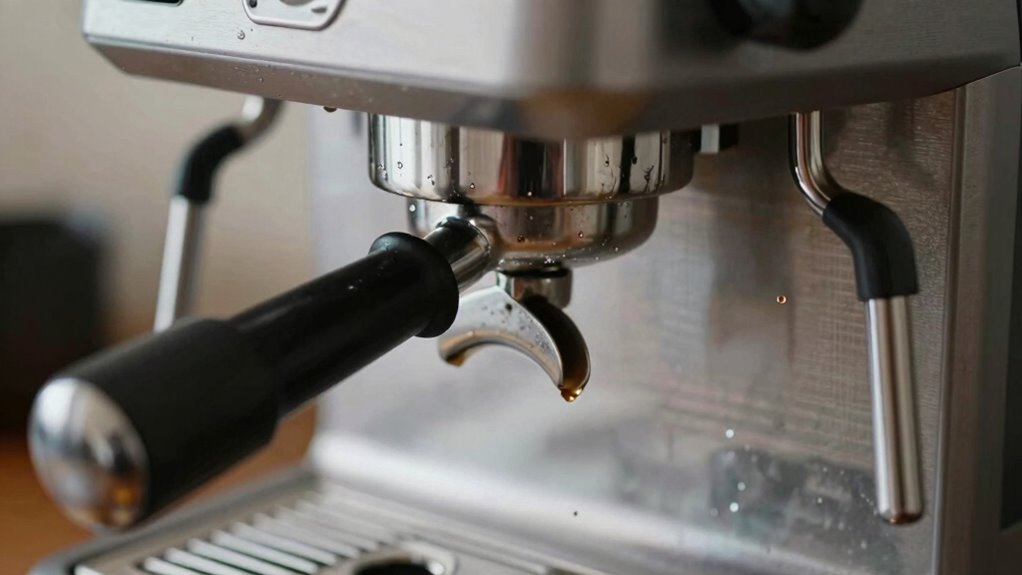
Vibrations during espresso machine operation often stem from mechanical issues or setup problems. If your machine isn’t properly maintained, loose parts or worn components can cause instability, leading to shaking. Check for loose screws, worn gaskets, or misaligned parts during routine machine maintenance. Modern machines may include vibration sensors that detect excessive movement, alerting you to potential problems. These sensors help identify issues early, preventing further damage. Uneven placement on the countertop can also contribute to shaking, so ensure your machine sits on a stable, level surface. Sometimes, internal imbalances or a faulty pump can produce vibrations. Addressing these common issues through regular maintenance and monitoring vibration sensors can markedly reduce shaking, improving your machine’s stability and the consistency of your espresso. Additionally, understanding vibration sensors and how they function can help you troubleshoot more effectively.
How Vibration Impacts Your Espresso’s Flavor and Consistency

When your espresso machine vibrates, it can throw off the careful balance of extraction, leading to inconsistent flavors. Vibration also affects the texture of your espresso, making it either too thin or overly thick. Understanding these impacts helps you maintain a better, more reliable brew every time. Additionally, vibrations can disrupt the consistency of speech therapy techniques, which are vital for skill development and progress tracking. In environments where precision is critical, such as specialized training, vibrations can significantly hinder outcomes. Incorporating smart vibration sensors can help monitor and reduce unwanted machine movement to ensure optimal performance.
Disrupts Coffee Extraction Precision
Vibration can considerably disrupt the precision of coffee extraction, causing inconsistencies in your espresso’s flavor and strength. When your machine vibrates, it hampers proper machine calibration, making it difficult to maintain consistent pressure and temperature during extraction. This instability means your operator techniques can’t compensate effectively, leading to uneven contact between water and coffee grounds. As a result, the extraction process becomes unpredictable, often over-extracting or under-extracting grounds, which alters flavor and strength from shot to shot. Even small vibrations can throw off the delicate balance needed for ideal extraction, reducing your ability to produce a consistently high-quality espresso. Ensuring your machine remains stable helps preserve extraction precision, allowing your operator techniques to work effectively and your coffee to reach its full potential.
Alters Espresso Texture
Since vibrations can disturb the delicate balance during extraction, they often alter the espresso’s texture and mouthfeel. When your machine vibrates, it impacts how evenly the water flows through the coffee, affecting factors like grind size and tamp pressure. This can cause a inconsistent extraction, leading to a thinner or overly thick crema. Imagine this visual:
| Grind Size | Tamp Pressure | Espresso Texture | Result | Mouthfeel |
|---|---|---|---|---|
| Too fine | Too hard | Overly thick, sticky | Bitter, dense shot | Heavy, pasty |
| Too coarse | Too light | Watery, thin | Weak flavor, lacking body | Watery, insipid |
| Ideal | Properly applied | Smooth, balanced | Rich crema, full-bodied | Silky, velvety |
| Uneven grind | Uneven tamp | Inconsistent | Uneven extraction, variable | Unpleasant |
| Vibration present | Excessive tamp | Disrupted texture | Dull, inconsistent mouthfeel | Choppy, rough |
Vibrations disturb this harmony, changing how your coffee feels and tastes.
Simple Steps to Stabilize Your Espresso Machine

To stabilize your espresso machine, start by checking that it’s perfectly level. Make sure all loose parts are tightened and secure to prevent unnecessary movement. You can also add anti-vibration pads to absorb shocks and keep your machine steady during brewing. Additionally, understanding safe installation practices can help ensure your setup minimizes vibrations and maintains consistent performance. Properly installing your espresso machine according to manufacturer guidelines can further reduce unwanted movement and enhance brewing stability. Paying attention to vibration reduction methods can significantly improve your espresso consistency over time. Incorporating proper maintenance routines can also prolong the life of your machine and sustain optimal stability.
Check Machine Level
Ensuring your espresso machine is perfectly level is essential for consistent extraction and ideal performance. An uneven machine can cause water level fluctuations, impacting shot quality and leading to vibrations. To check your machine level, use a spirit level or a smartphone app on the base and adjust the feet until it’s stable. Proper machine calibration depends on this foundation, ensuring water distributes evenly during brewing. When your machine is level, you’ll notice improved consistency and fewer disruptions caused by vibrations. Additionally, machine stability plays a role in maintaining optimal performance and preventing damage over time. A stable machine also helps to mitigate unwanted vibrations, which can compromise your brewing process and damage internal components. Don’t underestimate how a simple adjustment can transform your espresso quality. Take control now, feel confident, and enjoy a smoother brewing experience every time. Detecting passive voice in your writing can also improve clarity and engagement. Ensuring proper machine calibration is a key step in avoiding unnecessary vibrations and maintaining your equipment’s longevity. Regularly checking and adjusting your setup ensures your machine remains in optimal condition, leading to better results and increased durability.
Secure Loose Parts
Loose parts can cause unwanted vibrations and instability in your espresso machine, affecting both performance and shot quality. Check all machine parts regularly for loose screws, nuts, or bolts. Tighten any loose screws, paying special attention to the group head, portafilter, and drip tray. Securing these parts helps prevent unnecessary movement that could disturb the brewing process. If you notice any rattling or shifting, don’t wait—tighten or replace the loose components immediately. Ensuring your machine parts are secure minimizes vibrations that can lead to inconsistent espresso extraction. Keep a small screwdriver handy for quick adjustments. Regularly inspecting and tightening loose screws not only stabilizes your espresso machine but also prolongs its lifespan, ensuring each shot remains precise and delicious. Incorporating vibration control considerations similar to those in deep-sky imaging can help you identify and address potential sources of vibration more effectively.
Use Anti-Vibration Pads
Using anti-vibration pads is a simple and effective way to stabilize your espresso machine and reduce unwanted movement during operation. These anti vibration mats provide shock absorption, preventing vibrations from transferring to your countertop. By adding these pads, you’ll create a more stable platform, helping your machine stay steady during brewing. This stability minimizes inconsistent shots and ensures better extraction every time. Plus, anti-vibration pads can safeguard your countertop from scratches and wear caused by constant movement. Imagine the confidence you’ll feel knowing your machine is secure, delivering consistent results. Take control today with anti-vibration mats and experience the difference they make in your espresso quality and overall setup.
- Feel the confidence of a steady machine during each shot
- Protect your countertop from damage and wear
- Enjoy consistent, high-quality espresso every time
When Should I Call a Technician to Fix Vibration Problems?

If your espresso machine starts vibrating excessively or unpredictably, it’s a clear sign that you should consider calling a technician. Persistent or intense vibrations can indicate underlying issues that require professional machine maintenance. Avoid trying to fix complex problems yourself, as improper handling might worsen the situation. A technician can perform a thorough vibration diagnosis to pinpoint the cause, whether it’s misaligned components, worn bearings, or structural instability. Promptly consulting an expert helps prevent further damage and ensures your machine operates smoothly. If vibrations continue despite basic adjustments or anti-vibration pads, don’t delay—professional intervention guarantees proper repair and maintains the consistency you need for great espresso.
Frequently Asked Questions
Can Vibration Affect the Longevity of My Espresso Machine?
Yes, vibration can affect the longevity of your espresso machine. When your machine isn’t stable, it experiences constant vibration, which can cause wear on internal components over time. Ensuring good machine stability and using vibration damping solutions helps reduce these impacts. By minimizing vibrations, you protect your machine’s parts, extend its lifespan, and maintain peak performance, so investing in stability measures is well worth it.
Are There Specific Brands More Prone to Shaking Issues?
Some brands are more prone to shaking issues due to design flaws and their overall reputation. For instance, lower-cost or poorly engineered machines often lack stability, leading to vibrations that affect espresso quality. Reputable brands with solid design usually minimize shaking, but always check reviews and user feedback. If you notice persistent shaking, consider investing in a higher-quality machine or adding stabilization accessories to improve consistency.
Does the Size of the Espresso Machine Influence Vibration Levels?
Yes, the size of your espresso machine influences vibration levels. Larger, heavier machines tend to have greater machine weight, which helps reduce vibrations. Additionally, their placement stability is vital; placing the machine on a sturdy, level surface minimizes shaking. Smaller, lighter machines are more prone to vibrations, so if you want consistency, opt for a heavier model and make sure it’s placed securely to limit movement during operation.
Can Regular Maintenance Reduce Machine Shaking?
Think of your espresso machine as a delicate dance partner—regular maintenance routines are like practice that keeps it steady on its feet. Yes, they can markedly reduce machine shaking by addressing loose parts, worn components, and imbalances. When you prioritize maintenance routines, you enhance machine stability, ensuring consistent espresso shots and preventing unnecessary vibrations. Keep up with your maintenance, and your machine will stay as steady as a metronome, delivering perfect brews every time.
How Does Vibration Impact Energy Consumption of the Machine?
Vibration decreases your machine’s energy efficiency by causing power fluctuations. When it shakes, the motor works harder to maintain stable operation, wasting energy. This increased effort not only raises your energy bills but also places extra strain on components, potentially leading to faster wear and tear. To improve efficiency and reduce unnecessary energy use, you should address the vibration issue through proper maintenance and stabilization measures.
Conclusion
A steady machine is like a calm lake, reflecting your dedication with every shot. But when it shudders and shakes, it’s like turbulent waters distorting that reflection. Vibration may seem small, but it can toss your espresso’s flavor into chaos. Keep it stable, and you’ll enjoy a smooth, consistent brew—like a still mirror. Don’t let vibrations turn your perfect shot into a shaky, unpredictable mess. Stability is the secret to true espresso mastery.