Pump pressure is what your machine’s pump pushes water with, while brew pressure is the force during extraction that influences flavor and crema. Often, the labels on your machine show these pressures, but they can be confusing if not understood correctly. Properly distinguishing these helps you fine-tune your espresso and troubleshoot issues. If you keep exploring, you’ll discover how accurate pressure labels and gauges play a vital role in brewing perfect coffee.
Key Takeaways
- Pump pressure measures the machine’s water force, usually displayed on the gauge, while brew pressure is the pressure during extraction.
- Brew pressure is influenced by grind size, tamping, and portafilter design, not just pump pressure.
- Accurate pressure labels and calibrated gauges ensure correct readings and prevent misinterpretation.
- Pump pressure is set to optimize extraction; brew pressure reflects actual conditions during brewing.
- Confusion arises when labels are inaccurate or gauges are uncalibrated, leading to improper adjustments and shot quality issues.
Pump Pressure vs Brew Pressure: What’s the Difference?
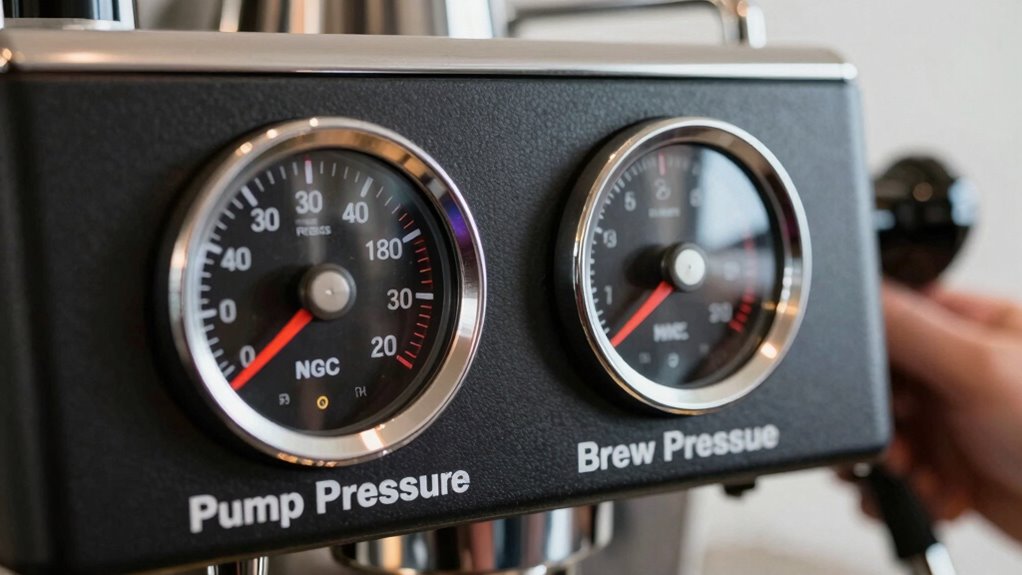
Understanding the difference between pump pressure and brew pressure is key to dialing in your espresso shot. Pump pressure refers to the pressure generated by your espresso machine’s pump, usually measured with a pressure gauge calibration for accuracy. This pressure is what pushes hot water through the coffee grounds. Brew pressure, on the other hand, is the pressure experienced during extraction, influenced by factors like grind size and tamping. Proper calibration of your pressure gauge ensures you’re applying the correct pump pressure. Additionally, pressure relief valves help regulate and release excess pressure, preventing over-pressurization and maintaining consistent brew conditions. Calibration accuracy is crucial for achieving optimal extraction results. Knowing how these components interact allows you to fine-tune your machine, ensuring ideal extraction and flavor. It’s also important to understand pressure stability, which refers to how consistently your machine maintains the desired pressure during brewing. Regular maintenance and monitoring can help sustain pressure consistency, leading to better espresso quality. Furthermore, understanding the pressure dynamics within your machine can help identify issues that affect shot quality and consistency.
How Pump Pressure Affects Espresso Flavor and Crema
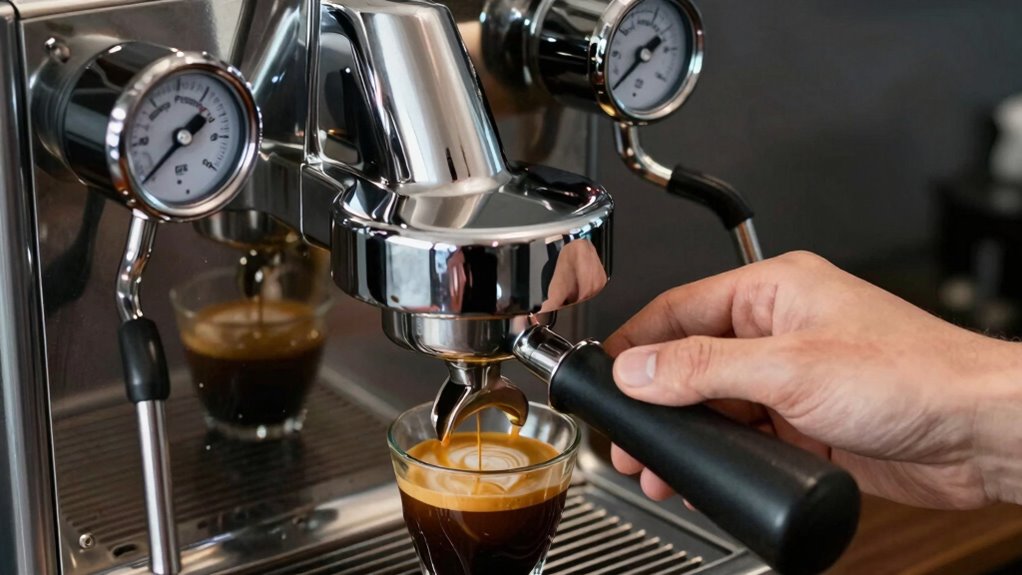
Pump pressure directly influences the flavor and crema of your espresso by controlling how water interacts with the coffee grounds. When pressure is stable, extraction is consistent, resulting in balanced flavors and rich crema. Fluctuating pressure can cause under- or over-extraction, leading to sour, bitter, or flat tastes. Maintaining pressure stability also minimizes pump noise, making your brewing experience smoother. If the pump struggles to sustain the right pressure, you might notice inconsistent crema or a dull flavor. Proper pump calibration guarantees even extraction and maximum crema formation. Remember, the right pump pressure doesn’t just affect taste—it also impacts the overall noise level and reliability of your espresso machine. Keeping pressure stable is Pressure stability essential for consistent espresso quality and machine longevity, especially since consistent pressure reduces wear on internal components. Additionally, pressure regulation ensures your machine operates efficiently over time, preventing premature parts failure. Ensuring your machine has good pressure control can greatly improve your espresso experience.
What Brew Pressure Tells You About Your Espresso’s Taste and Consistency

Brew pressure directly influences the flavor and strength of your espresso, revealing how well your extraction is balanced. If the pressure is too high or too low, it can lead to over- or under-extraction, affecting taste and aroma. Monitoring brew pressure helps you achieve consistent, flavorful shots every time.
Impact on Flavor Profile
The pressure applied during brewing directly influences the espresso’s flavor profile, revealing subtle nuances in taste and aroma. Higher brew pressure can enhance flavor extraction, leading to a richer, more concentrated taste. Conversely, too much pressure might cause over-extraction, resulting in bitterness, while too little can produce under-extraction, making the espresso sour or weak. Adjusting brew pressure helps you achieve better taste balance, highlighting the coffee’s unique qualities. Proper pressure control is essential for consistent results and optimal flavor development, which can be influenced by various factors such as grind size and tamping technique. Understanding how brew pressure interacts with other variables allows you to fine-tune your espresso for the best possible flavor. Correctly managing pressure consistency ensures your espresso maintains its intended flavor profile from shot to shot. Additionally, being aware of the pressure settings specified by your machine can help you troubleshoot and optimize your brewing process.
Consistency in Extraction
Maintaining consistent extraction is key to achieving a balanced and predictable espresso shot, and brew pressure plays a significant role in this process. When your brew pressure remains stable, it indicates that your grind adjustment and tamping technique are on point. If the pressure fluctuates, you might need to adjust your grind to prevent over- or under-extraction. Consistent pressure also ensures even water flow through the puck, leading to uniform extraction. Proper tamping technique helps create resistance that supports stable pressure, avoiding channeling or uneven extraction. By paying attention to brew pressure, you can fine-tune your grind and tamping method, leading to more reliable shots with consistent flavor and strength every time. Understanding brewing mechanics can help you better interpret pressure readings and improve your espresso-making skills.
How to Read and Understand Your Coffee Machine’s Pressure Labels
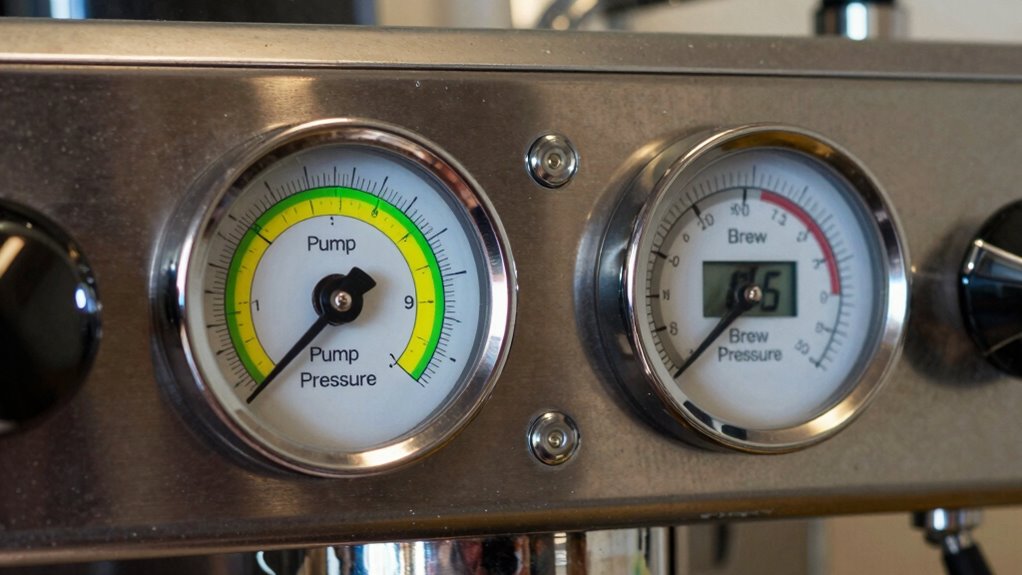
Your coffee machine’s pressure labels can seem confusing at first, but understanding them is key to perfect espresso. You need to recognize the differences between pump and brew pressure indicators and what they tell you about your shot. You can also benefit from understanding pressure measurement concepts to better troubleshoot and optimize your brewing process. For example, understanding the pressure profiles during extraction can significantly improve your results. Additionally, familiarizing yourself with pressure gauge readings can make it easier to identify issues and achieve consistent espresso quality. Recognizing how pressure curves fluctuate during brewing can help you fine-tune your technique for optimal extraction.
Interpreting Pressure Labels
Understanding how to read your coffee machine’s pressure labels is essential for ensuring ideal brewing performance. Proper interpretation helps you monitor and adjust settings accurately. Start by examining the label design; clear labels often specify pressure ranges and units, making readings straightforward. Be aware of pressure gauge calibration, as inaccurate gauges can mislead you into adjusting incorrectly. Look for labels that specify brew pressure or pump pressure, depending on your machine type. If the label shows a range, aim for the middle or manufacturer-recommended spot. Always verify that the pressure gauge is calibrated correctly for precise readings. Recognizing these details ensures you can troubleshoot issues effectively and optimize your espresso extraction every time.
Differentiating Pump and Brew
When reading your coffee machine’s pressure labels, it’s important to distinguish between pump pressure and brew pressure, as they serve different functions. Pump pressure indicates the strength of the machine’s water pump, affecting extraction, while brew pressure measures the actual pressure applied during extraction, impacting flavor and crema. For example, a machine with a high pump pressure might still have low brew pressure if the portafilter design or steam wand setup restricts flow.
| Aspect | What to Look For |
|---|---|
| Pump Pressure | Typically listed on the machine, indicates pump strength |
| Brew Pressure | Shown during extraction, relates to portafilter and flow |
| Portafilter Design | Affects brew pressure, needs proper sealing and size |
| Steam Wand | Can influence pressure stability during steaming |
Common Mistakes When Reading Pump and Brew Pressure Settings
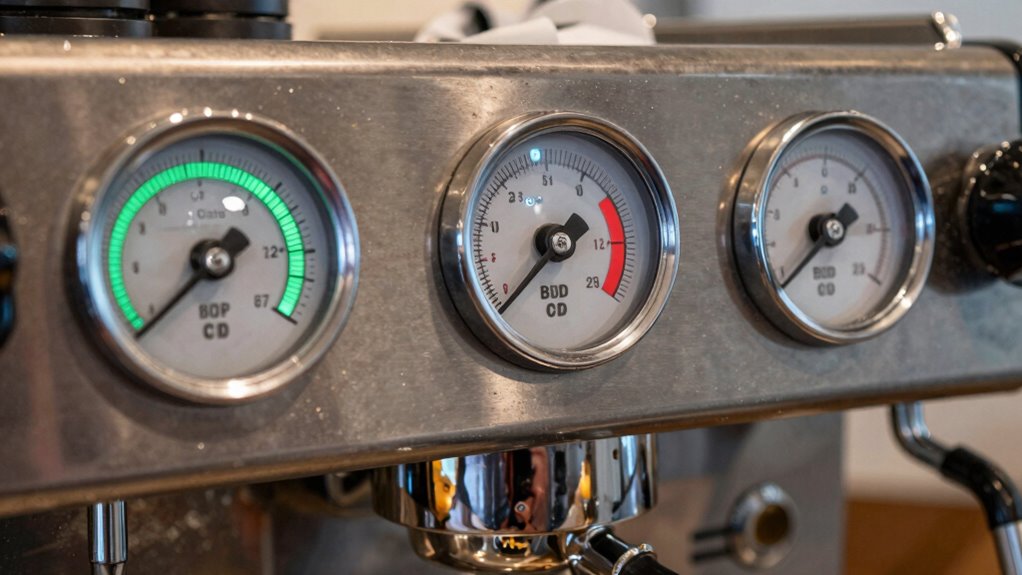
One common mistake is misreading pump and brew pressure gauges due to unfamiliarity with their proper ranges or calibration. If you don’t understand where the gauges should be calibrated, you might misinterpret the readings, leading to incorrect adjustments. This often happens if you neglect regular machine maintenance, which can affect gauge accuracy. Additionally, being aware of pressure gauge calibration is essential to maintain accurate readings over time. Regularly checking gauge accuracy helps ensure your espresso machine functions correctly. Moreover, understanding smart appliance integration can assist in monitoring and maintaining your equipment more effectively. Be mindful of these pitfalls: – Ignoring pressure gauge calibration checks over time – Assuming gauge readings are always accurate without verification – Misinterpreting pressure ranges for pump vs. brew settings – Overlooking the importance of regular maintenance to ensure reliable readings To avoid confusion, always verify gauge calibration periodically and keep your machine well-maintained. Accurate readings are essential for consistent espresso quality.
Tips for Adjusting Pressure to Brew Better Espresso

Adjusting pressure settings effectively can markedly improve your espresso quality, but it requires a clear understanding of your machine’s parameters. Start by fine-tuning your grind size; a coarser grind reduces pressure, while a finer grind increases it. Consistent tamp pressure is also vital—apply even, firm pressure to ensure uniform extraction. If your espresso tastes sour or under-extracted, try slightly increasing the pressure by adjusting your grind or tamp. Conversely, if it’s bitter or over-extracted, decrease the pressure. Always make small adjustments and taste the results before proceeding. Remember, pressure interacts with grind size and tamp pressure, so balance these factors to achieve ideal extraction. With practice, these tweaks will help you brew richer, more balanced espresso.
Why Accurate Pressure Labels Matter for Perfect Coffee
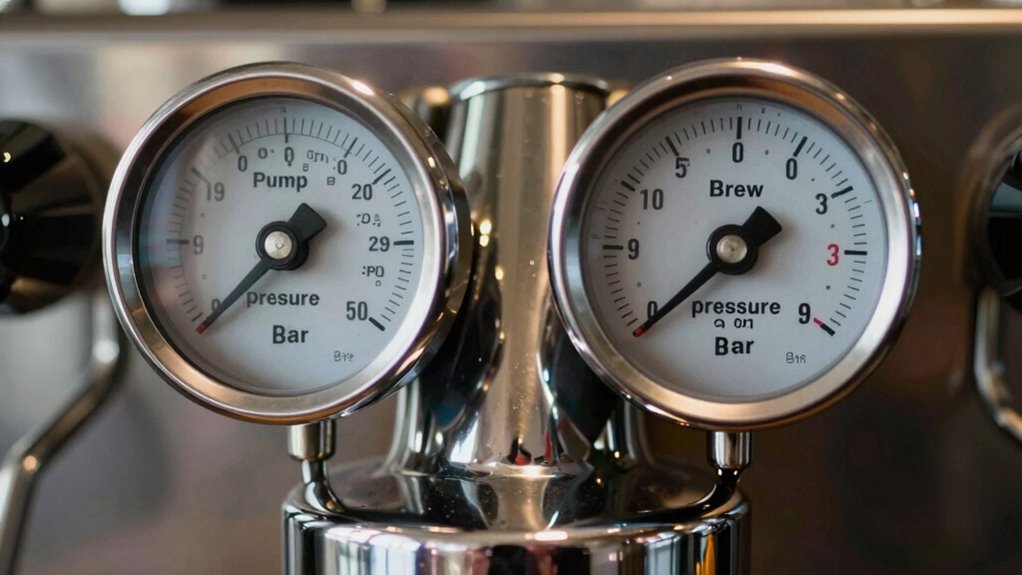
Accurate pressure labels on your espresso machine are essential because they guarantee you’re applying the correct amount of force for ideal extraction. When labels are precise, you can trust your gauge readings, leading to consistent, high-quality coffee. Proper pressure gauge calibration helps maintain label accuracy, preventing misreads that could ruin your shot. Misleading labels might cause over- or under-extraction, affecting flavor and crema. Ensuring your machine’s labels reflect actual pressure allows you to fine-tune your brewing process effectively.
- Prevents over- or under-extraction due to incorrect pressure readings
- Ensures consistent results shot after shot
- Helps identify when pressure gauge calibration is needed
- Allows you to troubleshoot brewing issues with confidence
Frequently Asked Questions
Can Pump Pressure Be Adjusted Independently of Brew Pressure?
Yes, you can usually adjust pump pressure independently of brew pressure on your espresso machine. Adjusting pump pressure directly influences the water flow rate through the coffee grounds, while brew pressure depends on factors like grind size and tamping. By fine-tuning the pump pressure, you control extraction without changing brew pressure, giving you better control over your espresso shot. Always check your machine’s manual to see how these settings interact.
How Do Different Coffee Beans React to Pressure Variations?
You’ll notice that different coffee beans react uniquely to pressure variations because of their pressure sensitivity. For bean extraction, lighter roasts often require more precise pressure control to prevent over-extraction, while darker roasts might be more forgiving. Adjusting pressure impacts flavor, body, and aroma, so paying attention to how your beans respond helps you find the perfect balance for each type, enhancing your espresso experience.
Are Pressure Labels Standardized Across All Espresso Machines?
You might notice that pressure labels on espresso machines aren’t standardized, and that’s no coincidence. Machine labeling often varies because pressure standards differ among brands and models. While some machines suggest a specific pump or brew pressure, others leave it open to interpretation. This inconsistency means you should always check your machine’s manual or manufacturer’s guidelines rather than relying solely on label numbers, ensuring ideal espresso extraction every time.
What Signs Indicate Pressure-Related Issues During Brewing?
You’ll notice pressure-related issues during brewing if your pressure gauge shows abnormal readings, like too high or too low pressure. Also, listen for unusual brewing sounds, such as hissing or sputtering, which can signal pressure problems. These signs suggest your machine might need adjustments or maintenance to guarantee ideal extraction and prevent damage. Keep an eye on both the gauge and sounds to catch issues early.
How Often Should Pressure Calibrations Be Performed on My Machine?
Perfectly precise pressure calibrations prevent problems and promote consistency. You should perform calibration checks every one to three months, depending on usage frequency and machine stability. Regularly verify your pressure gauge accuracy, ensuring your equipment operates most effectively. By prioritizing consistent calibration frequency, you’ll prevent pressure pitfalls, produce perfect pours, and enjoy peace of mind knowing your machine’s performance remains precise, powerful, and predictable with each pull.
Conclusion
Understanding the nuances between pump and brew pressure can subtly elevate your espresso game. Think of it as fine-tuning a delicate instrument—you don’t need perfection, just harmony. By paying attention to your machine’s labels and making gentle adjustments, you’ll find yourself savoring richer flavors and creamier crema. Embrace the journey of learning, and soon, your espresso will delight every time, as if the perfect notes were softly guiding your hand.