The common belief that a perfect espresso shot takes exactly 25–30 seconds is a myth. Shot time alone doesn’t guarantee great flavor and can be misleading since factors like grind size, tamping, bean freshness, and water temperature all influence extraction. Focusing solely on timing might cause you to miss key taste cues and overlook adjustments that improve your espresso. To truly understand what makes a balanced shot, explore how technique and sensory evaluation work together.

Get kitchen gear delivered free — and shop member deals
- Fast, free delivery on millions of items
- Access to Prime Big Deal Days deals on October 6–7
- Prime Video, Amazon Music and more included
Key Takeaways
- The 25–30 second shot time is a general guideline, not a strict rule for quality.
- Shot duration is influenced by grind size, tamping, bean freshness, and temperature, not just seconds.
- Relying solely on timing can overlook flavor balance, aroma, and mouthfeel, which are essential for good espresso.
- Proper extraction focuses on sensory cues like crema, flavor, and aroma, rather than just clock time.
- Adjusting grind, dose, and technique is more effective for consistent quality than fixating on a specific shot time.
As an affiliate, we earn on qualifying purchases.
Why the 25–30 Second Shot Time Is a Common Espresso Myth
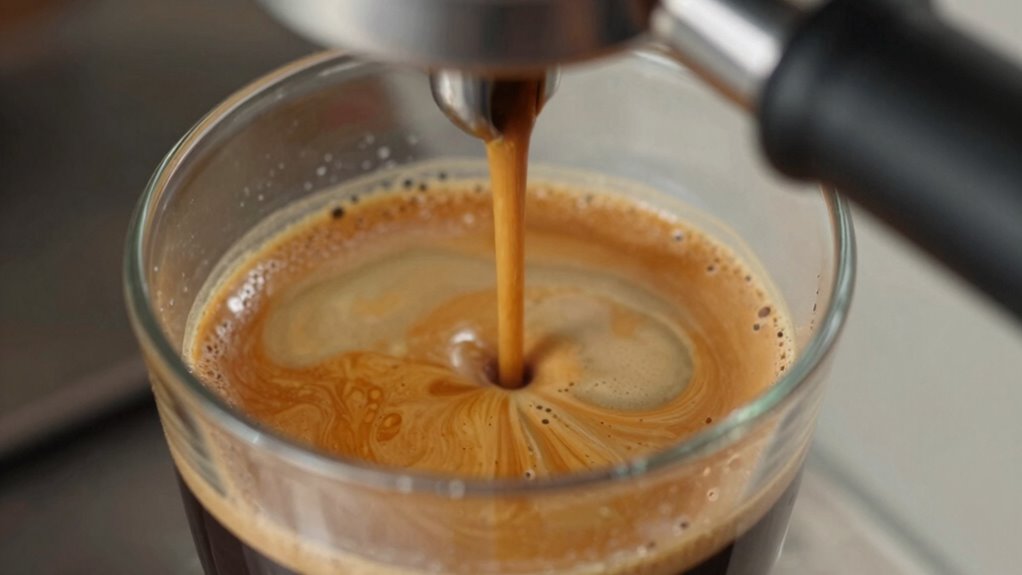
Many people believe that a perfect espresso shot must take exactly 25 to 30 seconds, but this timeframe is actually a myth. The true key isn’t just the shot time; it’s how your brew water interacts with coffee freshness. Freshly ground coffee releases more flavorful oils and aromas, which can influence extraction speed. If your coffee isn’t fresh, it may require a longer or shorter shot time to develop proper flavor, regardless of the clock. Similarly, the quality and temperature of your brew water impact extraction efficiency. Focusing solely on shot duration overlooks these factors. Additionally, equipment calibration and grind size play crucial roles in achieving optimal results. Instead, aim for a well-balanced extraction that highlights your coffee’s unique profile, rather than obsessing over a rigid time window.
As an affiliate, we earn on qualifying purchases.
What Shot Time Really Reveals About Your Espresso

Shot time can tell you a lot about your espresso’s extraction and flavor balance, but it’s not the whole story. A properly timed shot often indicates balanced extraction, highlighting well-developed flavors. However, it also impacts brew consistency, so paying attention to shot time helps you dial in results more reliably. Additionally, understanding proper extraction techniques can further improve your espresso quality.
Extraction Timing and Flavor Balance
While extraction time is often used as a quick indicator of espresso quality, it doesn’t tell the whole story about flavor balance. The true key lies in how the brew temperature interacts with extraction timing, influencing flavor development. A shot pulled in a slightly higher brew temperature may extract more complex flavors in less time, while a lower temperature might require longer extraction. Tamping pressure also plays a role by controlling water flow, affecting extraction consistency. Too much tamping pressure can slow extraction and dull flavors, whereas too little can cause under-extraction and sour notes. Ultimately, focusing solely on shot time overlooks these vital factors that shape flavor balance. Instead, aim for a harmonious interplay between brew temperature, tamping pressure, and extraction duration to achieve the desired flavor profile.
Implications for Brew Consistency
Understanding what shot time truly reveals about your espresso can help you achieve more consistent results. A stable shot time suggests good temperature stability and water quality, both essential for precision. Variations in shot time often indicate issues with water flow or temperature fluctuations, which affect flavor and consistency. To improve, monitor your machine’s temperature stability and ensure your water quality is high—free of minerals and impurities. Use the following table to see how shot time relates to these factors:
| Shot Time | Temperature Stability | Water Quality |
|---|---|---|
| 25-30s | Consistent, stable | Clean, mineral-balanced |
| Under 25s | Potential temp fluctuation | Hard or impure water |
| Over 30s | Weak temperature control | Dirty water or scale buildup |
| Ideal | Suitable stability | Properly filtered water |
Additionally, understanding the projector technology behind your equipment can help you optimize your setup for consistent shot times and better overall espresso quality.
As an affiliate, we earn on qualifying purchases.
How Grind, Dose, and Tamping Shape Your Shot Duration

The grind size, dose, and tamping pressure directly influence how long your espresso shot takes to pull. If your grind isn’t consistent, the water flows unevenly, leading to unpredictable shot times. A finer grind increases resistance, resulting in a longer extraction, while a coarser grind shortens it. Precise dosing ensures the right amount of coffee, affecting both flow rate and shot duration. Under-dosing can cause faster pulls, and over-dosing may slow the process. Tamping pressure compacts the coffee evenly; too firm, and water struggles to pass through, increasing shot time. Too light, and water flows too quickly, shortening the shot. By maintaining grind consistency and dose precision, you control shot duration, helping you achieve a balanced extraction every time. Proper equipment maintenance also plays a vital role in ensuring consistent shot times.
coffee temperature control device
As an affiliate, we earn on qualifying purchases.
As an affiliate, we earn on qualifying purchases.
Why Focusing Only on Shot Time Can Hurt Your Flavor

Focusing only on shot time can lead you to ignore the nuances that make your coffee unique. When you prioritize speed over flavor, you might miss out on the complexity and balance that define a great espresso. Ultimately, honing in solely on timing can keep you from achieving the rich, nuanced taste you’re after.
Overemphasis on Timing
While shot time is an important factor in brewing, placing too much emphasis on it can actually harm your coffee’s flavor. Focusing solely on timing might lead you to overlook the nuances of extraction, which are essential for balanced taste. Overemphasizing shot time can foster caffeine dependency, where you chase a specific number instead of appreciating the coffee’s complexity. It can also turn brewing into a ritualistic process, causing you to ignore subtle flavor notes that develop beyond a strict time frame. When you fixate on shot time, you risk sacrificing the richness and depth that come from a more holistic approach. Instead, prioritize tasting and adjusting based on flavor, not just seconds, for a more satisfying coffee experience. Additionally, understanding how kitchen tools work and how to use them correctly can help you better control extraction and flavor development.
Flavor Complexity Neglected
When you concentrate solely on shot time, you risk missing out on the complex flavors that develop during brewing. Flavor complexity isn’t just about speed; it’s about how different compounds extract at various rates, creating rich taste nuances. Focusing only on a specific time can cause you to overlook subtle shifts in aroma and taste, which are essential for a well-rounded espresso. By prioritizing shot time over overall extraction quality, you may produce a shot that’s technically within the “ideal” window but lacking depth and vibrancy. Extraction is a dynamic process that influences the full spectrum of flavors in your coffee. To truly appreciate what your coffee can offer, pay attention to flavor complexity and taste nuances that unfold beyond just timing. This approach helps you craft a more balanced, expressive espresso that highlights all its intricate layers.
How to Recognize a Well-Extracted, Great-Tasting Espresso
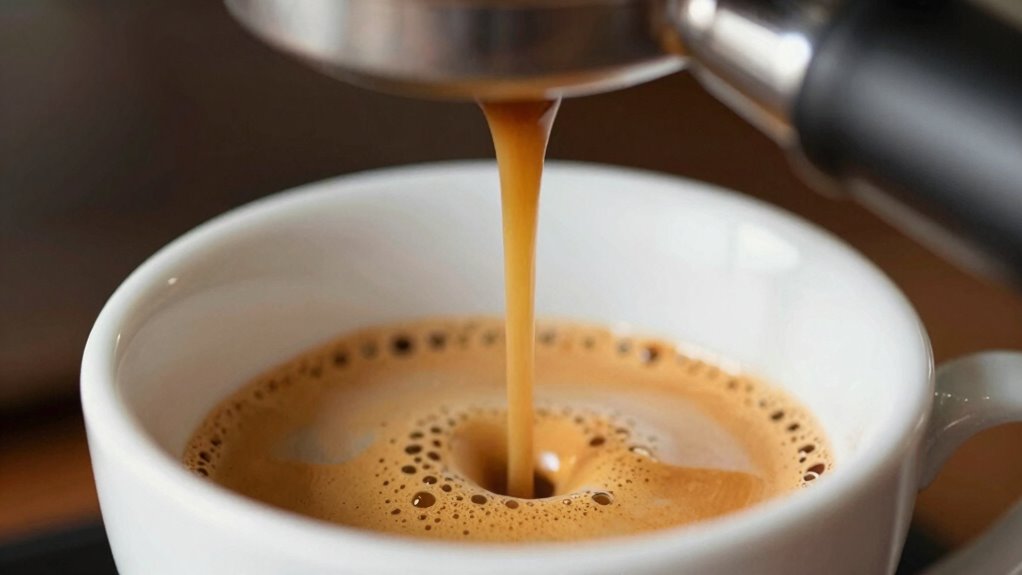
A well-extracted, great-tasting espresso should have a rich, vibrant flavor that balances sweetness, acidity, and bitterness. You’ll notice a lively espresso aroma that invites you in, hinting at complex flavors. The caffeine extraction is ideal, delivering a full-bodied experience without over- or under-extraction. To recognize a quality shot, look for:
- A glossy, caramel-colored crema sitting atop the espresso
- A nose filled with sweet, fruity, or nutty notes
- A balanced taste that’s neither sour nor overly bitter
- A smooth, lingering aftertaste
- A full-bodied mouthfeel that coats your palate
These signs indicate proper extraction, ensuring you enjoy the true essence of the coffee beans and a satisfying espresso experience. Sizing and load‑planning tools can help optimize your brewing process for consistent results.
Limitations of Using Shot Time as Your Only Quality Indicator

Relying solely on shot time to judge espresso quality can be misleading because it ignores other critical factors that influence flavor and extraction. Artificial benchmarks like a 25–30 second window don’t account for variables such as grind size, tamping pressure, or bean freshness. Blind timing can cause you to overlook subtle signs of under- or over-extraction that aren’t reflected in seconds alone. For example, a shot may pour quickly but taste balanced and rich, or take longer and still be flat. Focusing only on time risks ignoring the complexity of espresso development. It’s essential to take into account flavor, aroma, and texture alongside shot duration. Using shot time as the sole indicator simplifies the process but sacrifices accuracy and the opportunity to fine-tune your technique.
How to Dial in Your Espresso Beyond the 25–30 Second Window

If your shot isn’t hitting the mark within the typical 25–30 seconds, don’t just accept it—adjust your grind size to control extraction. Fine-tuning the grind can help you hit your target brew time while balancing flavor. Keep an eye on your timing and make small tweaks to optimize your espresso beyond the usual window. Monitoring passive voice detection can help you identify and improve unclear or awkward phrasing in your writing.
Adjust Grind Size
Ever wonder how to fine-tune your espresso when the shot time falls outside the ideal 25–30 second range? Adjusting your grind size is key. If your shot pulls too fast, you’ll want a finer grind to increase resistance. Conversely, a too-slow shot needs a coarser grind. Focus on precise grind adjustments and dose calibration to get it right. Picture:
- A pebble-sized grind for a quick shot
- Powder-fine for a slow, syrupy pull
- A scale measuring your dose for consistency
- A tamper pressing evenly with steady pressure
- A timer watching your shot’s progress
These small tweaks help control extraction time, ensuring your shot hits that perfect window. Remember, even minor grind adjustments can dramatically impact shot time, so dial in carefully for maximum flavor. Mastering Home Espresso techniques can make all the difference in achieving consistent results.
Optimize Brew Time
Once you’ve adjusted your grind size to control shot time, you might still find your espresso pulling outside the ideal 25–30 second window. To optimize brew time further, focus on maintaining grind consistency, ensuring each shot starts with uniform grounds. Variations in grind size can cause unpredictable extraction, so use a quality grinder and double-check settings. Tamping pressure is equally essential; apply even, firm pressure to create a consistent puck, which promotes even water flow. Inconsistent tamping can lead to channeling and uneven extraction, regardless of grind size. Fine-tuning these factors helps you hit your target shot time more reliably. Remember, small adjustments in tamping and grind consistency considerably impact extraction and flavor, allowing you to dial in your espresso beyond just the shot time.
Troubleshooting Shot Time and Extraction Problems

Troubleshooting shot time and extraction issues requires a systematic approach to identify and fix common problems. Start by checking your grind size—too fine or coarse can disrupt extraction. Consider the coffee origin, as beans from different regions have varying caffeine content, affecting extraction speed. Ensure your dose is consistent, and tamp firmly but evenly. Observe the shot—if it pulls too quickly, adjust grind coarseness; if too slow, make it finer. Use a scale to monitor consistency. A proper technique can also help prevent uneven tamping and channeling, resulting in more consistent shot times. Visualize a slow pour, like honey dripping, indicating over-extraction. Imagine fast flow, thin and watery, signaling under-extraction. Think of a rich, balanced crema as a sign of proper extraction. Recall that uneven tamping causes channeling, resulting in inconsistent shot times. Recognize that stale beans or incorrect grind size can hinder proper extraction.
The Impact of Equipment and Technique on Perfect Extraction

The quality of your espresso shot heavily depends on both your equipment and your technique. Cultural perceptions often influence how people value equipment upgrades, but even the best machine won’t produce perfect extraction without proper technique. Consistent grinding, tamping, and timing are vital. Upgrading your equipment can improve shot consistency, but mastering your existing tools is equally important. High-quality grinders, for example, create more uniform grounds, leading to better extraction. Technique adjustments, like adjusting tamp pressure or grind size, directly impact shot flow and flavor. Remember, equipment alone isn’t a magic fix—your skill and understanding of your setup determine the shot’s success. Focusing on proper technique alongside any equipment improvements is essential to achieve that ideal extraction and rich flavor.
Tips for Developing a Consistent, Flavor-Focused Espresso Routine

Establishing a consistent, flavor-focused espresso routine requires deliberate practice and attention to detail. To achieve this, focus on key elements that enhance the coffee aroma and preserve bean freshness.
Consistency and attention to detail elevate your espresso’s flavor and freshness.
- Regularly weigh your beans to ensure consistency in dose
- Dial in grind size carefully for ideal extraction
- Use freshly roasted beans, prioritizing bean freshness
- Maintain a stable temperature in your machine
- Record each shot’s parameters to identify what works best
- Proper storage methods can significantly extend the freshness of your beans and improve flavor consistency.
Frequently Asked Questions
How Does Water Temperature Affect Shot Timing and Flavor?
Water temperature directly impacts your shot timing and flavor. When you use higher brew temperatures, it extracts flavors faster, so your shot may pull too quickly if your grind size isn’t adjusted. Conversely, lower temperatures slow extraction, making your shot take longer. To get the perfect balance, tweak your grind size accordingly. Properly managing water temperature and grind size ensures you achieve ideal flavor and consistent shot timing.
Can Different Coffee Beans Require Different Shot Times?
Like a painter choosing different brushes, you’ll find that coffee bean varieties and roast levels often need tailored shot times. Light roasts, with their delicate flavors, may require longer extraction, while dark roasts can often be pulled quicker to avoid bitterness. To access the full potential of each bean, adjust your shot times accordingly, experimenting based on their unique characteristics. This guarantees you get a rich, balanced flavor every time.
What Role Does Machine Pressure Play in Shot Extraction?
You need to understand that machine pressure plays a vital role in shot extraction. Maintaining pressure consistency guarantees you achieve even extraction, which impacts flavor and strength. Proper pressure control allows you to fine-tune your shot, preventing under- or over-extraction. When you monitor and adjust pressure actively, you gain better extraction control, resulting in a richer, more balanced espresso. Consistent pressure is key to mastering your espresso game.
How Do Ambient Conditions Influence Shot Quality?
Imagine the steam rising from your coffee as a gentle breeze hits. Ambient conditions like temperature and humidity affect your shot by altering how water interacts with your grind size and tamp pressure. Cooler, humid air can slow extraction, requiring a finer grind or firmer tamp. Conversely, warmer, dry air can speed it up. Staying aware of these changes helps you adjust your grind size and tamp pressure for consistent shot quality.
Is There an Ideal Shot Time for All Espresso Styles?
There’s no single ideal shot time for all espresso styles because it depends on factors like brew temperature and grind consistency. You should aim for a shot that extracts balanced flavors, which might mean adjusting grind size or brew temperature rather than fixating on a specific time. Focus on taste and shot quality, and tweak your variables until you achieve the perfect balance for your preferred espresso style.
Conclusion
Don’t get caught up in the myth that your shot must hit 25–30 seconds—your espresso’s true magic lies in flavor, balance, and extraction. Ignoring these details is like chasing a unicorn while your perfect cup sits right under your nose. So, tune your technique, trust your taste buds, and remember: a great shot isn’t about timing, it’s about craft. Your perfect espresso is just a few tweaks away—go find it!
Fall Picks
fall essentials
As an affiliate, we earn on qualifying purchases.